( Temple History ) PreviousNext HISTORY OF SRI RAHU KETHU TEMPLE,THIRUPPAMPURAM
THIRUPPAMPURAM GREATNESS
Chola kings succeeding vijayalaya chola (Tirugnanasambandar era). Renovated many brick-built temples into stone ones.and Thiruppampuram is one among them. Of the 15 inscriptions found in this temple most are found in the outer ring –six on the north, one in east,four in west and two in the south. Of these the oldest is from the period of kulothunga chola the third (11 78-1218 AD).Hence one can safely conclude this stone edifice is close to a millennium old.ctually, seven of the inscriptions belong to the period of Kulothunga III, 3 during the region of Rajendran III and one during Rajendra III. There are two belonging to Sadayavarman Sundarapandian who ascended the madurai throne in 1250 AD, and one of the time of Maratha King Serfoji, who ruled Thanjaavur. But, unusually, there no gifts from any of the kingdoms – Chola, Pandia or Maratha. The common man has bequeathed whatever the temple . The brick temple for the Lord, was converted to a stone one by a great man. Kotramngalam pararavayur. The name Pughazhabaranam was also given (Inscription 95/1911). This conversion might have happened just during the region of Kulothunga III. (1200 AD). The temple of the Godness was converted during 22nd year of the region of Rajarajan III (1216 – 1246 AD, inscription 90/1911). So it can be safely concluded that the stone temple for Maamalayatti was constructed in the year 1238 Ad. According to the inscription 85/1911. in the year 27th year in the region of Kulothunga III, a land had been sold to the temple. In the following year, a land had been gifted to the Rajaraja vinayaka temple, suitated on the banks of the Arisil river (Arasalaaru). It can be concluded that this Vinayaka is different from the one within the Pampuranathar temple (inscription 91/1911).
THIRUPPAMPURAM HISTORY
The inscription 96/1911 belongs to the 31st year of the region of the same king. And this same that on request of arunmozhibramarayan a land exempted from some taxes was gifted to the temple. One sentence in the inscription names this “Kaverikkarai Viniyogam” (Kaverikkarai distribution). The 35th year in the region of the king saw a sale of a land to the temple by a dancing girl, for the worship of Periya Thevar and Natchiar. (Inscription 92/1911). Another inscription 94/1911 states that the same dancing girl installed some statues in the temple and hence was given some concessions by the archakas. Vaarana Vadheesuramudaiyan, also know as Manakkudi Kosala Rayar, established a khoshala with 14 cows and also arranged for the feeding of the cows and income for the coweherd. (Inscription 87/1911, 13 th year in the region of the region of Rajarajan III, 1216 – 1246 AD).
In the 22nd year of the same king, Vaanavappaadi Pazhavettarayan gifted land for the garlands and abhishekam of the lord. In the 24th year, Sozhiyadhararaya velaam a.k.a Damodran gifted land for the upkeep of the mandapam in the second prahaaram. A land was sold in the 25th year of the region of Rajendra III according to the inscription 89/1911. In the same inscription. We find that a gifted in the 2nd year of the region of Sadayavarman sundarapandian. The temple’s Vasantha mandapam was built by subedar Ragopanditharayan, Kaariyastha. He did it during the rule of the King Serfoji in Kali 4824,Saka ere 1644 corresponding to sobhakrithu year...
Read moreI am just giving a overview of the route to reach the temple and also updating the facilities available near temple and temple premises.
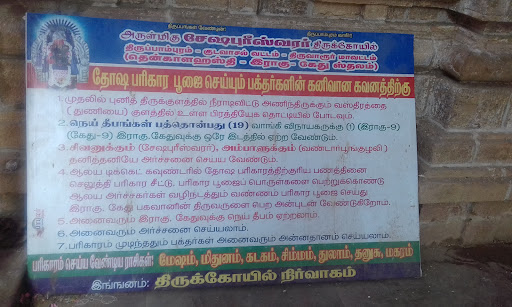
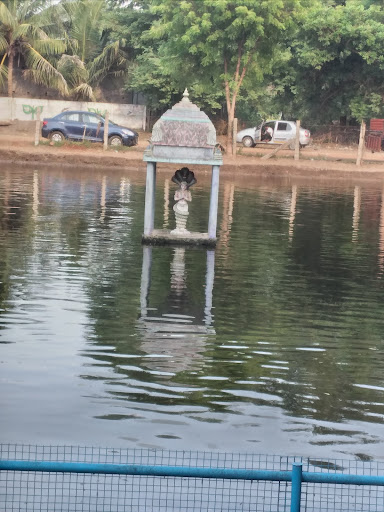
#Temple is also called as South kalahasthi. #Raaghu Kethu thosha parihara isthalam/ SarbhaThosha Parihara Isthalam. #Vanni tree is the temple thala viruksham. Temple pond is in front of the temple. (Only for Thosha parigara persons-Where devotees can take a bath and leave their dress and change another dress *dress changing room available near to pond) All devotees can take a hand of water and can sprinkle on their head. Even it's a interior village, here temple owned Lodges (Ac/Non-Ac) & Private Lodges, Rest Room facilities are available.
#Preferably own vehicles suggested due to lack of public transport by government. Private auto' s available at temple to reach Main roads. (Karkathi)
I would recommend and project the way for devotees who travelling to temple via public transport.
Near by Railway Station: Peralam From Peralam rarely a mini bus available to temple. If you take a auto they might ask Rs.350 to 450 for this 8km distance to reach the temple.
Bus route from Mayiladuthurai/ Mayavaram and Thiruvarur: Direct Timing buses also available from Mayiladuthurai. But we have connecting routes which will be more helpful to reach the temple soon.
Step 1) Take a Thiruvarur bus from Mayiladuthurai (or) vice versa. Get down at Kollumangudi ( Kollumangudi is a junction where four roads connected) Step 2) Stand in kumbakonam road Get in to kumbakonam bus and get down at Karkathi. Step 3) Stepping down at karkathi, total distance to temple is 3km. If you can walk just do it. Definitely you will enjoy the walk with bothside of paddy fields and a greenery scenes along with a little breeze effect. (Or) Take a auto with a fare of Rs.80 as on Feb/2018 from karkathi to reach Thirupamparam.
Bus route from kumbakonam:
Step 1: Get in to karaikal bus (via kollumangudi) step down at karkathi.
Step 2: Stepping down at karkathi, total distance to temple is 3km. If you can walk just do it. Definitely you will enjoy the walk with bothside of paddy fields and a greenery scenes along with a little breeze effect. (Or) Take a auto with a fare of Rs.80 as on Feb/2018 from karkathi to reach Thirupamparam.
Lord Raaghu and Lord Kethu got Sabha Vimokshanam in this temple.
I hope provided little details which may help the upcoming devotees.
Rajthilak.GR A...
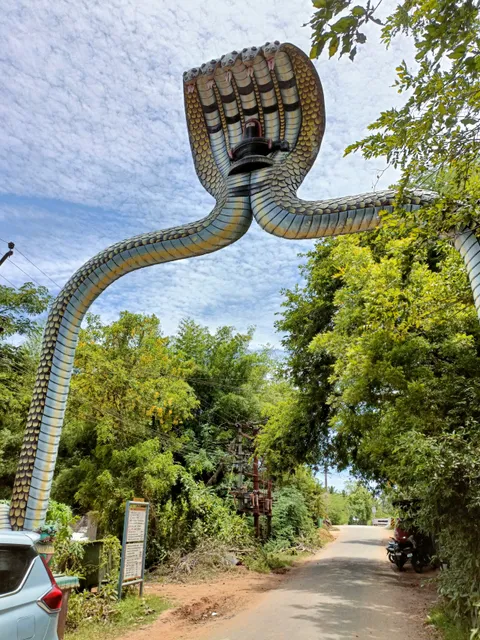
Read morePampuranathar Temple in Thirupampuram is a deeply spiritual and peaceful destination that truly stands out among Tamil Nadu’s sacred Shiva temples. This ancient temple, believed to be over 1000 years old, is dedicated to Lord Shiva in the form of Pampuranathar, and Goddess Parvati as Soundaryanayaki. It holds immense astrological and spiritual significance, especially for those affected by Rahu–Ketu dosham or Naga dosham.
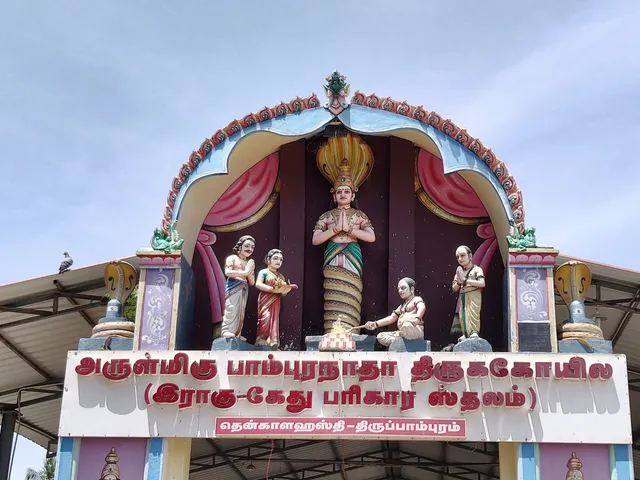
The temple is part of the revered Navagraha pilgrimage circuit and is especially known for remedies related to serpent afflictions and ancestral curses. Devotees perform special poojas here to seek relief from past karmic debts and gain blessings for marriage, childbirth, and peaceful life.
Architecturally, the temple exudes Chola-era elegance with intricately carved sculptures, a serene prakaram (outer corridor), and a timeless ambiance. The atmosphere is tranquil, with the soothing chants of mantras and the aroma of incense creating a divine experience.
What touched me most was the humble, sincere energy of the temple priests and the cleanliness of the premises. The rituals are performed with care and devotion, offering a deep sense of connection to the divine. There’s also a small Naga shrine where devotees offer milk and light lamps, adding to the mystical charm of the temple.
I highly recommend visiting this temple, whether you're a devotee, a seeker of peace, or simply someone who appreciates cultural and spiritual heritage. It’s a divine place where tradition, energy, and serenity come together...
Read more