OM NAMAH SHIVAYA Lord Shiva as Naganathar and Goddess Parvathi as Sri Piraiyanivaal Nuthal Ammai and Sri Girigujaambigai. Shenbakam tree was abundant once upon a time in this area and Lord Shiva was called Shenbagaranyeeswarar . Glorified in Thevaram by all three Thevara movvars, Thirugnana Sambandar, Thirunavukarasar and Sundarar.
Temple situated 8 kms of Kumbakonam. Temple situated very nearby Uppiliyappan Koil ( divyadesam ).
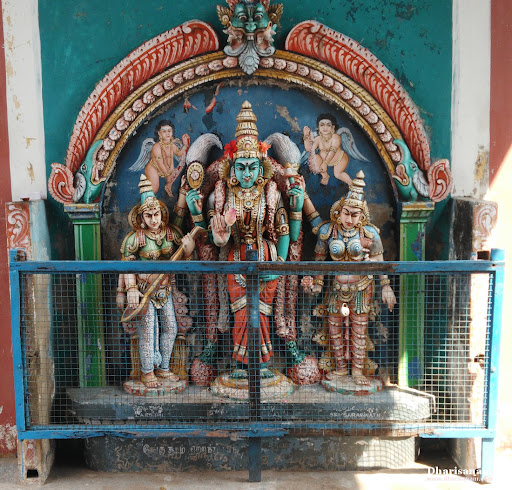
According to legend, Lord Shiva had asked Goddess Parvathi to go to earth and perform penance because she had punished Sage Birunki severely. Lord Shiva also told her that Goddesses Lakshmi and Saraswathi will accompany her. Goddess Parvathi selected this place (Thirunageswaram) to perform her penance. Pleased with her penance, Lord Shiva blessed her with his darshan and took her back to Mount Kailash. Goddess Parvathi is praised here as Sri Girigujambal. Her idol is also believed to be “Swayambu”.Still we can see Goddess Girigujaambigai along with Goddess Saraswati and Goddess Mahalakshmi. It is believed that Sage Brinki got the darshan of all the three goddesses (Parvathy, Lakshmi and Saraswathi) simultaneously here.
Lord Shiva was worshipped in 2nd Phase of Shivarathri by Lords Nagaraja inthis temple. It is believed Lord Shiva conducted the marriage of Lord Nagaraja at this temple with Nagavalli and Nagakanni . The eight great serpents- (Ananthan, Vasuki, Thatchakan, Karkodakan, Sankapalan, Kulikan, Padman and Mahapadman) along with Adhiseshan worshiped the lord here. Adhiseshan came from the “Padhala logam” (underworld) and visited this place. Hence, Lord Shiva here is praised as “Thiru Nageswarar”.
It is also believed that Nandhi, Chandran, Suryan, Nalan, Gauthamar, Paraasarar and Bhageerathan have worshiped the lord here.
Sage Gauthamar was re-united with his wife Akalika after worshiping the lord here.
King Nalan regained his lost wealth.
Paandavas regained their kingdom.
Chandira Varman, who had been turned into a dog due to a curse, was restored to his original form after he took a dip in this temple’s holy water and worshiped the lord here.
Nandi, after worshipping Lord Shiva here, attained the status of “Adhikara Nandheeswarar”.
Lord Vinayakar, after worshipping Lord Shiva here, attained the status of “Ganapathy” - the head of Ganas (“Ganas” are the attendants of Lord Shiva).
Indira, the King of Devas, worshiped Goddess Girigujambal here to seek absolution for sins.
This temple is popular as Rahu Dosha parihara sthalam. The milk used for abishegam of Lord Rahu turn into blue color and once again changes to white.
Seikizhar, author of Periyapuranam had a special admiration to Lord Shiva here. Hence he built a temple at his birthplace Kundrathur near Chennai in the name of...
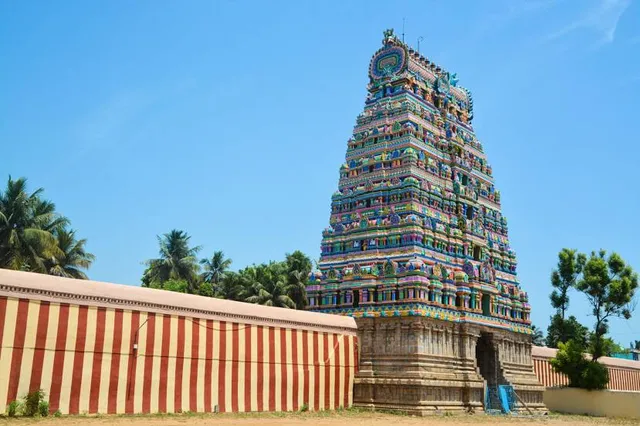
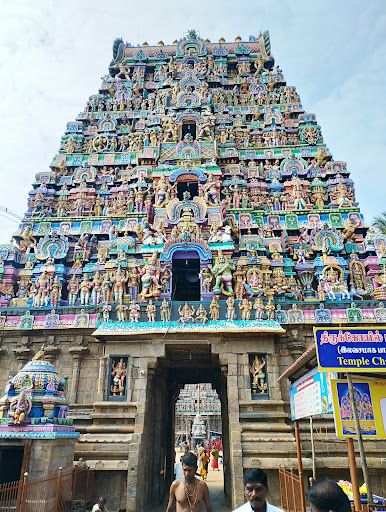
Read moreThe temple is another masterpiece which exhibits the Chola style of architecture. It is believed to have been built by Aditya Chola I in the 10th century A.D. Later rulers have modified the temple with their own additions. The temple has a separate shrine for Rahu. The temple is located on the southern bank of the river Kaveri 7 km from Kumbakonam. The temple campus encompasses exclusive shrines for Naganatha Swamy (Shiva), Pirayani Amman (Parvathi), Giri-Gujambigai (Parvathi) and Rahu with his divine spouses. Goddess Girigujambal has a separate shrine inside the temple campus as it is believed that the goddess is in thava kolam (mode of deep penance).
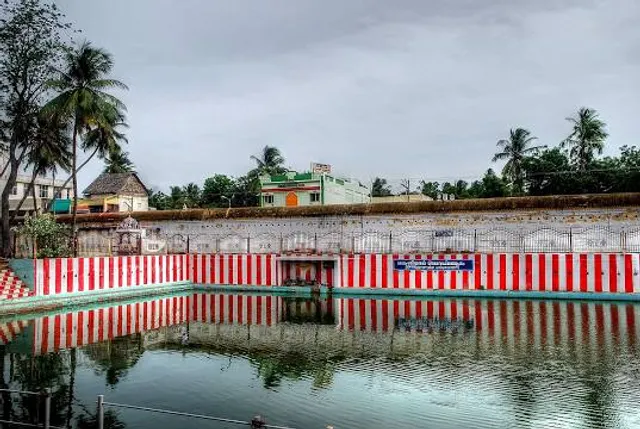
The temple covers an area of 630 ft (190 m) South-North and 800 ft (240 m) East-West with concentric sub lanes and four major streets around the four sides. There are four gateways along the four sides with entry towers (gopuram) and a surrounding compound wall. In the broad pathway on the third precinct, there is a flower garden on the northern side. The Vinayaka shrine, Bali Peetam, Nandikeshwara hall and flag post are located in the eastern entrance.This Ganapathy shrine is said to have been installed by the great saint Sadasiva Brahmendra along with a Ganapathy yantra. An inscription in the temple bears testimony to this fact. The temple tank is called Sula Theertham, a dip in which, is believed to clear sins committed by human beings. The temple tank is located in the southern side and has a hundred pillared hall.The second precinct has a granite floor and enshrines the Rahu shrine in the north eastern corner. The path leading to the main shrine in the second precinct has a hall decorated with Nayak style pillars with yalis. The hall was constructed by Govinda Dikshitar, the minister of successive Nayak rulers, Achuthappa Nayak(1560–1614) and Raghunatha Nayak (1600–34). In the front hall on the eastern side, artistic pillar with "older and nine horses" design is found, while similar pillars are found on the southern side as well. There is a hall in the northern side with pillars decorated with yalis used for staging idols during the festive occasions. The renovation work in the western walls was done during 1929 with artistic inscriptions. In the path way to main shrine, there are art works depicting Veda nayakas, king Sambumali and penance pose of Ambal. The Dwarapalaga images on each side at the entrance of Naganathar shrine are made...
Read moreVisiting Rahu Stalam, Sri Naganathaswamy Temple, Thirunageswaram in Tamilnadu, dedicated to Rahu Bhagavan is considered very auspicious to diminish the malefic effect of Rahu. Rahu Bhagwan is believed to be the cause for one’s good position, business, status, winning over opposition, faithfulness, to travel overseas, and for mantra power. As per the ancient science of Astrology, Rahu is considered a shadow planet which means it has no real physical existence. Anyhow, its malefic influence is very powerful, and its presence is said to make the lives of natives burdensome. It is believed that the presence of Rahu in one’s horoscope signifies karma bondage coming down from their previous births. Puthira Dosham, Kalathra Dosham, Sarpa Dosham, mental disorders, communicable diseases, leprosy, delay in getting married, childlessness, troublesome married life, fall in grace are caused by Rahu Dosham.
Astrologers suggest that doing Milk Abhishekam for Rahu Bhagavan during Rahu Kalam, especially on Sundays at Sri Naganathaswamy Temple can neutralize the malefic effect of Rahu like marriage obstacles, troubled marital life, lack of progeny, Puthira Dosham, Kaalasarpa Dosham, Kalathra Dosham, and Sarpa Dosham. It is also suggested that reciting Rahu Moola Manthra and Rahu Gayatri Manthra also helps alleviate the malefic effect of Rahu. It is a miracle that during Milk Abhishekam, the milk poured over the idol of Lord Rahu turns Blue. Urad Dal and Blue Cloth are the main offerings of Sri Naganathaswamy Temple. Also, Mantharai Flower is considered very special to Rahu Bhagavan.
Sri Naganathaswamy Temple is believed to be the place where Nandi attained the status of Nandeeshwara after worshipping Lord Shiva. Also, this is the place where Vinayakar attained the status of Ganapathi or the Head of the Ganas. It is also said that the King of Devas, Indira was relieved of the bad smell emanating from his body by worshipping Goddess Giri Gujambika at this temple with a scented material named Punugu for 45 days. A lot of devotees flocks to Sri Naganathaswamy Temple, seeking relief from Naga Dosha as it is said to be the place where serpents Adi Sesha, Dakshan, and Kaarkotakan worshipped Lord Shiva and got relieved from their curse. As Sri Naganathaswamy Temple is revered in Tevaram, it is categorized as Paadal Petra Sthalam, one among the 275 temples that find mention in the...
Read more