HTML SitemapExplore
logo
Find Things to DoFind The Best Restaurants

Sree Seetha Ramachandraswamy Vari Devasthanam - Bhadrachalam — Attraction in Telangana

Name
Sree Seetha Ramachandraswamy Vari Devasthanam - Bhadrachalam
Description
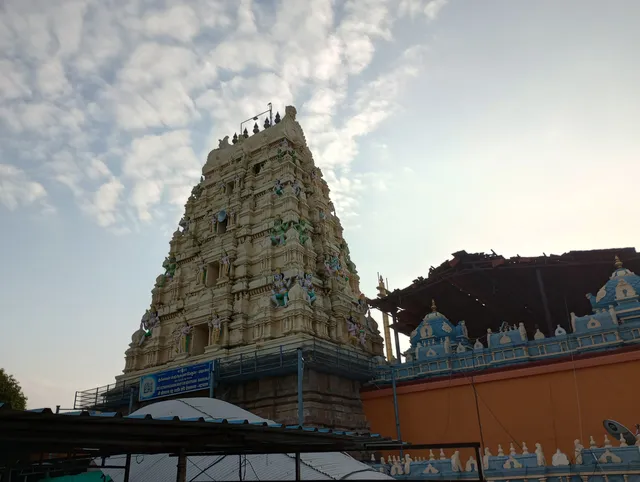
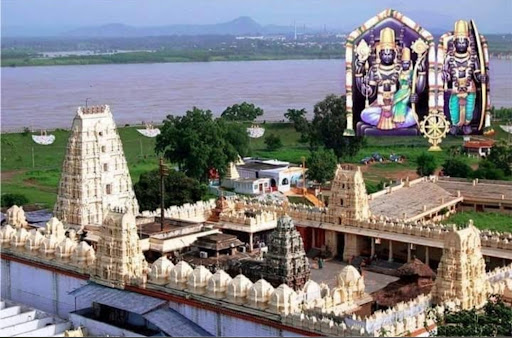
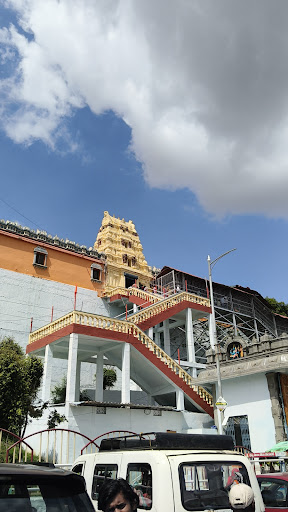
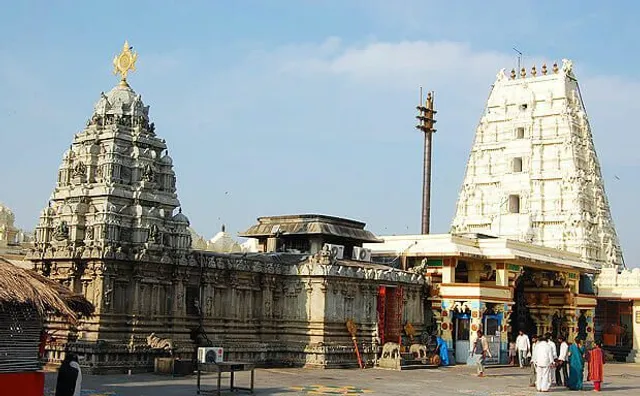
The Sri Sita Ramachandraswamy temple is a Hindu temple dedicated to Rama, a prominent avatar of the god Vishnu. It is located on the banks of the Godavari River in the town of Bhadrachalam in east Telangana, India.
Nearby attractions
Sita Rama Temple.
Seetharamachandra Swamy Temple, Bhadrachalam, Telangana 507111, India
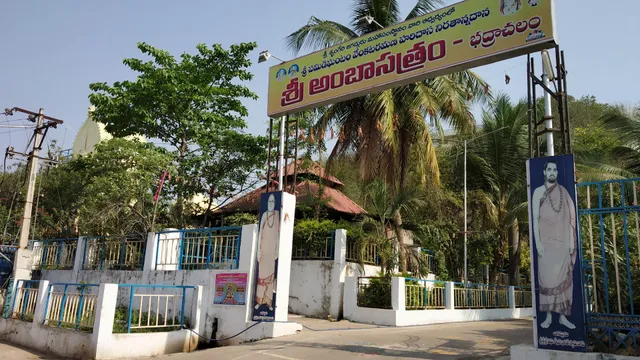
Amba Satram Temple
MV7M+P74, Ambasatram, Bhadrachalam, Andhra Pradesh 507111, India
Nearby restaurants
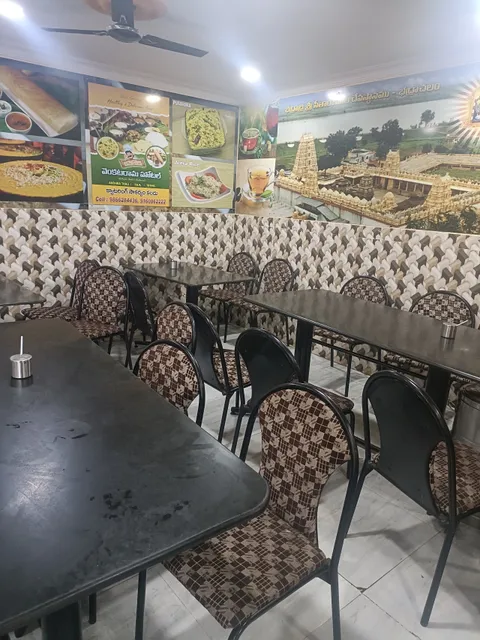
SRK Hotel
MV8J+VPP, opp. Sri Rama Temple, Bhadrachalam, Andhra Pradesh 507111, India
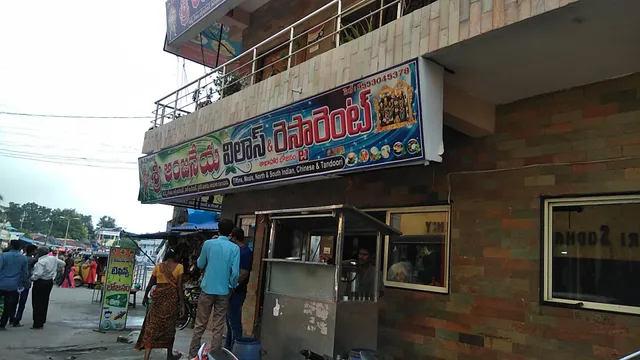
Sri Anjaneya Vilas
1-1-127, Temple Steps, Bhadrachalam, Andhra Pradesh 507111, India
karivena vaari sathram
MV8M+X9M, Bhadrachalam, Andhra Pradesh 507111, India
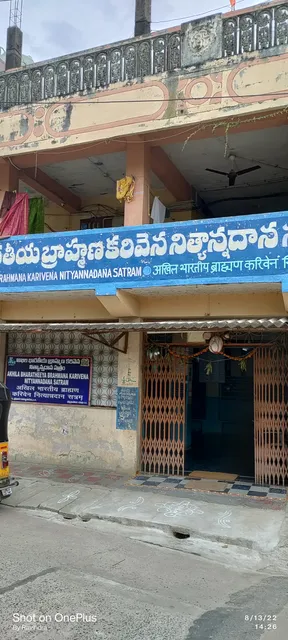
Sri Rama Nitya Annadana Satram
MV9J+5V4, Bhadrachalam, Andhra Pradesh 507111, India
Srirama Tiffin Center
H No 4-1-82, Kalyanamandapam Road, opposite Om Shanti Satram, Bhadrachalam, Telangana 507111, India
Uma Maheshwari Hotel
2-2 Temple Line, Bhadradri, Kothagudem, Telangana 507111, India
Hotel Sri Rama
1-175, near by CRO Office, Bhadrachalam, Telangana 507111, India
YASODA FOODS (Old Arya Vysya Tiffen Center)
5-1-34, Tatagudi center, Bhadrachalam, 507111, India
Bhadradri hotel, Bhadra
MV9P+C49, Old Market Road, Bhadrachalam, Andhra Pradesh 507111, India
Pesaratla Bhadhram Hotel
MV8Q+68C, Bhadrachalam, Andhra Pradesh 507111, India
Nearby hotels
Varun Residency
Ramalayam center, 1-1-38, near Godavari river Venkateshwara Colony, Bhadrachalam, Andhra Pradesh 507111, India
Sri Sudharsana Residency
MV8J+FFQ, 1-1-61, Temple Main Road Opp: Ramalayam Temple, Bhadrachalam, Andhra Pradesh 507111, India
Srinidhi Residency
MV8M+JHX, Temple Rd, Bhadrachalam, Andhra Pradesh 507111, India
Jeeyar Mutt, Bhadrachalam
H N. 4, 1-6, Temple Rd, Raja Veedhi, Bhadrachalam, Andhra Pradesh 507111, India
VR Palace
H.No: 1, RAMALAYAM CENTER, 1 - 24, Bhadrachalam, Andhra Pradesh 507111, India
SRI BHAVYA RESIDENCY
MV8M+XM5, 4-1-64, 1st St, opp. SBI&HDFC ATM, Bhadrachalam, Andhra Pradesh 507111, India
Hotel Royal Palace
Kalyanam mandapam road, beside Krishna temple, Bhadrachalam, 507111, India
Sitha Nilayam
MV8J+872, Steps, Bhadrachalam, Andhra Pradesh 507111, India
Nandini Residency
MV9M+5VW, Old Market Road, Bhadrachalam, Andhra Pradesh 507111, India
Padmasali Satram
MV9M+8XH, Bhadrachalam, Andhra Pradesh 507111, India
Related posts
Keywords
Sree Seetha Ramachandraswamy Vari Devasthanam - Bhadrachalam tourism.Sree Seetha Ramachandraswamy Vari Devasthanam - Bhadrachalam hotels.Sree Seetha Ramachandraswamy Vari Devasthanam - Bhadrachalam bed and breakfast. flights to Sree Seetha Ramachandraswamy Vari Devasthanam - Bhadrachalam.Sree Seetha Ramachandraswamy Vari Devasthanam - Bhadrachalam attractions.Sree Seetha Ramachandraswamy Vari Devasthanam - Bhadrachalam restaurants.Sree Seetha Ramachandraswamy Vari Devasthanam - Bhadrachalam travel.Sree Seetha Ramachandraswamy Vari Devasthanam - Bhadrachalam travel guide.Sree Seetha Ramachandraswamy Vari Devasthanam - Bhadrachalam travel blog.Sree Seetha Ramachandraswamy Vari Devasthanam - Bhadrachalam pictures.Sree Seetha Ramachandraswamy Vari Devasthanam - Bhadrachalam photos.Sree Seetha Ramachandraswamy Vari Devasthanam - Bhadrachalam travel tips.Sree Seetha Ramachandraswamy Vari Devasthanam - Bhadrachalam maps.Sree Seetha Ramachandraswamy Vari Devasthanam - Bhadrachalam things to do.
Sree Seetha Ramachandraswamy Vari Devasthanam - Bhadrachalam things to do, attractions, restaurants, events info and trip planning
Sree Seetha Ramachandraswamy Vari Devasthanam - Bhadrachalam
IndiaTelanganaSree Seetha Ramachandraswamy Vari Devasthanam - Bhadrachalam

Basic Info

Sree Seetha Ramachandraswamy Vari Devasthanam - Bhadrachalam

Bhadrachalam, Telangana 507111, India
4.7(5.9K)
Open until 9:00 PM
Save
spot

Ratings & Description

Info

The Sri Sita Ramachandraswamy temple is a Hindu temple dedicated to Rama, a prominent avatar of the god Vishnu. It is located on the banks of the Godavari River in the town of Bhadrachalam in east Telangana, India.

Cultural
Family friendly
attractions: Sita Rama Temple., Amba Satram Temple, restaurants: SRK Hotel, Sri Anjaneya Vilas, karivena vaari sathram, Sri Rama Nitya Annadana Satram, Srirama Tiffin Center, Uma Maheshwari Hotel, Hotel Sri Rama, YASODA FOODS (Old Arya Vysya Tiffen Center), Bhadradri hotel, Bhadra, Pesaratla Bhadhram Hotel
logoLearn more insights from Wanderboat AI.
Phone
+91 76600 07679
Website
telangana.gov.in
Open hoursSee all hours
Fri4:30 AM - 1 PM, 3 - 9 PMOpen

Plan your stay

hotel
Pet-friendly Hotels in Telangana
Find a cozy hotel nearby and make it a full experience.
hotel
Affordable Hotels in Telangana
Find a cozy hotel nearby and make it a full experience.
hotel
The Coolest Hotels You Haven't Heard Of (Yet)
Find a cozy hotel nearby and make it a full experience.
hotel
Trending Stays Worth the Hype in Telangana
Find a cozy hotel nearby and make it a full experience.

Reviews

Nearby attractions of Sree Seetha Ramachandraswamy Vari Devasthanam - Bhadrachalam

Sita Rama Temple.

Amba Satram Temple

Sita Rama Temple.

Sita Rama Temple.

4.6

(75)

Open 24 hours
Click for details
Amba Satram Temple

Amba Satram Temple

4.6

(175)

Open 24 hours
Click for details

Nearby restaurants of Sree Seetha Ramachandraswamy Vari Devasthanam - Bhadrachalam

SRK Hotel

Sri Anjaneya Vilas

karivena vaari sathram

Sri Rama Nitya Annadana Satram

Srirama Tiffin Center

Uma Maheshwari Hotel

Hotel Sri Rama

YASODA FOODS (Old Arya Vysya Tiffen Center)

Bhadradri hotel, Bhadra

Pesaratla Bhadhram Hotel

SRK Hotel

SRK Hotel

3.8

(18)

Click for details
Sri Anjaneya Vilas

Sri Anjaneya Vilas

2.6

(26)

Click for details
karivena vaari sathram

karivena vaari sathram

4.4

(24)

Click for details
Sri Rama Nitya Annadana Satram

Sri Rama Nitya Annadana Satram

4.0

(6)

Click for details
Get the Appoverlay
Get the AppOne tap to find yournext favorite spots!
Wanderboat LogoWanderboat

Your everyday Al companion for getaway ideas

CompanyAbout Us
InformationAI Trip PlannerSitemap
SocialXInstagramTiktokLinkedin
LegalTerms of ServicePrivacy Policy

Get the app

© 2025 Wanderboat. All rights reserved.
logo

Reviews of Sree Seetha Ramachandraswamy Vari Devasthanam - Bhadrachalam

4.7
(5,866)
avatar
5.0
23w

🙏🏼🚩🛕Sri SitaRamachandra Swamy Temple* in Bhadrachalam, one of the most revered Rama temples in India.

I. INTRODUCTION

The Sri Sita Ramachandra Swamy Temple is located in Bhadrachalam, Telangana. It is one of the most famous temples dedicated to Lord Rama in South India. Situated on the banks of the sacred Godavari River, it attracts millions of devotees yearly. The temple is also known as Dakshina Ayodhya (Southern Ayodhya). It has deep connections with the Ramayana, especially the exile years of Rama. The temple town is named Bhadrachalam, which means “the Hill of Bhadragiri”. The temple is built on a hillock called Bhadragiri. The region is closely linked with episodes from Rama’s life in the Dandakaranya forest. It is believed that Rama, Sita, and Lakshmana spent part of their 14-year exile here. The temple is unique as it blends mythology, devotion, folk tales, and history.

II. LEGEND OF BHADRACHALA RAMA

The temple’s origin is rooted in the legend of Bhakta Bhadra, a tribal devotee. Bhadragiri, the hill, is named after this devotee called Bhadra. Bhadra was the son of Meru and Menaka, and a great devotee of Lord Rama. He performed penance on the banks of the Godavari for several thousand years. His only wish was to see Lord Rama in his Pattabhisheka (coronation) form. The Ramayana era passed, and Bhadra’s penance continued. Rama, bound by time, promised to fulfill his wish in the future. Finally, at the end of the Treta Yuga, Lord Rama appeared before Bhadra. He was accompanied by Sita and Lakshmana. The divine trio appeared on Bhadragiri and blessed Bhadra with darshan.

III. APPEARANCE OF THE DEITIES

After granting darshan to Bhadra, Lord Rama turned into stone. The deities of Rama, Sita, and Lakshmana appeared in Swayambhu form (self-manifested). These idols are believed to be the original murti in the sanctum today. Lord Rama is seen in his coronation form, seated with Sita on his left and Lakshmana standing by. This divine vision fulfilled Bhadra’s longing. He continued to worship the Lord on Bhadragiri until he merged into the hill. Over centuries, the knowledge of this divine site faded. The forest reclaimed the region and the idols remained hidden.

IV. DISCOVERY BY KANCHERLA GOPANNA (BHADRACHALA RAMADASU)

In the 17th century, a major event revived Bhadrachalam’s glory. A devotee named Kancherla Gopanna, later known as Ramadasu, rediscovered the deities. Gopanna was born in Nelakondapalli, a village near Khammam. He was a deeply religious scholar, poet, and Rama devotee. He was appointed as the Tehsildar (revenue officer) of Bhadrachalam by the Golconda ruler. During his service, he noticed the spiritual atmosphere around Bhadragiri. Locals spoke of strange stories and spiritual phenomena on the hill. Gopanna explored the hill and found the ancient idols of Rama, Sita, and Lakshmana. Overcome by devotion, he decided to build a grand temple for the deities. He began collecting funds for the temple construction.

V. CONSTRUCTION OF THE TEMPLE

Gopanna used both public donations and government revenue funds. He built a magnificent temple on Bhadragiri, suitable for the Lord. The temple was designed in traditional Dravidian style with gopurams and inner shrines. The sanctum was carefully constructed to house the Swayambhu idols. Gopanna personally supervised every detail of the temple. His love for Rama inspired a generation of devotees. He composed many devotional songs in Telugu praising Rama. These songs became the famed Ramadasu Keertanalu. Upon completion, he organized elaborate rituals and inaugurated the temple. The town began to grow around the temple.

VI. ARREST AND IMPRISONMENT OF RAMADASU

When the Sultan of Golconda, Tanisha, learned of the misused funds, he was furious. Gopanna was arrested for...

   Read more
avatar
5.0
6y

The Sri Sita Ramachandraswamy temple is a South Indian Hindu temple dedicated to Rama, the seventh incarnation of the god Vishnu.

According to Hindu legend, in the Treta Yuga, Rama (avatar of the god Vishnu), along with his consort Sita and brother Lakshmana, stayed in the Dandaka forest as a part of their fourteen-year exile. Due to Rama's grace, a stone turned into a human called Bhadra, who was considered the son of Mount Meru. Devoted to Rama, Bhadra later met the sage Narada, who initiated an upadesam(instruction) of the Rama Taraka mantra. Bhadra mediated and chanted the mantra on the banks of the Godavari River for several years. Pleased, Rama promised to return to meet Bhadra when he had found Sita, who had been abducted by the demon king Ravana. However, Rama failed to fulfill his promise in his lifetime.

Later, Vishnu was pleased with Bhadra's devotion and appeared before Bhadra in the form of Rama. In a hurry, Vishnu forgot that Rama was a mortal with two arms and appeared with his four celestial arms. Rama in upper arms held a shankha (conch) and the Sudarshana Chakra (discus) and a bow and an arrow in his lower hands. Sita was seated on his left thigh and Lakshmana stood to his left. All three faced west towards the Godavari River. Rama held the conch in his right upper hand in contrast to Vishnu, with the intention of giving salvation to Bhadra.

Rama turned Bhadra into a hillock; the images of the deities in the same postures manifested at its summit. The hillock was referred to as Bhadrachalam or Bhadradri ("Bhadra's hill"). The central icon of Rama is referred by various epithets. Since Rama descended from Vaikuntha (Vishnu's abode) and manifested there, he was called "Vaikuntha Rama". As the deity is four-armed like Vishnu (Narayana), he was named "Rama Narayana". The trio of deities together signified the aspects of the sacred sound Om, which earned Rama the sobriquet of "Om-kara Rama".

The self-manifested moolavar was discovered in the 17th century by Pokala Dhammakka, a tribal woman living in Bhadrareddypalem. After she built a mandapam for the idols, Bhadrachalam's tehsildar Kancherla Gopanna constructed this temple.

Bhadrachalam is notable for its principal deity Vaikuntha Rama, a form of Rama not found anywhere else in the country. According to the Brahma Purana, the temple's deity is capable of imparting knowledge to those who worship him.

During the reign of Abul Hasan Qutb Shah (1672-1686), Kancherla Gopanna served as the tehsildar (revenue officer) of Bhadrachalam. Gopanna was given the title of Ramadas (Rama's servant) by Kabirdas, a Muslim saint who was impressed with his charity. Following the Shah's orders, Gopanna enforced the Jaziya tax, a penalty designed to force Hindus to adopt Islam. Observing the dilapidated state of the temple, Gopanna decided to build a temple for the deity by raising donations. In the initial attempt, Gopanna received harsh criticism from the local Hindus for enforcing the tax. Dejected by numerous rebuffs, Gopanna decided to use a portion of the tax collected to build the temple and face the consequences.

The temple was completed at a cost of nearly six lakh varahas. After learning the truth, the Shah was enraged, and Gopanna was summoned to the court. Gopanna explained that he never intended to misuse the treasury funds and planned to reimburse using donations he expected to receive in the future. The Shah ordered his soldiers to hang Gopanna if the sum was not repaid within twelve years, and imprisoned him. On the last day of the twelfth year, Rama and Lakshmana appeared in Shah's dream and repaid the entire sum in Rama madas(gold coins with Rama's inscriptions on them). When the Shah woke up, he saw real gold coins and released Gopanna. He gave Gopanna a pension for life and donated the area around Bhadrachalam as an endowment to the temple. Some scholars dismissed the idea of Rama paying the money, saying that the Shah had held a fair and impartial inquiry, found Gopanna innocent, and exonerated him...

   Read more
avatar
4.0
1y

This temple in Bhadrachalam is closely connected with the life of the 17th-century saint composer Kancharla Gopanna who was known as Bhakta Ramadas. Gopanna was the Tahasildar of Bhadrachalam, and as per popular legend, is said to have used money from the government treasury to build this temple. He was subsequently imprisoned in a dungeon at Golconda. Lord Rama is said to have miraculously given the Sultan the money spent by Gopanna, after which he was released. Gopanna then became Bhadrachala Ramadasa and went on to compose innumerable number of songs in Telugu in praise of Lord Rama.

The annual Brahmotsavam festival and the Sri Sitarama Thirukalyana Mahotsavam, celebrated on the eve of Rama Navami are the major festivals celebrated in the Bhadrachalam temple. Other important festivals celebrated here include Vaikuntha Ekadashi, Vijayadashami and Vasanthotsavam.

There are several legends associated with the Bhadrachalam temple, one of them suggests that the significance of this temple dates back to the Ramayana Era. It is believed that Lord Rama with his consort Sita and brother Lakshama spent some time at Parnasala, a village near Bhadrachalam temple during their 14 years of exile. This is also the same place where Sita was abducted by Ravana. A Rishi named Bhadra who used to live there was a great devotee of Lord Rama. Overwhelmed with his devotion, Lord Rama promised him moksha but never managed to make good on his promise during the Ramavataram. But Bhadra continued his penance on the banks of the Godavari River which pleased Lord Vishnu and he appeared before Bhadra in the form of Rama. Lord Vishnu came with the intention of giving him moksha. He appeared with his four celestial arms. He was holding Shankha and Sudarshan chakra in upper arms and a bow and an arrow in the lower hands. While Sita was sitting on his left thigh, his brother Lakshmana was standing to his left. Rama granted him salvation and turned him into a hillock which is now referred to as Bhadradri. This form of Rama came to be known as Vaikuntha Rama and Rama Narayana (the union of Rama and Vishnu).

The Bhadrachalam temple has the idols of the Vaikuntha Rama with a bow and a conch, depicting both Lord Vishnu and Lord Rama at the same time. The idol of Sita sitting on the lap of Lord Rama is a rare sight.

Another myth related to the Bhadrachalam temple is about Pokala Dhammaka, a tribal woman who was a passionate devotee of Lord Rama. According to folklore, one night Lord Rama appeared in her dream and told her about the idols that existed on the Bhadragiri hills. The next day, she went there and found the idols inside an anthill. She poured countless number of pots of Godavari water over the anthill to uncover the idols. She started worshipping the deities there and one day Lord Rama told her that a temple will be constructed at this very site by one of his devotees. That devotee was Bhakta Ramadas who constructed the Bhadrachalam temple in the year 1674 A.D.

The magnificent architecture of the Bhadrachalam temple will leave you enchanted. The temple has four entrances and the temple complex is divided into three parts. The first part is a temple dedicated to the head of Bhadra. Inside this temple, there is a rock structure of Bhadra’s head. This structure has a footprint on it which is believed to be that of Lord Rama’s. The second part is a shrine where the presiding deity of the temple resides and the third is the main tower or rajagopuram located at Bhadra’s feet.

On the top of the shrine or the sanctum, a Sudarshana Chakra is engraved. Gopanna found this eight-faced chakra with thousand corners in the Godavari river. The idols of Rama, Sita and Lakshmana are seated to the right of the sanctum. These idols are worshipped every day. A gold plated flag post or dwajasthambam can be seen right opposite the sanctum. Made up of panchaloha, the flag contains images of Garuda, the vehicle of...

   Read more
Page 1 of 7
Previous
Next

Posts

Vinay SVinay S
The Sri Sita Ramachandraswamy temple is a South Indian Hindu temple dedicated to Rama, the seventh incarnation of the god Vishnu. According to Hindu legend, in the Treta Yuga, Rama (avatar of the god Vishnu), along with his consort Sita and brother Lakshmana, stayed in the Dandaka forest as a part of their fourteen-year exile. Due to Rama's grace, a stone turned into a human called Bhadra, who was considered the son of Mount Meru. Devoted to Rama, Bhadra later met the sage Narada, who initiated an upadesam(instruction) of the Rama Taraka mantra. Bhadra mediated and chanted the mantra on the banks of the Godavari River for several years. Pleased, Rama promised to return to meet Bhadra when he had found Sita, who had been abducted by the demon king Ravana. However, Rama failed to fulfill his promise in his lifetime. Later, Vishnu was pleased with Bhadra's devotion and appeared before Bhadra in the form of Rama. In a hurry, Vishnu forgot that Rama was a mortal with two arms and appeared with his four celestial arms. Rama in upper arms held a shankha (conch) and the Sudarshana Chakra (discus) and a bow and an arrow in his lower hands. Sita was seated on his left thigh and Lakshmana stood to his left. All three faced west towards the Godavari River. Rama held the conch in his right upper hand in contrast to Vishnu, with the intention of giving salvation to Bhadra. Rama turned Bhadra into a hillock; the images of the deities in the same postures manifested at its summit. The hillock was referred to as Bhadrachalam or Bhadradri ("Bhadra's hill"). The central icon of Rama is referred by various epithets. Since Rama descended from Vaikuntha (Vishnu's abode) and manifested there, he was called "Vaikuntha Rama". As the deity is four-armed like Vishnu (Narayana), he was named "Rama Narayana". The trio of deities together signified the aspects of the sacred sound Om, which earned Rama the sobriquet of "Om-kara Rama". The self-manifested moolavar was discovered in the 17th century by Pokala Dhammakka, a tribal woman living in Bhadrareddypalem. After she built a mandapam for the idols, Bhadrachalam's tehsildar Kancherla Gopanna constructed this temple. Bhadrachalam is notable for its principal deity Vaikuntha Rama, a form of Rama not found anywhere else in the country. According to the Brahma Purana, the temple's deity is capable of imparting knowledge to those who worship him. During the reign of Abul Hasan Qutb Shah (1672-1686), Kancherla Gopanna served as the tehsildar (revenue officer) of Bhadrachalam. Gopanna was given the title of Ramadas (Rama's servant) by Kabirdas, a Muslim saint who was impressed with his charity. Following the Shah's orders, Gopanna enforced the Jaziya tax, a penalty designed to force Hindus to adopt Islam. Observing the dilapidated state of the temple, Gopanna decided to build a temple for the deity by raising donations. In the initial attempt, Gopanna received harsh criticism from the local Hindus for enforcing the tax. Dejected by numerous rebuffs, Gopanna decided to use a portion of the tax collected to build the temple and face the consequences. The temple was completed at a cost of nearly six lakh varahas. After learning the truth, the Shah was enraged, and Gopanna was summoned to the court. Gopanna explained that he never intended to misuse the treasury funds and planned to reimburse using donations he expected to receive in the future. The Shah ordered his soldiers to hang Gopanna if the sum was not repaid within twelve years, and imprisoned him. On the last day of the twelfth year, Rama and Lakshmana appeared in Shah's dream and repaid the entire sum in Rama madas(gold coins with Rama's inscriptions on them). When the Shah woke up, he saw real gold coins and released Gopanna. He gave Gopanna a pension for life and donated the area around Bhadrachalam as an endowment to the temple. Some scholars dismissed the idea of Rama paying the money, saying that the Shah had held a fair and impartial inquiry, found Gopanna innocent, and exonerated him with due Honour.
SANTHOSH SAMUDRALASANTHOSH SAMUDRALA
🏛 Architecture & Layout Features classic South Indian temple architecture: a towering Rajagopuram, intricately carved pillars, mandapams, and sub‑shrines for Hanuman, Govindaraja Swamy, and Yogananda Narasimha . Unique plan reflects the shape of the devotee Bhadra: sanctum at the “heart,” gopuram at the “feet,” and shrine marking the “head” at a rock footprint said to be Bhadra’s . --- ⏰ Timings, Sevas & Practical Info Open daily: 4:30 AM–1 PM & 3 PM–9 PM . Regular sevas include morning abhishekam, archana, kesavanaamaarchana, evening Rajata Ratha Seva, and Vahana Sevas . Temple manages its own online darshan and seva booking portal (bhadrachalamonline.com) . --- Jai shree Ram 🚩🎉 Festivals & Celebrations Brahmotsavam, the biggest festival, runs ~12 days around Rama Navami, featuring vibrant processions, marriages (Sitarama Thirukalyana), float festival, and flag hoisting . Other major festivals: Vaikuntha Ekadashi (21 days), Vasanthotsavam, Vijayadashami, Teppotsavam, Rathotsavam . --- 🎯 Visitor Experience & Reviews Travelers found the temple peaceful, with darshan time being quick during off‑peak visits—often under 10 minutes . Many mention the temple’s aesthetic beauty—the form of Rama, Sita on his lap, vibrant carvings—and the soulful ambiance . It’s very close to accommodations—ample guesthouses and pilgrim sadans are available, and the serenity is “small‑town charm” at its best . 👍 Pros ✨ Rich history & mythology, deeply rooted in Ramayana traditions and 17th‑century devotion. 🎨 Stunning architecture, with unique structural symbolism and ornate carvings. 🙏 Spiritual vibe—calm, devotional, away from noisy crowds (outside festival times). 📅 Festivals & events bring vibrant cultural experiences. 👎 Cons During major festivals (Rama Navami, Brahmotsavam) it gets very crowded, and darshan/seva booking is competitive. 📝 Tips for Visitors Visit during off-peak hours or seasons (September–April is ideal) for a serene experience . Book sevas/darshan online in advance, especially around festival days. Stay nearby—many pilgrim lodges and mid-range hotels are just a minute’s walk away. Extend your trip: Do a river cruise on the Godavari, and visit Parnasala (~35 km away), Sabari, or Papi Kondalu hills . Sree Seetha Ramachandraswamy Vari Devasthanam is a spiritually rich, historically rooted, and architecturally captivating temple. It offers a tranquil pilgrimage experience most of the year—vibrant and packed with devotion during festivals. Ideal for those seeking a culturally immersive religious visit, with good guidance to avoid peak-time congestion.
CHIDANANDA PATCHALACHIDANANDA PATCHALA
The Sri Sita Ramachandraswamy temple is a Hindu temple dedicated to Rama, a prominent avatar of the god Vishnu. It is located on the banks of the Godavari River in the town of Bhadrachalam in east Telangana, India. Often simply referred to as Bhadrachalam or Bhadradri, the temple is considered one of the Divya Kshetrams of Godavari and is also revered as Dakshina Ayodhya. The central icon, believed to be self-manifested, features the four-armed Vaikuntha Rama, the form Vishnu appeared in to answer Bhadra'a prayers. Rama's consort Sita and brother Lakshmana form part of the central icon. By some accounts the Bhadrachalam temple was built, and other accounts repaired by the legendary Bhakti saint Kancherla Gopanna – also known as Bhadrachala Ramadasu – in the 17th century. Gopana was the revenue officer of Bhadrachalam under the reign of the last Sultan of Golconda, Abul Hasan Qutb Shah (Tana Shah). Gopana was accused and arrested of using funds meant for the Sultanate treasury to build the Sita Ramachandraswamy temple. He spent 12 years in jail, where he composed bhakti songs still sung at this temple. Before Golconda Sultanate collapsed during Aurangzeb's expansion of the Mughal control of the Deccan region, Gopana was released by Sultan Tana Shah, with regional legends stating that god Rama himself appeared together with Lakshmana to pay the gold coins Sultan demanded for Gopana's release. Gopana then continued to compose poems dedicated to Rama in this temple. After Gopanna, Tumu Lakshmi Narasimha Dasu and Varada Ramadasu looked after the temple's rituals. Bhadrachalam follows the Vaishnavite Pancharatra Agama tradition, and its system of worship is modelled on that of the Ranganathaswamy temple in Srirangam. The temple has four entrances; the Rajagopuram is located at the northern entrance, which is called the Vaikuntha Dwaram. The temple houses a number of sub-shrines and a few mandapams. Bhadrachalam is notable for its principal deity Rama. Gopanna used Bhadrachalam as a centre of the Bhajan tradition to spread awareness of the Vaishnavite tradition. The annual Brahmotsavam is the biggest festival celebrated in Bhadrachalam; the key event is the Sri Sitarama Thirukalyana Mahotsavam, or the marriage of Rama and Sita on the eve of Rama Navami. Other important festivals celebrated in Bhadrachalam are Vaikuntha Ekadashi, Vasanthotsavam, and Vijayadashami.
See more posts
See more posts
hotel
Find your stay

Pet-friendly Hotels in Telangana

Find a cozy hotel nearby and make it a full experience.

The Sri Sita Ramachandraswamy temple is a South Indian Hindu temple dedicated to Rama, the seventh incarnation of the god Vishnu. According to Hindu legend, in the Treta Yuga, Rama (avatar of the god Vishnu), along with his consort Sita and brother Lakshmana, stayed in the Dandaka forest as a part of their fourteen-year exile. Due to Rama's grace, a stone turned into a human called Bhadra, who was considered the son of Mount Meru. Devoted to Rama, Bhadra later met the sage Narada, who initiated an upadesam(instruction) of the Rama Taraka mantra. Bhadra mediated and chanted the mantra on the banks of the Godavari River for several years. Pleased, Rama promised to return to meet Bhadra when he had found Sita, who had been abducted by the demon king Ravana. However, Rama failed to fulfill his promise in his lifetime. Later, Vishnu was pleased with Bhadra's devotion and appeared before Bhadra in the form of Rama. In a hurry, Vishnu forgot that Rama was a mortal with two arms and appeared with his four celestial arms. Rama in upper arms held a shankha (conch) and the Sudarshana Chakra (discus) and a bow and an arrow in his lower hands. Sita was seated on his left thigh and Lakshmana stood to his left. All three faced west towards the Godavari River. Rama held the conch in his right upper hand in contrast to Vishnu, with the intention of giving salvation to Bhadra. Rama turned Bhadra into a hillock; the images of the deities in the same postures manifested at its summit. The hillock was referred to as Bhadrachalam or Bhadradri ("Bhadra's hill"). The central icon of Rama is referred by various epithets. Since Rama descended from Vaikuntha (Vishnu's abode) and manifested there, he was called "Vaikuntha Rama". As the deity is four-armed like Vishnu (Narayana), he was named "Rama Narayana". The trio of deities together signified the aspects of the sacred sound Om, which earned Rama the sobriquet of "Om-kara Rama". The self-manifested moolavar was discovered in the 17th century by Pokala Dhammakka, a tribal woman living in Bhadrareddypalem. After she built a mandapam for the idols, Bhadrachalam's tehsildar Kancherla Gopanna constructed this temple. Bhadrachalam is notable for its principal deity Vaikuntha Rama, a form of Rama not found anywhere else in the country. According to the Brahma Purana, the temple's deity is capable of imparting knowledge to those who worship him. During the reign of Abul Hasan Qutb Shah (1672-1686), Kancherla Gopanna served as the tehsildar (revenue officer) of Bhadrachalam. Gopanna was given the title of Ramadas (Rama's servant) by Kabirdas, a Muslim saint who was impressed with his charity. Following the Shah's orders, Gopanna enforced the Jaziya tax, a penalty designed to force Hindus to adopt Islam. Observing the dilapidated state of the temple, Gopanna decided to build a temple for the deity by raising donations. In the initial attempt, Gopanna received harsh criticism from the local Hindus for enforcing the tax. Dejected by numerous rebuffs, Gopanna decided to use a portion of the tax collected to build the temple and face the consequences. The temple was completed at a cost of nearly six lakh varahas. After learning the truth, the Shah was enraged, and Gopanna was summoned to the court. Gopanna explained that he never intended to misuse the treasury funds and planned to reimburse using donations he expected to receive in the future. The Shah ordered his soldiers to hang Gopanna if the sum was not repaid within twelve years, and imprisoned him. On the last day of the twelfth year, Rama and Lakshmana appeared in Shah's dream and repaid the entire sum in Rama madas(gold coins with Rama's inscriptions on them). When the Shah woke up, he saw real gold coins and released Gopanna. He gave Gopanna a pension for life and donated the area around Bhadrachalam as an endowment to the temple. Some scholars dismissed the idea of Rama paying the money, saying that the Shah had held a fair and impartial inquiry, found Gopanna innocent, and exonerated him with due Honour.
Vinay S

Vinay S

hotel
Find your stay

Affordable Hotels in Telangana

Find a cozy hotel nearby and make it a full experience.

Get the Appoverlay
Get the AppOne tap to find yournext favorite spots!
🏛 Architecture & Layout Features classic South Indian temple architecture: a towering Rajagopuram, intricately carved pillars, mandapams, and sub‑shrines for Hanuman, Govindaraja Swamy, and Yogananda Narasimha . Unique plan reflects the shape of the devotee Bhadra: sanctum at the “heart,” gopuram at the “feet,” and shrine marking the “head” at a rock footprint said to be Bhadra’s . --- ⏰ Timings, Sevas & Practical Info Open daily: 4:30 AM–1 PM & 3 PM–9 PM . Regular sevas include morning abhishekam, archana, kesavanaamaarchana, evening Rajata Ratha Seva, and Vahana Sevas . Temple manages its own online darshan and seva booking portal (bhadrachalamonline.com) . --- Jai shree Ram 🚩🎉 Festivals & Celebrations Brahmotsavam, the biggest festival, runs ~12 days around Rama Navami, featuring vibrant processions, marriages (Sitarama Thirukalyana), float festival, and flag hoisting . Other major festivals: Vaikuntha Ekadashi (21 days), Vasanthotsavam, Vijayadashami, Teppotsavam, Rathotsavam . --- 🎯 Visitor Experience & Reviews Travelers found the temple peaceful, with darshan time being quick during off‑peak visits—often under 10 minutes . Many mention the temple’s aesthetic beauty—the form of Rama, Sita on his lap, vibrant carvings—and the soulful ambiance . It’s very close to accommodations—ample guesthouses and pilgrim sadans are available, and the serenity is “small‑town charm” at its best . 👍 Pros ✨ Rich history & mythology, deeply rooted in Ramayana traditions and 17th‑century devotion. 🎨 Stunning architecture, with unique structural symbolism and ornate carvings. 🙏 Spiritual vibe—calm, devotional, away from noisy crowds (outside festival times). 📅 Festivals & events bring vibrant cultural experiences. 👎 Cons During major festivals (Rama Navami, Brahmotsavam) it gets very crowded, and darshan/seva booking is competitive. 📝 Tips for Visitors Visit during off-peak hours or seasons (September–April is ideal) for a serene experience . Book sevas/darshan online in advance, especially around festival days. Stay nearby—many pilgrim lodges and mid-range hotels are just a minute’s walk away. Extend your trip: Do a river cruise on the Godavari, and visit Parnasala (~35 km away), Sabari, or Papi Kondalu hills . Sree Seetha Ramachandraswamy Vari Devasthanam is a spiritually rich, historically rooted, and architecturally captivating temple. It offers a tranquil pilgrimage experience most of the year—vibrant and packed with devotion during festivals. Ideal for those seeking a culturally immersive religious visit, with good guidance to avoid peak-time congestion.
SANTHOSH SAMUDRALA

SANTHOSH SAMUDRALA

hotel
Find your stay

The Coolest Hotels You Haven't Heard Of (Yet)

Find a cozy hotel nearby and make it a full experience.

hotel
Find your stay

Trending Stays Worth the Hype in Telangana

Find a cozy hotel nearby and make it a full experience.

The Sri Sita Ramachandraswamy temple is a Hindu temple dedicated to Rama, a prominent avatar of the god Vishnu. It is located on the banks of the Godavari River in the town of Bhadrachalam in east Telangana, India. Often simply referred to as Bhadrachalam or Bhadradri, the temple is considered one of the Divya Kshetrams of Godavari and is also revered as Dakshina Ayodhya. The central icon, believed to be self-manifested, features the four-armed Vaikuntha Rama, the form Vishnu appeared in to answer Bhadra'a prayers. Rama's consort Sita and brother Lakshmana form part of the central icon. By some accounts the Bhadrachalam temple was built, and other accounts repaired by the legendary Bhakti saint Kancherla Gopanna – also known as Bhadrachala Ramadasu – in the 17th century. Gopana was the revenue officer of Bhadrachalam under the reign of the last Sultan of Golconda, Abul Hasan Qutb Shah (Tana Shah). Gopana was accused and arrested of using funds meant for the Sultanate treasury to build the Sita Ramachandraswamy temple. He spent 12 years in jail, where he composed bhakti songs still sung at this temple. Before Golconda Sultanate collapsed during Aurangzeb's expansion of the Mughal control of the Deccan region, Gopana was released by Sultan Tana Shah, with regional legends stating that god Rama himself appeared together with Lakshmana to pay the gold coins Sultan demanded for Gopana's release. Gopana then continued to compose poems dedicated to Rama in this temple. After Gopanna, Tumu Lakshmi Narasimha Dasu and Varada Ramadasu looked after the temple's rituals. Bhadrachalam follows the Vaishnavite Pancharatra Agama tradition, and its system of worship is modelled on that of the Ranganathaswamy temple in Srirangam. The temple has four entrances; the Rajagopuram is located at the northern entrance, which is called the Vaikuntha Dwaram. The temple houses a number of sub-shrines and a few mandapams. Bhadrachalam is notable for its principal deity Rama. Gopanna used Bhadrachalam as a centre of the Bhajan tradition to spread awareness of the Vaishnavite tradition. The annual Brahmotsavam is the biggest festival celebrated in Bhadrachalam; the key event is the Sri Sitarama Thirukalyana Mahotsavam, or the marriage of Rama and Sita on the eve of Rama Navami. Other important festivals celebrated in Bhadrachalam are Vaikuntha Ekadashi, Vasanthotsavam, and Vijayadashami.
CHIDANANDA PATCHALA

CHIDANANDA PATCHALA

See more posts
See more posts