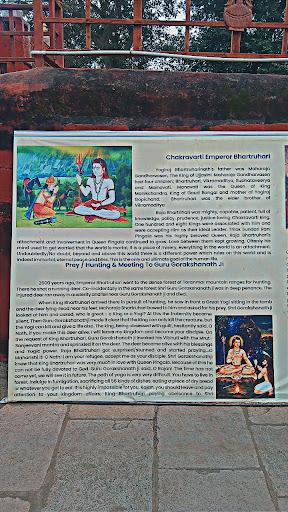
Bharthari, also known as "Sant" Bharthari, in many parts of India, is the hero of many folk stories in North India. He was the ruler of Ujjain, before renouncing the world and abdicating in the favor of his younger brother Vikramaditya.
Stories of Bharthari and his nephew King Gopi Chand of Bengal, who are considered Nath panth yogis, abound in the Indian folklore of Punjab, Haryana, Bihar, Uttar Pradesh, Chhattisgarh and West Bengal.1]
Many of the details about the lives of Bharthari and his brother Vikramaditya are from the tales of Baital Pachisi (Twenty five tales of Baital), translated as 'Vikram and The Vampire' by Sir Richard Francis Burton in 1870. Bhartari was the elder son of King Gandharva-Sena, and received the kingdom of Ujjain from The celestial god Indra and the King of Dhara.[2
When Bhartrhari was king of 'Ujjayani' (modern day Ujjain) in his state there lived a Brahman who after years of austerities was given the fruit of immortality from the celestial tree of Kalpavriksha. The Brahman presented the same to his monarch, Raja Bhartrhari, who in turn, passed it on to his love, the beautiful, Pinglah Rani or Ananga Sena (as per Maha Kavi Kalidas), Raja Bhartrhari's last and youngest wife. The queen, being in love with the Head police officer of the state, Mahipaala, presented the fruit to him, who further passed it on to his beloved, Lakha, one of the maids of honour. Eventually, Lakha being in love with the king presented the fruit back to the king. Having completed the circle, the fruit revealed the downsides of infidelity to the king, he summoned the queen and ordered her beheading, and ate the fruit himself. After that he abdicated the throne, to his younger brother Vikramaditya, and became a religious mendicant.2
He later became a disciple of Pattinathar (Swetharanyar or Pattinathu chettiyar is poorvashram name of this saint from Poompuhar,Tamil Nadu) who first indulged in an argument about samsari and sanyasi with king Bhartrhari later during the conversation pattinathar said that all women have 'dual mind' and it might be the true case even with parameswari. King conveyed this news to rani Pingalah and she ordered Pattinathar to get punished and to sit in 'kalu maram' (Tree, whose top portion would be sharpened like a pencil and whole tree is fully painted with oil, person who are allowed to sit in the top will split into 2 pieces), they tried pattinathar but kalu maram started burning and nothing happened to Pattinathar, the king came to know this news and went directly to Pattinathar and asked him to get ready to die the next day, but Pattinathar replied i'm ready even now to die. The next day king came with tears in his eyes and released saint from jail because he actually noticed queen pingalah in love with horsemen that night, He threw away his empire, wealth, even his full dress coat and dressed in a simple kovanam (loin cloth). The king became a disciple of Pattinathar and got mukthi (salvation) in the Kalahasthi temple.
There is a very famous song sung by the bards of Chhattisgarh in the memory of Raja Bhartrhari. The story says that Queen Pingala and Raja Bhartrhari did not have a son and the queen was very sad as a result of that. A saint came to the door of their palace one day and asked for alms. When Rani Pinglaa went down to give him alms, he said, "I know you are sad and I have brought some holy water for you. If you drink this water with faith, you will have a son in twelve months' time." Rani Pingala had the water and as promised by the Yogi, she had a son after...
Read more🕉️ Historical & Cultural Significance
Legendary Association: Named after the celebrated Sanskrit poet-sage Bhartrihari, said to be the stepbrother of King Vikramaditya, who renounced royal life and meditated here for years .
Literary Works: He is credited with composing key works like Shringar Shatak, Vairagya Shatak, and Nitishatak—the so-called Trishatak—possibly within these caves .
🏛 Architectural Details
Date & Style: The caves date to around the 11th century AD, featuring a simple yet intriguing rock-cut style typical of that era, supported by stone pillars and narrow access passages .
Structure:
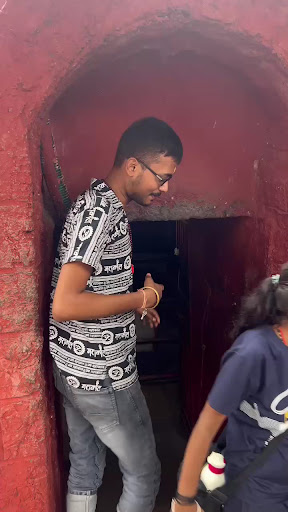
Narrow entrances, sometimes challenging to navigate.
Inside are multiple chambers with carved idols, a small temple shrine, and a sculpted stone image of Rishi Bhartrihari meditating.
Additional features include a Shiva linga, trident (trishul), ash hearth (dhuni), and wall carvings .
📍 Location & Access
Proximity to Ujjain: About 4 km from Ujjain Junction and 6 km from the city center, located near Gadkalika Mata Temple on the banks of the River Shipra in Gonsa locality .
Visiting Hours: Open daily from 6:00 AM to 9:00 PM; entry is free. A torch is recommended if you plan to explore deeper inside .
🙏 Spiritual Importance
Ascent for Devotees: A prominent site for the Nath community, with meditation sessions around ritual fires that continue even today. It has strong Shaivite and Bhairavi traditions and is sometimes associated with Gorakhnath and Matsyendranath of the Nath lineage .
Gharpresence of a Memorial: There’s a sacred Pipal tree believed to mark the Samadhi of Bhartrihari. Visitors often take its leaves as blessed tokens .
🧭 Visiting Tips
Time Required: Plan for about 1 to 2 hours including nearby stops like the Gadkalika Temple or Kali Mata temple .
Who Should Be Cautious: Visitors with claustrophobia or respiratory issues should avoid venturing into the deeper chambers due to narrow, enclosed passageways .
Ideal Visit Time: Morning or early evening sunlight creates a peaceful ambiance—ideal for reflection and photography .
📋 Quick Overview
Feature Details
Distance from Ujjain ~4 km from railway station, 6 km from city center Visiting Hours 6:00 AM – 9:00 PM (daily) Entry Fee Free Nearby Spot Gadkalika Mata Temple, Kali Mata Temple Best Time Morning / early evening Recommended Gear Torch or flashlight
Why Visit?
The Bhartrihari Caves offer a rare blend of historical heritage, spiritual serenity, and literary legacy. Whether you're drawn to ancient architecture, seeking a quiet meditative atmosphere, or curious about classical Sanskrit literature, this site is deeply evocative...
Read moreCaves in Ujjain
One of the most Visited place of Ujjain
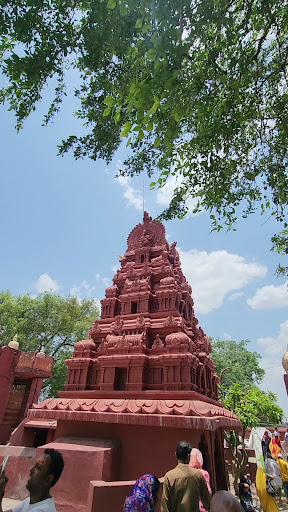
Bhartrihari Caves are situated near GadKalika Matha temple, above the banks of Shipra River and is one of the major tourist attraction of Ujjain. These 11th century caves owe their name from Bhartrihari who is step brother of King Vikramaditya. History of the Caves: Bhartrihari born as a King, but still renounced his affluent lifestyle and adopted the grab of an ascetic. It is said that reason beyond that was his disturbing relation with his wife. The heartbreak led him to give up all his dreams and become a spiritualist. When Bhartrihari decided to renounce the worldly life, he came here in search of a peace to continue his meditation. In due course of time these Caves became his shelter where he spend considerable part of his life. Bhartrihari was a great scholar and renowned poet, known for his delicate use of Sanskrit in his verses. Some of his great works like Nitishatak, Shringarshatak and Vairagyashatak are considered as gems of Indian literature. It is believed that all these were written in this caves only. The interior of the cave is extremely cool, peaceful and spiritual. Narrow route inside the cave number 1 leads to the place where Bhartrihari meditated. The stone curved statue of Bhartrihari in the sitting position is arranged there for visiting purpose. There is also a small temple in Cave number 2 that is a holy shrine of the Nath community. Throughout your journey to Bhartrihari Caves you will have a feeling of travelling to a different era.
Place to remember Mahpurush
The place is a cave now being developed as tourist place. Its a open place on small hill . The King Bhartrihari (relative of King Bikramiditya , The only King having throne equipped with yogini popularly known as " Throne of Vikramaditya" who was treated as most scientific and knowledgeable person to whom even Devta came for judgement) later became a masrishi did mediation there for the sake of good man kind. Place shows how the mediate there and show there devotion towards God. Small caves with Trisuhul etc are worth watching. Currently any visitor can offer grass to cow as " Gau seva" starts from Rs. 50 on wards. Beautiful place to spend some time with nature little far...
Read more