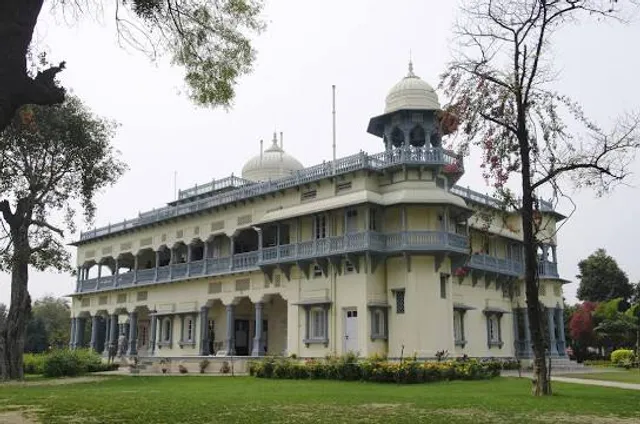
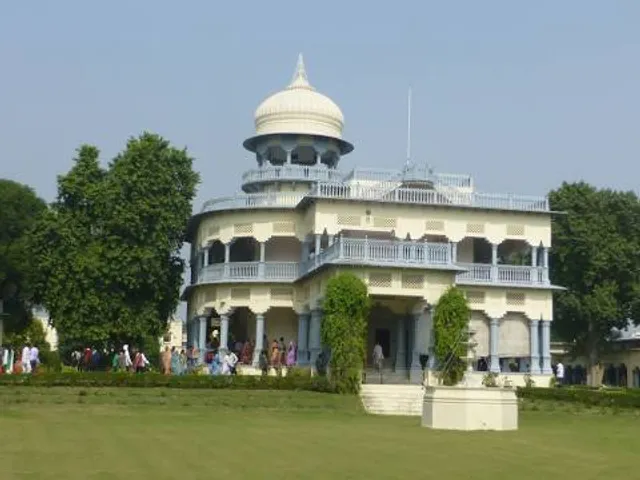
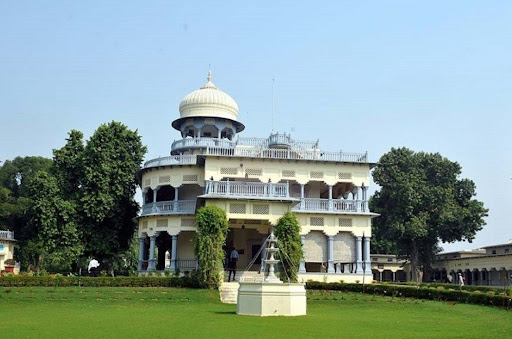
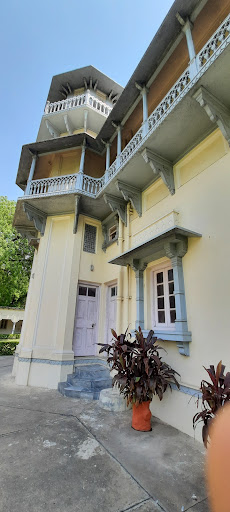
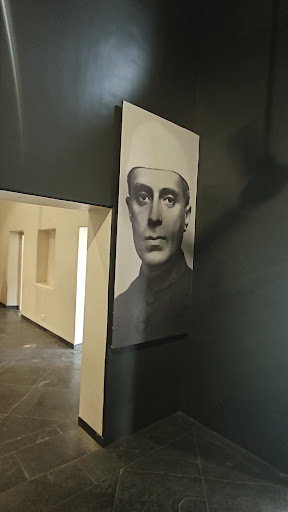
Anand Bhavan Museum, located in Prayagraj (formerly Allahabad), Uttar Pradesh, India, is a historic house museum that was the ancestral home of the Nehru-Gandhi family, a prominent political dynasty in India. Originally built by Motilal Nehru in 1927, it served as the family’s residence when their earlier home, Swaraj Bhavan, was donated to the Indian National Congress in 1930. The mansion was donated to the Indian government in 1970 by Indira Gandhi, then Prime Minister, and transformed into a museum to preserve the legacy of the Nehru-Gandhi family and their role in India’s freedom struggle. Historical Significance Nehru-Gandhi Legacy: Anand Bhavan was home to three Indian Prime Ministers—Jawaharlal Nehru, Indira Gandhi (born here in 1917), and Rajiv Gandhi. It was a central hub for political activities during the Indian independence movement, hosting key meetings and leaders like Mahatma Gandhi, who had a dedicated room.Freedom Struggle: The mansion witnessed critical events, including discussions on the Civil Disobedience Movement and Quit India Movement. It served as an informal headquarters for the Indian National Congress, with Swaraj Bhavan functioning as the party’s regional office.Donation: In 1970, Indira Gandhi gifted Anand Bhavan to the nation, and it was converted into a museum under the Jawaharlal Nehru Memorial Fund to showcase the family’s contributions to India’s history.Architecture and Features design: The two-storey mansion, designed by Motilal Nehru with assistance from a Tata architect, blends Indian and Western styles. It features high ceilings, pillared verandahs, intricate railings, and a bulbous dome on the terrace. The interiors are adorned with imported Chinese and European wooden furniture and global artifacts, reflecting the family’s affluent lifestyle.Museum Exhibits: The museum preserves the Nehru-Gandhi family’s personal belongings, including:Jawaharlal Nehru’s study and bedroom, with bookshelves containing Marxist and Leninist titles.Indira Gandhi’s room, showcasing her personal items and wedding photos.Mahatma Gandhi’s minimalist room with a charkha, floor bed, and books.Photographs, letters, and documents from the independence movement.A library with over 8,000 books and historical records. Swaraj Bhavan: Adjacent to Anand Bhavan, this older mansion (originally called Anand Bhavan, renamed in 1930) was built in 1871 for Syed Ahmad Khan and later purchased by Motilal Nehru in 1900. It has 42 rooms and houses memorabilia, including a charkha used by Gandhi and an underground room used for secret meetings. It also hosts a light and sound show narrating its history.Jawahar Planetarium: Built in 1979 within the Anand Bhavan complex, it seats 80 and offers educational shows on astronomy and space, aiming to foster scientific curiosity. Entry to the planetarium requires a separate ticket.
Visiting InformationLocation: Anand Bhavan, 1 Elgin Road, Prayagraj, Uttar Pradesh 211002, India, in the Civil Lines area, 5 km from the Civil Lines Bus Stand, 3.5–4 km from Prayagraj Junction, and 12 km from Bamrauli Airport. Accessible by taxi, auto-rickshaw, or cycle-rickshaw.Timings: Open 9:30 AM to 5:30 PM, Tuesday to Sunday (closed Mondays and public holidays).Entry Fees (subject to change, verify before visiting):Indian Nationals: ₹20 (ground floor), ₹70 (both floors), ₹35 (students, both floors), ₹10 (students, ground floor).Foreign Nationals: ₹200.Planetarium: ₹60 (adults), ₹25 (children).Children under 3 feet: Free.Photography: Allowed outside but prohibited inside the museum to protect exhibits.Best Time to Visit: October to March for pleasant weather. Visiting during the Kumbh Mela (next in 2025) offers a vibrant cultural experience but expect crowds.
Some nearby Attractions are Bharadwaj ashram Akbar fort Sangam Nag vasuki mandir Shankar viman Mandapam Shivalay...
Read moreAnand Bhawan, located in Tagore Town, Prayagraj, Uttar Pradesh, is a historic mansion with immense significance in India’s freedom struggle and the legacy of the Nehru-Gandhi family.
Originally purchased by Motilal Nehru in the late 19th century, the estate became the ancestral home of a family that would produce three of India’s prime ministers, Jawaharlal Nehru, Indira Gandhi, and Rajiv Gandhi.
In the 1930s, when Motilal Nehru donated their earlier residence, Swaraj Bhavan, to the Indian National Congress to serve as its regional headquarters, he built this new house next door and named it Anand Bhawan.
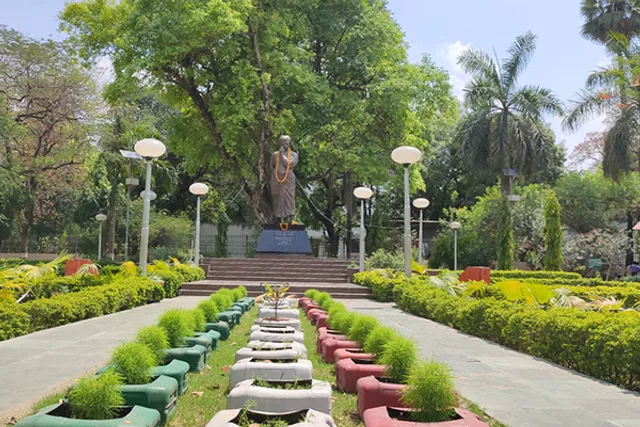
The mansion’s architecture reflects the sophistication of its time, with its elegant white and blue façade and imported wooden furniture from China and Europe. The sprawling estate, surrounded by well-maintained lawns and a serene rose garden, exudes a sense of timeless grandeur softened by an air of simplicity.
Designed with input from Motilal Nehru and an architect associated with the Tata family, the house became more than just a residence but it was an hub of political activity during India’s fight for independence.
Anand Bhawan hosted critical political discussions and decisions, with Mahatma Gandhi being a frequent visitor. The mansion’s lawns often served as venues for public addresses by Gandhi and other leaders during the Non-Cooperation and Civil Disobedience movements. The underground room, rumored to have been a secret meeting spot during the independence movement, adds an element of intrigue to the estate’s history.
After India gained independence, Anand Bhawan retained its sentimental value for the Nehru family. In 1970, Indira Gandhi, then Prime Minister and granddaughter of Motilal Nehru, donated the house to the government, transforming it into a Museum to preserve her family’s legacy and their role in India’s freedom movement.
Today, the museum houses an extensive collection of memorabilia, including personal belongings of the Nehru-Gandhi family, antique household items, and over 8,000 books in its library. The rooms have been meticulously preserved to reflect their pre-independence state, offering visitors an intimate glimpse into the lives of the family.
Among the highlights are Jawaharlal Nehru’s bedroom and study, where his modest desk and shelves lined with books reflect his deep commitment to the nation’s future. Rooms dedicated to Indira Gandhi and Mahatma Gandhi further illustrate their contributions, while the picture gallery in an outhouse showcases rare images of the Nehru family, from Indira’s childhood to her wedding.
The charkha used by Mahatma Gandhi and photographs capturing pivotal moments of the freedom struggle stand out among the museum’s most poignant exhibits.
The estate also includes the Jawahar Planetarium, which fosters scientific curiosity through engaging sky shows on astronomy. This blend of history and science adds to the museum’s appeal, making it an enriching destination for visitors of all ages.
Open from 9:30 AM to 5:00 PM, except on Mondays and government holidays, Anand Bhawan offers a serene ambiance and educational exhibits that attract history enthusiasts and tourists alike.
The estate’s proximity to other landmarks like Allahabad University and Chandrashekhar Azad Park enhances its appeal. A small additional fee grants access to the first floor, providing a deeper dive into the Nehru family’s private world.
Anand Bhawan stands as a testament to India’s rich heritage and its relentless struggle for independence. Its well-preserved architecture, historical artifacts, and tranquil gardens create an atmosphere where history whispers through every corner. For visitors, it offers not just a journey through time but a profound appreciation of the sacrifices and vision that shaped...
Read moreThis mansion was purchased by lawyer Motilal Nehru in 19th century for Rs 19000. The house was in the state of repair. This property was then renovated accordingly, which took around a decade for this process. As Motilal Nehru was on his frequent tours to Europe and China, all the furniture in this mansion has been imported from other countries. In a few years, the house was totally renovated to look like a palace. As more than 100 people stayed in this huge palace, Motilal Nehru named this mansion as Anand Bhavan.
As Motilal Nehru was an active member of Indian National Congress, many political leaders of the party would frequently visit the Nehru house and hence it became the centre of the Indian Independence Movement. Back then this was the headquarters of the Indian National Congress, where India’s first Prime Minister Jawaharlal Nehru was brought up. This mansion was then donated to the Indian National Congress party by Motilal Nehru in 1930, after which he constructed a new house next to the old one and named the latter as Anand Bhavan and the former was given the name Swaraj Bhavan.
The newly-constructed Anand Bhavan was donated by Smt. Indira Gandhi, which was then transformed into a museum to hold certain precious books in the memory of her father and grandfather. And today it has very famous museums. At Anand Bhavan, art and cultural classes are conducted for children, to uphold India’s culture. Also, 4 shows of light and sound are also conducted at this venue every day. The world famous Nehru Planetarium is situated here, which is well-known for sky shows that they conduct on astronomy and science. The Swaraj Bhavan has got the facility to show video of the story of Independence to all the visitors who visit the venue. The Swaraj Bhavan has also got a secret meeting room, where meetings pertaining to independence were conducted.The Anand Bhawan is a historic house museum in Allahabad, which belongs to the Nehru family. It was constructed by Motilal Nehru in the 1930s to serve as the residence of the Nehru family when the original mansion Swaraj Bhawan was transformed into the local headquarters of the Indian National Congress. The Bhawan houses the Jawahar Planetarium. Swaraj Bhavan, earlier known as Anand Bhavan, is situated in Allahabad is one of the largest manor present in this city. This manor was owned by Motilal Nehru. This mansion is the ancestral property of the Nehrus. It is the birth place of Prime Minister of India Indira Gandhi. This mansion is now being maintained by Jawaharlal Nehru Memorial Fund.
Home to the 5 generations of the Nehru family, Anand Bhavan, had been the headquarters for the Indian National Congress to overthrow the British rulers before Independence. With the wealth or artifacts and personal belongings of the national leaders, this sacred place takes you into a world of pre-Independence times. The outhouse in the estate also contains picture gallery that depicts the life of...
Read more