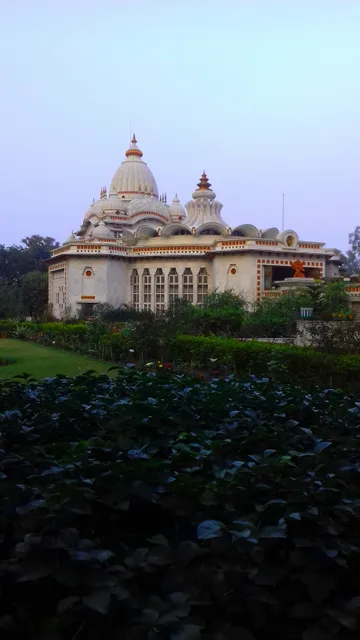
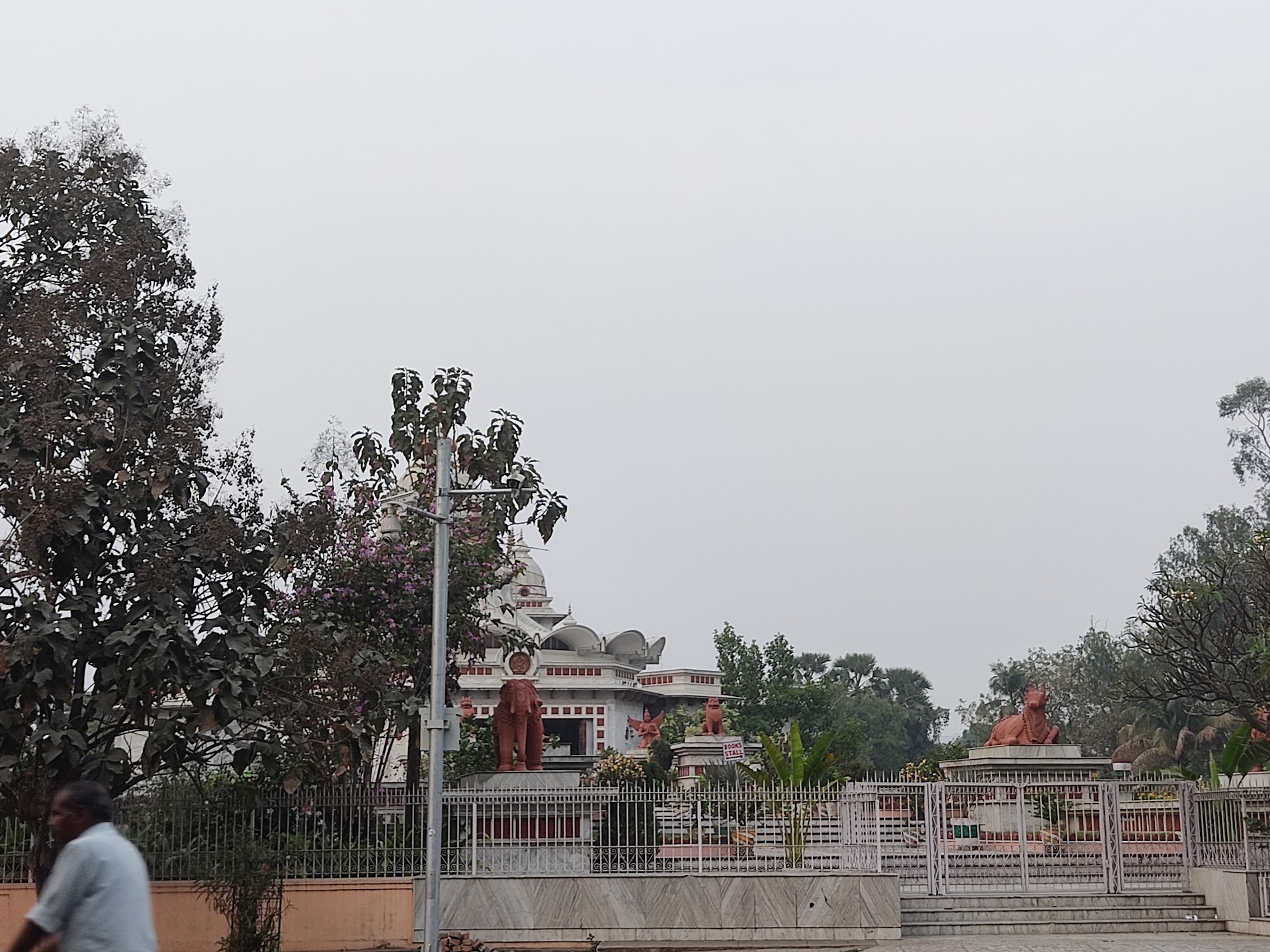
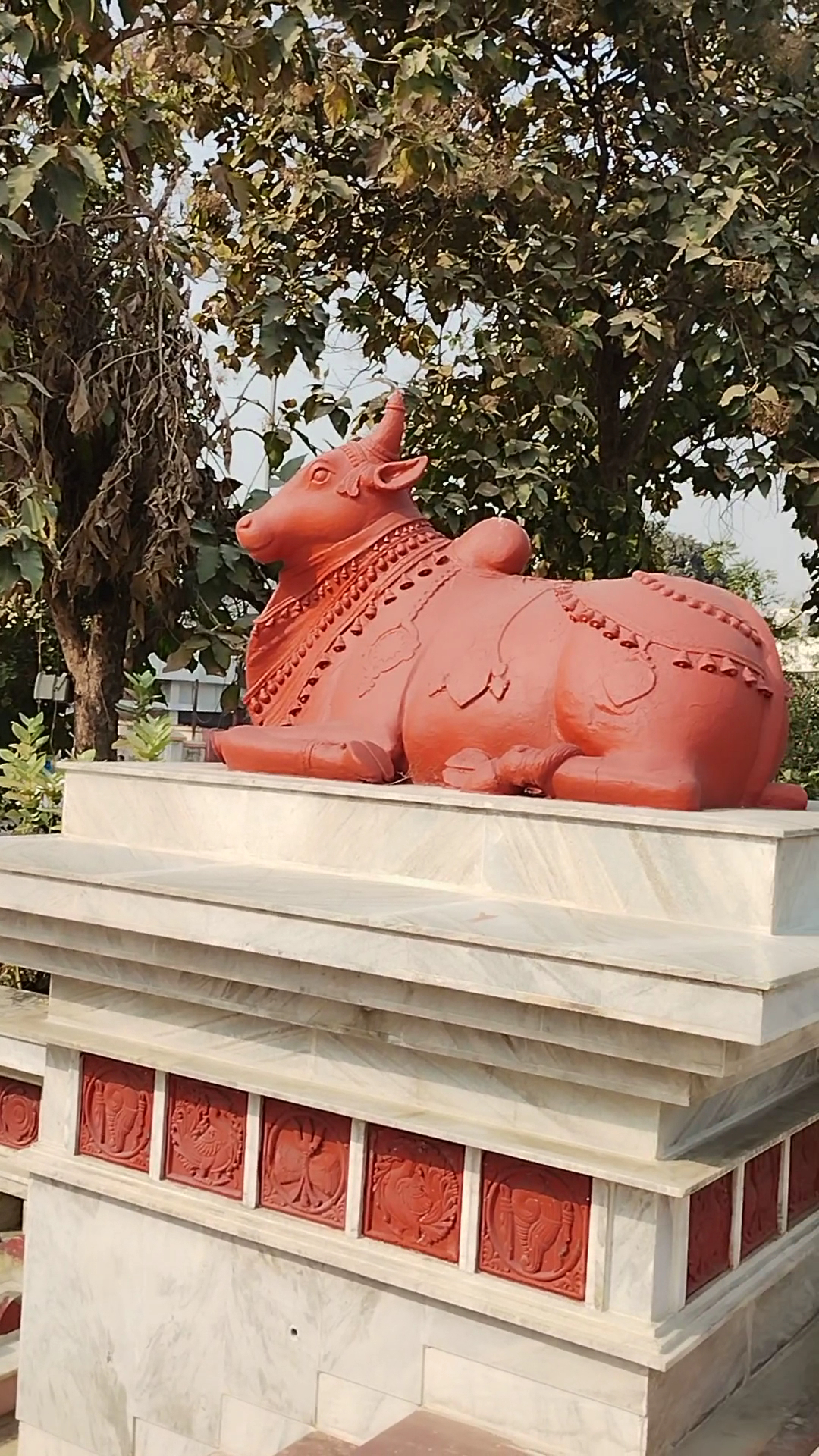
The new temple was constructed adjacent to the old shrine and opened on 2 February 1987. The temple is built in marble, a favourite of the Mughal architect emperor Shah Jahan. The marble has been especially obtained from the mines of Bundi and Makrana. To add an element of contrast, a style innovated by the Mughals, (using red sandstone along with marble) has been adopted in this temple.
The figures from mythology such as the Shankha (conch shell), Chakra (disc), Padma (lotus), Trishul (Trident), Damaru (drum), Vajra (Thunderbolt) and Hansas (swans) have all been painted with red cement. These have been placed right from the gateway to the temple door.
The temple stands out as a unique combination of various styles of architecture that includes those imbibed by the Chandellas, Chalukyas and Pallavas of Southern India besides the Mughals and the Jains.
The Nat Mandir (Prayer Hall)
The floor of the congregation hall is done up decoratively with geometric patterns created out of contrasting colours of white marble and brown Kumri range stone. Lotus made out of large copper plates have been placed artistically on the floor, which once again adds to the religious mood of the temple. The ceiling of the Natmandir (prayer hall) is dome shaped, typical of a Jain temple. In the centre of the ceiling is a beautifully carved wooden, circular panel from which hangs a big chandelier with 256 lights have been arranged in three different tiers. Two circular beams support the inner dome, on which hang pictures of the 15 direct disciples of Sri Ramakrishna. Between each is carved out two wheels one inside the other denoting the spread of religion - dharma chakra. These wheels closely resemble the wheels of the Sun temple at Konark.
On the extreme northern side of the circular beams the monogram of Ramakrishna Math and Ramakrishna Mission has been placed with Swamiji's explanation in English. Keeping in view the widely celebrated Durga Puja, the Natmandir was designed to adjust the Durga mandap within the same temple complex. The Durga Mandap is thus an extended part of the main building with its door facing outside for the benefit of all devotees who throng to watch the ceremonial Puja held every year. The size of Natmandir is of 5,100 square feet with its dome shaped like an inverted lotus, the petals of which are curled out, an idea imported from the Buddhist Pagodas of the Far East. This 51 feet high dome, circular in shape, with sixteen petals weighs 250 tons and rests on...
Read moreRamakrishna Math in Lucknow is a serene and peaceful ashram, located in the heart of the city. Established in 1955, it is a branch of the Ramakrishna Math and Mission, founded by Swami Vivekananda in 1897. The ashram is dedicated to the propagation of the teachings of Sri Ramakrishna, Swami Vivekananda, and other great saints of India.
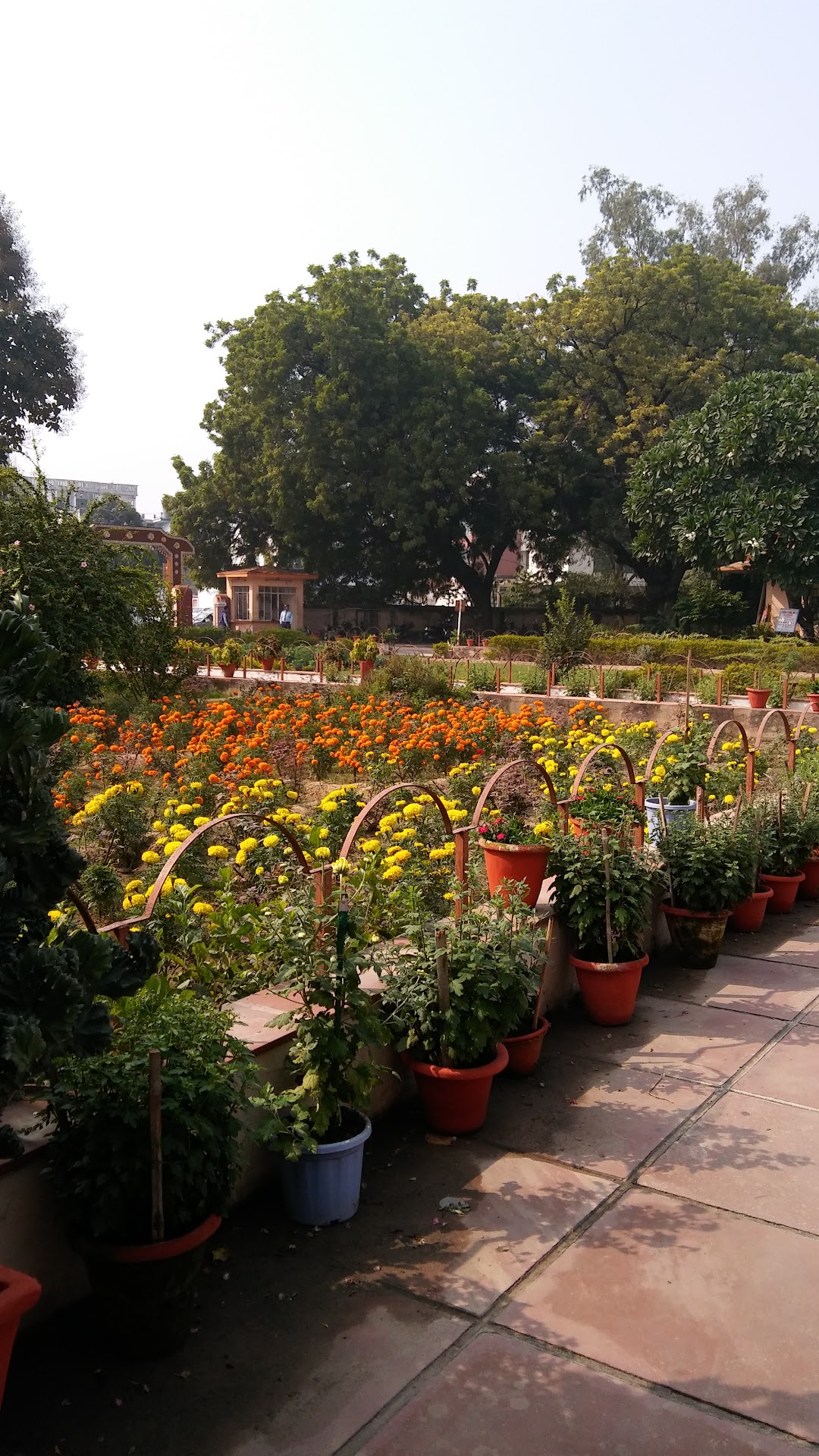
The ashram is situated in a sprawling campus and has a beautiful temple dedicated to Sri Ramakrishna, Holy Mother Sarada Devi, and Swami Vivekananda. The temple is a peaceful and serene place where one can meditate and seek solace. The atmosphere inside the temple is divine, and one can feel the positive vibes as soon as they enter the temple.
Apart from the temple, the ashram has a library that houses a vast collection of books on various subjects, including religion, philosophy, and spirituality. The library is open to the public and provides an excellent opportunity for seekers to gain knowledge and understanding of various religions and philosophies.
The ashram also has a charitable dispensary that provides medical services to the underprivileged sections of society. The dispensary provides free medical services and medicines to the needy and is a great service to the community.
The ashram conducts regular satsangs, discourses, and spiritual retreats for the benefit of seekers. The programs are conducted by eminent spiritual teachers, and they provide a great opportunity for seekers to deepen their understanding of spiritual practices and teachings.
In conclusion, Ramakrishna Math in Lucknow is a great place to seek solace, gain knowledge, and deepen one's understanding of spirituality. The ashram is run by dedicated and selfless volunteers, and their service to society is a great inspiration. I highly recommend visiting the ashram and experiencing the divine atmosphere...
Read moreThe Ramakrishna Mission Sevashrama, Lucknow, a Branch Centre of the Ramakrishna Math & Mission, Belur, has been rendering dedicated services to the people of this region for more than seven decades. Duly taking into account the local circumstances and demands of public need, the activities of the Sevashrama have been mostly directed towards medical and health sectors, for giving relief to the ailing and the sick. This, it does through Vivekananda Polyclinic - now a multi-facility hospital as well as the Rural Health Programmes carried on in the adjoining villages. The polyclinic fulfils the public needs by way of Rural Health Programmes carried on in the adjoining villages. More and more facilities are getting added to the polyclinic. The multifarious activities of the Math includes library, daily worship and bhajans, fortnightly Ramnam and Shyamnam, Sankirtans, and weekly religious discourses and lectures, Celebration of the birthdays of Sri Ramakrishna, Holy Mother Sri Sarada Devi, Swami Vivekananda and other religious prophets, in addition to Durga Puja and other festivals. The Math various cultural programmes, and personality development and yoga classes for students. Furthermore, the Math organises free coaching centre for 100 slum children, daily distribution of milk and tiffin to 100 poor children. The Math is instrumental in the expansion of cultural, religious and spiritual activities according to the universal principles propounded by Sri Ramakrishna, Holy Mother Sarada Devi and Swami Vivekananda and exemplified by their...
Read more