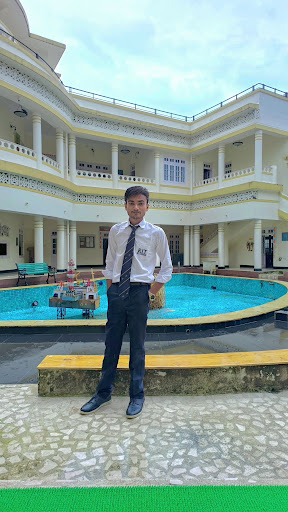
Not many people know about this fantastic museum. I feel this since even our driver, who was a localite, never knew that the ONGC headquarters had such a fantastic museum.
This is by far one of the best and the most impressive museums I have ever visited and rather a first-time visit to an oil museum. When we visited the museum, we were the only ones since it had been recently opened post the COVID pandemic. But what we saw and experienced is nothing short of sheer brilliance.
There is a whole host of information on everything related to fossil fuels and what ONGC does for the country. The biggest highlight is that they have created mini working models of many processes that are done for the processing of oil from the earth. This includes models such as fractional distillation, digging for extraction of oil, etc. Other than that, the museum also contains a live map of the Mangalore refinery. A live map indicates they have placed buttons on the dashboard. As you click those buttons, you can see with lights blinking the various storages such as diesel, jet fuel, etc. And also what other processes and machines are located in which part of the refinery.
They have also kept real instruments such as the various kinds of drill bits and pipes used in the extraction of crude oil. There is also a snapshot of India's history and a small tube containing oil from the first extraction at India's Digboi oil field in Assam.
All in all, I would say if you are in Dehradun, do not miss visiting this museum. This is super amazing, and if there are school kids, this is one place that will be really valuable to them in terms of gaining knowledge from what is directly shared by ONGC. Simply...
Read moreWow!!This is a fabulous place where u can update ur knowledge about oil,petroleum,how they r obtained,how they r cleaned,their varieties....... It is a very big museum and the staff is also very friendly. Outside the museum they have green trees and plants spread throughout.....
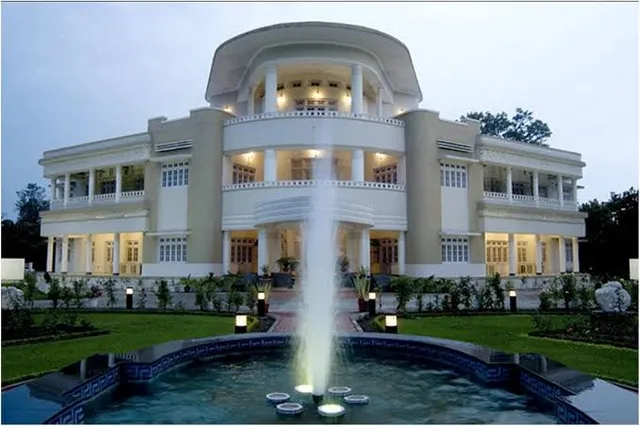
Situated in the charming Hill Station of Dehradun, the museum is named after ex-CMD of ONGC and located at the HQs of ONGC, the National Oil Company of India, inside heritage building/ kothi of Maharaja of Patiala which was subsequently given to ONGC for its office and now called as Tel Bhawan. The building houses at well maintained place having good lawns with photo opportunities. There is a nominal/ reasonable entry fee but free entry for group of students. Through wonderful videos and demonstrations, exhibits of exploration and production for Hydrocarbons and Crude Oil history, etc. are marvelously displayed. Near the entrance a souvenir shop is also there. The museum encompasses in detail history & various facets of Oil industry. Visit to museum is interesting, knowledgeable and learning about gamuts of oil Industry & business and is very and educational. The museum is split into distinct sections; one depicting the oil history with samples of varieties of crude oil and several charts & posters explaining their characteristics, another segment offers an insight at the exploration and production including the transportation methods and refining technology used in the industry. It additionally has an AV Room presenting the adventure of ONGC and Oil...
Read moreSubir Raha Oil Museum was inaugurated on 14th August 2005. ONGC is the foremost exploration and production company in India. The museum was set up in Tel Bhawan also known as Patiala House in 1956. It was once the palace of Maharaja of Patiala and was brought by ONGC.
The museum offers a unique experience to educate the common man about different aspects of oil. How it is excavated, its importance, the difference in oil ratio, and much more.
The museum has various things to make the people understand different sectors of the oil industry and its significant history. It is divided into different sectors, of which the first sector tells us about the geology of the industry. There is a Foucault pendulum, various informative charts, and samples of different types of crude oil in this sector.
#Trivia: The Foucault pendulum is a device to show the Earth's rotation and is named after the French physicist Leon Foucault. It is a popular display in almost all science museums across the world.
The second sector is dedicated to the production of oil and the working of ONGC. The third sector gives us information about the industry's transportation methods and refining technologies.
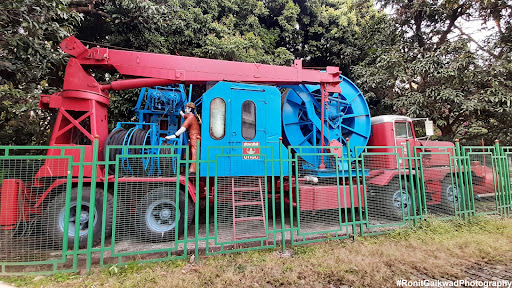
The fourth and last section shows all the future plans, achievements, assets, basins owned by ONGC, etc. You can see a few beautiful things outside the museum, such as the sucker rod pump, blowout preventers, etc.
The museum has many things that give a great representation of the oil industry, its functioning, history,...
Read more