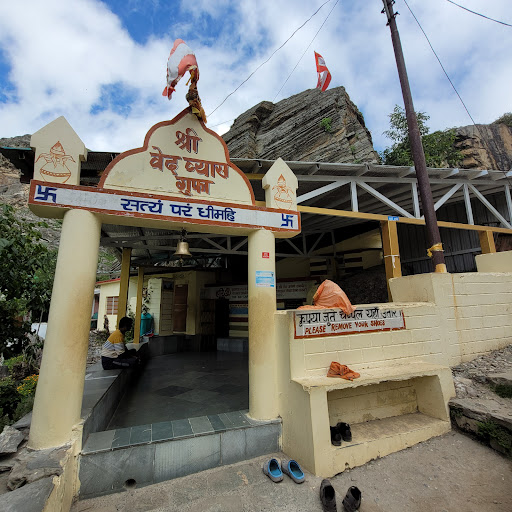
The Cave of Veda Vyasa, also known as Vyasa Gufa, is a significant historical and religious site in Mana village near Badrinath, Uttarakhand, India. This cave is named after the great sage Ved Vyasa, credited with composing the Mahabharata and the Puranas and compiling the Vedas.
Historical and Religious Significance
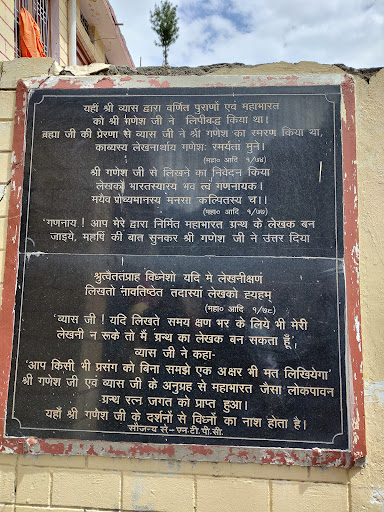
Vyasa's Literary Work: Mahabharata: IVyasa is believed to have dictated the Mahabharata to Lord Ganesha in this cave. Lord Ganesha served as his scribe, writing down the verses as Vyasa composed them. Compilation of Vedas: The cave is also associated with compiling the four Vedas, which Vyasa organised into their current form.
Spiritual Importance: Pilgrimage Site: The cave is a revered spot for pilgrims visiting Badrinath, one of the Char Dham pilgrimage sites. Devotees visit Vyasa Gufa to pay homage to the sage and seek blessings. Cultural Heritage: The site holds immense cultural importance due to its connection with ancient Hindu literature and mythology.
Architectural and Natural Features
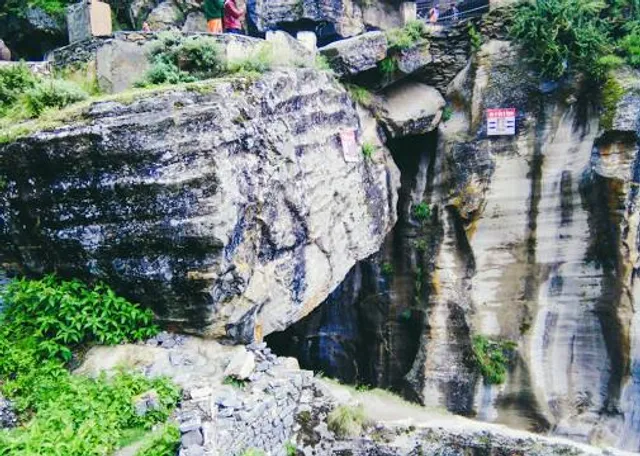
Cave Structure: Interior: The cave is relatively small and straightforward, with a shrine dedicated to Vyasa. Inside the cave, visitors can find an idol of Vyasa and inscriptions or sculptures depicting scenes from his literary works. Surroundings: The cave is picturesque amidst the Himalayan mountains, providing a serene and spiritually uplifting environment.
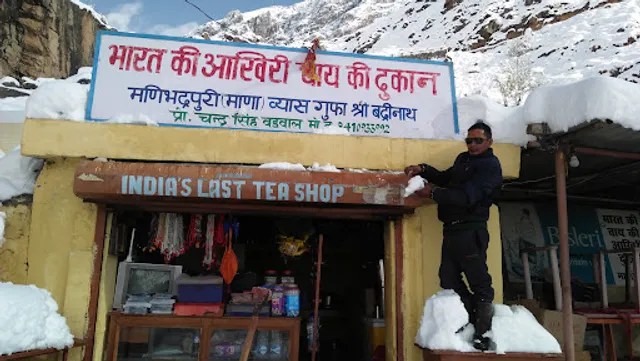
Proximity to Other Sites: Mana Village: Known as the last Indian village before the Tibetan border, Mana is home to several other significant sites, including the Bhim Pul (a natural rock bridge) and Ganesh Gufa (another cave associated with Lord Ganesha).
Cultural and Community Aspects
Festivals and Rituals: Vyasa Puja: Special rituals and pujas (prayers) are conducted in honour of Vyasa, particularly on Guru Purnima, a day dedicated to paying respect to teachers and gurus.
Local Traditions: Oral Histories: The local community in Mana village preserves and narrates stories about Vyasa and the mythological events associated with the cave, keeping the cultural heritage alive.
Visiting Vyasa Gufa
Accessibility: The cave is accessible from Badrinath by a short trek. Badrinath itself is well-connected by road to major towns and cities in Uttarakhand. Best Time to Visit: The ideal time to visit Vyasa Gufa is from May to October, as the region is covered in snow during the winter months, making it difficult to access.
Exploring the Cave of Veda Vyasa provides a deep insight into the rich literary and cultural heritage of ancient India and offers a spiritually enriching experience...
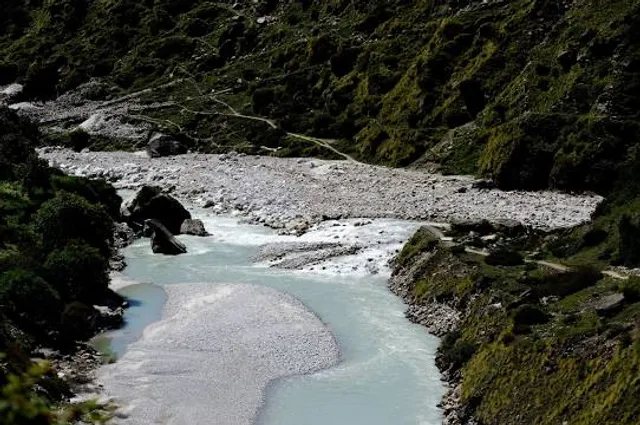
Read moreBadrinath is one of the Chardham, and all the Hindu devotees wish to visit at least once in a life time. Near to such spiritual and natural beautiful place there is small village called as Mana Village where this cave is located, which is also known as First village of India before the Tibetan boarder. The Journey to this village and the cave is an adventure in itself. Breathtaking views of the Himalayan ranges, Vedanta Valleys and the Alakananda River all put together will mesmerize your mindset while going through this route. Visiting Mana village is also one of the life time experience where you can visit Ganesh Gufa, Vyas Gufa, Saraswathi River Janmasthal, Bhim Pul, Swarga Arohan Marg and Vasudhara falls. It's one day full trip if you want to Visit Vasudhara Falls also. First 5 places one can visit in 3 to4 hour's time, bur to visit Vasudhara falls one has to trek @ 5km which is known as moderate trek which will take half day time to reach there and come down. If anyone is not able to do trek then better visit 5 places in Mana village and return to Badrinath from Mana Village.
Whenever you visit this village follow the sequence s mentioned below so that you will not miss any place Ganesh Gufa Vyasa Gufa Saraswathi Janmasthal Bhim Pul Swarg Arohan Marg Vasudhara Falls
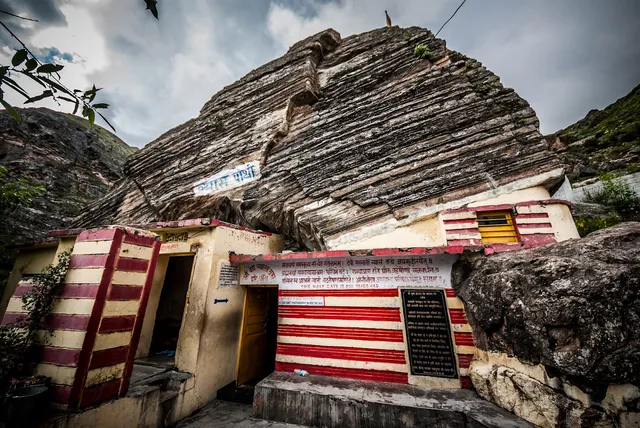
Interesting Facts about Ganesh Gufa: The Vyasa Gufa is estimated to be 5330 years old as of 2022. This is the cave where Sage Veda Vyas wrote 18 puranas. It is also believed that Sage Veda Vyas sat here and dictated Mahabharat to Lord Ganesha and Lord Ganesha wrote the same by sitting in Ganesh Gufa which is proximity distance from this place. Inside the Cave of Veda Vyasa one can find a small shrine dedicated to the Sage with traditional offerings. This Cave is so special and with lot of positive energy. Making it a perfect spot for meditation. Many Devotees feels a deep sense of peace and connection to the divine while spending time inside this Cave. It is believed that this the place where Sri Adi Shankaracharya met Sage Veda Vyas and discussed Bhashyam for Brahma Sutras. Guru Purnima is celebrated on the birth anniversary of Veda Vyas. Every year big events are organized at Vyas cave on Guru Purnima. one of the unique features of Vyas Gufa is its Roof, which resembles the pages of a script adding an...
Read moreWhile exploring Mana, India’s Last Village, I couldn’t miss the chance to visit Vyas Gufa, an ancient cave deeply rooted in Hindu mythology and history. Just like Ganesh Gufa, this sacred spot holds immense spiritual significance, believed to be the very place where Maharishi Ved Vyas composed the Mahabharata. Unlike the grand temples of Kedarnath and Badrinath, Vyas Gufa offers a more intimate and peaceful spiritual experience, where silence speaks louder than any rituals.
The Walk to Vyas Gufa: A Journey Through Legends
Located near Badrinath, within Mana village, the walk to Vyas Gufa is short yet stunning. The path winds through scenic mountain views, the roaring Saraswati River, and small stone houses of the locals, making it feel like stepping into a timeless world. Unlike the physically demanding Kedarnath trek, this walk is gentle and calming, allowing you to soak in the natural beauty while reflecting on the historical importance of the place.
The Cave of Maharishi Ved Vyas
Vyas Gufa itself is simple yet profoundly significant. It is believed that Maharishi Ved Vyas lived and meditated here, dictating the Mahabharata, the Puranas, and the Vedas to Lord Ganesha. The cave has a serene and mystical aura, making it easy to imagine the great sage sitting here, surrounded by the vast wisdom of the ages.
One of the most fascinating aspects of Vyas Gufa is the unique rock formation on its roof, which resembles stacked palm-leaf manuscripts—just like the ancient texts in which scriptures were originally written. Locals believe this is a divine mark left behind by Maharishi Vyas himself.
Inside, the idol of Maharishi Vyas is placed with deep reverence, and the cave has a quiet, meditative atmosphere. Unlike the bustling temples, here, you can sit in silence, absorb the vibrations of history, and feel the depth of the wisdom that once flowed through this very space.
Final Thoughts: A Place of Reflection and Spiritual Depth
Visiting Vyas Gufa is not just about seeing a historical site—it’s about feeling connected to the very roots of Hindu wisdom and philosophy. The simplicity of the cave, the rich legends tied to it, and the peaceful surroundings make it an unforgettable experience.
Would I visit again? Without a doubt. Because some places don’t just tell stories—they let you be a...
Read more