HTML SitemapExplore

Jubilee Bridge — Attraction in West Bengal

Name
Jubilee Bridge
Description
Nearby attractions
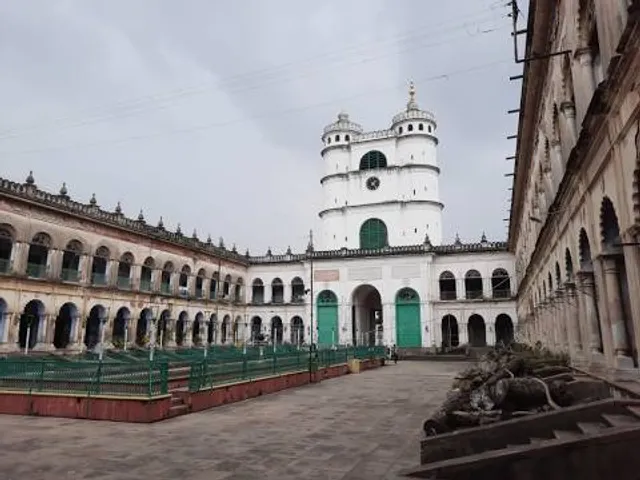
Hooghly Imambara
Imambara Rd, near D.M Banglw, Chowk Bazar, Olaichanditala, Chinsurah, West Bengal 712103, India
Nearby restaurants
Nearby local services
Nearby hotels
Related posts
Keywords
Jubilee Bridge tourism.Jubilee Bridge hotels.Jubilee Bridge bed and breakfast. flights to Jubilee Bridge.Jubilee Bridge attractions.Jubilee Bridge restaurants.Jubilee Bridge local services.Jubilee Bridge travel.Jubilee Bridge travel guide.Jubilee Bridge travel blog.Jubilee Bridge pictures.Jubilee Bridge photos.Jubilee Bridge travel tips.Jubilee Bridge maps.Jubilee Bridge things to do.
Jubilee Bridge things to do, attractions, restaurants, events info and trip planning
Jubilee Bridge
IndiaWest BengalJubilee Bridge

Basic Info

Jubilee Bridge

WC43+QRW, Garifa, Naihati, Chinsurah, West Bengal 743166, India
4.5(178)
Open 24 hours
Save
spot

Ratings & Description

Info

Cultural
Scenic
Accessibility
attractions: Hooghly Imambara, restaurants: , local businesses:
logoLearn more insights from Wanderboat AI.

Plan your stay

hotel
Pet-friendly Hotels in West Bengal
Find a cozy hotel nearby and make it a full experience.
hotel
Affordable Hotels in West Bengal
Find a cozy hotel nearby and make it a full experience.
hotel
The Coolest Hotels You Haven't Heard Of (Yet)
Find a cozy hotel nearby and make it a full experience.
hotel
Trending Stays Worth the Hype in West Bengal
Find a cozy hotel nearby and make it a full experience.

Reviews

Live events

Sri Ramakrishna Yatra- day tour of the holy places
Sun, Jan 18 • 8:00 AM
Baranagar, West Bengal, 700056, India
View details

Nearby attractions of Jubilee Bridge

Hooghly Imambara

Hooghly Imambara

Hooghly Imambara

4.3

(898)

Closed
Click for details
Get the Appoverlay
Get the AppOne tap to find yournext favorite spots!
Wanderboat LogoWanderboat

Your everyday Al companion for getaway ideas

CompanyAbout Us
InformationAI Trip PlannerSitemap
SocialXInstagramTiktokLinkedin
LegalTerms of ServicePrivacy Policy

Get the app

© 2025 Wanderboat. All rights reserved.

Reviews of Jubilee Bridge

4.5
(178)
avatar
4.0
1y

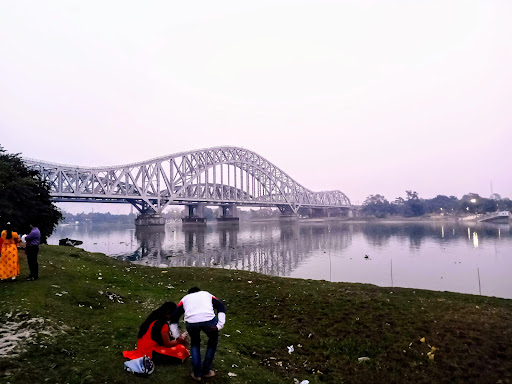
The Jubilee Bridge, spanning across the Hooghly River in West Bengal, India, is an iconic structure that connects the cities of Howrah and Hooghly. Officially opened in 1887 to commemorate the Golden Jubilee of Queen Victoria, the bridge has since been a vital transportation link and a symbol of historical significance.

The Jubilee Bridge, also known as the Hooghly River Bridge, was designed by Sir Bradford Leslie, an eminent British civil engineer of that era. The bridge's construction marked a technological feat of the time, utilizing steel for its superstructure, a material that was gaining prominence in engineering during the late 19th century.

The bridge's design showcases a combination of cantilever and girder spans, allowing it to accommodate both rail and road traffic. This dual functionality has contributed to its enduring relevance, meeting the evolving transportation needs of the region. The strategic location of the Jubilee Bridge has been instrumental in facilitating trade and commerce between the two cities on either side of the Hooghly River.

Over the years, the Jubilee Bridge has undergone renovations and repairs to ensure its structural integrity. It played a crucial role in connecting the railway networks on either side of the river, enhancing connectivity and easing the movement of goods and passengers. The bridge has stood witness to the changing landscape of the region, reflecting the historical and cultural transitions over more than a century.

In addition to its utilitarian role, the Jubilee Bridge holds sentimental value for the local population. It stands as a symbol of colonial-era engineering prowess and has become an integral part of the cultural heritage of West Bengal. The bridge is often frequented by tourists and locals alike, offering panoramic views of the river and the surrounding areas.

The Jubilee Bridge has weathered the test of time and technological advancements, continuing to serve as a vital transportation artery and an architectural landmark. As it spans the Hooghly River, this bridge remains a testament to the convergence of engineering innovation, historical milestones, and the enduring spirit of connectivity in the heart of...

   Read more

avatar
5.0
2y

The Jubilee Bridge (Bengali: জুবিলি ব্রিজ) is a former rail bridge over the Hooghly River between Naihati and Bandel in West Bengal, India. It provided an important connection between Garifa railway station and Hooghly Ghat railway station.

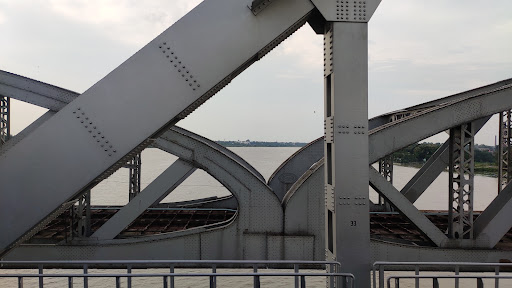
The Jubilee Bridge was opened on 16 February 1885 in the fiftieth, or golden jubilee, year of the reign of Queen Victoria. Construction began in 1882 and was completed in 1887. The Chief Engineer in charge of construction works was Lt Col Arthur John Barry, nephew of Sir John Wolfe-Barry, project engineer of the London Tower Bridge.[1] The Bridge was designed by Sir Bradford Leslie, Chief Engineer in India and Alexander Meadows Rendel. Its steel was manufactured by Hawks Crawshay of Gateshead in England and James Goodwin of Motherwell in Scotland. Bradford Leslie also designed the floating pontoon bridge across the Hooghly in Calcutta, which was replaced by the Howrah Bridge in 1942 and the Gorai River Railway Bridge near Kushtia in Bangladesh. He was a son of the American painter Charles Robert Leslie, ultimately Professor of Painting at the Royal Academy in London.

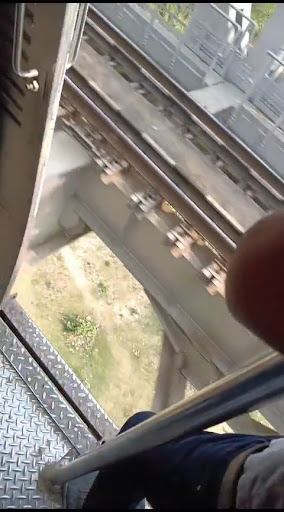
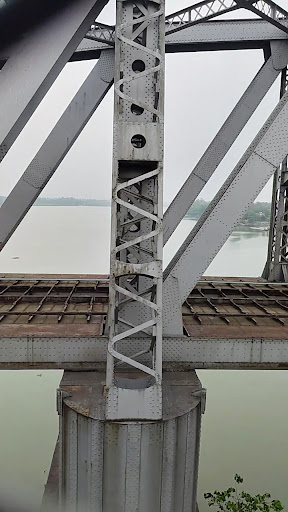
The Jubilee Bridge is noteworthy in that it is a cantilever truss bridge, constructed entirely by riveting, without any nuts or bolts used in the construction.

The Jubilee Bridge was decommissioned from service on 17 April 2016, the last train to pass through it being 13141/Teesta Torsha Express. At the same time rail traffic was diverted through Sampreeti Bridge, the new bridge between Bandel and Naihati section of the Eastern Railway, that has been constructed beside the Jubilee Bridge.

Jubilee bridge served the people for 129 years, and several generations used the service to cross the River Hooghly. The bridge has the distinction of being first permanent crossing over the Hooghly, which had been considered unbridgeable owing to difficult foundation conditions at that time.

The new bridge, Sampreeti Bridge, was inaugurated in 2016 after work started on around 2004. It is the first continuous truss...

   Read more
avatar
5.0
6y

One of the oldest Bridge in India ject description A railway bridge was constructed in the late 19th century to span the Hooghly River near Kolkata - formerly known as Calcutta and the capital of erstwhile British India. Due to its opening in 1887, the fiftieth year of the reign of Britain’s Queen Victoria, the bridge was called the Jubilee Bridge. At the start of the 21st century, after 125 years of service, the bridge was deemed to be in need of replacement, and a new bridge is currently under construction. The New Jubilee Bridge has been designed with a bow-string three-span continuous steel truss superstructure of overall length 417m. The new bridge crosses the Hooghly River near Kolkata, eastern India. Illustration of a RESTON®SPHERICAL Type KA bearing – exploded view showing central calotte. A typical RESTON®SPHERICAL bearing during applica- tion of grease to upper sliding surface. Highlights & facts mageba products: Type: RESTON®SPHERICAL bearings – for loads of up to 46,500kN Features: ROBO®SLIDE high-grade sliding material Installation: 2015-2016 Structure: State: Kolkata Country: India Completed: ongoing Type: Railway bridge Length: 417 m Contractor: Tantia Constructions Ltd New Jubilee Bridge, Kolkata (India) mageba – Project information mageba scope mageba was awarded the contract to supply the bearings that support the bridge’s deck. RESTON®SPHERICAL bearings with ROBO®SLIDE high-grade sliding material were selected for use. Such bearings were established to offer the optimal solution for this project, thanks to their high strength to footprint ratio and excellent durability. The bearings, with vertical load capacities of up to 46’500kN, shall be delivered marked with the CE label, certifying compliance with EN 1337 – a first in India for any type of bridge bearing. The project also represents the first use of spherical bearings on a major Indian...

   Read more
Page 1 of 7
Previous
Next

Posts

PUSHKAR BISWASPUSHKAR BISWAS
The Jubilee Bridge, spanning across the Hooghly River in West Bengal, India, is an iconic structure that connects the cities of Howrah and Hooghly. Officially opened in 1887 to commemorate the Golden Jubilee of Queen Victoria, the bridge has since been a vital transportation link and a symbol of historical significance. The Jubilee Bridge, also known as the Hooghly River Bridge, was designed by Sir Bradford Leslie, an eminent British civil engineer of that era. The bridge's construction marked a technological feat of the time, utilizing steel for its superstructure, a material that was gaining prominence in engineering during the late 19th century. The bridge's design showcases a combination of cantilever and girder spans, allowing it to accommodate both rail and road traffic. This dual functionality has contributed to its enduring relevance, meeting the evolving transportation needs of the region. The strategic location of the Jubilee Bridge has been instrumental in facilitating trade and commerce between the two cities on either side of the Hooghly River. Over the years, the Jubilee Bridge has undergone renovations and repairs to ensure its structural integrity. It played a crucial role in connecting the railway networks on either side of the river, enhancing connectivity and easing the movement of goods and passengers. The bridge has stood witness to the changing landscape of the region, reflecting the historical and cultural transitions over more than a century. In addition to its utilitarian role, the Jubilee Bridge holds sentimental value for the local population. It stands as a symbol of colonial-era engineering prowess and has become an integral part of the cultural heritage of West Bengal. The bridge is often frequented by tourists and locals alike, offering panoramic views of the river and the surrounding areas. The Jubilee Bridge has weathered the test of time and technological advancements, continuing to serve as a vital transportation artery and an architectural landmark. As it spans the Hooghly River, this bridge remains a testament to the convergence of engineering innovation, historical milestones, and the enduring spirit of connectivity in the heart of West Bengal.
Sohag RoySohag Roy
The Jubilee Bridge was a historic railway bridge spanning the Hooghly River between Naihati and Bandel in West Bengal, India. Opened on February 16, 1885, during Queen Victoria's Golden Jubilee, it was the first permanent bridge across the Hooghly River. Designed by Sir Bradford Leslie and Alexander Meadows Rendel, and constructed under the supervision of Lt. Col. Arthur John Barry, the bridge was an engineering marvel of its time. Notably, it was a cantilever truss bridge assembled entirely by riveting, without the use of nuts or bolts . After serving for 129 years, the bridge was decommissioned on April 17, 2016, due to structural concerns, particularly cracks in its cast-iron pendulum bearings . It was replaced by the adjacent Sampreeti Setu, a modern steel bowstring bridge inspired by the Sydney Harbour Bridge . Recognizing its historical significance, Indian Railways decided to preserve a portion of the Jubilee Bridge in a specially designed open-air museum near Kolkata. This initiative aims to educate engineering students and the public about the bridge's unique design and construction .
TANIMA ADAKTANIMA ADAK
The Jubilee Bridge is a former rail bridge over the Hooghly River between Naihati and Bandel in West Bengal, India.. It provided an important connection between Garifa railway station and Hooghly Ghat railway station... This bridge is noteworthy in that it is a cantilever truss bridge, constructed entirely by riveting, without any nuts or bolts used in the construction... It served the people for 129 years, & now this was decommissioned from service on 17 April 2016... Then the new bridge, Sampreeti Bridge, was inaugurated...
See more posts
See more posts
hotel
Find your stay

Pet-friendly Hotels in West Bengal

Find a cozy hotel nearby and make it a full experience.

The Jubilee Bridge, spanning across the Hooghly River in West Bengal, India, is an iconic structure that connects the cities of Howrah and Hooghly. Officially opened in 1887 to commemorate the Golden Jubilee of Queen Victoria, the bridge has since been a vital transportation link and a symbol of historical significance. The Jubilee Bridge, also known as the Hooghly River Bridge, was designed by Sir Bradford Leslie, an eminent British civil engineer of that era. The bridge's construction marked a technological feat of the time, utilizing steel for its superstructure, a material that was gaining prominence in engineering during the late 19th century. The bridge's design showcases a combination of cantilever and girder spans, allowing it to accommodate both rail and road traffic. This dual functionality has contributed to its enduring relevance, meeting the evolving transportation needs of the region. The strategic location of the Jubilee Bridge has been instrumental in facilitating trade and commerce between the two cities on either side of the Hooghly River. Over the years, the Jubilee Bridge has undergone renovations and repairs to ensure its structural integrity. It played a crucial role in connecting the railway networks on either side of the river, enhancing connectivity and easing the movement of goods and passengers. The bridge has stood witness to the changing landscape of the region, reflecting the historical and cultural transitions over more than a century. In addition to its utilitarian role, the Jubilee Bridge holds sentimental value for the local population. It stands as a symbol of colonial-era engineering prowess and has become an integral part of the cultural heritage of West Bengal. The bridge is often frequented by tourists and locals alike, offering panoramic views of the river and the surrounding areas. The Jubilee Bridge has weathered the test of time and technological advancements, continuing to serve as a vital transportation artery and an architectural landmark. As it spans the Hooghly River, this bridge remains a testament to the convergence of engineering innovation, historical milestones, and the enduring spirit of connectivity in the heart of West Bengal.
PUSHKAR BISWAS

PUSHKAR BISWAS

hotel
Find your stay

Affordable Hotels in West Bengal

Find a cozy hotel nearby and make it a full experience.

Get the Appoverlay
Get the AppOne tap to find yournext favorite spots!
The Jubilee Bridge was a historic railway bridge spanning the Hooghly River between Naihati and Bandel in West Bengal, India. Opened on February 16, 1885, during Queen Victoria's Golden Jubilee, it was the first permanent bridge across the Hooghly River. Designed by Sir Bradford Leslie and Alexander Meadows Rendel, and constructed under the supervision of Lt. Col. Arthur John Barry, the bridge was an engineering marvel of its time. Notably, it was a cantilever truss bridge assembled entirely by riveting, without the use of nuts or bolts . After serving for 129 years, the bridge was decommissioned on April 17, 2016, due to structural concerns, particularly cracks in its cast-iron pendulum bearings . It was replaced by the adjacent Sampreeti Setu, a modern steel bowstring bridge inspired by the Sydney Harbour Bridge . Recognizing its historical significance, Indian Railways decided to preserve a portion of the Jubilee Bridge in a specially designed open-air museum near Kolkata. This initiative aims to educate engineering students and the public about the bridge's unique design and construction .
Sohag Roy

Sohag Roy

hotel
Find your stay

The Coolest Hotels You Haven't Heard Of (Yet)

Find a cozy hotel nearby and make it a full experience.

hotel
Find your stay

Trending Stays Worth the Hype in West Bengal

Find a cozy hotel nearby and make it a full experience.

The Jubilee Bridge is a former rail bridge over the Hooghly River between Naihati and Bandel in West Bengal, India.. It provided an important connection between Garifa railway station and Hooghly Ghat railway station... This bridge is noteworthy in that it is a cantilever truss bridge, constructed entirely by riveting, without any nuts or bolts used in the construction... It served the people for 129 years, & now this was decommissioned from service on 17 April 2016... Then the new bridge, Sampreeti Bridge, was inaugurated...
TANIMA ADAK

TANIMA ADAK

See more posts
See more posts