AMBIKA KALNA RAJBARI We had been here on 27-Nov-21
Ambika Kalna or simply Kalna is a religious , historic and cultural town approximately 85 km by road . Located on the bank of the Bhagirathi, Ambika Kalna once a flourished port town.
Under the ruler ship of Maharajas of Bardhaman during late 18th Century, Kalna was its pick of glory .Maharajas of that time , constructed several magnificent temples with intricate terracotta ornamentation
Gradually Kalna lost its glory once port was closed and maritime business stopped but its history and remains of the temple reminds its glorious past .
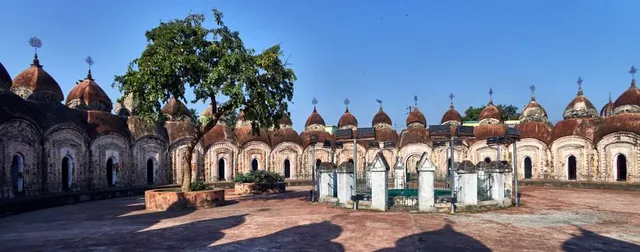
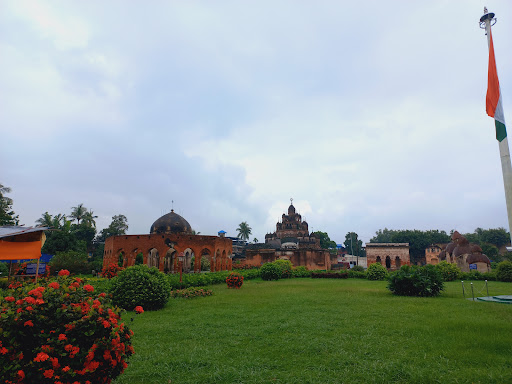
Just opposite the Naba Kailash Complex is the Rajbari Complex (or Palace Complex) consisting of a series of temples and other structures built over a period of more than a hundred years.
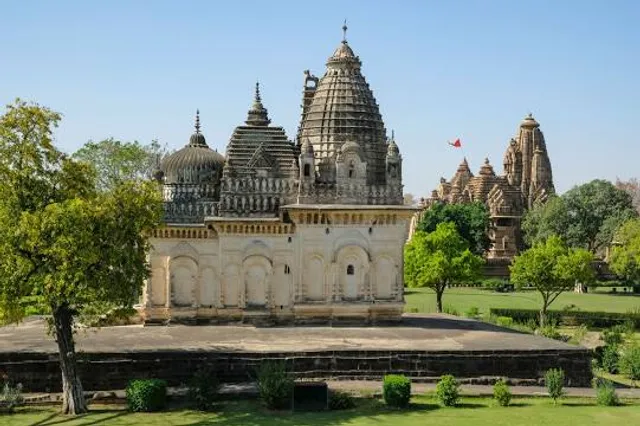
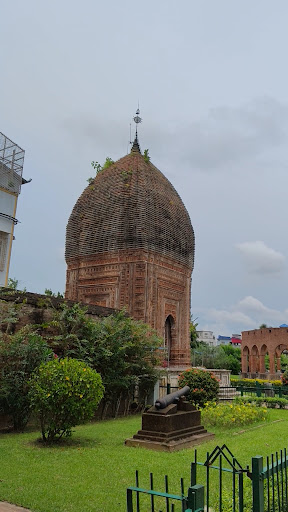
Located at the left of the entrance the Pratapeswar Temple (or Pratapeshwar Temple) greats visitors to the Rajbari Complex.The smallest but the most ornate of the temples of the Rajbari Complex. The 1849 built temple stands on a high podium. The Pratapeswar Temple is built in rekh deul style, with curvelinear sikhara and single arched entrance.
On the left of the Pratapeswar stands a small cannon and on the right is a Ras Mancha, whose roof has long collapsed. Further down the Rajbari Complex is the Lalji Temple, which itself is located within a small walled complex.
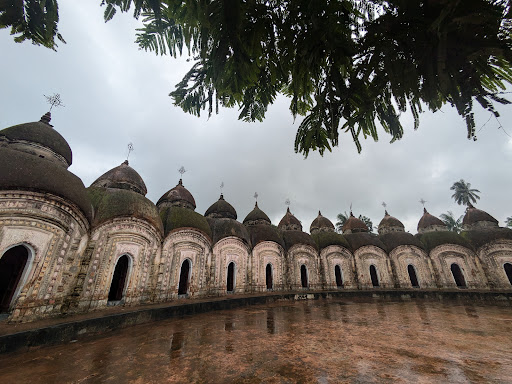
Lalji Temple follows the Panchabimsati Ratna style of architecture and consists of 25 pinnacles.
There are only 5 Panchabimsati Ratna temples in West Bengal and 3 of them are located in Ambika Kalna of which 2 are in the Rajbari Complex. The other 2 are located in Sukharia (Hooghly) and Sonamukhi (Bankura).
Just in front of the Lalji Temple is a Char – Chala (four sloped roofs) mandap, which served as a gathering platform for devotees visiting the temple. The complex also houses an interesting mountain like temple known as the Girigobardhana Temple.
A left turn from the Lalji Complex leads one past a decorative flat roofed structure and the Panchratna Temples and finally towards the Krishna Chandraji Temple, the second panchabimsati ratna temple of the Rajbari Complex.
Incidentally the third panchabimsati ratna temple, Gopalbari Temple is located outside the Rajbari Complex. The Pancharatna Temple is not a temple with 5 pinnacles temple but a compilation of of 5 aat – chala (eight sloped roofs) temples of different size. Although each of the 5 temples follow the aat – chala style of architecture but their shapes differ from each other.
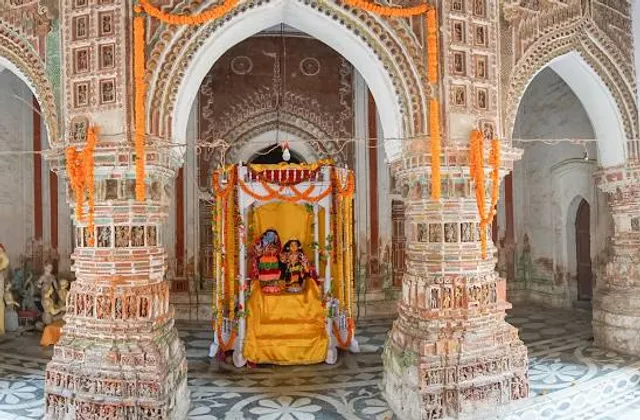
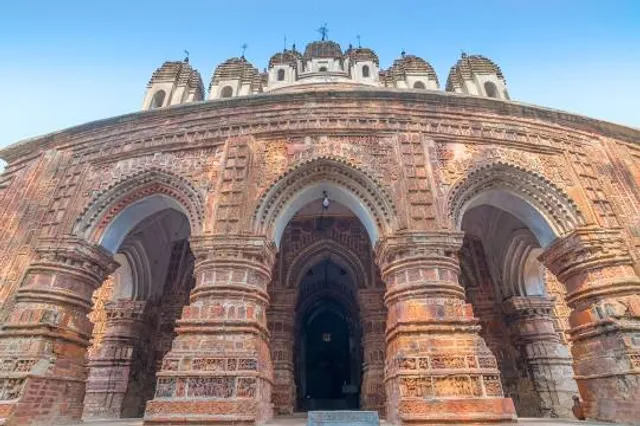
Like the Lalji temple complex the Krishna Chandraji Temple complex is housed in a separate complex and consits of several other structures including the Vijay Vidyanath Temple. Vijay Vidyanath temple is a huge aat – chala temple located at the left of the entrance, sadly it has no terracotta ornamentation. Next to it is the towering Krishna Chandraji Temple, with its 25 pinnacles. The Krishna Chandaraji Temple was built 1751 – 55 and has a three arched entrance on all sides. It also has a rich terracotta ornamentation in its front facade, depicting scenes from mythologies, epics and even day to day life.
Travel Tips: Getting there: Howrah – Katwa local (Howrah departure 07:53, Ambika Kalna arrival 09:48) Sealdah – Katwa local (Sealdah departure 07:57, Ambika Kalna arrival 10:30).
Getting around: Rickshaws are the only alternative. It takes 2 ½ to 3 hours for the entire trip. Charges are about Rs 150 per rickshaw for the entire trip, but it is subject to heavy bargain.
Places to eat: The temples & pilgrimages of Kalna can be covered in a day. There are several places to eat.
Getting back: Katwa – Howrah local leaves Kalna at 16:20. Katwa – Sealdah local leaves Kalna at 17:20.
Parking is a serious problem here as there is no standard parking parking lot for four wheeler.
Credit...
Read moreAmbika Kalna, also known as Kalna, is a city situated in the Purba Bardhaman district of West Bengal. It is located on the western banks of the Bhagirathi River.
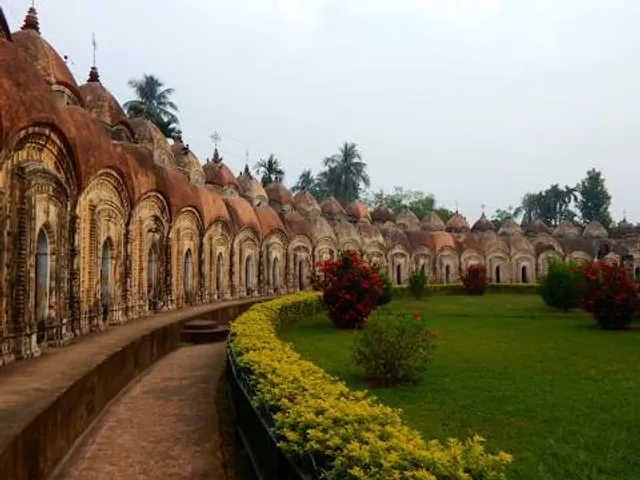
Kalna is known as “The Temple City”, as this place is famous for its glorious terracotta temples built in the 18th century.
The historical Rajbari, or palace, stands as a testament to the rich cultural heritage of its era, captivating visitors with its majestic architecture and intricate design. Constructed during a time of opulence and grandeur, the Rajbari served as the seat of power for generations of rulers, offering a glimpse into the lavish lifestyles of the past.
Stepping into the Rajbari, visitors are transported back in time, surrounded by ornate carvings, towering pillars, and sprawling courtyards. The attention to detail in every corner reflects the craftsmanship and dedication of artisans from centuries ago. From the grand halls where royal banquets were once held to the serene gardens where nobles strolled, each space exudes an aura of regality and splendor.
Exploring the Rajbari is like embarking on a journey through history, with each room telling its own story. Visitors can marvel at the intricate frescoes depicting mythological scenes, admire the delicate filigree work adorning doorways, and imagine the echoes of laughter and conversation that once filled the halls.
Beyond its architectural marvels, the Rajbari also serves as a repository of cultural heritage, housing priceless artifacts and relics from bygone eras. From antique furniture to royal regalia, each piece offers insights into the customs, traditions, and lifestyles of the past, enriching the visitor's experience with a deeper understanding of the region's history.
Despite the passage of time, the Rajbari remains a symbol of resilience, standing tall amidst changing landscapes and evolving societies. Its preservation not only honors the legacy of those who built it but also serves as a source of inspiration for future generations, reminding us of the importance of preserving our cultural heritage for posterity. In essence, a visit to the historical Rajbari is not just a journey through time, but a celebration of human creativity, ingenuity, and...
Read moreOverview: Kalna Rajbari Complex
Nestled in the town of Ambika Kalna (Kalna) on the west bank of the Bhagirathi River, the Kalna Rajbari Complex stands as a grand testament to the religious and artistic patronage of the Bardhaman zamindars during the 18th and 19th centuries .
Architectural Highlights
Pratapeswar Temple (1849): As you enter the complex, this temple—with its Rekha Deul (curvilinear spire) architecture—welcomes visitors. Built by Pearykumari Devi in memory of Raja Pratap Chand, it features deeply expressive terracotta panels with depictions from mythology and daily life .
Ras Mancha: A roofless, octagonal structure located next to the Pratapeswar Temple, consisting of an inner octagon with 8 arches and an outer one with 24. It was traditionally used for staging Ras-lila performances and cultural rituals .
Lalji Temple (1739): Dedicated to Radha–Krishna, this is the oldest temple in the complex. Built by Braja Kishori Devi (wife of Maharaja Jagat Ram), it’s an exquisite Panchabimsati Ratna (25-pinnacled) temple set within its own compound, featuring a char-chala natmandir and divine terracotta portrayals .
Krishna Chandraji Temple (1751–55): Another majestic Pancha-vimsati Ratna temple, commissioned by Raja Trilokchand in honor of his mother Lakshmikumari Devi. Rich in terracotta and limestone-stucco ornamentation, it portrays Krishna’s life and social scenes in great detail .
Vijay Vaidyanath Temple: Aat-chala styled temple built by King Trilokchand as fulfillment of his mother's wish. The temple stands behind the Krishna Chandraji Temple and exhibits subtle terracotta artwork .
Pancharatna/At-chala Temples: A row of five at-chala (eight-sloped roof) temples built in the 19th century, arranged on a raised platform—sometimes called Pancharatna (five shrine grouping) .
Rupeswar (Chandni) Temple & Nearby Shrines: Situated centrally, this flat-roofed temple along with other smaller at-chala shrines—some built by Raja Trilokchand’s first wife Rupkumari Devi—round out the...
Read more