HTML SitemapExplore
logo
Find Things to DoFind The Best Restaurants

Kathgola Bagan Bari — Attraction in West Bengal

Name
Kathgola Bagan Bari
Description
Nearby attractions
Nearby restaurants
Nearby hotels
Related posts
Keywords
Kathgola Bagan Bari tourism.Kathgola Bagan Bari hotels.Kathgola Bagan Bari bed and breakfast. flights to Kathgola Bagan Bari.Kathgola Bagan Bari attractions.Kathgola Bagan Bari restaurants.Kathgola Bagan Bari travel.Kathgola Bagan Bari travel guide.Kathgola Bagan Bari travel blog.Kathgola Bagan Bari pictures.Kathgola Bagan Bari photos.Kathgola Bagan Bari travel tips.Kathgola Bagan Bari maps.Kathgola Bagan Bari things to do.
Kathgola Bagan Bari things to do, attractions, restaurants, events info and trip planning
Kathgola Bagan Bari
IndiaWest BengalKathgola Bagan Bari

Basic Info

Kathgola Bagan Bari

Kathgola Bagan Connector Rd, Kathgola, Murshidabad, West Bengal 742160, India
4.4(2.7K)
Open 24 hours
Save
spot

Ratings & Description

Info

Cultural
Outdoor
Family friendly
attractions: , restaurants:
logoLearn more insights from Wanderboat AI.

Plan your stay

hotel
Pet-friendly Hotels in West Bengal
Find a cozy hotel nearby and make it a full experience.
hotel
Affordable Hotels in West Bengal
Find a cozy hotel nearby and make it a full experience.
hotel
The Coolest Hotels You Haven't Heard Of (Yet)
Find a cozy hotel nearby and make it a full experience.
hotel
Trending Stays Worth the Hype in West Bengal
Find a cozy hotel nearby and make it a full experience.

Reviews

Get the Appoverlay
Get the AppOne tap to find yournext favorite spots!
Wanderboat LogoWanderboat

Your everyday Al companion for getaway ideas

CompanyAbout Us
InformationAI Trip PlannerSitemap
SocialXInstagramTiktokLinkedin
LegalTerms of ServicePrivacy Policy

Get the app

© 2025 Wanderboat. All rights reserved.
logo

Reviews of Kathgola Bagan Bari

4.4
(2,714)
avatar
4.0
1y

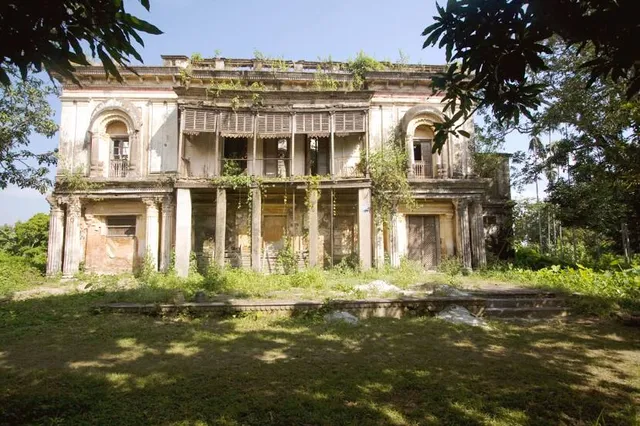
Kathgola Bagan Bari, often called Kathgola Garden House, is a historical palace located in Murshidabad, West Bengal, and reflects the opulent lifestyle of Bengal’s elite merchant families in the 18th and 19th centuries. This estate, primarily built by the affluent Jain merchant Dhanpat Singh Dugar in the early 19th century, showcases a blend of architectural grandeur, Mughal gardens, and Jain heritage that has become a significant tourist attraction for its historic and architectural value.

History and Background

Murshidabad, known as the former capital of Bengal under the Nawabs, became a prosperous trading center in the 18th century, attracting wealthy merchants who established grand estates. Kathgola Bagan Bari was built during this era when the influence of Nawabi culture and aesthetics blended with the wealth of Bengali traders, particularly the Jain merchants. This mansion was primarily owned by the Dugar family, who were prominent Jain merchants involved in the silk trade. The family’s wealth and influence are evident in the estate’s architecture, gardens, and treasures housed within its walls.

Architecture and Design

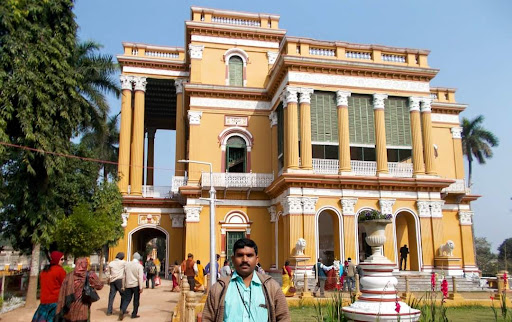
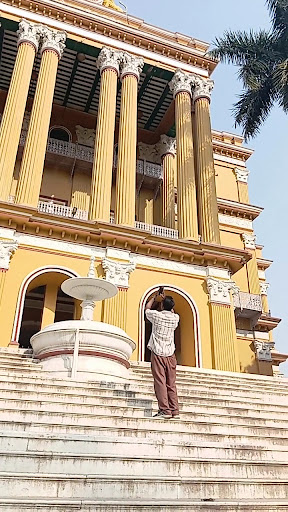
Kathgola Bagan Bari's architecture is a blend of European, Mughal, and traditional Bengali styles, creating a distinct aesthetic. The palace is four stories tall, with spacious rooms, intricate balconies, and well-preserved frescoes that reflect the grandeur of the era. The exterior includes Corinthian columns, ornate pillars, and expansive verandas, which lend the building a majestic, stately appearance. Inside, lavish decorations, chandeliers, and hand-crafted wooden elements display the wealth and taste of its original occupants.

The palace grounds are just as impressive as the building itself. The estate’s gardens are meticulously designed, featuring Mughal-style landscaping that includes manicured lawns, fountains, flowerbeds, and orchards. These gardens served not only as a private oasis for relaxation but also as a social gathering space for hosting guests and events.

The Jain Connection

The Dugar family were devout Jains, which adds a unique religious aspect to Kathgola Bagan Bari. Within the palace grounds, a small Jain temple is dedicated to Lord Adinath, the first Tirthankara in Jainism, making it a significant pilgrimage site for Jains. The temple, modest in size but adorned with intricate carvings and statues, reflects the Dugar family’s devotion and the importance of Jainism in their lives.

Additionally, the garden estate houses several rare statues of Jain deities, which are meticulously maintained and serve as a reminder of the religious heritage associated with the family. Visitors often find this aspect of Kathgola to be a peaceful retreat, offering insights into the Jain influence in Bengal during that era.

The Black Rose Legend

Kathgola Bagan Bari is often associated with the story of the "Kath Golap," or black rose, after which it is believed the garden was named. According to local lore, the garden once grew a rare species of black rose, a symbol of exotic beauty and mystery. Although there is limited historical evidence to confirm this legend, the tale of the black rose has become intertwined with the estate’s mystique, drawing visitors who are fascinated by its stories and legends.

Collections and Treasures

Inside the Kathgola mansion, the Dugar family’s wealth is evident through a collection of antiques, paintings, and artifacts from various regions. The palace houses exquisite Italian marble statues, European paintings, and elaborate crystal chandeliers that reflect the grandeur of the bygone era. One of the most intriguing aspects of the palace is the collection of armory and weaponry displayed within, which includes Persian swords, European muskets, and traditional Indian weapons, offering a glimpse into the defensive measures...

   Read more

avatar
5.0
1y

Kathgola Palace: A Testament to Bengal’s Architectural Grandeur

Kathgola Palace, nestled in the serene Kathgola Gardens of Murshidabad, West Bengal, is a splendid four-storeyed mansion that serves as a remarkable example of the opulent architectural style of the region. Built in the 19th century by the affluent Jain merchants of the Dugar family, the palace exudes an aura of royal elegance, a reflection of the wealth and influence they wielded during the period.

The palace’s exterior is an epitome of grandeur. The facade, intricately ornamented, boasts a unique blend of European and traditional Bengali architectural styles. One of the key features of Kathgola Palace is its use of detailed stucco work that decorates the exterior walls. Each corner of the palace is adorned with ornamental designs, and the balconies are framed with finely carved columns, showcasing a fusion of classical elements and regional artistry.

As you approach the palace, the detailed facade immediately captures attention with its vibrant paintings and intricate embellishments. The palace is also known for its extensive use of mirrors, a rare feature in local palaces, which lends a surreal charm to its interiors. The mirror work, accompanied by period furniture, transports visitors back in time, offering a glimpse of the luxurious lifestyle of its former inhabitants.

Upon entering Kathgola Palace, one is greeted by spacious rooms with high ceilings, each adorned with period furniture, chandeliers, and decorative pieces. The attention to detail in the furniture and fixtures is striking, with each item thoughtfully curated to complement the lavish decor. Large mirrors, placed strategically throughout the palace, amplify the sense of space and light within the grand rooms. Paintings depicting local scenes, historical events, and mythological stories add a touch of cultural depth to the interiors.

Surrounding the palace is the sprawling Kathgola Gardens, filled with lush greenery, flowering plants, and ornamental pathways. The gardens offer a tranquil escape from the hustle of urban life, and visitors can enjoy leisurely walks amidst nature. Adjacent to the palace, there is a small pond that adds to the charm of the surroundings. The reflection of the palace in the still waters of the pond creates a picturesque scene, especially during the golden hours of sunrise and sunset.

Kathgola Palace holds significant historical value, not just for its architectural beauty but also for the stories it represents. The palace was once a hub of trade and commerce, with the Dugar family playing an instrumental role in the region’s economy. It also stands as a testament to the flourishing Jain community in Murshidabad, with the nearby Jain Temple being another noteworthy site. The palace was a gathering place for dignitaries and traders, reflecting the cultural and economic importance of Murshidabad during its heyday.

Kathgola Palace is not merely a historical structure; it is a living legacy of Murshidabad’s rich cultural past. Its ornamented facade, detailed interiors, and serene gardens offer a captivating experience for visitors. The palace serves as an enduring reminder of the region’s architectural brilliance and the luxurious lifestyle of the Bengal aristocracy. A visit to Kathgola Palace is a journey through time, providing a window into the grandeur and elegance of...

   Read more
avatar
3.0
1y

A Timeless Marvel – Kathgola Palace and Gardens

Rating: ⭐️⭐️⭐️⭐️⭐️

Nestled within the enchanting Kathgola Gardens, the Kathgola Palace stands tall as a testament to the opulence and grandeur of Murshidabad's glorious past. This four-storeyed palatial wonder is a harmonious blend of art and architecture, showcasing the rich history of the region and the affluence of the Marwari Jain community.

As you approach the palace, the ornate facade immediately captures your attention. Adorned with intricate paintings, mirrors, and exquisite furniture, every inch of Kathgola Palace exudes a sense of timeless elegance. The meticulous craftsmanship and attention to detail reflect the affluence and taste of its builders, Dhanpat Singh Dugar and Lakshmipat Singh Dugar, who commissioned the palace in 1873.

The Kathgola Gardens surrounding the palace add to its allure, with a small pond and a baoli enhancing the picturesque setting. The ambiance is serene, offering visitors a chance to immerse themselves in the history and beauty that permeate the air.

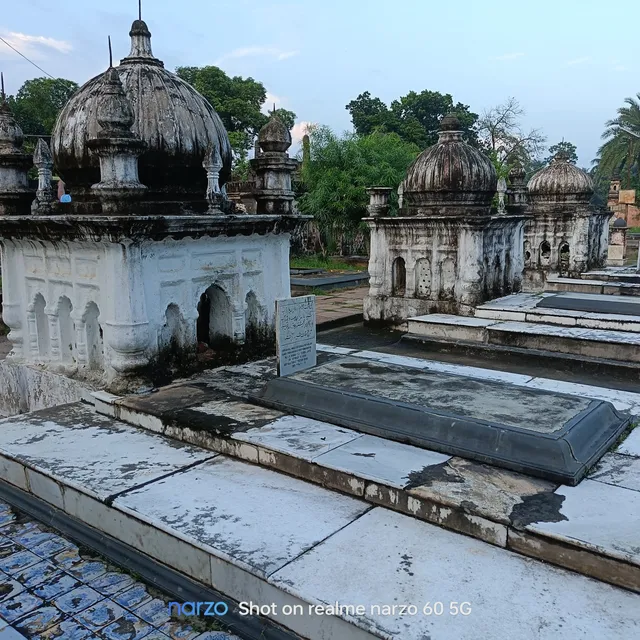
The palace's historical significance is further enriched by its proximity to other notable landmarks such as the Namak Haram Deorhi, Jafarganj Cemetery, Nashipur Rajbari, House of Jagat Seth, and the Tomb of Azimunissa Begum. This cluster of heritage sites provides a comprehensive glimpse into the cultural mosaic of Murshidabad during its peak in the early 19th century.

The Marwari Jain community played a pivotal role in shaping the destiny of Murshidabad, and their legacy is beautifully encapsulated in the Kathgola Palace. The migration of Marwari Jains to the region led to the construction of not just palatial residences but also numerous temples. Though some families eventually moved to Kolkata during the British era, their architectural marvels remain as a testament to their prosperity and cultural influence.

The Kathgola Palace, now transformed into a museum, is a treasure trove of artifacts that transports visitors back in time. Magnificent chandeliers, ornate mirrors, and exquisite furniture are on display, showcasing the lifestyle and taste of a bygone era. The museum's collection also includes 17 images of Jain tirthankaras, adding a spiritual dimension to the overall experience.

In conclusion, a visit to the Kathgola Palace and Gardens is not just a tour through history; it's a journey into the lap of luxury and culture. The meticulous preservation of this architectural gem allows patrons to witness the grandeur of Murshidabad's past. For connoisseurs of art and history, Kathgola Palace is a must-visit destination that promises an...

   Read more
Page 1 of 7
Previous
Next

Posts

Shyamal Rana (শ্যামল রানা)Shyamal Rana (শ্যামল রানা)
Kathgola Palace: A Testament to Bengal’s Architectural Grandeur Kathgola Palace, nestled in the serene Kathgola Gardens of Murshidabad, West Bengal, is a splendid four-storeyed mansion that serves as a remarkable example of the opulent architectural style of the region. Built in the 19th century by the affluent Jain merchants of the Dugar family, the palace exudes an aura of royal elegance, a reflection of the wealth and influence they wielded during the period. The palace’s exterior is an epitome of grandeur. The facade, intricately ornamented, boasts a unique blend of European and traditional Bengali architectural styles. One of the key features of Kathgola Palace is its use of detailed stucco work that decorates the exterior walls. Each corner of the palace is adorned with ornamental designs, and the balconies are framed with finely carved columns, showcasing a fusion of classical elements and regional artistry. As you approach the palace, the detailed facade immediately captures attention with its vibrant paintings and intricate embellishments. The palace is also known for its extensive use of mirrors, a rare feature in local palaces, which lends a surreal charm to its interiors. The mirror work, accompanied by period furniture, transports visitors back in time, offering a glimpse of the luxurious lifestyle of its former inhabitants. Upon entering Kathgola Palace, one is greeted by spacious rooms with high ceilings, each adorned with period furniture, chandeliers, and decorative pieces. The attention to detail in the furniture and fixtures is striking, with each item thoughtfully curated to complement the lavish decor. Large mirrors, placed strategically throughout the palace, amplify the sense of space and light within the grand rooms. Paintings depicting local scenes, historical events, and mythological stories add a touch of cultural depth to the interiors. Surrounding the palace is the sprawling Kathgola Gardens, filled with lush greenery, flowering plants, and ornamental pathways. The gardens offer a tranquil escape from the hustle of urban life, and visitors can enjoy leisurely walks amidst nature. Adjacent to the palace, there is a small pond that adds to the charm of the surroundings. The reflection of the palace in the still waters of the pond creates a picturesque scene, especially during the golden hours of sunrise and sunset. Kathgola Palace holds significant historical value, not just for its architectural beauty but also for the stories it represents. The palace was once a hub of trade and commerce, with the Dugar family playing an instrumental role in the region’s economy. It also stands as a testament to the flourishing Jain community in Murshidabad, with the nearby Jain Temple being another noteworthy site. The palace was a gathering place for dignitaries and traders, reflecting the cultural and economic importance of Murshidabad during its heyday. Kathgola Palace is not merely a historical structure; it is a living legacy of Murshidabad’s rich cultural past. Its ornamented facade, detailed interiors, and serene gardens offer a captivating experience for visitors. The palace serves as an enduring reminder of the region’s architectural brilliance and the luxurious lifestyle of the Bengal aristocracy. A visit to Kathgola Palace is a journey through time, providing a window into the grandeur and elegance of 19th-century Bengal.
SUBHENDU KOLAYSUBHENDU KOLAY
A Timeless Marvel – Kathgola Palace and Gardens Rating: ⭐️⭐️⭐️⭐️⭐️ Nestled within the enchanting Kathgola Gardens, the Kathgola Palace stands tall as a testament to the opulence and grandeur of Murshidabad's glorious past. This four-storeyed palatial wonder is a harmonious blend of art and architecture, showcasing the rich history of the region and the affluence of the Marwari Jain community. As you approach the palace, the ornate facade immediately captures your attention. Adorned with intricate paintings, mirrors, and exquisite furniture, every inch of Kathgola Palace exudes a sense of timeless elegance. The meticulous craftsmanship and attention to detail reflect the affluence and taste of its builders, Dhanpat Singh Dugar and Lakshmipat Singh Dugar, who commissioned the palace in 1873. The Kathgola Gardens surrounding the palace add to its allure, with a small pond and a baoli enhancing the picturesque setting. The ambiance is serene, offering visitors a chance to immerse themselves in the history and beauty that permeate the air. The palace's historical significance is further enriched by its proximity to other notable landmarks such as the Namak Haram Deorhi, Jafarganj Cemetery, Nashipur Rajbari, House of Jagat Seth, and the Tomb of Azimunissa Begum. This cluster of heritage sites provides a comprehensive glimpse into the cultural mosaic of Murshidabad during its peak in the early 19th century. The Marwari Jain community played a pivotal role in shaping the destiny of Murshidabad, and their legacy is beautifully encapsulated in the Kathgola Palace. The migration of Marwari Jains to the region led to the construction of not just palatial residences but also numerous temples. Though some families eventually moved to Kolkata during the British era, their architectural marvels remain as a testament to their prosperity and cultural influence. The Kathgola Palace, now transformed into a museum, is a treasure trove of artifacts that transports visitors back in time. Magnificent chandeliers, ornate mirrors, and exquisite furniture are on display, showcasing the lifestyle and taste of a bygone era. The museum's collection also includes 17 images of Jain tirthankaras, adding a spiritual dimension to the overall experience. In conclusion, a visit to the Kathgola Palace and Gardens is not just a tour through history; it's a journey into the lap of luxury and culture. The meticulous preservation of this architectural gem allows patrons to witness the grandeur of Murshidabad's past. For connoisseurs of art and history, Kathgola Palace is a must-visit destination that promises an unforgettable experience.
Amares SahaAmares Saha
We entered into the Kathgola garden through a large gate, Naubatkhana. It is actually a garden covering a huge area which was built by Lakshmipat Singh Dugar. It is said that at one point of time black roses were grown in the Kathgola garden and right side was full of mango trees. Some mango trees are there now. We saw expensive marble statues of Laxmipat Singh Sugar and his brother Dhanpat Singh Dugar in the garden. Before entering into the palace we purchased tickets @ ₹30/- each. On the left side there is a gateway of a underground tunnel which is going towards Bhagirathi river. It is said that this tunnel was connected with the residence of Jagat Seth. Now we saw river water at the bottom. On the right side ther is a mini zoo. A varieties of foreign birds, Emu bird and some rabbits are being nurtured. The Kathgola Palace stands majestic in the middle of the garden. The palace is now converted into museum with the belongings of the owners. We saw various expensive furniture, utensils, mirrors, paintings etc. Many group photographs are hanging in the walls. We could identify Dr. Radha krishna, Pundit Jawarharlal Nehru, Dr. Bidhan Chandra Roy, Mrs. Indira Gandhi in those photographs.The ticket for visiting the ground floor is included with the entry ticket of the garden itself. We had to pay ₹10/- each to visit the upper two floors. Among the items present in the upper two floors are nainly the items nade of marble. We also found several ponds within the garden and one is full of beautiful fishes. As the owners being Jains did not allow killing ir catching of the fishes. Instead if any fish died in the pond then that fish was buried in the garden. The visitors are not allowed to take photographs inside the museum. A beautiful Temple in memory Adinath, the first guru of the Jain is built within the total area of Kathgola Palace. There is beautiful architecture made in white stone in the temple. The Adinath Temple was built in 1793 by Harreck Chand. It of the beautiful temple with an admirable work of stucco. The main idol inside the Adinath Temple is that of Adinath. It is shown sitting in the lotus posture. The Kathgola Palace is a 4 storeyed structure. During the period of Battle of Plassey, monetary transactions did take place in Kathgola Palace. William Watts and Walsh met Mir Jafar, three days after the Battle of Plassey in 1757 and conferred concerning payment of the amounts stipulated for by them before the battle was fought.
See more posts
See more posts
hotel
Find your stay

Pet-friendly Hotels in West Bengal

Find a cozy hotel nearby and make it a full experience.

Kathgola Palace: A Testament to Bengal’s Architectural Grandeur Kathgola Palace, nestled in the serene Kathgola Gardens of Murshidabad, West Bengal, is a splendid four-storeyed mansion that serves as a remarkable example of the opulent architectural style of the region. Built in the 19th century by the affluent Jain merchants of the Dugar family, the palace exudes an aura of royal elegance, a reflection of the wealth and influence they wielded during the period. The palace’s exterior is an epitome of grandeur. The facade, intricately ornamented, boasts a unique blend of European and traditional Bengali architectural styles. One of the key features of Kathgola Palace is its use of detailed stucco work that decorates the exterior walls. Each corner of the palace is adorned with ornamental designs, and the balconies are framed with finely carved columns, showcasing a fusion of classical elements and regional artistry. As you approach the palace, the detailed facade immediately captures attention with its vibrant paintings and intricate embellishments. The palace is also known for its extensive use of mirrors, a rare feature in local palaces, which lends a surreal charm to its interiors. The mirror work, accompanied by period furniture, transports visitors back in time, offering a glimpse of the luxurious lifestyle of its former inhabitants. Upon entering Kathgola Palace, one is greeted by spacious rooms with high ceilings, each adorned with period furniture, chandeliers, and decorative pieces. The attention to detail in the furniture and fixtures is striking, with each item thoughtfully curated to complement the lavish decor. Large mirrors, placed strategically throughout the palace, amplify the sense of space and light within the grand rooms. Paintings depicting local scenes, historical events, and mythological stories add a touch of cultural depth to the interiors. Surrounding the palace is the sprawling Kathgola Gardens, filled with lush greenery, flowering plants, and ornamental pathways. The gardens offer a tranquil escape from the hustle of urban life, and visitors can enjoy leisurely walks amidst nature. Adjacent to the palace, there is a small pond that adds to the charm of the surroundings. The reflection of the palace in the still waters of the pond creates a picturesque scene, especially during the golden hours of sunrise and sunset. Kathgola Palace holds significant historical value, not just for its architectural beauty but also for the stories it represents. The palace was once a hub of trade and commerce, with the Dugar family playing an instrumental role in the region’s economy. It also stands as a testament to the flourishing Jain community in Murshidabad, with the nearby Jain Temple being another noteworthy site. The palace was a gathering place for dignitaries and traders, reflecting the cultural and economic importance of Murshidabad during its heyday. Kathgola Palace is not merely a historical structure; it is a living legacy of Murshidabad’s rich cultural past. Its ornamented facade, detailed interiors, and serene gardens offer a captivating experience for visitors. The palace serves as an enduring reminder of the region’s architectural brilliance and the luxurious lifestyle of the Bengal aristocracy. A visit to Kathgola Palace is a journey through time, providing a window into the grandeur and elegance of 19th-century Bengal.
Shyamal Rana (শ্যামল রানা)

Shyamal Rana (শ্যামল রানা)

hotel
Find your stay

Affordable Hotels in West Bengal

Find a cozy hotel nearby and make it a full experience.

Get the Appoverlay
Get the AppOne tap to find yournext favorite spots!
A Timeless Marvel – Kathgola Palace and Gardens Rating: ⭐️⭐️⭐️⭐️⭐️ Nestled within the enchanting Kathgola Gardens, the Kathgola Palace stands tall as a testament to the opulence and grandeur of Murshidabad's glorious past. This four-storeyed palatial wonder is a harmonious blend of art and architecture, showcasing the rich history of the region and the affluence of the Marwari Jain community. As you approach the palace, the ornate facade immediately captures your attention. Adorned with intricate paintings, mirrors, and exquisite furniture, every inch of Kathgola Palace exudes a sense of timeless elegance. The meticulous craftsmanship and attention to detail reflect the affluence and taste of its builders, Dhanpat Singh Dugar and Lakshmipat Singh Dugar, who commissioned the palace in 1873. The Kathgola Gardens surrounding the palace add to its allure, with a small pond and a baoli enhancing the picturesque setting. The ambiance is serene, offering visitors a chance to immerse themselves in the history and beauty that permeate the air. The palace's historical significance is further enriched by its proximity to other notable landmarks such as the Namak Haram Deorhi, Jafarganj Cemetery, Nashipur Rajbari, House of Jagat Seth, and the Tomb of Azimunissa Begum. This cluster of heritage sites provides a comprehensive glimpse into the cultural mosaic of Murshidabad during its peak in the early 19th century. The Marwari Jain community played a pivotal role in shaping the destiny of Murshidabad, and their legacy is beautifully encapsulated in the Kathgola Palace. The migration of Marwari Jains to the region led to the construction of not just palatial residences but also numerous temples. Though some families eventually moved to Kolkata during the British era, their architectural marvels remain as a testament to their prosperity and cultural influence. The Kathgola Palace, now transformed into a museum, is a treasure trove of artifacts that transports visitors back in time. Magnificent chandeliers, ornate mirrors, and exquisite furniture are on display, showcasing the lifestyle and taste of a bygone era. The museum's collection also includes 17 images of Jain tirthankaras, adding a spiritual dimension to the overall experience. In conclusion, a visit to the Kathgola Palace and Gardens is not just a tour through history; it's a journey into the lap of luxury and culture. The meticulous preservation of this architectural gem allows patrons to witness the grandeur of Murshidabad's past. For connoisseurs of art and history, Kathgola Palace is a must-visit destination that promises an unforgettable experience.
SUBHENDU KOLAY

SUBHENDU KOLAY

hotel
Find your stay

The Coolest Hotels You Haven't Heard Of (Yet)

Find a cozy hotel nearby and make it a full experience.

hotel
Find your stay

Trending Stays Worth the Hype in West Bengal

Find a cozy hotel nearby and make it a full experience.

We entered into the Kathgola garden through a large gate, Naubatkhana. It is actually a garden covering a huge area which was built by Lakshmipat Singh Dugar. It is said that at one point of time black roses were grown in the Kathgola garden and right side was full of mango trees. Some mango trees are there now. We saw expensive marble statues of Laxmipat Singh Sugar and his brother Dhanpat Singh Dugar in the garden. Before entering into the palace we purchased tickets @ ₹30/- each. On the left side there is a gateway of a underground tunnel which is going towards Bhagirathi river. It is said that this tunnel was connected with the residence of Jagat Seth. Now we saw river water at the bottom. On the right side ther is a mini zoo. A varieties of foreign birds, Emu bird and some rabbits are being nurtured. The Kathgola Palace stands majestic in the middle of the garden. The palace is now converted into museum with the belongings of the owners. We saw various expensive furniture, utensils, mirrors, paintings etc. Many group photographs are hanging in the walls. We could identify Dr. Radha krishna, Pundit Jawarharlal Nehru, Dr. Bidhan Chandra Roy, Mrs. Indira Gandhi in those photographs.The ticket for visiting the ground floor is included with the entry ticket of the garden itself. We had to pay ₹10/- each to visit the upper two floors. Among the items present in the upper two floors are nainly the items nade of marble. We also found several ponds within the garden and one is full of beautiful fishes. As the owners being Jains did not allow killing ir catching of the fishes. Instead if any fish died in the pond then that fish was buried in the garden. The visitors are not allowed to take photographs inside the museum. A beautiful Temple in memory Adinath, the first guru of the Jain is built within the total area of Kathgola Palace. There is beautiful architecture made in white stone in the temple. The Adinath Temple was built in 1793 by Harreck Chand. It of the beautiful temple with an admirable work of stucco. The main idol inside the Adinath Temple is that of Adinath. It is shown sitting in the lotus posture. The Kathgola Palace is a 4 storeyed structure. During the period of Battle of Plassey, monetary transactions did take place in Kathgola Palace. William Watts and Walsh met Mir Jafar, three days after the Battle of Plassey in 1757 and conferred concerning payment of the amounts stipulated for by them before the battle was fought.
Amares Saha

Amares Saha

See more posts
See more posts