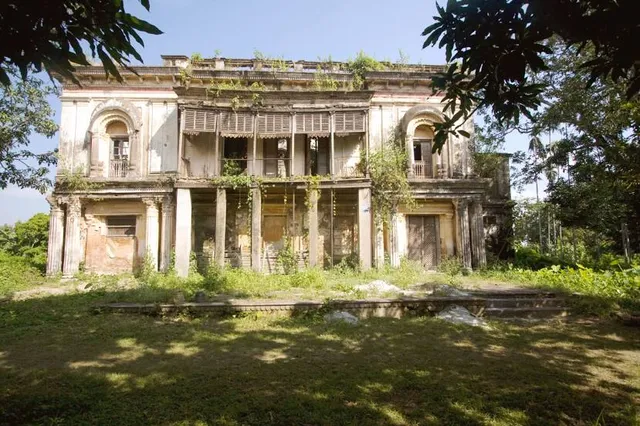
Location Jafraganj Cemetery is located at 24°12′03″N 88°15′45″E. The Namak Haram Deorhi, House of Jagat Seth, Nashipur Rajbari , Kathgola Palace and Tomb of Azimunissa Begum are all located nearby. One can reach the temple town of Rani Bhavani at Baranagar, on the other side of the Bhagirathi, by country boat from Ajimganj. History Jafargaj Cemetery was built by Mir Jafar over an area of 3.51 acres within an enclosure of waved walls, about half a mile north to the Nizamat Fort Campus and inside the campus of Namak Haram Deorhi. It hosts the graves of the later Nawabs of Bengals of the Najafi dynasty, starting from Mir Jafar, and their family members while Khushbagh, which was built by Nawab Alivardi Khan, hosts the graves of the Nawabs of Bengal belonging to the Afshar dynasty and their family members. At present this graveyard is controlled and maintained by the Archaeological Survey of India. It is said that earlier there was a "Kitchen Garden" at the site of this cemetery which Shah Khanaum Begum (Mir Jafar's wife and Alivardi Khan's sister) was very fond of.The Jafarganj Cemetery has the graves of the family members of the Nawab of Bengal. It hosts the graves of Nawab Nazim Humayun Jah, his wives Umdat-un-nisa Begum, Amir-un-nia-Dulhan Begum, Sultana Ghetiara Begum and Rais-un-nisa Begum; Nawab Nazim Walla Jah, his wife Nazib-un-nisa Begum; Mir Jafar and his wives Shah Khanaum Begum, Babbu Begum and Munny Begum; Nawab Nazim Mubarak ud-Daulah, his wife Faiz-un-nisa Begum; Syud Ahmed Nazafi, (Mir Jafar's father); Muhammad Ali Khan (Mir Jafar's brother); Bohu Begum, wife of Nawab Nazim Ali Jah; Nawab nazim Nazam ud-Daulah; Nawab Nazim Saif ud-Daulah; Babar Ali; Mehr Lekha Begum, (also known as Guiti Afroz Mahal), wife of Humayun Jah, who was previously a mut‘ah wife and Ismail Ali Khan and Ashraf Ali Khan (the sons-in-law...
Read moreJafarganj Cemetery in Murshidabad is a place of historical significance and tranquil beauty. It serves as the final resting place for several prominent figures from the Nawabi era, adding to its cultural and historical importance.
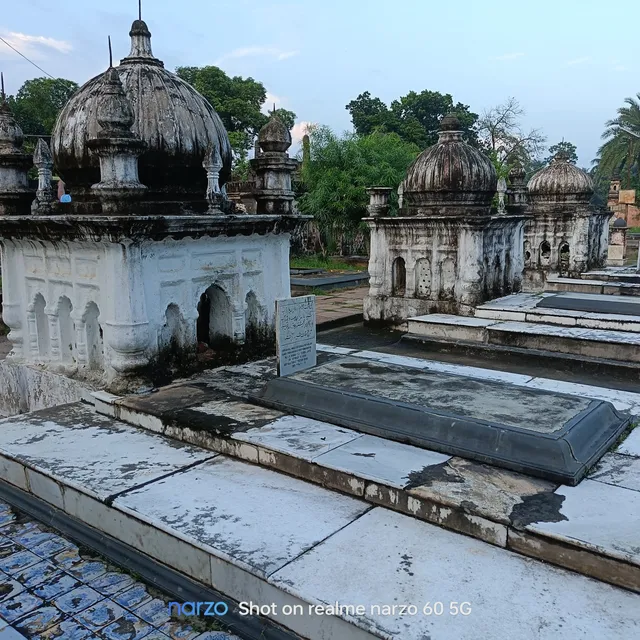
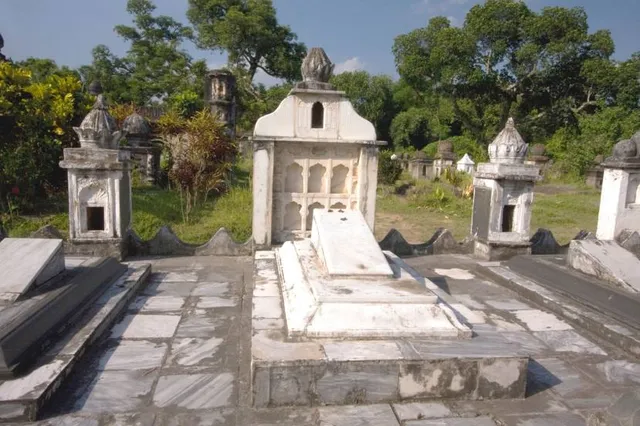
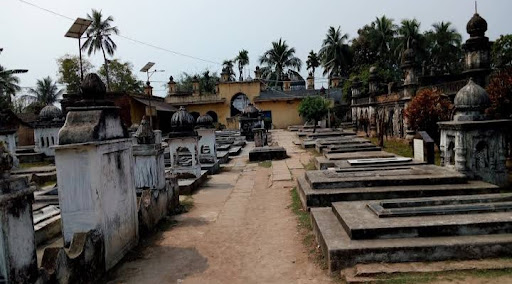
The cemetery's architecture is a blend of Mughal and European styles, with intricately designed tombs and gravestones that reflect the artistry of the time. Walking through the cemetery, one can sense the rich history and heritage of Murshidabad, making it a compelling destination for history enthusiasts and those interested in the region's past.
One of the striking features of Jafarganj Cemetery is its peaceful ambiance. Surrounded by trees and greenery, the cemetery offers a serene environment that is perfect for quiet contemplation and reflection. Visitors can take a leisurely stroll through the grounds, admiring the architecture and paying respects to the departed souls.
Jafarganj Cemetery also offers a glimpse into the social and cultural life of Murshidabad during the Nawabi era. Many of the tombs and gravestones bear inscriptions that provide insight into the lives and achievements of the people buried there, adding a personal touch to the historical narrative.
Overall, Jafarganj Cemetery is a place of historical and cultural significance that offers a peaceful retreat from the hustle and bustle of daily life. Whether you're interested in history, architecture, or simply seeking a tranquil setting, Jafarganj Cemetery is well...
Read moreThe Jafarganj Cemetery in Murshidabad, West Bengal, is a solemn reminder of the region's Nawabi history and the decline of a once-flourishing dynasty. Situated about 1.5 kilometers from Hazarduari Palace, this expansive burial ground holds significant historical value. It serves as the final resting place for the family members of Mir Jafar, the controversial Nawab of Bengal whose betrayal at the Battle of Plassey (1757) marked the beginning of British rule in India.
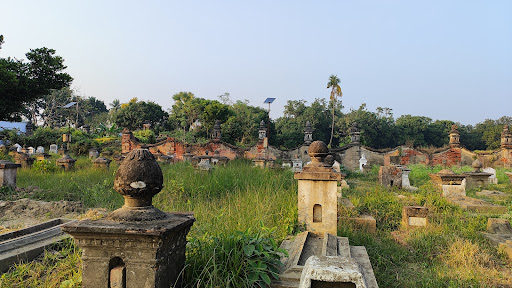
Spread across a tranquil area, the cemetery is enclosed by high brick walls and dotted with around 100 graves. The tombs, though weathered by time, showcase Mughal-style architecture, featuring modest carvings and inscriptions. Among the notable burials are those of Mir Jafar himself, his descendants, and other family members. The site also houses the tomb of Mir Jafar’s son, Miran, infamous for his cruelty and tragic demise.
Despite its historical significance, the cemetery is steeped in an eerie atmosphere, often linked to tales of betrayal and the Nawab family's turbulent history. The neglect and overgrowth lend a haunting charm to the place. Visiting Jafarganj Cemetery offers a reflective journey into the darker chapters of Bengal’s history, making it a somber yet compelling destination for history...
Read more