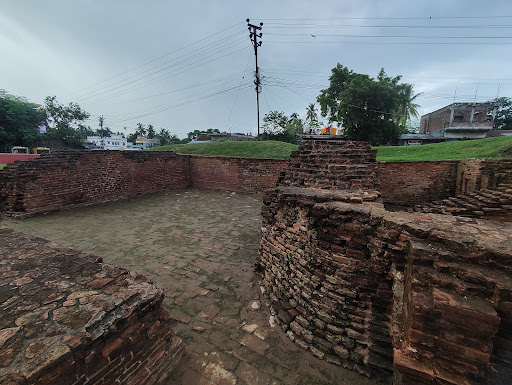
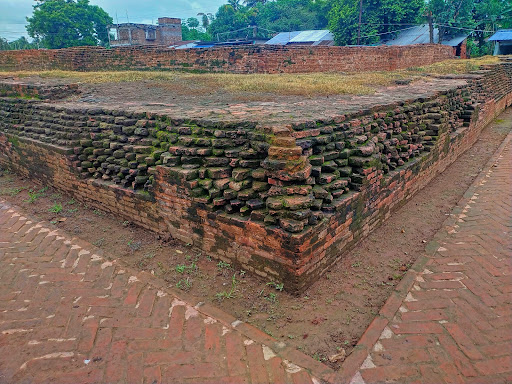
CHANDRAKETUGARH Situated in the district of North 24 parganas in the state of West Bengal, Chandraketugarh represents reminiscence of a multicultural site and an important urban centre. The chronology of Chandraketugarh can be traced back to 5th Century BC. The pre Mayuryan period (C.600-300BC) was followed by Mayuryan period (...C.300-185BC), then the Shunga (C.185BC-50AD); the Kushana (C.50-300AD); the Gupta (C.300-500AD); the Post Gupta (C.500-750AD) and the Pala-Sena (C.750-1250AD) period. However, the most flourishing period of the site was between C.200BC to C.200AD.
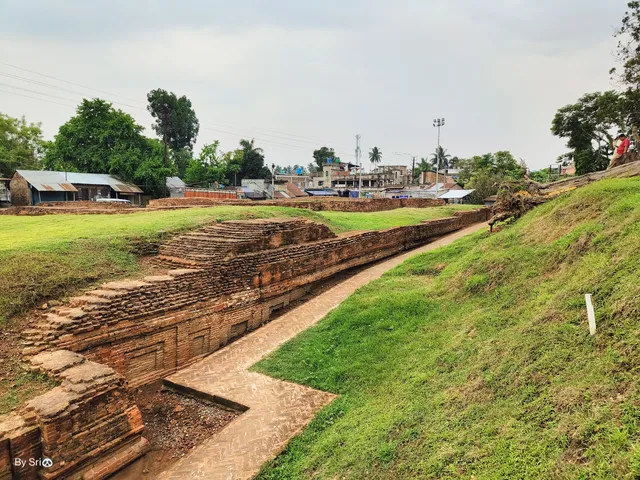
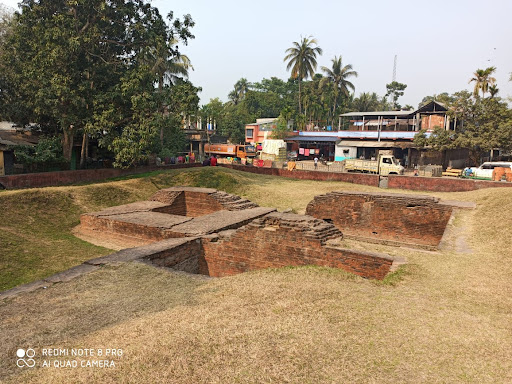
Being in the abyss of oblivion for a long period, Chandraketugarh was discovered in the early years of 20th century when road building activity.The excavations at Chandraketugarh was mainly conducted at the mound known as Khana-Mihirer-Dhipi in the northern sector of the city and revealed a massive burnt-brick temple complex. The name Khana-Mihirer-Dhipi is probably associated with the great astrologers Khana and Mihira. Three pre-temple earlier periods have been found in Khana-Mihirer-Dhipi , the earliest going back to a level yielding NBP ware and Punch-marked and Cast-copper coins. Beginning from the opening session of 1957-58 till 1965-66 in the report of each year in the IAR, the stupendous temple at Khana-Mihirer-Dhipi has been stated to be of the Gupta period with renovations carried out in later periods. But then in 1967-68, the final year, it was stated that “A tentative date of circa 7th -8th century AD is postulated for the earliest phase.
The mound known as Chandraketugarh or SinghaDarwaza had a high wall with a rampart and a moat, remains of which can be seen till now.
Chandraketugarh and adjacent areas have produced an array of artefacts mostly belonging to the Shunga-Kushana period.
The terracotta art of the site is most famous for it’s detailed workmanship and artistic execution. These include mould-made plaques delineating human male and female figures (In the form of Yaksha; Yakshi; Kubera; Gana; Aditi Uttanpad or Lajja-Gouri or the Birth-giving mother etc.); the tales of Panchatantra; the Jataka etc. There are also narrative plaques which depict processions, music and dance, people at work and homely scenes. Animal motifs are found in both plaques and figurines. Clay made toycart with a hollow space to accommodate axle and wheels have been found.
A large number of erotic plaques delineating various postures of “MAITHUNA”, sometimes in pair or in group and also with animals were found in this area. According to Dr. Enamul Haque (Academic Director-the International Centre for Study of Bengal Art-Banani-Dhaka-Bangladesh), the plaques are of pre Buddhist period and earlier to the sculptures of Khajuraho or Konark. A large number of plaques describe the postures of coition narrated in the “Kamasutra” of Vatsayana. Though it is believed that Vatsayana wrote his “Kamasutra” at least centuries later. Some scholars believe that Vatsayana either visited this place several times or had his residence in “Gangeya-Banga”.
A large number of potteries that includes black-polished ware, black ware, grey ware, red ware, buff ware and chocolate ware were found. Silver punch-marked coins and uninscribed cast-copper coins have been found from the site along with billion punch-marked coins with boat symbols.
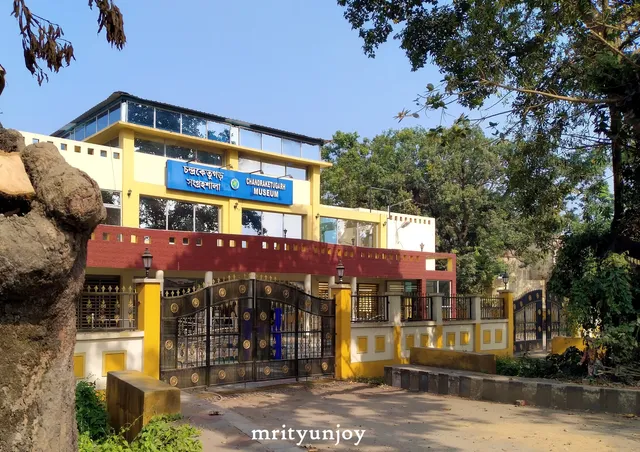
Other than these, the site has yielded a large number of beads of semi-Precious stones like Agate; Carnelian; Quartz-crystal; Garnet; Amethyst and Jasper etc. Many bone objects like awls; stylus; arrowheads etc. and a few iron and copper elements were also found. Nevertheless, some wooden objects also sustained almost in intact. (N.B.-The collection of State )
Copy From Gautam...
Read more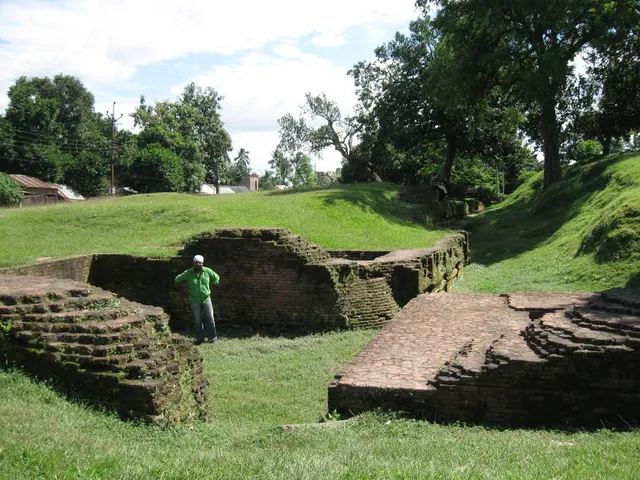
 Learn more insights from Wanderboat AI.