In my almost 35 years stay in Haldia, this is the first time I visited this historic place. Never got the chance nor was I actually interested in seeing what's there.
Recently it came to my mind to explore what's really there as I have heard several good reviews of the place.
With these things running through my head, I planned a half day tour to the Rajbari from Haldia Township. It was a 29 kms drive. The road was maintained and the drive was smooth. On reaching Mahishadal more you have to turn left to enter the Rajbari road. When you enter this by lane it becomes narrow and the traffic increases. A college is also there on the road. So, reaching Rajbari from Mahishadal more wouldn't be a hassle free drive.
Overcoming those huddles, as you reach the main gate of the Rajbari, I was a bit depressed seeing the main gate. There was no dedicated parking place in front of the gate. The road is narrow in front of the gate and you have to manage your own parking as your own risk.
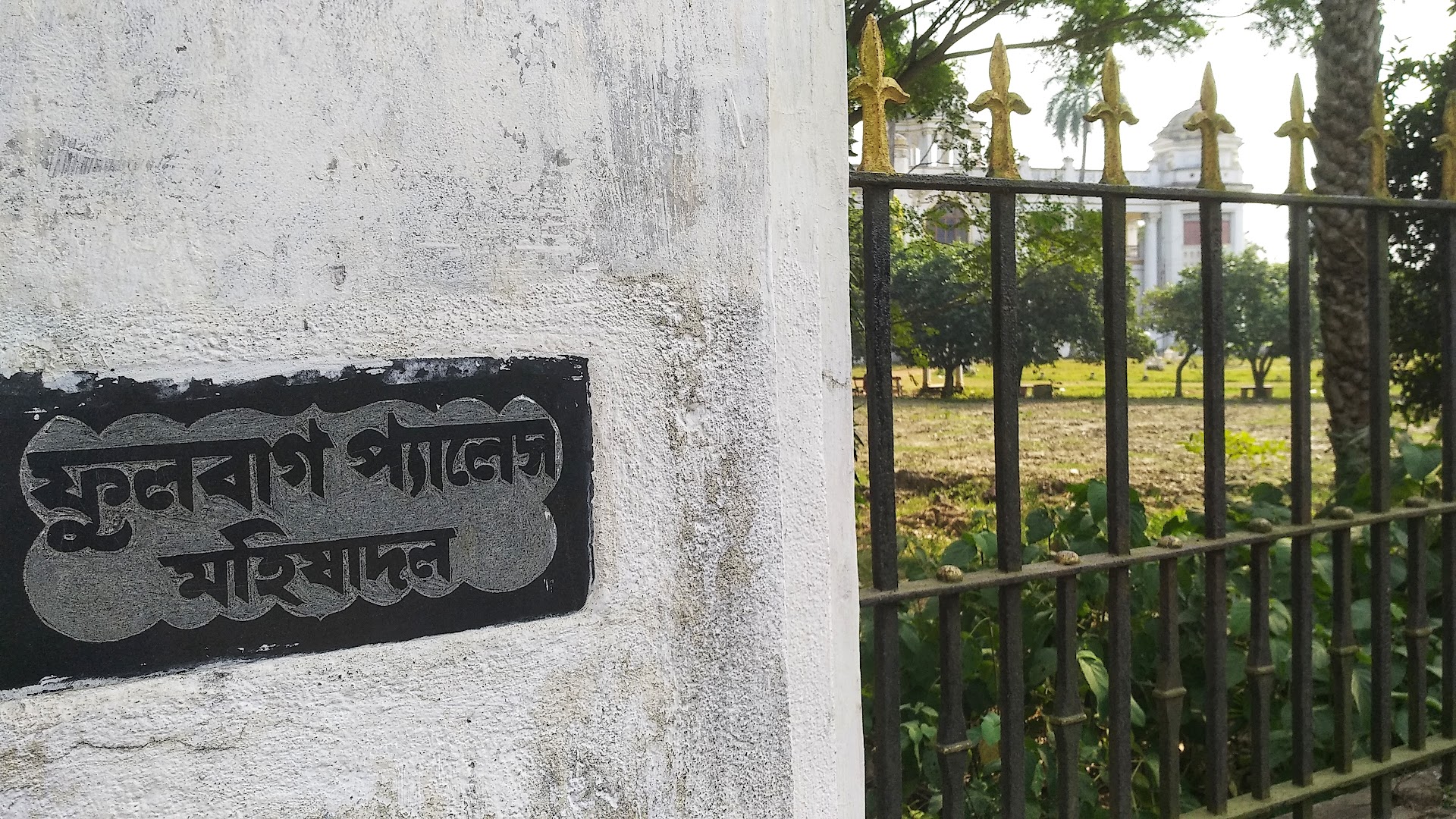
After parking my car in a safe place, I stood still in front of the gate and wanted to feel the ambiance. It was calm and quiet but it didn't give me that gorgeous feel, as it was not at all like I expected a Rajbari Gate to be. The size of the gate was bigger than our normal gates but not as big as a Rajbari Gate should be.
After entering the gates the view inside was awesome with old aged trees covering the paths going towards the portico of the Rajbari. Going a few steps towards the portico, saw two persons sitting with a table in front of them, who were actually selling entry tickets. Got ticket for my family. It was cheap.
Finally, after going few steps from the counter, reached the lawn in front of the Rajbari. The lawn was not best maintained. Few old iron furniture are kept there. You can sit there ans spend few minutes before entering the main Rajbari area. From the lawn after crossing the paved path, there are stairs going inside the Rajabari. I was gradually feeling excited as I was proceeding through it. The Rajbari was not that big, but still the ambiance inside made me feel thrilled. There are numbers of museums in the rooms of the Rajbari.
I was amazed seeing the collection these museum holds. Loved it totally.
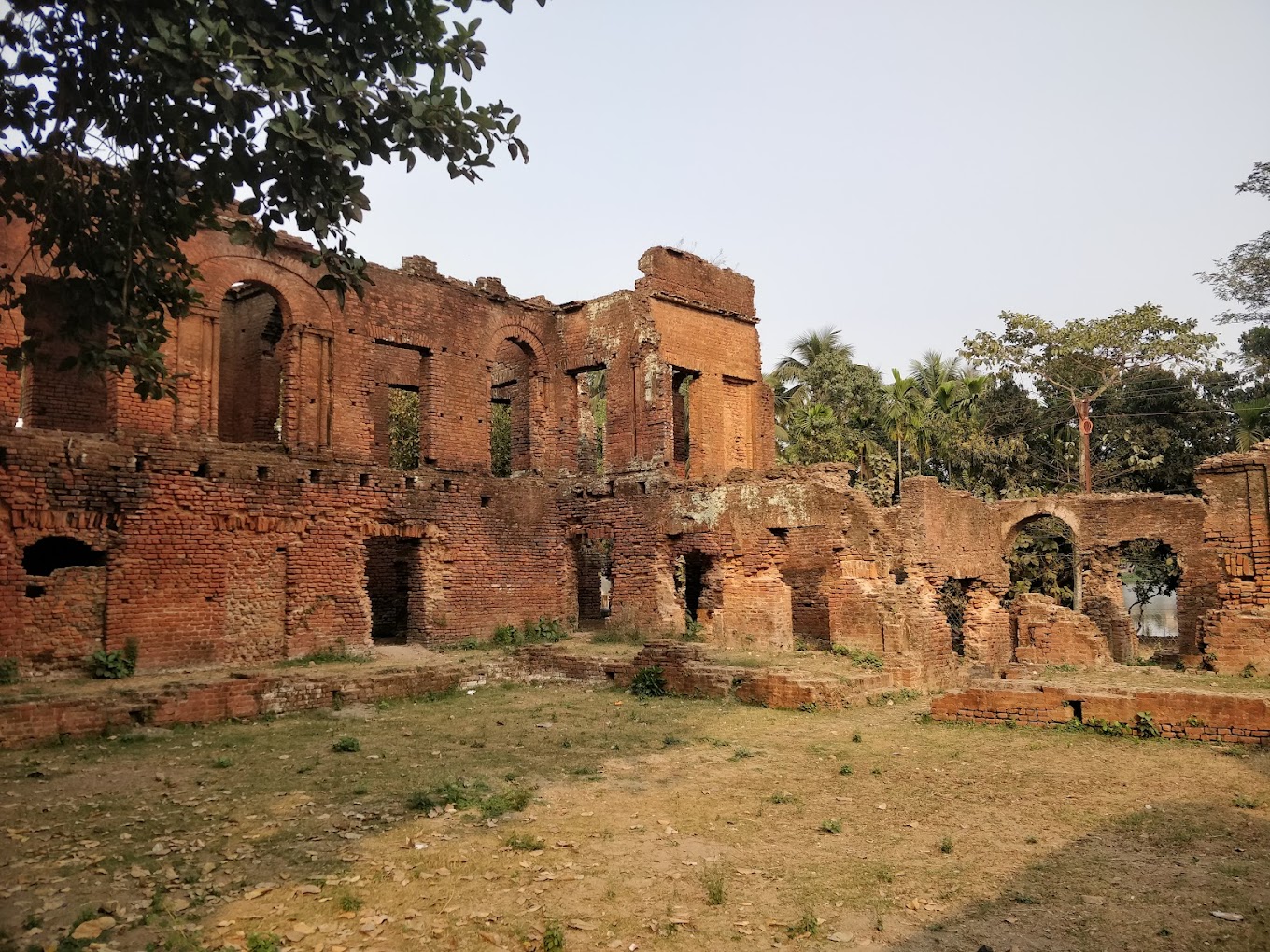
Gradually, we completed our inside trip and then after coming out from the main building, we walked towards the old palace.
Photography inside the rooms in the palace is prohibited. I appreciate the decision. Seeing items from the past with own eyes will make the trip more thrilling.
Overall, ambiance around the new palace, the Shiv Mandir, the old palace and the ruined gates of old palace will pack you with historical thrills.
So do plan a weekend trip to the palace.
Heard that the present generation of the family rents one night stay in a room in the palace. I am not sure if it's still on our...
Read moreThe History of Mahishadal Raj Bari dates back to the 16th Century when the current place “Geokhali” was known as “Jibonkhali”. It was during this time that Emperor Akbar was reigning India and the Mahishadal Raj Bari was founded by Janardhan Upadhya, who was a high ranked personnel in the Emperor’s Army. Starting from Raja Janardhan Upadhya the baton passed to Raja Duryodhan Upadhya, Raja Ramsharan Upadhya, Raja Rajaram Upadhya, Raja Shukh lal Upadhya, Raja Anadalal Upadhya. It was at this stage that Raja Anadalal Upadhya died and his wife Rani Janaki Devi started ruling the Mahshadal Estate during 1770-1804. Madan Gopal jew temple is the main temple at Mahishadal besides Ram jew temple Dadhibaman jew and Janakinath temple at Nandigram are some of the temples Rani Janaki built. MadanGopal temple was established in 1774 and the famous Rathjatra started from 1776 which is till date one of the most famous festivals of Bengal besides the age-old Durga puja at Mahishadal Rajbari.
The couple had a girl child Rani Manthara Devi after which the lineage transferred to her son, Raja Guru Prasad Garga to the current Sankar Prasad Garga and Hara Prasad Garga.
LOCATIONS NEARBY RAJ BARI
5 min walk to Madan Gopal Jew temple, built by Rani Janaki in 1774. The famous Rathayatra of Mahishadal started in 1776 after the construction of the temple.
5 min walk to Rangi Basan Palace built in 1840. It is currently preserved by West Bengal Heritage Commission. Beside this, there is 'Thakur Dalan' where Mahishadal Rajbari's Durga Puja is held every year.
10 mins walk to 'Gandhi Kutir'. The Mahatma had visited and stayed here.
5 min walk to Mahishadal Raj School and Raj College, both of which were built by Mahishadal Raj Family. Adjoining areas -
7 to 8 Km - Geonkhali( previously called Jibankhali) - it is also called Triveni Sangam where 3 rivers unite.
19 Km - Tamluk - previously known as Tamralipta - there is a historical temple called 'Barghabhima'.
Khirai - Valley of flowers - seasonal - only for winters.
ATTRACTIONS MADAN GOPAL JIU MANDIR – A HANUMAN TEMPLE IN WHITE MARBLE STONE, LAL BAGAN, RASHMANCH, JANAKI NATH MANDIR, RANI SAGAR ARE THE PRINCIPAL ATTRACTIONS FOR THE ESTATE. The Rath Yatra in Mahishadal is called “MadanGopal Jew Rath” is an Utsav which adds to the pomp and glory of this ancient estate and is a cultural heritage for the local people. There is a museum for visitors where all artefacts, old cutlery etc are kept since 30th July’2012. It is also a favourite place for shooting films from long. Maha Nayak Uttam Kumar’s RaiKamal, Choti si Mulaqat and till date Khokha, Koyel Mullick’s Arundhati...
Read moreNestled in the heart of East Midnapore, the majestic Mahishadal Rajbari is that grand old aristocrat who refuses to retire quietly. Think marble, music, and a hint of mystery — all wrapped in an imperial bow. It’s less of a monument and more of a time capsule where Bengal’s feudal flamboyance meets cultural finesse with dramatic flair.
First Impressions? Regal Drama. Walk through the iron gates and boom — you’re in a Satyajit Ray frame, minus the film crew. The first thing that hits you is the Neo-Classical architecture, with high-pillared porticos, sweeping staircases, and intricate stucco work that screams, “Yes, we had serious taste back in the day!”
Built in 1902 by the Mahishadal Zamindar family, this Rajbari is actually the newer palace. The original one, just nearby, now modestly moonlights as a college (because apparently, even palaces need second innings).
The Inside Scoop: Home to generations of Basu Roys, Mahishadal Rajbari was a hotbed of art, music, and politics. These weren’t just royals—they were revolutionary patrons. Think kings with khadi! The palace boasts a rare collection of Belgian glass chandeliers, grand pianos, oil paintings, and porcelain that could make Downton Abbey look like a garage sale. The attached Rangibasan Palace Museum is a delightful rabbit hole of vintage weaponry, costumes, and family memorabilia that whisper tales from another century.
The Rajbari’s Not-so-Secret Charm: It hosts the famous Rath Yatra festival with such grandeur that even Lord Jagannath might feel a little extra pampered. Locals say it’s “half-spiritual, half-carnival, full madness” — and honestly, that checks out.
Instagram Gold Alert: Visit during golden hour and the columns practically glow. Bonus points if you capture a peacock strutting across the lawn like it owns the place (because it probably does).
Final Word? If heritage had a personality, Mahishadal Rajbari would be that well-dressed uncle who still tells the best stories at family reunions. A perfect weekend detour for those craving culture with a side of...
Read more