📍 Location:
Burul Rajbari, also called the Burul Palace, is located in Burul village, not exactly in Santiniketan, but in South 24 Parganas, West Bengal.
Many confuse it with other rajbaris or link it to Santiniketan due to the similar architectural ambiance. If you're referring to a rajbari near Santiniketan, you might mean Surul Rajbari or Roy Bari of Surul — which is actually in Santiniketan.
✅ Clarify: Do you mean Surul Rajbari (near Shantiniketan, Bolpur) or Burul Rajbari (in South 24 Parganas, by the Ganges)? Assuming Burul Rajbari, here is the correct info:
🧭 Historical Background:
Burul Rajbari is the ancestral palace of the Mitra Mustafi family, one of the prominent zamindar families during the British era.
The estate thrived under the Bengal zamindari system, with Burul being a key riverine hub due to its location beside the Hooghly River.
The Mitras were known patrons of Bengali art, culture, and the freedom movement.
🏛️ Architectural Features:
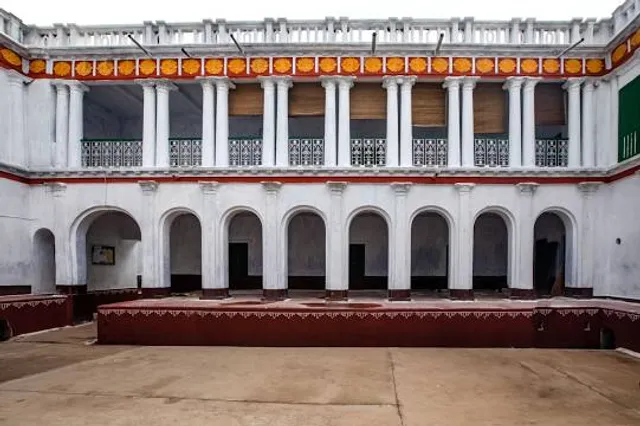
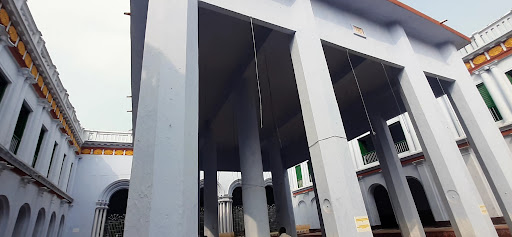
The rajbari showcases a mix of Indo-European and colonial Bengali architecture.
Key features:
High Doric columns in the facade
Symmetrical verandahs with tall doors and arches
Long open courtyard (adda-style)
Antique wooden furniture and iron railings
River-facing back, offering scenic views of the Ganges
🎭 Cultural Significance:
Hosted several cultural gatherings, Durga Pujas, and local festivities.
A key example of zamindari patronage of Bengali traditions.
Some local legends say famous Bengali personalities like Bibhutibhushan Bandyopadhyay and Jadunath Sarkar visited during their research or journeys.
🎒 Tourism Relevance:
Not a major tourist destination yet — offbeat and raw, which makes it ideal for explorers and content creators.
Accessible via Diamond Harbour Road, around 2 hours from Kolkata.
Locals are friendly but permissions are needed for photography inside the house if private sections are still inhabited.
🎥 Instagram/Content Creation Tips:
🔹 Ideal Content Types:
Drone shots over the Ganges and Rajbari
Architectural close-ups (pillars, textures, motifs)
Time-lapse of sun setting over the river backdrop
Traditional attire shoot for heritage vibes
Documentary-style Reel with narration on...
Read moreMost of the people who visit Santiniketan either doesn’t know or are not much interested in visiting this century-old Zamindari house.They are also called as Rajbari or Bonedi Bari in Bengali for the palatial grandeur and the flamboyant lifestyle of the rich aristocrats.
Some people visit Bolpur as a day trip as Santiniketan is well connected with the rail. It becomes easy to take a train from Howrah and again board the evening train and return.
But a place like Bolpur which holds a perfect blend of culture, tradition, serenity and calmness deserve more than a single day stay. Once in Bolpur you will long to spend a few more hours. Sitting idle, listening to the sound of the wind, the song of birds chirping, the fresh scent of raanga maati or red soil, immersing yourself in the melodious tunes of the bowl singer and get carried away to a world so pleasant and charming.The Surul Rajbari belonged to the Sarkars who were the affluent zamindars during the British rule. The Sarkars were greatly responsible for the socio-economic development of Surul to a great extentThe earliest ancestor of Surul’s Sarkars was Bharat Chandra. He along with his wife Srimati Bimala settled in Surul after being advised by their Gurudev Sri Basudev Bhattacharjee.They gave birth to a son and named him Krishnahari Sarkar. Gradually the family settled permanently in Surul.Sri Krishnahari had three sons- Jadavendra, Madhavendra and Kalicharan. The descendants of Jadavendra Sarkar and Kalicharan were the inmates of Surul Borobari and the descendants of Madhavendra of the Surul Chotobari. As such there are two Durga Puja celebrated one belonging to the Chotobari and another Borobari.
Jadavendra Sarkar had two sons- Brajaballav and Rajballav. Brajaballav had five sons of which his third son Sri Srinivas Sarkar established a distinct name and identity in Surul. He made praiseworthy contributions and played a major role in the well being of the Sarkar family. This Rajbari was built by Sri Srinivas Sarkar, a prominent zamindar during the 18th century in Colonial India. Srinivas Sarkar earned remarkable name after he started getting involved with the East...
Read moreTrusted Reviews
City Guides

Similar GuidesTravelTourist Attractions
Visit This 290-Year-Old Rajbari For A Glimpse Into Bengal's History & Heritage
By Devyani
6614 Interested |
9.1K Views

Photo Source: MusafirJunction

Photo Source: P.K. Niyogi

Photo Source: MusafirJunction
Sarkar Rajbari, Santiniketan
SEE ON MAP
What Makes It Awesome
Did you know there’s an over 290-year-old rajbari surrounded by stunning terracotta temples in a small village in Shantiniketan? Yes!
Surul (previously known as Surulia), a village located a few kilometres away from Bolpur station, houses the Sarkar Bari built in the 1750s. The Surul Sarkar Bari still remains in terrific condition despite being almost three centuries old! It was built by a businessman named Srinivas Sarkar, the great great grandson of Bharatchandra Sarkar (the first person who migrated to Surul village and settled there). Srinivas apparently made a lot of money by selling sails for ships that sailed from the Saheb Ghat port in Illambazar. It also boasts of several dilapidated but unique temples with a lot of intricate terracotta carvings.
The ancient panch ratna Lakshmi Janardhan Temple has three arches with the central arch depicting a war scene between Ram and Ravan while the two remaining arches depict the former's coronation ceremony and the latter's meeting with his generals. The twin temples made in the rekha-deul style dedicated to Lord Shiva with terracotta panels are also worth a visit.
We would also recommend visiting a couple of other temples built by Srinivas Sarkar. One is an aatchala showing an eroded Lord Jagannath's rath in terracotta. The other is a rekha-deul style temple depicting Shiva playing the tanpura. There are figures of other gods and goddesses as well. Watch out for the terracotta carvings depicting Goddess Durga with her family and women in European dresses.
Info...
Read more