The temple is not the most amazing thing ever, but it is an interesting thing to see. One of those that if you miss you are fine, but if you see it you are just a little richer. That is what travelling will do for you.
If you are doing a tour of the island and can stop there, I recommend. It won’t take more than 30 minutes of your day. In my case I almost had no option, as my hotel is literally across the road.
I have noticed some reviews saying that this is all about the money, and complaining about being treated as a walking ATM... I think it is fair to look at this objectively.
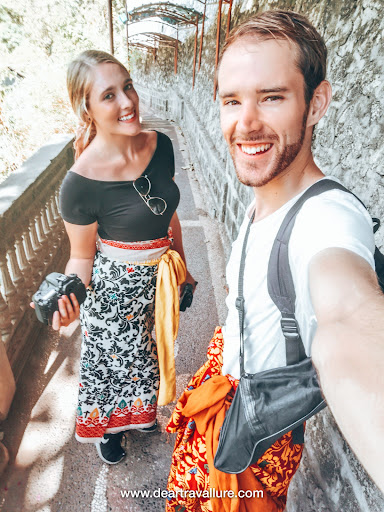
As in every temple, you are asked to cover your legs with a sarong. Now, if you don’t have one, you can “rent” one for ... 39 cents (usd) or 5000 rupiahs. You may question why different gods don’t like your knees and don’t visit on principle, but come on, it is 40 cents.
After you cover you legs you go up stairs to the entrance. There you are “blessed” with “holy” water, asked to write your name and country, and “donate” $1.42 (20000 IDR) to enter. I think it would be easier to just sell a ticket, rather than go through the blessing and donation act, but still, perspective is important. For less than $2 you are entering a pretty unique temple. Not for a moment I felt that I was being treated as an ATM. It takes more than two bucks...
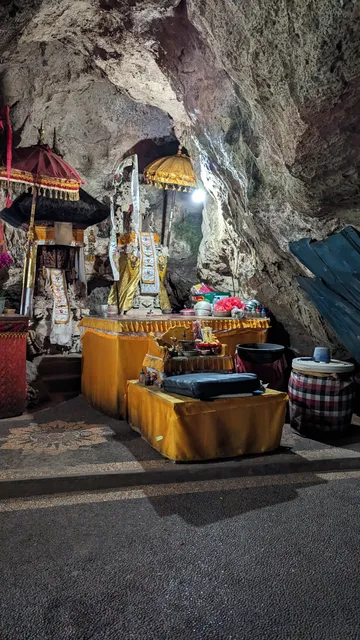
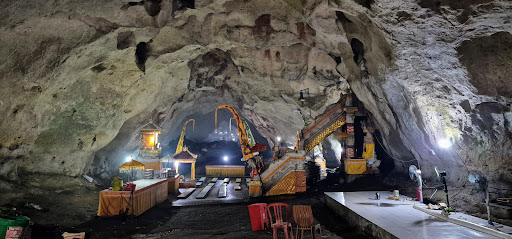
As noted before, the entrance is very narrow, but it is also very short, probably less than 2 meters long. It’s not like you are crawling for several meters. You literally sit and push yourself for a meter and a half before you are again standing. From that point on you are facing an incredibly big cave. It is not well ventilated (we we alone and the fans were off), but since the cave is enormous, I think only the most claustrophobic person ever would have a problem.
As I said, it’s a good experience if you can fit...
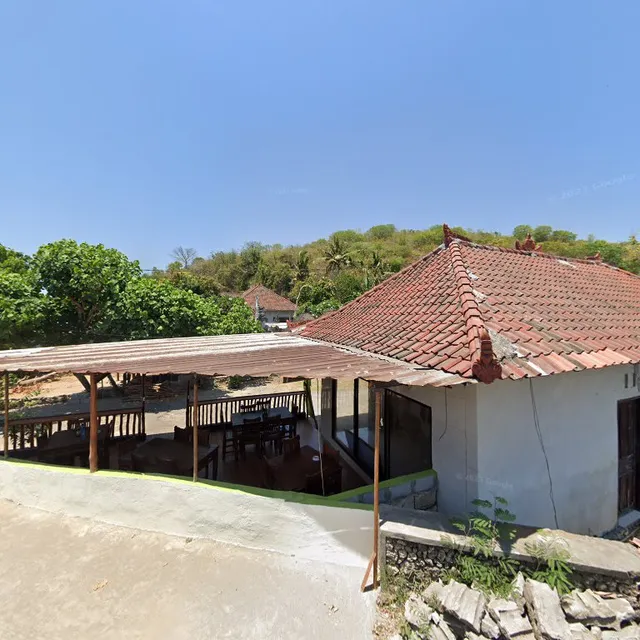
Read moreThis was our favourite drive along the coast. Park on the left, grab a Sarong for 5k each and head across the road to smash those 110 steps to the top, but brace yourself for the holy water.
Holy water is a very prolific symbol in Balinese and Hindu culture, so if you’re entering one of their most holy sites, prepare to be purified. We were splashed with large quantities of the water before we had the chance to prepare for it.
So there we were, dripping at a table before the entrance being asked for donations. Be aware that donations are a nicer way of saying entrance fee. 20k per person is not much though, so place it in the box and get ready to crawl into the cave.
Your only entrance to the 300m cave is through a tiny hole in the wall. It’s not great for the claustrophobes at first, but the short entrance opens up to a massive 15m roof and cave that can manage around 5000 people.
If you are fortunate enough you can witness some religious ceremonies, purification by holy water or enchanting music. You will definitely love the smell of incense and mystical ambience created by the smoke, lights and wet paths.
After the last worship area, you are led outside and down a ramp. Turn right and you walk back to the road; don’t doubt yourself, it’s longer than we thought, but after around 5 minutes we were back on the main road a few meters up from the parking lot.
Pura Goa Giri translates to “a mountain cave temple” and “Putri” translates to princess, but symbolizes the feminine...
Read moreThe temple at Goa Giri Putri is among the most popular destinations in Nusa Penida. However, make sure not to miss the entrance, as it is relatively small. Once you have found it, you will be greeted by a massive and awe-inspiring cave. At Goa Giri Putri Temple, there are a total of 6 praying spots. This includes the preceding stairway up to the Ida Hyang Tri Purusa Lan Ganapati shrine at the entrance. The remaining 5 spots are inside. Visiting pilgrims must go through all of them, consecutively. Visits usually include a holy water purification ritual.
Devotees take their seats on the raised marble platforms. This is due to the surrounding floor of the cave being constantly moistened by the water dripping from stalactites. During major ceremonies, pilgrims must take turns getting in and out of the cave.
Another unique feature of this cave temple is the final praying spot. This is devoted to Chinese deities such as Guan Yin, or the Goddess of Mercy, as well as the god of the earth and sky. It's adorned with red Chinese lanterns and ornaments that you would usually find at a Chinese temple. Many pilgrims pray here and ask for blessings of better business and prosperity.
As this is a sacred site, proper attire must be worn when visiting Goa Giri Putri. If you didn’t bring a sarong and sash, you can rent them at the temple’s base. Lighting inside the cave is adequate, but if you’re planning to take photos, a tripod and a camera or smartphone with low-light capabilities...
Read more