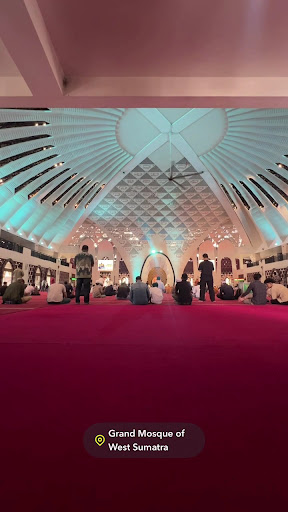
Masjid Raya Padang, located in Sumatera Barat, Indonesia, is a remarkable architectural and cultural treasure that holds a special place in the hearts of the local community and visitors alike. This grand mosque is not only a place of worship but also a symbol of historical and architectural significance.
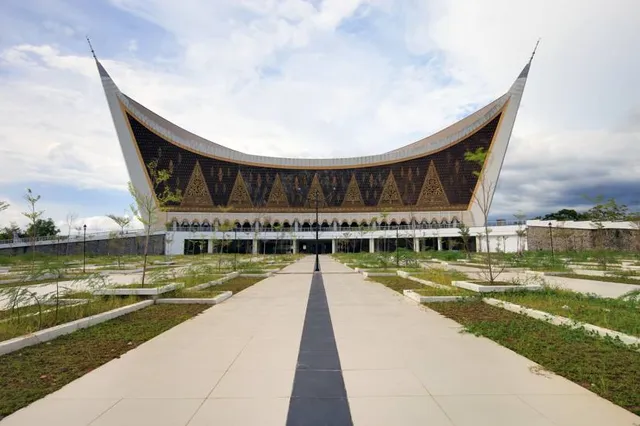
The mosque's stunning design is a fusion of Minangkabau and Middle Eastern architectural influences. Its multi-tiered, upswept rooflines and ornate carvings are a testament to the rich Minangkabau culture. The intricate calligraphy and geometric patterns that adorn the mosque's interior are a visual delight, showcasing the craftsmanship and attention to detail put into its construction.
One of the most striking features of Masjid Raya Padang is its expansive courtyard, where people gather for communal prayers and various cultural events. The peaceful atmosphere in the mosque's surroundings offers respite from the bustling city, making it a tranquil space for contemplation and spiritual reflection.
The mosque's role in the community goes beyond its religious significance. It often serves as a venue for cultural exhibitions, seminars, and local events, making it a hub for cultural and social activities. This underscores its importance in preserving and promoting the rich Minangkabau heritage.
In conclusion, Masjid Raya Padang is not just a place of worship; it is a cultural gem that reflects the identity and traditions of Sumatera Barat. Its stunning architecture, cultural significance, and active role in the community make it a must-visit landmark for anyone exploring the region, and a source of pride for the...
Read moreThe Great Mosque of West Sumatra or also known as the Mahligai Minang Mosque is one of the largest mosques in Indonesia which is located in North Padang District, Padang City, West Sumatra Province. The mosque, which is still under construction, is the largest mosque in West Sumatra. The construction of this mosque began with the laying of the first stone on December 21, 2007 by the then Governor of West Sumatra, Gamawan Fauzi. According to the plan, this mosque will have three floors which are estimated to be able to accommodate around 20,000 worshipers, namely around 15,000 worshipers on the ground floor and the rest on the second and third floors. This mosque was built on an area of about 40,000 square meters with the main building area being less than half of the land area, which is around 18,000 square meters, leaving a large courtyard. In this courtyard, a courtyard, parking area, garden and evacuation site in the event of a tsunami will be made. The architecture of this mosque was designed by Rizal Muslimin, the winner of the West Sumatra Great Mosque design competition which was participated in by 323 architects from various countries in 2007. In general, the architecture of this mosque follows the Minangkabau architectural typology with the building characteristic of a rectangular shape, to the use of Minang carvings as well as calligraphy. on the outer wall. Apart from that, the architecture of this mosque also describes the incident of the laying of the Black Stone using a cloth brought by four representatives of the tribes in the city of Mecca at...
Read moreIkon baru westsumatera
The first stone of the construction was laid on December 21, 2007, inaugurated by the Governor of West Sumatra Province Gamawan Fauzi.
Construction took a long time because of budget issues. Apart from relying on the West Sumatra's regional government budget, other strategies were used to collect funding, such as relying on donation from the people, from the private sectors, as well as from foreign governments. In 2009 The government of Saudi Arabia funded 50 million US dollars for the construction of the mosque, however this came at the same time as the 2009 West Sumatra earthquakes, so the funding was relocated for rehabilitation of the earthquake victims and reconstruction process of West Sumatra instead. In 2014, the Turkish government donated rugs for the mosque
The most distinctive feature of the mosque is its roof form, a contemporary interpretation of the traditional roof of the Minangkabau vernacular houses. The shape of the roof is also meant to symbolize the cloth that was held by the four clan leaders of the Qurayshtribe by its corners to lift the blackstones to the current spot in mecca The roof frame is constructed of steel pipes, supported by four curving concrete columns.
The main building consists of three floors. The main prayer hall is located on the second floor. The mosque is able to accommodate...
Read more