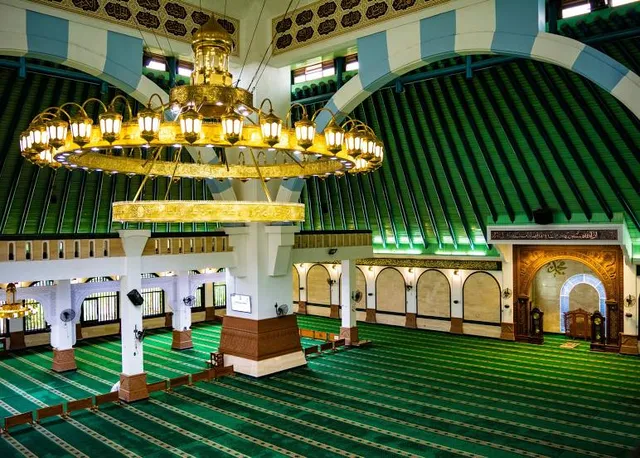
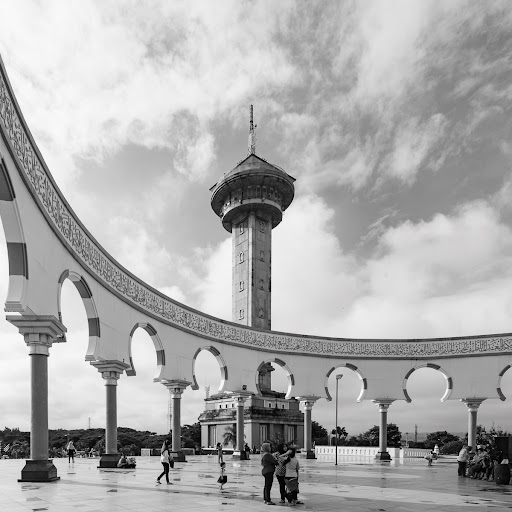
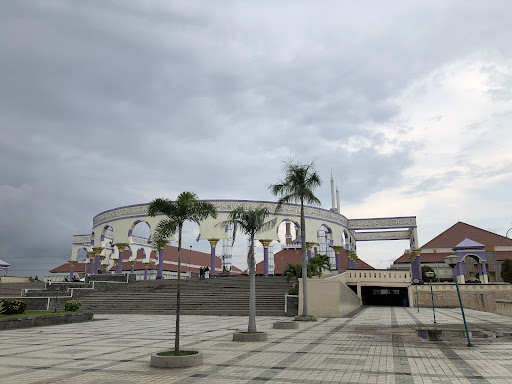
Semarang has a magnificent mosque with a blend of Javanese, Roman and Arabic architecture. Central Java Grand Mosque named. You can see batik motifs that are the traditional art of Javanese people at the bottom of the pole. In addition, the art of calligraphy carving into Middle Eastern architectural culture adorns the walls of the Great Mosque of Central Java.
On the front porch of the mosque, there are six giant hydraulic umbrellas that can open and close automatically. This is an adaptation of the Nabawi Mosque building architecture in the City of Medina. The interior design of the Great Mosque is also adorned with layers of colors that are influenced by Roman architectural styles.
The grandeur of the Great Mosque of Central Java makes it a symbol of religious tourism for the people of Semarang and Central Java. The mosque is able to accommodate around 15,000 worshipers, not including the main courtyard of the mosque which is able to accommodate around 10,000 worshipers.
The mosque which is located on Jalan Gajah Raya, Sambirejo Sub-District, Gayamsari District, Semarang City, does not only function as a place of worship for Muslims. This mosque also functions as an educational center, a center for Islamic symbols and religious tourism for travelers who want to admire the grandeur of the mosque's architecture.
The mosque, which was built in 2001 and completed in 2006, has a giant Al-Quran by H. Hayatuddin, who is a calligraphy writer from the University of Science and Sciences of the Koran from Wonosobo, Central Java. This mosque also has a giant drum which is a gift from the students of the Al Falah boarding school Banyumas, Central Java.
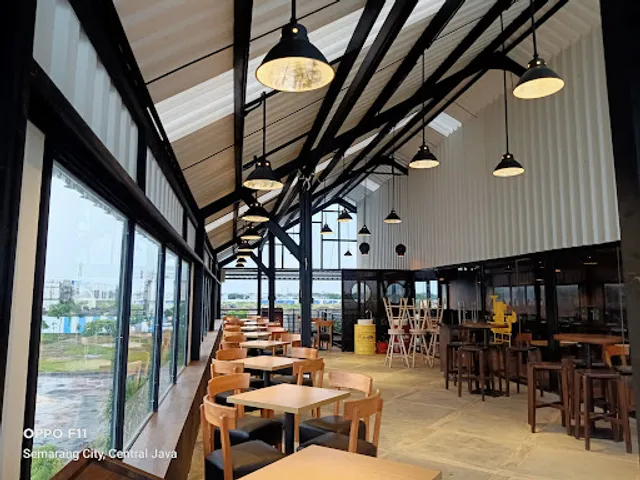
The Great Mosque of Central Java is also equipped with several facilities, such as a library, auditorium, lodging, marriage contract room, and a museum of Islamic development, and a cafe in the Asmaul Husna Tower section.
Next to the mosque, there is the Asmaul Husna Tower (Al Husna Tower) which has a height of 99 meters. From the top of the tower which has 19 floors, you can enjoy the beauty of Semarang City. You can also see the beauty of Semarang using binoculars provided by the mosque manager.
Satisfied watching the panorama of Semarang City, you can relax in the cafe located on the 18th floor. This cafe can rotate 360 degrees. Looking at the beauty of the city while enjoying Semarang's special food and feeling the slow rotation will certainly provide a sensation and...
Read moreThe mosque complex covers 10 hectares There are three central buildings arranged in the shape of a U, with the domed mosque at the centre; all buildings have pitched, tiled roofs, while the central mosque has four minarets. The central roof resembles the roof of a "joglo", the traditional Javanese house, and symbolises the rising steps toward heaven or to gain God's blessing. The long buildings forming the arms of the U house a library and auditorium respectively. At the open end of the U is a series of Arabic-style arches, with Arabic calligraphs of 99 attributes of Allah, stood on 25 pillars, each representing one of the named prophets in Islam.
Nearby is the 99-metre-tall Asmaul Husna Tower, designed to resemble the minaret of Menara Kudus Mosque in Kudus; the height represents the 99 attributes of Allah. Used for calling Muslims to prayer, the tower also houses a radio station for da'wah and museum at its base and restaurant and observation deck near its summit. The upper levels are accessible by lift On premises there is also a...
Read moreMasjid Agung Jawa Tengah: Simbol Sinkretisme dan Modernitas Islam di Jawa Masjid Agung Jawa Tengah berdiri sebagai ikon monumental yang merefleksikan dinamika perpaduan antara tradisi Islam, budaya Jawa, dan sentuhan modernitas. Arsitekturnya yang unik, memadukan elemen Jawa, Arab, dan Romawi, menjadikannya sebuah karya seni arsitektur yang patut diacungi jempol. Lebih dari sekadar tempat ibadah, masjid ini telah menjelma menjadi pusat kegiatan keagamaan, sosial, dan budaya masyarakat Jawa Tengah. Melalui pengamatan etnografis, dapat dilihat bagaimana masjid ini menjadi ruang publik yang inklusif, mengakomodasi berbagai macam aktivitas umat Islam, mulai dari ibadah shalat, pengajian, hingga kegiatan sosial lainnya.
Ritual dan Simbolisme dalam Arsitektur
Setiap elemen arsitektur Masjid Agung Jawa Tengah sarat akan makna simbolis. Kubah besar yang menjulang tinggi melambangkan keagungan Allah SWT, sementara ornamen batik yang menghiasi dinding dan tiang-tiang masjid merepresentasikan kekayaan budaya Jawa. Adanya enam payung hidrolik raksasa yang menyerupai payung di Masjid Nabawi, Madinah, semakin memperkuat dimensi spiritual masjid ini. Ritual-ritual keagamaan yang dilakukan di dalam masjid, seperti shalat berjamaah dan pengajian, menciptakan atmosfer spiritual yang kuat dan menjadi perekat bagi umat Islam. Melalui pengamatan terhadap ritual-ritual ini, kita dapat memahami bagaimana agama Islam dipraktikkan dalam konteks budaya Jawa.
Tantangan dan Peluang di Masa Depan
Sebagai salah satu ikon wisata religi di Jawa Tengah, Masjid Agung Jawa Tengah menghadapi tantangan untuk menjaga keseimbangan antara aspek spiritual dan komersial. Peningkatan jumlah pengunjung menuntut adanya pengelolaan yang lebih baik agar tidak mengganggu kenyamanan para jemaah. Di sisi lain, masjid ini juga memiliki peluang besar untuk menjadi pusat pengembangan kajian Islam dan peradaban Islam. Dengan potensi yang dimilikinya, Masjid Agung Jawa Tengah dapat menjadi model bagi masjid-masjid lain di Indonesia dalam menggabungkan nilai-nilai agama dengan perkembangan zaman.
Kesimpulan
Masjid Agung Jawa Tengah bukan hanya sebuah bangunan fisik, tetapi juga sebuah simbol identitas dan kebanggaan masyarakat Jawa Tengah. Melalui pengamatan etnografis, kita dapat melihat bagaimana masjid ini berperan penting dalam membentuk karakter dan nilai-nilai masyarakat. Keberadaan masjid ini menjadi bukti bahwa agama Islam dapat hidup berdampingan dengan budaya lokal dan terus berkembang seiring dengan...
Read more