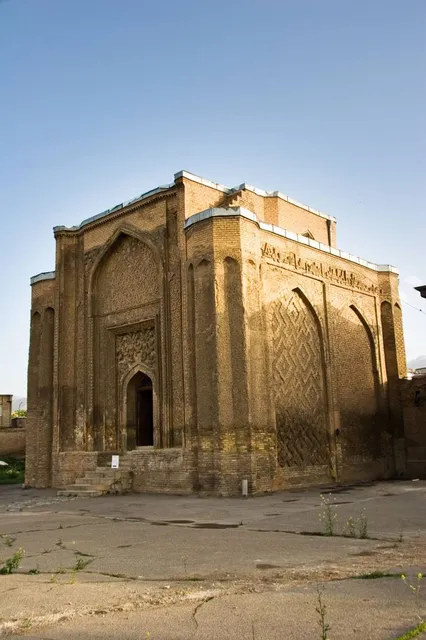
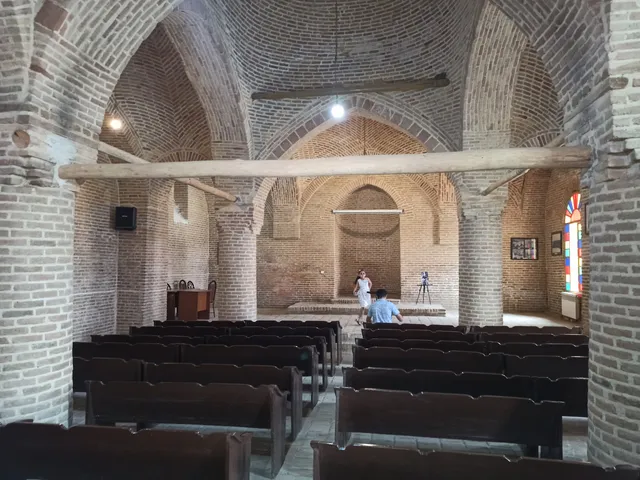
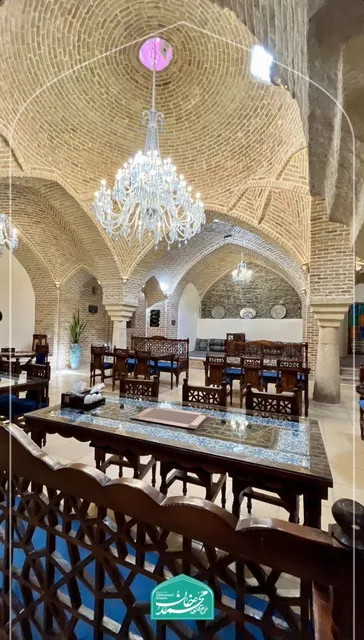
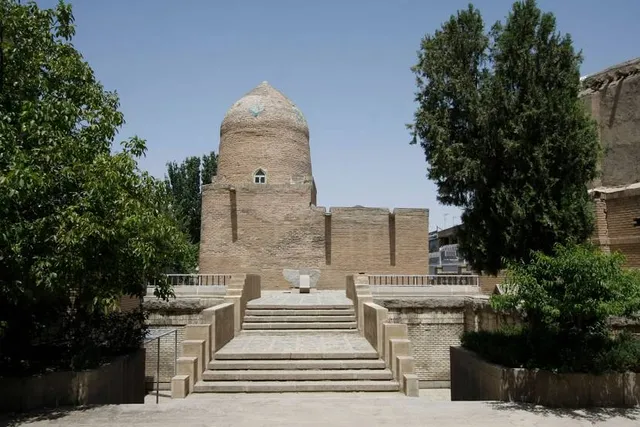
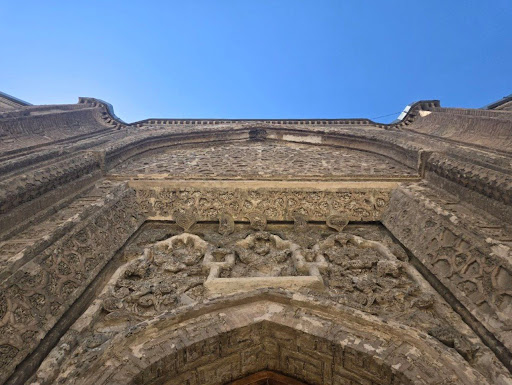
Alavian Dome in Hamadan, west of Iran, is located in a garden of the same name. The structure was initially a mosque built by the Alavian family during the Seljuq era (1038-1118) and later became a family crypt.
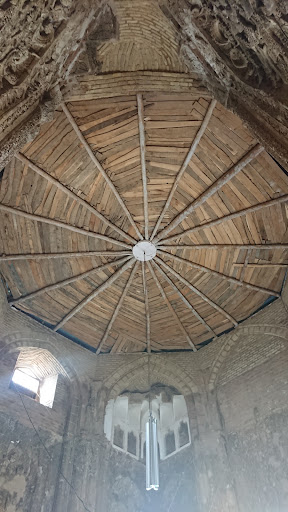
This 10th century structure once had a dome, which collapsed over time. With its unique stucco reliefs and delicate brickwork, this cube-shaped structure is an outstanding example of Persian-Islamic architecture. It`s one of the architecture masterpieces after Islam in Hamedan. It was recorded in national monument list on 26th of December on 1931. The interior of the structure has been lavishly decorated with stucco inscriptions, which are presumed to have been added during the Ilkhanid era, in the Kufic calligraphy hand. There is a rectangular plaque with stucco honeycomb patterns and flower motifs above the entrance of the structure. The outer frame of this plaque bears stucco reliefs of Quranic inscriptions in the Kufic calligraphy hand.
It looks like the red dome of Maragheh which was built in the year 542 AH. Its interior dimension and rich decoration, eye-catching and mysterious, is somewhat similar to the building of Qazvin Heydarieh dome, built in the early 6th AH century. It was built like a four-sided cube in size 8/12 in 5/12 and a height of 5/11. There are four columns, like towers in four corners of the building, with 5/9m height, 2 meters diameter. Each of towers has five triangular arches. Over the entrance and inside the rectangular box, there are beautiful decoration including intertwining flowers and plants. In every corner, there are two arches and arch decorative façade in east-west sides, covered with a beautiful design. The dome's sanctuary located on the south side with beautiful decoration has added to the richness of building. Few high skylights, adjoining the ceiling give a good lightening to the area. The small cellar is the tomb of two elders of Alavian family. The interior area is formed of six rooms with arches. Cube-shaved graves covered with turquoise bricks are...
Read moreThe Alavian Dome (Gonbad-e Alavian) is a remarkable historical monument in Hamadan, Iran, dating back to the Seljuk era (12th century). Originally built as a mosque for the Alavian family, it later served as a mausoleum. The structure is renowned for its intricate brickwork and stunning stucco reliefs, featuring geometric patterns and Quranic inscriptions.
You can find this astonishing landmark in Hamedan, one of Iran’s oldest cities, with a history stretching back over 2,500 years. It was once the capital of the Medes Empire and known as Ecbatana, playing a significant role in ancient Persian history. Today, it offers visitors a blend of historical sites, such as the Hegmataneh complex and the tomb of Avicenna and Babataher, alongside vibrant local culture. If you appreciate history, art, and authentic experiences, I highly recommend visiting Hamadan, specially this beautiful tomb. The city’s rich heritage and welcoming atmosphere make it a unforgettable...
Read moreگنبد علویان در چهار باغ علویان در نزدیکی میدان امامزاده عبدالله شهر همدان قرار دارد. این اثر یکی از شاهکارهای معماری و گچبری بعد از اسلام در همدان است، و طی شماره ۹۴ در تاریخ ۱۵/۱۰/۱۳۱۰ در فهرست آثار ملی به ثبت رسیدهاست. بر اساس شناسنامه فنی بنا، این گنبد یکی از یادمانهای متعلق به اواخر دوره سلجوقیان در قرن ششم هجری است که توسط خاندان علویان ابتدا به عنوان مسجد احداث شده بودهاست. در دورههای بعد با ایجاد سردابی در زیر زمین به مقبره آن خاندان تبدیل گردیدهاست. خاقانی به کنایه از آن به عنوان گنبد سبز یاد نمودهاست و فرهنگ عامیانه مردم استان همدان نیز بر این امر دلالت دارد. یکی از جاهای دیدنی همدان گنبد علویان است که در نزدیکی امامزاده عبدالله و میدان عینالقضات قرار دارد. همچنین این اثر تاریخی به خیابان باباطاهر و خیابان اکباتان نزدیک است. این بنا در قرن ششم هجری و در اواخر دوره سلجوقیان تاسیس شده است که با دیدن آن، معماری اسلامی را مشاهده میکنید. در ابتدا این بنا یک مسجد بود که علویان آن زمان در آن آداب مذهبی خود را برگزار میکردند. اما الان به عنوان یکی از مناطق گردشگری در استان همدان محسوب میشود. با من و مجله علیبابا همراه باشید تا بیشتر درباره این گنبد آجری بدانید. در ساخت این بنا از نقوش برجسته و گچبریهایی استفاده شده است که با دیدن گل بوتههای آن ساعتها سرگرم شوید. گنبد علویان همدان در اواخر دوره سلجوقیان و در قرن ۶ هجری ساخته شد. همانطور که گفتم در آن زمان خاندان علویان از این مکان برای برگزار مراسمات مذهبی استفاده میکردند. در قرنهای بعدی گنبد علویان برای حکومتهای بعد مورد استفاده قرار میگیرد و یک سرداب به زیر زمین آن اضافه کردند. در این قسمت از ساختمان مقبرههای خاندان علویان دیده میشود. این بنا در طی سالیان متمادی دچار فرسودگی شد که بعضی از قسمتهای آن خراب شد. در سال ۱۳۱۷ به دستور رضاشاه و با همکاری اداره کل باستانشنایی، بنای گنبد علویان همدان بازسازی شد. به طوری که سقف آن با چوب و مسطح پوشانده شد تا از گزند گرما و سرما دور بماند. گنبد علویان بهعنوان یکی از جاهای دیدنی همدان روی یک سکو قرار دارد که تا رفتن به درب ورودی بنا باید از ۹ پله عبور کنید. در حال حاضر این اثر تاریخی توسط سازمان میراث فرهنگی دارد حفاظت میشود و در سفر به همدان، یکی از بایدهای دیدنی شده است. وقتی به تصویر این ساختمان کهن نگاه میکنید، هیچ اثری از گنبد نمیبینید. شاید برایتان سوال باشد چرا به آن گنبد میگویند؟ همانطور که گفتیم تا قبل از سال ۱۳۱۷ ساختمان فرسوده شده بود که تا قبل از این سال سقف آن حالت گنبدی داشت؛ اما برای جلوگیری از ریزش و برای محافظت گنبد علویان سقف به حالت مسطح درآمد و روی آن را ایزوگام کردهاند. در گذشته مردم به آن گنبد علویان میگفتند، چون در زیر زمین این بنا دو تن از خاندان علویان دفن شدهاند. اکنون این مقبره با همان نام گذشته خود...
Read more