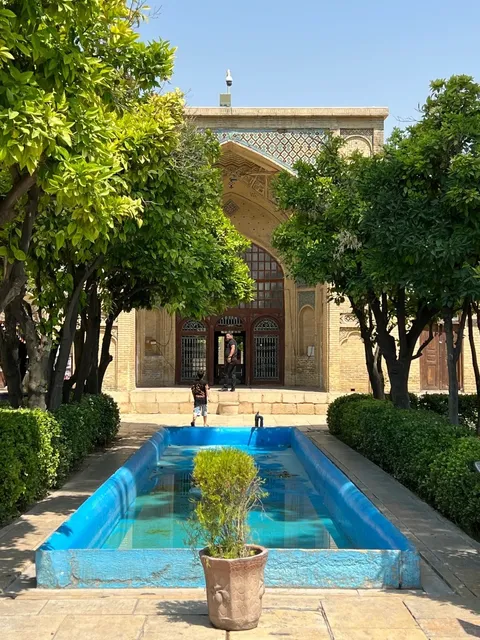
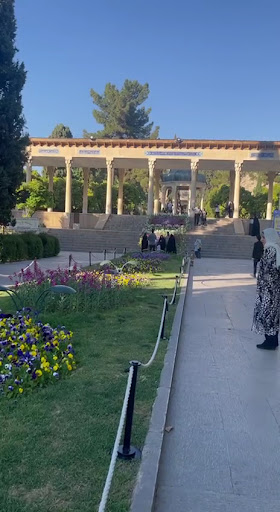
Hafez was born in Shiraz in 1315 and died there in 1390. A beloved figure of the Iranian people, who learn his verses by heart, Hafez was prominent in his home town and held a position as the court poet.[1] In his memory, a small, dome-like structure was erected in Shiraz near his grave at Golgast-e Mosalla in 1452 at the order of Babur Ibn-Baysunkur, a Timurid governor. The Golgast-e Mosalla were gardens (now known as Musalla Gardens) that featured in Hafiz's poetry. With a surface of over 19,000 square metres, the gardens were also home to one of Shiraz's cemeteries, and Babur had a pool built here at the same time as the memorial. Believing they were ordered by omens in Hafez's poetry, Abbas I of Persia and Nader Shah both carried out separate restoration projects in the following 300 years. A much more substantial memorial was constructed in the gardens in 1773 during the reign of Karim Khan Zand. Situated on the north bank of the seasonal Rudkhaneye Khoshk river in the Musalla Gardens, the Hāfezieh consisted of four central columns, with two rooms built at the east and west end and with the north and south sides remaining open. The building split the gardens into two regions, with the orange grove in the front and the cemetery in the back. The actual tomb was outside of the structure, in the middle of the cemetery, with a marble slab placed over the grave. The marble was engraved by a calligrapher with excerpts from Hafez's poetry.
The tomb was restored in 1857 by a governor of Fars, and a wooden enclosure was built around the tomb in 1878, by another governor of Fars. Following this, the site became a subject of controversy, when, in 1899, Ardeshir, a Parsi from India began to build a shrine around Hafez's grave. Although the philanthropist Parsi had obtained permission from a ulema of Shiraz to build the iron and wood shrine, a doctor of religious law with some authority in Shiraz, ʿAli-Akbar Fāl-Asiri, objected to a Zoroastrian building over the grave of a Muslim. With his followers, he destroyed the half-built construction. The people of Shiraz protested the destruction and the government ordered the rebuilding of the monument, but Fāl-Asiri opposed them and pronounced that he would destroy any building raised there, even if it were erected by the...
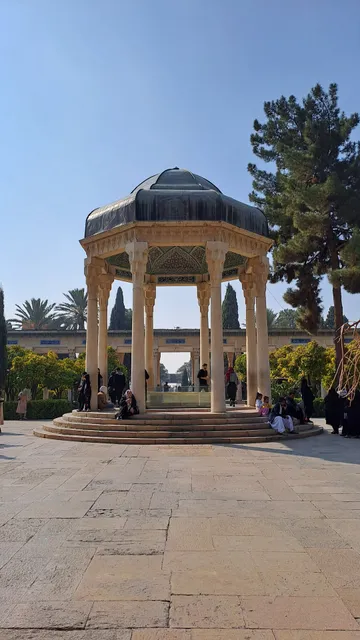
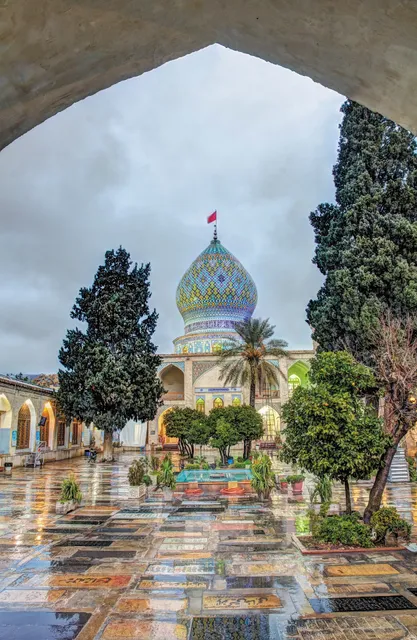
Read moreHafezieh is a beautiful garden complex in the city of Shiraz, Iran. It is the final resting place of Hafez, one of the most celebrated Persian poets of all time. The garden is a popular tourist destination, and for good reason. It is a peaceful and serene place, with stunning architecture and a rich history. As I entered the gates of Hafezieh, I was immediately struck by the beauty of the garden. The air was filled with the scent of flowers, and the sound of birdsong was everywhere. The paths were lined with cypress trees, and there were fountains and pools of water everywhere. I felt a sense of calm wash over me as I walked through the garden. I made my way to the tomb of Hafez, which is located in the center of the garden. The tomb is a white marble structure with a turquoise dome. It is surrounded by rose bushes and other flowers. I took a few moments to admire the tomb, and then I went inside. The inside of the tomb is simple but elegant. The walls are decorated with verses from Hafez's poetry, and there is a small altar in the center of the room. I sat down on the floor and read some of Hafez's poems. His words were beautiful and moving, and I could see why he is so revered by Iranians. After I finished reading, I went outside and wandered around the garden some more. I sat by a fountain and watched the people go by. There were families with children, couples holding hands, and groups of friends laughing and talking. Everyone seemed to be enjoying the peaceful atmosphere of the garden. I spent a few more hours at Hafezieh before it was time to leave. I was reluctant to go, but I knew that I would be back someday. Hafezieh is a truly special place, and I highly recommend it to anyone visiting Shiraz. Here are some other things that tourists might enjoy about Hafezieh: The garden is a great place to relax and escape the hustle and bustle of the city. There are several cafes and restaurants in the garden, so you can enjoy a meal or a snack while you're there. The garden is a popular spot for people-watching. There are several souvenir shops in the garden, where you can buy traditional Iranian...
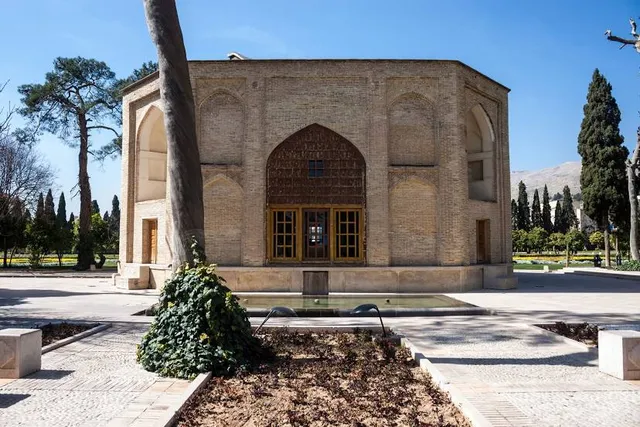
Read moreThe Hafeziyeh, Hafez Shirazi's tomb, is a venerated place in Shiraz, Iran, visited by Persian poetry fans from all over the world. This structure is more than just the final resting place of the famed poet; it also represents Iran's rich cultural legacy and creative achievements.
Hafez lived in Shiraz around the eighth century AH (14th century CE) and died there as well. His first burial location was a garden called "Golgasht" or "Jafarabad." Throughout the years, many buildings were built and rebuilt atop his grave, including noteworthy additions from the Timurid, Safavid, Afsharid, and Zand empires.
The modern Hafeziyeh was mostly created under Reza Shah Pahlavi's era. Under his orders, the French architect Andre Godard planned a new edifice in 1935, which was built by Ali Riazi and overseen by Ali Sami.
The Hafeziyeh complex spans roughly 2 hectares and is split into two main courtyards: north and south. The courtyards are separated by a 56-meter-long great hall supported by 20 columns.
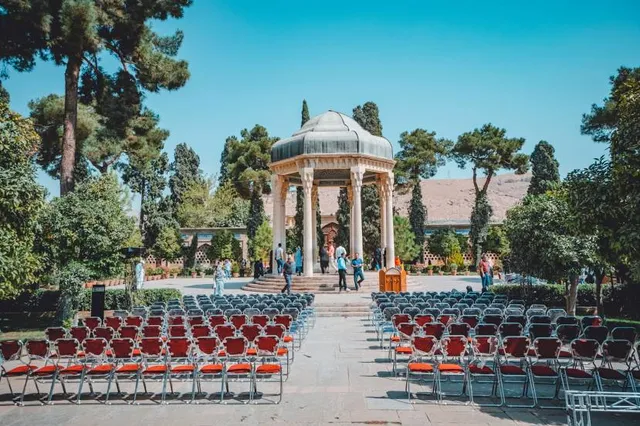
The tomb of Hafez is located in the northern courtyard and is marked with a marble stone engraved with phrases from his poetry. The tomb is topped with a copper dome with elaborate tile work on the inside and an exterior made of copper.
The central hall, also known as the "Karim Khan Zand Hall," is a covered area with towering columns that hosts a variety of events and meetings.
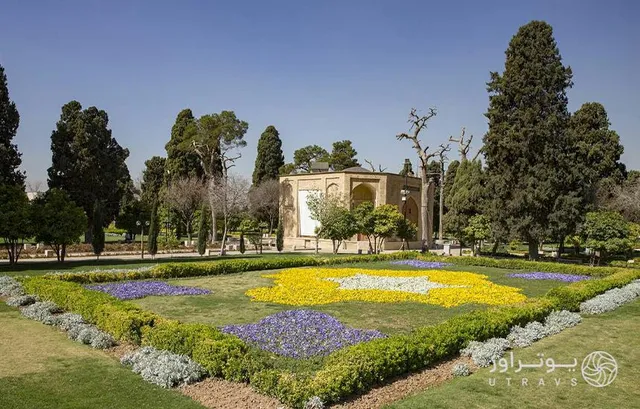
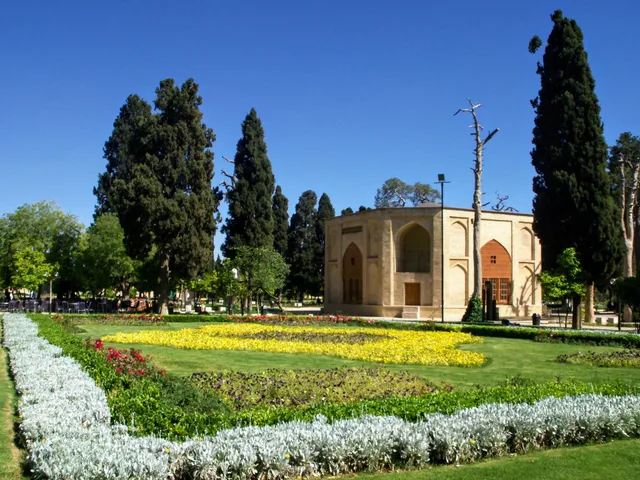
The Hafeziyeh is known for its beautiful gardens, which include cypress, pine, orange trees, and colorful flowers. These quiet settings, together with the soothing mood, offer a pleasant environment in which visitors may ponder the beauty of poetry and nature.
The Hafeziyeh has several ponds and fountains throughout the complex, which adds to its calm and visual appeal. The calm sound of running water, along with the pools' reflections of the surrounding buildings, creates a captivating visual and...
Read more