HTML SitemapExplore
Find Things to DoFind The Best Restaurants

Toghrol Tower — Attraction in Tehran

Name
Toghrol Tower
Description
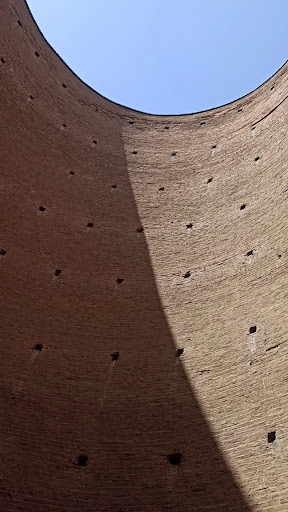
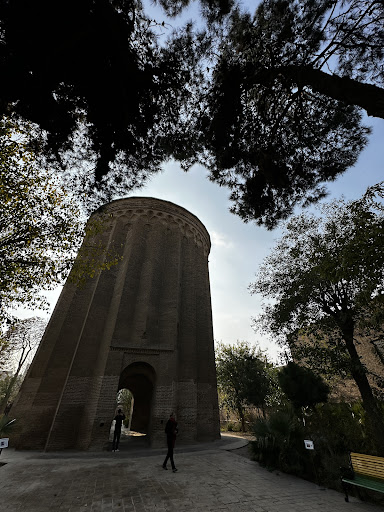
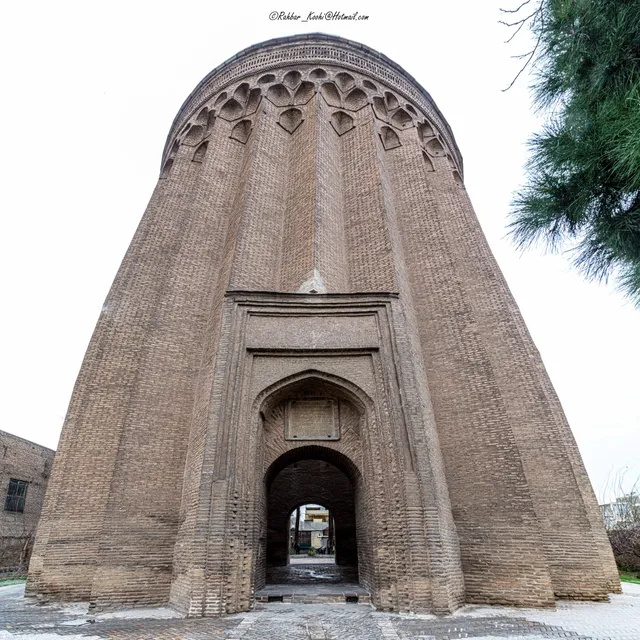
Toghrol Tower is a 12th-century monument, located in the city of Rey, Iran. Tuğrul Tower is near Rashkan Castle. The 20-metre-tall brick tower is the tomb of Seljuk ruler Tughril, who died in Rey in 1063.
Nearby attractions
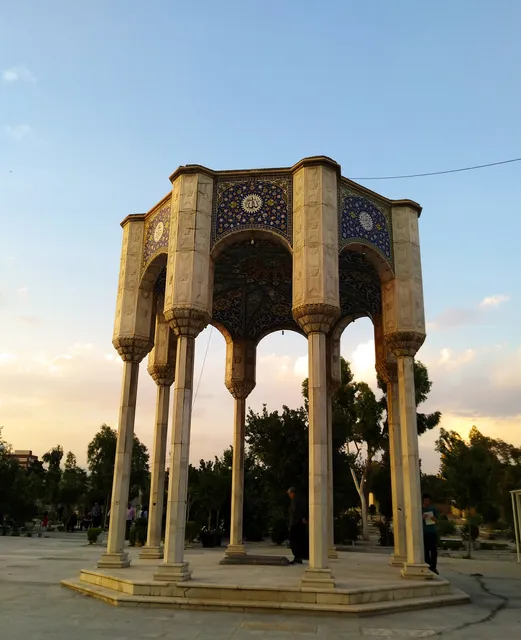
The Tomb of Ibn Babawayh
JC2V+WF8 District 20, Rey, Tehran Province, Iran
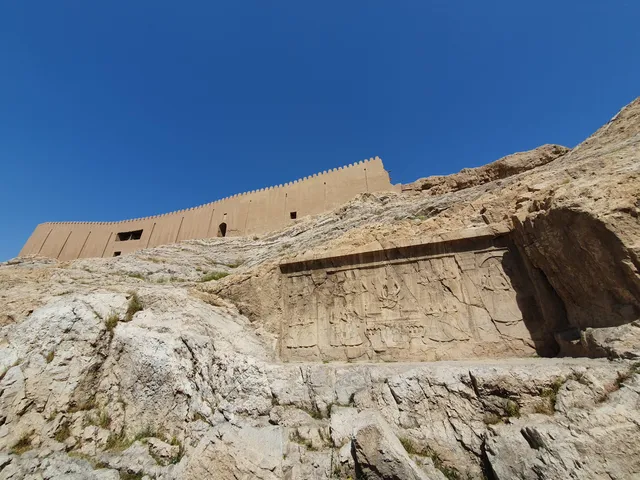
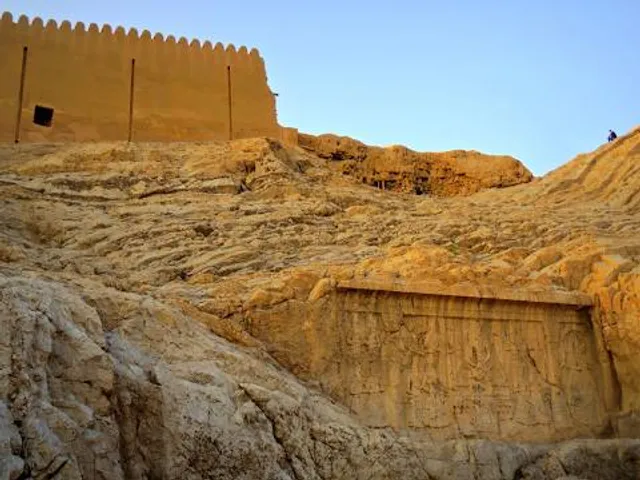
Rashkan Castle
Tehran Province, District 6, 35°36'18. 51°26'59., 9th, Iran
Rey Castle
JC5V+2RX, Rey, Tehran Province, Iran
Fath Ali Shah Inscription (Cheshmeh-Ali)
JC4V+XXF, Rey, Tehran Province, Iran
Nearby restaurants
Nearby hotels
Related posts
Keywords
Toghrol Tower tourism.Toghrol Tower hotels.Toghrol Tower bed and breakfast. flights to Toghrol Tower.Toghrol Tower attractions.Toghrol Tower restaurants.Toghrol Tower travel.Toghrol Tower travel guide.Toghrol Tower travel blog.Toghrol Tower pictures.Toghrol Tower photos.Toghrol Tower travel tips.Toghrol Tower maps.Toghrol Tower things to do.
Toghrol Tower things to do, attractions, restaurants, events info and trip planning
Toghrol Tower
IranTehran ProvinceTehranToghrol Tower

Basic Info

Toghrol Tower

Tehran Province, Rey, District 20, Shahid Taqipur, JC2W+67J, Iran
4.5(334)
Open 24 hours
Save
spot

Ratings & Description

Info

Toghrol Tower is a 12th-century monument, located in the city of Rey, Iran. Tuğrul Tower is near Rashkan Castle. The 20-metre-tall brick tower is the tomb of Seljuk ruler Tughril, who died in Rey in 1063.

Cultural
Scenic
Family friendly
attractions: The Tomb of Ibn Babawayh, Rashkan Castle, Rey Castle, Fath Ali Shah Inscription (Cheshmeh-Ali), restaurants:
logoLearn more insights from Wanderboat AI.

Plan your stay

hotel
Pet-friendly Hotels in Tehran
Find a cozy hotel nearby and make it a full experience.

hotel
Affordable Hotels in Tehran
Find a cozy hotel nearby and make it a full experience.

hotel
The Coolest Hotels You Haven't Heard Of (Yet)
Find a cozy hotel nearby and make it a full experience.

hotel
Trending Stays Worth the Hype in Tehran
Find a cozy hotel nearby and make it a full experience.

Reviews

Nearby attractions of Toghrol Tower

The Tomb of Ibn Babawayh

Rashkan Castle

Rey Castle

Fath Ali Shah Inscription (Cheshmeh-Ali)

The Tomb of Ibn Babawayh

The Tomb of Ibn Babawayh

4.4

(71)

Open until 6:00 PM
Click for details
Rashkan Castle

Rashkan Castle

4.1

(62)

Open 24 hours
Click for details
Rey Castle

Rey Castle

4.5

(75)

Open 24 hours
Click for details
Fath Ali Shah Inscription (Cheshmeh-Ali)

Fath Ali Shah Inscription (Cheshmeh-Ali)

4.5

(38)

Open 24 hours
Click for details
Get the Appoverlay
Get the AppOne tap to find yournext favorite spots!
Wanderboat LogoWanderboat

Your everyday Al companion for getaway ideas

CompanyAbout Us
InformationAI Trip PlannerSitemap
SocialXInstagramTiktokLinkedin
LegalTerms of ServicePrivacy Policy

Get the app

© 2025 Wanderboat. All rights reserved.

Posts

mo amo a
The Toghrel tower is about 9 centuries old and is one of the architectural masterpieces of the Seljuk period. Toghrel Tower with its unique architecture has amazing uses. Toghrel Tower is one of the most ancient towers in Tehran. The Seljuqs, having noble Iranian ministers such as Khwaja Nizam al-Mulk, were among the kingdoms that ruled the largest land after Islam, and this shows the power and greatness of the Seljuk kings. One of the buildings built at this time is Toghrel Tower. The Tower of Tughrel is only one of the valuable works of Tehran, which is located not far away in the city of Ray and near the tomb of Ibn Babouye. This tower attracts many tourists every year due to its architectural style and historical age. This brick building with a height of 20 meters was built about 900 years ago by a person named Mohammad Amin Memarbashi to express the art and civilization of the kings of his time. In the construction of this tower, in addition to materials such as raw clay and bricks, a material called Saroj was used, which has made this building strong despite natural disasters until today. Saroj is actually a combination of five ingredients: egg white, stone powder, camel wool and goat hair, lime and coal ash. It is interesting to know that since the city of Ray is located on the silk road, this tower with the fire that was lit on top of it was like a guide for travelers who were moving from Khorasan to Ray. According to historians and archaeologists, this place is a tomb for the first king of the Seljuqban dynasty, Tughrel Bey Seljuqi. But some others believe that one of Timur Lang's children named Khalil Sultan is buried in this place. In the meantime,another group believes that Tehran's Toghrel Tower is the place where Khalil Sultan and his wife rested. Tehran's Tughrel Tower is one of the architectural masterpieces of the Seljuk period, which is about 9 centuries old. The area where the tower is located has two wooden doors decorated with iron studs. Upon entering through the main door of this complex, you will see beautiful brick arches that, although they are contemporary for the era, have tried to match the architecture of this building. After passing through it, you step into a passage that is decorated with flowers and lighting as beautifully as possible. At the end of this passage, there is a tower that is still standing after 900 years. There was a dome on top of this tower, which unfortunately is not known today. If you look at this tower from above, you will notice that the body of the tower is skillfully made in the form of a multi-pointed star; As the sun rises from the east, one of the congresses is illuminated by sunlight, so in the past, Toghrel Tower was used as a big sundial to tell the time so that it could be seen by all the people of the city. On both sides of this tower, there are two heads in the south and the north, which are facing each other and on the peninsula. These pediments, arches, and empty spaces are all evidence of the tower's endurance. This tower has 24 congresses, and the sun moves to the next congress almost every hour. until it reaches its highest height and is located on the peninsula of the region. In addition to being the tomb of Tughrel Bey Seljuk, this tower was used as a loudspeaker for the speaker. In such a way that the architecture and the holes inside the tower make it so that if the singer stands right in the center of the tower, his voice will echo and spread throughout the area as if he had a microphone in his hand. Of course, now these hollow spaces of the tower welcome birds. Another use of this tower is to determine the time and clock. Tehran's Toghrel tower has been like a beacon in such a way that a fire was lit on top of it to be a sign for travelers who were moving from Khorasan to Ray to find their way. It is interesting to know that the materials used in the construction of this alum tower are soil and egg white, which made it a strong building and still standing after many years.
ali mojahedali mojahed
Toghrol Tower (Persian: برج طغرل‌) also transliterated Toghrul, Tughrol, or Tughrul) is a 12th-century monument, located in the city of Rey, Tehran province, Iran. Tuğrul Tower is near Rashkan Castle. The 20-metre-tall (66 ft) brick tower is the tomb of Seljuk ruler Tughril, who died in Rey in 1063. Originally, like other monuments of its time, it was capped by a conical dome (گنبد, gonbad), which collapsed during an earthquake.[when?] The thickness of the walls varies from 1.75 to 2.75 meters. The inner and outer diameters are 11 and 16 meters, respectively. The exterior shape is that of a polygon with 24 angles in its design, which is thought to contribute to the structure's stability against tremors. At the top of the tower, Kufic inscriptions were originally observable. The tower is protected by Iran's Cultural Heritage Organization. In some texts this place is called Burj Khalifa Yazid. According to some experts' ideas, this tower is like a clock pointer and the time can be recognized by the sunshine on its congresses. It is said that one of the uses of this tower was to use it on foggy nights by lighting a fire on its high barrier to guide the travelers of the Silk Road coming from Khorasan to Rey, and to meet the chronological needs of the people during the day. According to Manouchehr Arian in the article "Another Look at the Towers", calling the term "tower" to this building and similar buildings refers to the annual moving passageways of sunlight in Zodiacal. In addition to this feature, Toghrol Tower has another unique feature called the sundial that is hidden in the heart of its congresses. Naser al-Din Shah ordered some restorations to be made to the top part of the tower, which was collapsing in 1884. There are many challenges and discrepancies between experts and historians about the character buried in this building. Some consider it to be the tomb of Tughral Beyk of Seljuk, and it is stated in the “Mahmalottavarikh” book on page 465 that "Sultan Tughralibek died in the city of Rey and his tomb is there." Turkish historian, Faregh Sumer also considers the burial place of Toghrol in the same location. Other writers consider this place to be the burial place of Khalil Sultan, the son of Timur Lang and his wife Shadalmolk in the 15th century. In the book of Reye Baastaan (the ancient Ray) authoring Hassan Karimiyan is mentioned that a group attributes this monument to Fakhr Deilami. Mohammad Mohit Tabatabai considered this building to belong to Ibrahim Khawas and he himself was buried next to this tower in 1992. Decline and restoration edit As mentioned above, Toghrol Tower was first renovated in 1922 and at the end of the 35th year of the reign of Nasser al-Din Shah. This restoration was carried out by the order of the Shah and by the Chancellor Amin al-Sultan and by Abul Hassan Khan Memarbashi and marble slabs were installed on the entrance of the building. This reconstruction saved the building from the danger of destruction, but destroyed the elegance of the old works and the tomb of the Kufic inscription. After the Revolution of 1978, this building was abandoned until it was rebuilt again in the early seventies, and seriously began in mid-1998 and ended in the winter of 2000. Reconstruction is currently underway by District 20 of Tehran Municipality in an area of 2 hectares in order to expand and build a cultural center, library, museum and restaurant.
A J BashhaA J Bashha
The Toghrol Tower, an ancient architectural marvel located in the city of Rey, Iran, stands as a symbol of the region’s rich historical and cultural heritage. This was constructed in 1063, the tower rises to a height of approximately 20 meters and is built using bricks and Sarooj, a water-resistant mortar. It is widely believed to have been designed as the tomb of Tuğrul Beg, the founder of the Seljuk dynasty. However, some scholars suggest that it may have served as a lighthouse, guiding travelers along the Silk Road, particularly during foggy days and nights. Throughout the centuries, the tower has withstood the passage of time, its cylindrical form remaining an imposing and dignified presence in the landscape. The structure, with its intricate geometric brickwork and Kufic inscriptions, reflects the craftsmanship and ingenuity of the Seljuk era. Unlike many grand architectural monuments, the tower's elegance lies in its simplicity, relying on the interplay of light and shadow on its textured surfaces rather than ornate decorations. The site underwent its first major renovation in 1922, ensuring its preservation for future generations. The most recent restoration took place in 2000, reinforcing its status as a historical landmark. Despite its weathered appearance, the tower continues to captivate visitors, offering a glimpse into the architectural prowess of the 12th century. A narrow, spiral staircase inside the tower leads to the top, where visitors can experience a striking panoramic view of Rey, a city that blends ancient ruins with modern developments. The tower’s surroundings, with remnants of ancient walls and archaeological traces of a once-thriving settlement, further add to its historical significance. The peaceful ambiance of the area, marked by the gentle rustling of leaves and distant birdsong, enhances the sense of connection to the past. Toghrol Tower remains more than just a relic of history; it is a testament to the enduring legacy of the Seljuk period. Its understated yet profound beauty, combined with its historical and architectural importance, makes it a compelling destination for history enthusiasts, architecture admirers, and curious travelers alike.
See more posts
See more posts
hotel
Find your stay

Pet-friendly Hotels in Tehran

Find a cozy hotel nearby and make it a full experience.

The Toghrel tower is about 9 centuries old and is one of the architectural masterpieces of the Seljuk period. Toghrel Tower with its unique architecture has amazing uses. Toghrel Tower is one of the most ancient towers in Tehran. The Seljuqs, having noble Iranian ministers such as Khwaja Nizam al-Mulk, were among the kingdoms that ruled the largest land after Islam, and this shows the power and greatness of the Seljuk kings. One of the buildings built at this time is Toghrel Tower. The Tower of Tughrel is only one of the valuable works of Tehran, which is located not far away in the city of Ray and near the tomb of Ibn Babouye. This tower attracts many tourists every year due to its architectural style and historical age. This brick building with a height of 20 meters was built about 900 years ago by a person named Mohammad Amin Memarbashi to express the art and civilization of the kings of his time. In the construction of this tower, in addition to materials such as raw clay and bricks, a material called Saroj was used, which has made this building strong despite natural disasters until today. Saroj is actually a combination of five ingredients: egg white, stone powder, camel wool and goat hair, lime and coal ash. It is interesting to know that since the city of Ray is located on the silk road, this tower with the fire that was lit on top of it was like a guide for travelers who were moving from Khorasan to Ray. According to historians and archaeologists, this place is a tomb for the first king of the Seljuqban dynasty, Tughrel Bey Seljuqi. But some others believe that one of Timur Lang's children named Khalil Sultan is buried in this place. In the meantime,another group believes that Tehran's Toghrel Tower is the place where Khalil Sultan and his wife rested. Tehran's Tughrel Tower is one of the architectural masterpieces of the Seljuk period, which is about 9 centuries old. The area where the tower is located has two wooden doors decorated with iron studs. Upon entering through the main door of this complex, you will see beautiful brick arches that, although they are contemporary for the era, have tried to match the architecture of this building. After passing through it, you step into a passage that is decorated with flowers and lighting as beautifully as possible. At the end of this passage, there is a tower that is still standing after 900 years. There was a dome on top of this tower, which unfortunately is not known today. If you look at this tower from above, you will notice that the body of the tower is skillfully made in the form of a multi-pointed star; As the sun rises from the east, one of the congresses is illuminated by sunlight, so in the past, Toghrel Tower was used as a big sundial to tell the time so that it could be seen by all the people of the city. On both sides of this tower, there are two heads in the south and the north, which are facing each other and on the peninsula. These pediments, arches, and empty spaces are all evidence of the tower's endurance. This tower has 24 congresses, and the sun moves to the next congress almost every hour. until it reaches its highest height and is located on the peninsula of the region. In addition to being the tomb of Tughrel Bey Seljuk, this tower was used as a loudspeaker for the speaker. In such a way that the architecture and the holes inside the tower make it so that if the singer stands right in the center of the tower, his voice will echo and spread throughout the area as if he had a microphone in his hand. Of course, now these hollow spaces of the tower welcome birds. Another use of this tower is to determine the time and clock. Tehran's Toghrel tower has been like a beacon in such a way that a fire was lit on top of it to be a sign for travelers who were moving from Khorasan to Ray to find their way. It is interesting to know that the materials used in the construction of this alum tower are soil and egg white, which made it a strong building and still standing after many years.
mo a

mo a

hotel
Find your stay

Affordable Hotels in Tehran

Find a cozy hotel nearby and make it a full experience.

Get the Appoverlay
Get the AppOne tap to find yournext favorite spots!
Toghrol Tower (Persian: برج طغرل‌) also transliterated Toghrul, Tughrol, or Tughrul) is a 12th-century monument, located in the city of Rey, Tehran province, Iran. Tuğrul Tower is near Rashkan Castle. The 20-metre-tall (66 ft) brick tower is the tomb of Seljuk ruler Tughril, who died in Rey in 1063. Originally, like other monuments of its time, it was capped by a conical dome (گنبد, gonbad), which collapsed during an earthquake.[when?] The thickness of the walls varies from 1.75 to 2.75 meters. The inner and outer diameters are 11 and 16 meters, respectively. The exterior shape is that of a polygon with 24 angles in its design, which is thought to contribute to the structure's stability against tremors. At the top of the tower, Kufic inscriptions were originally observable. The tower is protected by Iran's Cultural Heritage Organization. In some texts this place is called Burj Khalifa Yazid. According to some experts' ideas, this tower is like a clock pointer and the time can be recognized by the sunshine on its congresses. It is said that one of the uses of this tower was to use it on foggy nights by lighting a fire on its high barrier to guide the travelers of the Silk Road coming from Khorasan to Rey, and to meet the chronological needs of the people during the day. According to Manouchehr Arian in the article "Another Look at the Towers", calling the term "tower" to this building and similar buildings refers to the annual moving passageways of sunlight in Zodiacal. In addition to this feature, Toghrol Tower has another unique feature called the sundial that is hidden in the heart of its congresses. Naser al-Din Shah ordered some restorations to be made to the top part of the tower, which was collapsing in 1884. There are many challenges and discrepancies between experts and historians about the character buried in this building. Some consider it to be the tomb of Tughral Beyk of Seljuk, and it is stated in the “Mahmalottavarikh” book on page 465 that "Sultan Tughralibek died in the city of Rey and his tomb is there." Turkish historian, Faregh Sumer also considers the burial place of Toghrol in the same location. Other writers consider this place to be the burial place of Khalil Sultan, the son of Timur Lang and his wife Shadalmolk in the 15th century. In the book of Reye Baastaan (the ancient Ray) authoring Hassan Karimiyan is mentioned that a group attributes this monument to Fakhr Deilami. Mohammad Mohit Tabatabai considered this building to belong to Ibrahim Khawas and he himself was buried next to this tower in 1992. Decline and restoration edit As mentioned above, Toghrol Tower was first renovated in 1922 and at the end of the 35th year of the reign of Nasser al-Din Shah. This restoration was carried out by the order of the Shah and by the Chancellor Amin al-Sultan and by Abul Hassan Khan Memarbashi and marble slabs were installed on the entrance of the building. This reconstruction saved the building from the danger of destruction, but destroyed the elegance of the old works and the tomb of the Kufic inscription. After the Revolution of 1978, this building was abandoned until it was rebuilt again in the early seventies, and seriously began in mid-1998 and ended in the winter of 2000. Reconstruction is currently underway by District 20 of Tehran Municipality in an area of 2 hectares in order to expand and build a cultural center, library, museum and restaurant.
ali mojahed

ali mojahed

hotel
Find your stay

The Coolest Hotels You Haven't Heard Of (Yet)

Find a cozy hotel nearby and make it a full experience.

hotel
Find your stay

Trending Stays Worth the Hype in Tehran

Find a cozy hotel nearby and make it a full experience.

The Toghrol Tower, an ancient architectural marvel located in the city of Rey, Iran, stands as a symbol of the region’s rich historical and cultural heritage. This was constructed in 1063, the tower rises to a height of approximately 20 meters and is built using bricks and Sarooj, a water-resistant mortar. It is widely believed to have been designed as the tomb of Tuğrul Beg, the founder of the Seljuk dynasty. However, some scholars suggest that it may have served as a lighthouse, guiding travelers along the Silk Road, particularly during foggy days and nights. Throughout the centuries, the tower has withstood the passage of time, its cylindrical form remaining an imposing and dignified presence in the landscape. The structure, with its intricate geometric brickwork and Kufic inscriptions, reflects the craftsmanship and ingenuity of the Seljuk era. Unlike many grand architectural monuments, the tower's elegance lies in its simplicity, relying on the interplay of light and shadow on its textured surfaces rather than ornate decorations. The site underwent its first major renovation in 1922, ensuring its preservation for future generations. The most recent restoration took place in 2000, reinforcing its status as a historical landmark. Despite its weathered appearance, the tower continues to captivate visitors, offering a glimpse into the architectural prowess of the 12th century. A narrow, spiral staircase inside the tower leads to the top, where visitors can experience a striking panoramic view of Rey, a city that blends ancient ruins with modern developments. The tower’s surroundings, with remnants of ancient walls and archaeological traces of a once-thriving settlement, further add to its historical significance. The peaceful ambiance of the area, marked by the gentle rustling of leaves and distant birdsong, enhances the sense of connection to the past. Toghrol Tower remains more than just a relic of history; it is a testament to the enduring legacy of the Seljuk period. Its understated yet profound beauty, combined with its historical and architectural importance, makes it a compelling destination for history enthusiasts, architecture admirers, and curious travelers alike.
A J Bashha

A J Bashha

See more posts
See more posts

Reviews of Toghrol Tower

4.5
(334)
avatar
5.0
37w

The Toghrel tower is about 9 centuries old and is one of the architectural masterpieces of the Seljuk period. Toghrel Tower with its unique architecture has amazing uses. Toghrel Tower is one of the most ancient towers in Tehran. The Seljuqs, having noble Iranian ministers such as Khwaja Nizam al-Mulk, were among the kingdoms that ruled the largest land after Islam, and this shows the power and greatness of the Seljuk kings. One of the buildings built at this time is Toghrel Tower. The Tower of Tughrel is only one of the valuable works of Tehran, which is located not far away in the city of Ray and near the tomb of Ibn Babouye. This tower attracts many tourists every year due to its architectural style and historical age. This brick building with a height of 20 meters was built about 900 years ago by a person named Mohammad Amin Memarbashi to express the art and civilization of the kings of his time. In the construction of this tower, in addition to materials such as raw clay and bricks, a material called Saroj was used, which has made this building strong despite natural disasters until today. Saroj is actually a combination of five ingredients: egg white, stone powder, camel wool and goat hair, lime and coal ash. It is interesting to know that since the city of Ray is located on the silk road, this tower with the fire that was lit on top of it was like a guide for travelers who were moving from Khorasan to Ray. According to historians and archaeologists, this place is a tomb for the first king of the Seljuqban dynasty, Tughrel Bey Seljuqi. But some others believe that one of Timur Lang's children named Khalil Sultan is buried in this place. In the meantime,another group believes that Tehran's Toghrel Tower is the place where Khalil Sultan and his wife rested. Tehran's Tughrel Tower is one of the architectural masterpieces of the Seljuk period, which is about 9 centuries old. The area where the tower is located has two wooden doors decorated with iron studs. Upon entering through the main door of this complex, you will see beautiful brick arches that, although they are contemporary for the era, have tried to match the architecture of this building. After passing through it, you step into a passage that is decorated with flowers and lighting as beautifully as possible. At the end of this passage, there is a tower that is still standing after 900 years. There was a dome on top of this tower, which unfortunately is not known today. If you look at this tower from above, you will notice that the body of the tower is skillfully made in the form of a multi-pointed star; As the sun rises from the east, one of the congresses is illuminated by sunlight, so in the past, Toghrel Tower was used as a big sundial to tell the time so that it could be seen by all the people of the city. On both sides of this tower, there are two heads in the south and the north, which are facing each other and on the peninsula. These pediments, arches, and empty spaces are all evidence of the tower's endurance. This tower has 24 congresses, and the sun moves to the next congress almost every hour. until it reaches its highest height and is located on the peninsula of the region. In addition to being the tomb of Tughrel Bey Seljuk, this tower was used as a loudspeaker for the speaker. In such a way that the architecture and the holes inside the tower make it so that if the singer stands right in the center of the tower, his voice will echo and spread throughout the area as if he had a microphone in his hand. Of course, now these hollow spaces of the tower welcome birds. Another use of this tower is to determine the time and clock. Tehran's Toghrel tower has been like a beacon in such a way that a fire was lit on top of it to be a sign for travelers who were moving from Khorasan to Ray to find their way. It is interesting to know that the materials used in the construction of this alum tower are soil and egg white, which made it a strong building and still standing...

   Read more
avatar
5.0
1y

Toghrol Tower (Persian: برج طغرل‌) also transliterated Toghrul, Tughrol, or Tughrul) is a 12th-century monument, located in the city of Rey, Tehran province, Iran. Tuğrul Tower is near Rashkan Castle.

The 20-metre-tall (66 ft) brick tower is the tomb of Seljuk ruler Tughril, who died in Rey in 1063. Originally, like other monuments of its time, it was capped by a conical dome (گنبد, gonbad), which collapsed during an earthquake.[when?]

The thickness of the walls varies from 1.75 to 2.75 meters. The inner and outer diameters are 11 and 16 meters, respectively. The exterior shape is that of a polygon with 24 angles in its design, which is thought to contribute to the structure's stability against tremors.

At the top of the tower, Kufic inscriptions were originally observable.

The tower is protected by Iran's Cultural Heritage Organization.

In some texts this place is called Burj Khalifa Yazid. According to some experts' ideas, this tower is like a clock pointer and the time can be recognized by the sunshine on its congresses.

It is said that one of the uses of this tower was to use it on foggy nights by lighting a fire on its high barrier to guide the travelers of the Silk Road coming from Khorasan to Rey, and to meet the chronological needs of the people during the day. According to Manouchehr Arian in the article "Another Look at the Towers", calling the term "tower" to this building and similar buildings refers to the annual moving passageways of sunlight in Zodiacal. In addition to this feature, Toghrol Tower has another unique feature called the sundial that is hidden in the heart of its congresses. Naser al-Din Shah ordered some restorations to be made to the top part of the tower, which was collapsing in 1884.

There are many challenges and discrepancies between experts and historians about the character buried in this building. Some consider it to be the tomb of Tughral Beyk of Seljuk, and it is stated in the “Mahmalottavarikh” book on page 465 that "Sultan Tughralibek died in the city of Rey and his tomb is there." Turkish historian, Faregh Sumer also considers the burial place of Toghrol in the same location. Other writers consider this place to be the burial place of Khalil Sultan, the son of Timur Lang and his wife Shadalmolk in the 15th century. In the book of Reye Baastaan (the ancient Ray) authoring Hassan Karimiyan is mentioned that a group attributes this monument to Fakhr Deilami. Mohammad Mohit Tabatabai considered this building to belong to Ibrahim Khawas and he himself was buried next to this tower in 1992.

Decline and restoration edit As mentioned above, Toghrol Tower was first renovated in 1922 and at the end of the 35th year of the reign of Nasser al-Din Shah. This restoration was carried out by the order of the Shah and by the Chancellor Amin al-Sultan and by Abul Hassan Khan Memarbashi and marble slabs were installed on the entrance of the building. This reconstruction saved the building from the danger of destruction, but destroyed the elegance of the old works and the tomb of the Kufic inscription. After the Revolution of 1978, this building was abandoned until it was rebuilt again in the early seventies, and seriously began in mid-1998 and ended in the winter of 2000. Reconstruction is currently underway by District 20 of Tehran Municipality in an area of 2 hectares in order to expand and build a cultural center, library, museum...

   Read more
avatar
4.0
44w

The Toghrol Tower, an ancient architectural marvel located in the city of Rey, Iran, stands as a symbol of the region’s rich historical and cultural heritage.

This was constructed in 1063, the tower rises to a height of approximately 20 meters and is built using bricks and Sarooj, a water-resistant mortar.

It is widely believed to have been designed as the tomb of Tuğrul Beg, the founder of the Seljuk dynasty. However, some scholars suggest that it may have served as a lighthouse, guiding travelers along the Silk Road, particularly during foggy days and nights.

Throughout the centuries, the tower has withstood the passage of time, its cylindrical form remaining an imposing and dignified presence in the landscape. The structure, with its intricate geometric brickwork and Kufic inscriptions, reflects the craftsmanship and ingenuity of the Seljuk era.

Unlike many grand architectural monuments, the tower's elegance lies in its simplicity, relying on the interplay of light and shadow on its textured surfaces rather than ornate decorations.

The site underwent its first major renovation in 1922, ensuring its preservation for future generations. The most recent restoration took place in 2000, reinforcing its status as a historical landmark. Despite its weathered appearance, the tower continues to captivate visitors, offering a glimpse into the architectural prowess of the 12th century.

A narrow, spiral staircase inside the tower leads to the top, where visitors can experience a striking panoramic view of Rey, a city that blends ancient ruins with modern developments. The tower’s surroundings, with remnants of ancient walls and archaeological traces of a once-thriving settlement, further add to its historical significance. The peaceful ambiance of the area, marked by the gentle rustling of leaves and distant birdsong, enhances the sense of connection to the past.

Toghrol Tower remains more than just a relic of history; it is a testament to the enduring legacy of the Seljuk period. Its understated yet profound beauty, combined with its historical and architectural importance, makes it a compelling destination for history enthusiasts, architecture admirers, and curious...

   Read more
Page 1 of 7
Previous
Next