HTML SitemapExplore
logo
Find Things to DoFind The Best Restaurants

Ur — Attraction in Al-Nasiriyah Central Subdistrict

Name
Ur
Description
Nearby attractions
Great Ziggurat of Ur
X473+473, Nasiriyah, Dhi Qar Governorate, Iraq
Ennigaldi-Nanna's Museum
X464+M3R, Mahatt Ur, Dhi Qar Governorate, Iraq
Nearby restaurants
Nearby hotels
Related posts
Keywords
Ur tourism.Ur hotels.Ur bed and breakfast. flights to Ur.Ur attractions.Ur restaurants.Ur travel.Ur travel guide.Ur travel blog.Ur pictures.Ur photos.Ur travel tips.Ur maps.Ur things to do.
Ur things to do, attractions, restaurants, events info and trip planning
Ur
IraqDhi Qar GovernorateAl-Nasiriyah Central SubdistrictUr

Basic Info

Ur

X464+92R, Mahatt Ur, Dhi Qar Governorate, Iraq
4.4(41)
Open 24 hours
Save
spot

Ratings & Description

Info

Cultural
attractions: Great Ziggurat of Ur, Ennigaldi-Nanna's Museum, restaurants:
logoLearn more insights from Wanderboat AI.

Plan your stay

hotel
Pet-friendly Hotels in Al-Nasiriyah Central Subdistrict
Find a cozy hotel nearby and make it a full experience.
hotel
Affordable Hotels in Al-Nasiriyah Central Subdistrict
Find a cozy hotel nearby and make it a full experience.
hotel
The Coolest Hotels You Haven't Heard Of (Yet)
Find a cozy hotel nearby and make it a full experience.
hotel
Trending Stays Worth the Hype in Al-Nasiriyah Central Subdistrict
Find a cozy hotel nearby and make it a full experience.

Reviews

Nearby attractions of Ur

Great Ziggurat of Ur

Ennigaldi-Nanna's Museum

Great Ziggurat of Ur

Great Ziggurat of Ur

4.5

(717)

Open 24 hours
Click for details
Ennigaldi-Nanna's Museum

Ennigaldi-Nanna's Museum

4.7

(36)

Open until 12:00 AM
Click for details
Get the Appoverlay
Get the AppOne tap to find yournext favorite spots!
Wanderboat LogoWanderboat

Your everyday Al companion for getaway ideas

CompanyAbout Us
InformationAI Trip PlannerSitemap
SocialXInstagramTiktokLinkedin
LegalTerms of ServicePrivacy Policy

Get the app

© 2025 Wanderboat. All rights reserved.
logo

Posts

Hussain FaisalHussain Faisal
Ur was a city in the region of Sumer, southern Mesopotamia, in what is modern-day Iraq. According to biblical tradition, the city is named after the man who founded the first settlement there, Ur, though this has been disputed. The city’s other biblical link is to the patriarch Abraham who left Ur to settle in the land of Canaan. This claim has also been contested by scholars who believe that Abraham’s home was further north in Mesopotamia in a place called Ura, near the city of Harran, and that the writers of the biblical narrative in the Book of Genesis confused the two. Whatever its biblical connections may have been, Ur was a significant port city on the Persian Gulf which began, most likely, as a small village in the Ubaid Period of Mesopotamian history (5000-4100 BCE) and was an established city by 3800 BCE continually inhabited until 450 BCE. The site became famous in 1922 CE when Sir Leonard Wooley excavated the ruins and discovered what he called The Great Death Pit (an elaborate grave complex), the Royal Tombs, and, more significantly to him, claimed to have found evidence of the Flood described in the Book of Genesis (this claim was later discredited but continues to find supporters). In its time, Ur was a city of enormous size, scope, and opulence which drew its vast wealth from its position on the Persian Gulf and the trade this allowed with countries as far away as India. The present site of the ruins of Ur are much further inland than they were at the time when the city flourished owing to silting of the Tigris and Euphrates rivers. From the beginning, Ur was an important trade center owing to its location at a pivotal point where the Tigris and Euphrates run into the Persian Gulf. Archaeological excavations have substantiated that, early on, Ur possessed great wealth and the citizens enjoyed a level of comfort unknown in other Mesopotamian cities. As with other great urban complexes in the region, the city began as a small village which was most likely led by a priest or priest-king. The king of the First Dynasty, Mesannepadda, is only known through the Sumerian King List and from inscriptions on artifacts found in the graves of Ur. The Second Dynasty is known to have had four kings but about them, their accomplishments, or the history during this time, nothing is known. The early Mesopotamian writers did not consider it worthwhile to record the deeds of mortals and preferred to link human achievements to the work and will of the gods. Ancient hero-kings such as Gilgamesh or those who performed amazing feats such as Etana were worthy of record but mortal kings were not afforded that same level of concern.
Ahmed Abd alwahedAhmed Abd alwahed
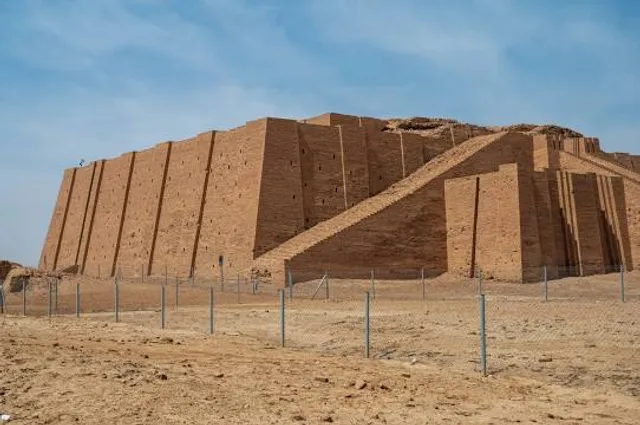
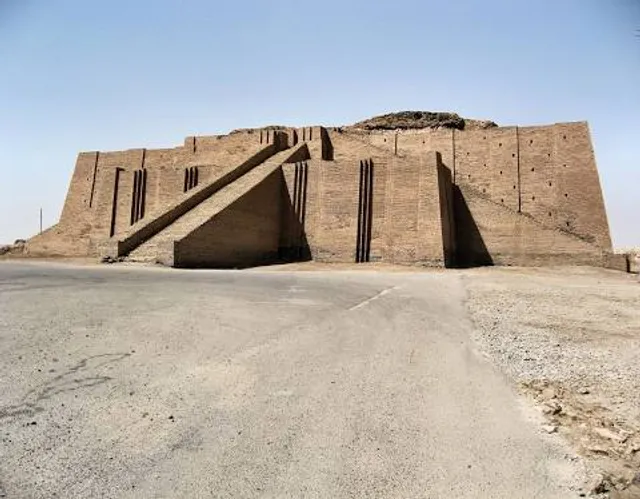
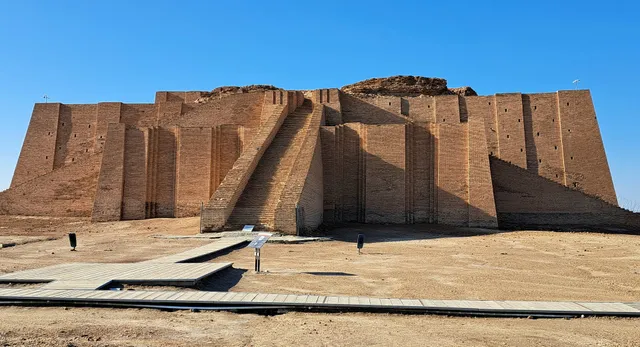
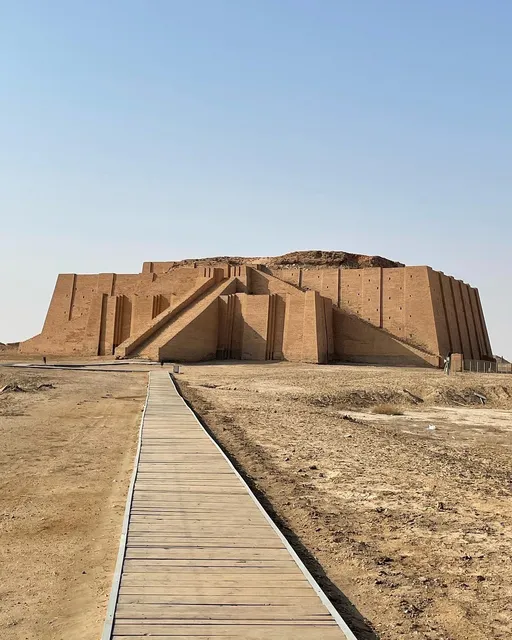
The Ziggurat of Ur is one of the oldest temples that remained in Iraq, located about 40 km to the west of the city of Nasiriyah (340 km south of Baghdad): built by the founder of the "Ur III dynasty, and its greatest king" in 2050 BC. It has a lasting relationship The ziggurat of Ur is rectangular in shape, its dimensions are "200 x 150 m", and its rectification is "45". It was basically composed of three layers, above which a temple dedicated to the worship of the great goddess of the city "Sun" rises, and elevated to it by two saints, and a third mediator, then it became Among the seven classes in the era of Assyrian rule. Currently he is studying an annotation in order to build a tourist city and a museum in the city
F GF G
I was here last year to take a look at the fund site. It was extremely interesting and my friend Henning P. didn't want to leave the place at all. 👍
See more posts
See more posts
hotel
Find your stay

Pet-friendly Hotels in Al-Nasiriyah Central Subdistrict

Find a cozy hotel nearby and make it a full experience.

Ur was a city in the region of Sumer, southern Mesopotamia, in what is modern-day Iraq. According to biblical tradition, the city is named after the man who founded the first settlement there, Ur, though this has been disputed. The city’s other biblical link is to the patriarch Abraham who left Ur to settle in the land of Canaan. This claim has also been contested by scholars who believe that Abraham’s home was further north in Mesopotamia in a place called Ura, near the city of Harran, and that the writers of the biblical narrative in the Book of Genesis confused the two. Whatever its biblical connections may have been, Ur was a significant port city on the Persian Gulf which began, most likely, as a small village in the Ubaid Period of Mesopotamian history (5000-4100 BCE) and was an established city by 3800 BCE continually inhabited until 450 BCE. The site became famous in 1922 CE when Sir Leonard Wooley excavated the ruins and discovered what he called The Great Death Pit (an elaborate grave complex), the Royal Tombs, and, more significantly to him, claimed to have found evidence of the Flood described in the Book of Genesis (this claim was later discredited but continues to find supporters). In its time, Ur was a city of enormous size, scope, and opulence which drew its vast wealth from its position on the Persian Gulf and the trade this allowed with countries as far away as India. The present site of the ruins of Ur are much further inland than they were at the time when the city flourished owing to silting of the Tigris and Euphrates rivers. From the beginning, Ur was an important trade center owing to its location at a pivotal point where the Tigris and Euphrates run into the Persian Gulf. Archaeological excavations have substantiated that, early on, Ur possessed great wealth and the citizens enjoyed a level of comfort unknown in other Mesopotamian cities. As with other great urban complexes in the region, the city began as a small village which was most likely led by a priest or priest-king. The king of the First Dynasty, Mesannepadda, is only known through the Sumerian King List and from inscriptions on artifacts found in the graves of Ur. The Second Dynasty is known to have had four kings but about them, their accomplishments, or the history during this time, nothing is known. The early Mesopotamian writers did not consider it worthwhile to record the deeds of mortals and preferred to link human achievements to the work and will of the gods. Ancient hero-kings such as Gilgamesh or those who performed amazing feats such as Etana were worthy of record but mortal kings were not afforded that same level of concern.
Hussain Faisal

Hussain Faisal

hotel
Find your stay

Affordable Hotels in Al-Nasiriyah Central Subdistrict

Find a cozy hotel nearby and make it a full experience.

Get the Appoverlay
Get the AppOne tap to find yournext favorite spots!
The Ziggurat of Ur is one of the oldest temples that remained in Iraq, located about 40 km to the west of the city of Nasiriyah (340 km south of Baghdad): built by the founder of the "Ur III dynasty, and its greatest king" in 2050 BC. It has a lasting relationship The ziggurat of Ur is rectangular in shape, its dimensions are "200 x 150 m", and its rectification is "45". It was basically composed of three layers, above which a temple dedicated to the worship of the great goddess of the city "Sun" rises, and elevated to it by two saints, and a third mediator, then it became Among the seven classes in the era of Assyrian rule. Currently he is studying an annotation in order to build a tourist city and a museum in the city
Ahmed Abd alwahed

Ahmed Abd alwahed

hotel
Find your stay

The Coolest Hotels You Haven't Heard Of (Yet)

Find a cozy hotel nearby and make it a full experience.

hotel
Find your stay

Trending Stays Worth the Hype in Al-Nasiriyah Central Subdistrict

Find a cozy hotel nearby and make it a full experience.

I was here last year to take a look at the fund site. It was extremely interesting and my friend Henning P. didn't want to leave the place at all. 👍
F G

F G

See more posts
See more posts

Reviews of Ur

4.4
(41)
avatar
5.0
7y

Ur was a city in the region of Sumer, southern Mesopotamia, in what is modern-day Iraq. According to biblical tradition, the city is named after the man who founded the first settlement there, Ur, though this has been disputed. The city’s other biblical link is to the patriarch Abraham who left Ur to settle in the land of Canaan. This claim has also been contested by scholars who believe that Abraham’s home was further north in Mesopotamia in a place called Ura, near the city of Harran, and that the writers of the biblical narrative in the Book of Genesis confused the two. Whatever its biblical connections may have been, Ur was a significant port city on the Persian Gulf which began, most likely, as a small village in the Ubaid Period of Mesopotamian history (5000-4100 BCE) and was an established city by 3800 BCE continually inhabited until 450 BCE.

The site became famous in 1922 CE when Sir Leonard Wooley excavated the ruins and discovered what he called The Great Death Pit (an elaborate grave complex), the Royal Tombs, and, more significantly to him, claimed to have found evidence of the Flood described in the Book of Genesis (this claim was later discredited but continues to find supporters). In its time, Ur was a city of enormous size, scope, and opulence which drew its vast wealth from its position on the Persian Gulf and the trade this allowed with countries as far away as India. The present site of the ruins of Ur are much further inland than they were at the time when the city flourished owing to silting of the Tigris and Euphrates rivers.

From the beginning, Ur was an important trade center owing to its location at a pivotal point where the Tigris and Euphrates run into the Persian Gulf. Archaeological excavations have substantiated that, early on, Ur possessed great wealth and the citizens enjoyed a level of comfort unknown in other Mesopotamian cities. As with other great urban complexes in the region, the city began as a small village which was most likely led by a priest or priest-king. The king of the First Dynasty, Mesannepadda, is only known through the Sumerian King List and from inscriptions on artifacts found in the graves of Ur. The Second Dynasty is known to have had four kings but about them, their accomplishments, or the history during this time, nothing is known. The early Mesopotamian writers did not consider it worthwhile to record the deeds of mortals and preferred to link human achievements to the work and will of the gods. Ancient hero-kings such as Gilgamesh or those who performed amazing feats such as Etana were worthy of record but mortal kings were not afforded that same...

   Read more

avatar
5.0
37w

It is a beautiful city.

I had a problem though, I met a very wise man in the streets of Ur, he called me over and started trying to sell me different types of copper ingot, he made me a promise to deliver me the finest copper, but they were all substandard! On top of it all he had the audacity to tell me "Take it or leave it!" How dare you? Do you take me for a fool? After I sent my wisest and dearest Sit-sin through enemy territory to bring back my copper! I have already paid you when we talked, 3 times Sit-sin went to grab my money and came back empty handed, why? Because I owe you a Mina of silver? I have bought so much copper from you, 1080 pounds I have given to the temple and my friend Sumi-Aban has bought 1080 pounds of copper likewise. We have written and sealed this message at the temple Shamash, it is up to you now Ea-Nasir to pay me back or your reputation will be put to shame so decrees Enlil! Make sure to do right by me and the Gods, no merchant in all of Telmun has treated me as such. Know now that I expect the finest of copper, and I will pick it from the comfort of my own yard! I will exercise my right of rejection for treating me with...

   Read more
avatar
5.0
7y

The city, said to have been planned by Ur-Nammu, was apparently divided into neighborhoods, with merchants living in one quarter, artisans in another. There were streets both wide and narrow, and open spaces for gatherings. Many structures for water resource management and flood control are in evidence.[7]

Houses were constructed from mudbricks and mud plaster. In major buildings, the masonry was strengthened with bitumen and reeds. For the most part, foundations are all that remain today. People were often buried (separately and alone; sometimes with jewellery, pots, and weapons) in chambers or shafts beneath the house floors.[7]

Ur was surrounded by sloping ramparts 8 metres high and 25–25 metres wide, bordered in some places by a brick wall. Elsewhere, buildings were integrated into the ramparts. The Euphrates river complemented these fortifications on the city's...

   Read more
Page 1 of 7
Previous
Next