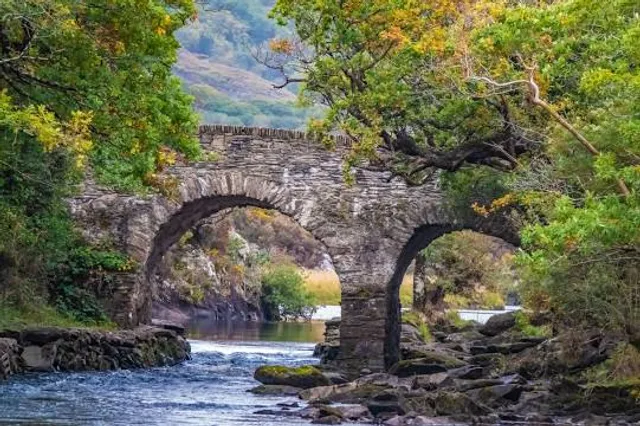
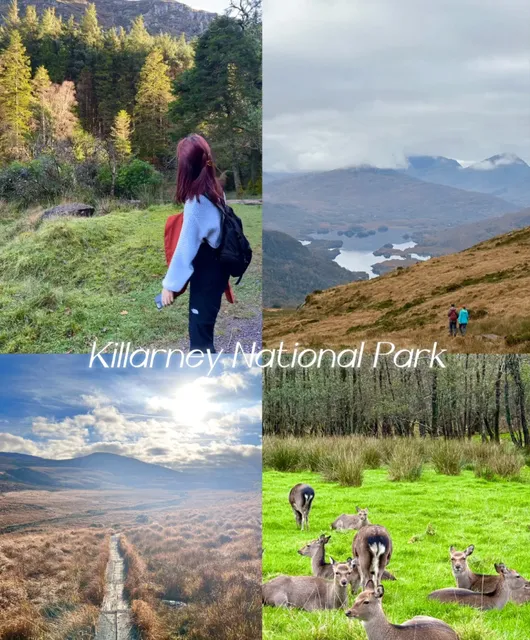
Killarney National Park near the town of Killarney, County Kerry, was the first national park in Ireland, created when the Muckross Estate was donated to the Irish Free State in 1932. The park has since been substantially expanded and encompasses over 102.89 km2 (25,425 acres) of diverse ecology, including the Lakes of Killarney, oak and yew woodlands of international importance, and mountain peaks. It has the only red deer herd on mainland Ireland and the most extensive covering of native forest remaining in Ireland.The park is of high ecological value because of the quality, diversity, and extensiveness of many of its habitats and the wide variety of species that they accommodate, some of which are rare. The park was designated a UNESCO Biosphere Reserve in 1981.The park forms part of a Special Area of Conservation and a Special Protection Area.
The National Parks and Wildlife Service is responsible for the management and administration of the park.Nature conservation is the main objective of the park, and ecosystems in their natural state are highly valued.The park is known for its scenery, and recreation and tourism amenities are provided for.
Climate and geography
Killarney National Park is in southwest Ireland close to the island's most westerly point. The Lakes of Killarney and the Mangerton, Torc, Shehy and Purple Mountains are in the park.Altitudes in the park range from 22 metres (72 ft) to 842 metres (2,762 ft). A major geological boundary between Devonian Old Red Sandstone and Carboniferous limestone lies in the park. The underlying geology of the majority of the park is sandstone, with the limestone pavements occurring on the low eastern shore of Lough Leane.
Lough Leane is the largest of the Killarney lakes and contains over 30 islands. Some visitors avail of boat trips to Innisfallen, one of the larger islands on Lough Leane.
The park has an oceanic climate, heavily influenced by the Gulf Stream. It experiences mild winters (6 °C (43 °F) February average) and cool summers (15 °C (59 °F) July average). Mean daily temperatures range from a low of 5.88 °C (42.58 °F) in January to a high of 15.28 °C (59.50 °F) in July. The park experiences high rainfall and changeable fronts, with light showery rainfall being frequent throughout the year.The mean rainfall is 1,263 millimetres (49.7 in) per year, 223 days per annum typically having more than 1 millimetre (0.039 in) precipitation. The mean number of frost days is 40.
The geological boundary, the park's wide range of altitudes, and the climatic influence of the Gulf Stream combine to give the park a varied ecology. These ecosystems include bogs, lakes, moorland, mountains, waterways, woodland, parks and gardens. Outcropping rock, cliffs and crags are features of the park.Above 200 metres (660 ft), the mountainous sandstone areas support large areas of blanket bog and heath.
History
Killarney National Park is one of the very few places in Ireland that has been continuously covered by woodland since the end of the most recent glacial period,approximately 10,000 years ago. Humans have lived in the area since at least the Bronze Age, approximately 4,000 years ago. Archaeologists have found evidence that copper mining took place in the Ross Island area during this period, which suggests that the area was of considerable importance to Bronze Age people. The park has many archaeological features, including a well preserved stone circle at Lissivigeen. The woods in the park have been disturbed and cleared at different periods since the Iron Age. This has caused a gradual decline in the diversity of tree species in the park.
Some of the most impressive archaeological remains in the park are from the early Christian period. The most important of these features is Inisfallen Abbey, the ruins of a monastic settlement on Inisfallen Island in Lough Leane. It was founded in the 7th century CE by St. Finian the Leper and was occupied until the...
Read more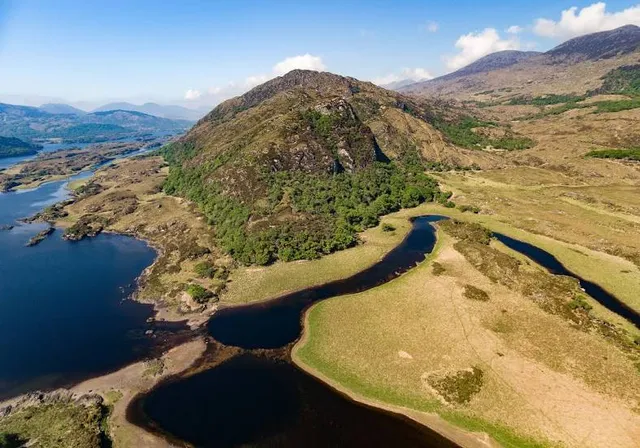
 Learn more insights from Wanderboat AI.