HTML SitemapExplore
logo
Find Things to DoFind The Best Restaurants

Tel Beit She'an — Attraction in Beit Shean

Name
Tel Beit She'an
Description
Nearby attractions
Beit She'an National Park
32.50099013 35.5002919, Beit She'an, Israel
Nearby restaurants
Nearby hotels
HI Beit Shean
Menachem Begin Blvd 129, Beit She'an, Israel
על הנחל
HaRambam St 28, Beit She'an, Israel
Related posts
Keywords
Tel Beit She'an tourism.Tel Beit She'an hotels.Tel Beit She'an bed and breakfast. flights to Tel Beit She'an.Tel Beit She'an attractions.Tel Beit She'an restaurants.Tel Beit She'an travel.Tel Beit She'an travel guide.Tel Beit She'an travel blog.Tel Beit She'an pictures.Tel Beit She'an photos.Tel Beit She'an travel tips.Tel Beit She'an maps.Tel Beit She'an things to do.
Tel Beit She'an things to do, attractions, restaurants, events info and trip planning
Tel Beit She'an
IsraelNorth DistrictBeit SheanTel Beit She'an

Basic Info

Tel Beit She'an

Beit She'an, Israel
4.9(83)
Open 24 hours
Save
spot

Ratings & Description

Info

Cultural
Outdoor
Family friendly
Accessibility
attractions: Beit She'an National Park, restaurants:
logoLearn more insights from Wanderboat AI.

Plan your stay

hotel
Pet-friendly Hotels in Beit Shean
Find a cozy hotel nearby and make it a full experience.
hotel
Affordable Hotels in Beit Shean
Find a cozy hotel nearby and make it a full experience.
hotel
The Coolest Hotels You Haven't Heard Of (Yet)
Find a cozy hotel nearby and make it a full experience.
hotel
Trending Stays Worth the Hype in Beit Shean
Find a cozy hotel nearby and make it a full experience.

Reviews

Nearby attractions of Tel Beit She'an

Beit She'an National Park

Beit She'an National Park

Beit She'an National Park

4.7

(2.5K)

Open 24 hours
Click for details
Get the Appoverlay
Get the AppOne tap to find yournext favorite spots!
Wanderboat LogoWanderboat

Your everyday Al companion for getaway ideas

CompanyAbout Us
InformationAI Trip PlannerSitemap
SocialXInstagramTiktokLinkedin
LegalTerms of ServicePrivacy Policy

Get the app

© 2025 Wanderboat. All rights reserved.
logo

Reviews of Tel Beit She'an

4.9
(83)
avatar
5.0
7y

Beit Shean is one of the oldest cities in Israel. Often overlooked by tourists, it’s worth a visit. Like most places in Israel Beit Shean has several names – Scythopolis, Tel Beit Shean, Tel el-Husn, Tel el-Hosn, Beisan, and Nysa. It is located in the Galilee region of northern Israel where the Harod Valley and Jordan Valley meet, just 27km south of the Sea of Galilee and 5km east of the Jordan River and is one of the country’s largest archaeological sites. The site is visited on our Galilee and Beit Shean Tourwhich runs twice a week from Tel Aviv and Jerusalem.

History of Beit Shean Beit Shean was settled as early as the Chalcolithic era (about 6000 years ago) and has remained continually inhabited since then. Extensive excavation of a large mound in Beit Shean has revealed over 20 layers of remains from ancient civilizations. Canaanite Temples pre-date Egyptian occupation of the region followed by Israelite rule and the Philistines during the Old Testament period. Beit Shean is mentioned in the Bible several times and is best known as the site where King Saul and his sons were hung from the city walls. The city remained a significant metropolis during the reign of King David and King Solomon. The Hellenistic period followed when the city was renamed, Scythopolis after Dionysus’ nurse who was believed to have been buried here. In the 1st century AD, Beit Shean became a flourishing multi-cultural Roman city and one of 10 cities in the Decapolis regional league. Beit Shean was the Roman provincial capital in the 4th century AD but following an earthquake in 749 AD the city never truly regained its former status. Since then the Crusaders, Mamluks, Ottomans, British and finally Israelis have each settled in Beit Shean.

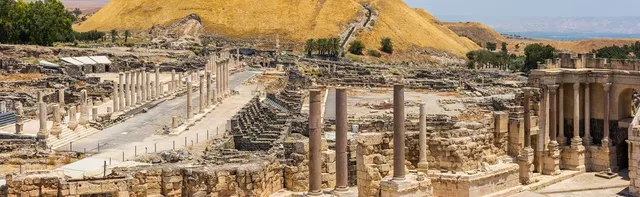
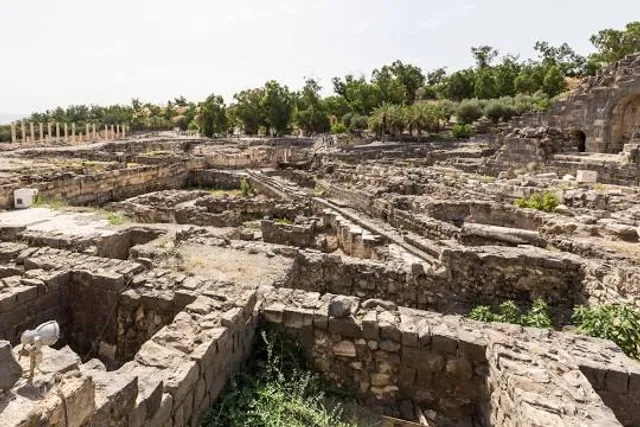
Beit Shean National Park Today the main attraction in Beit Shean is the Archaeological National Park where tourists can see the history of Israel through the archaeological remains from each historic period. On the elevated mound are remains of the Canaanite and Egyptian cities and at the foot of the mound are the extensive remains of the Roman city. The excavation and reconstruction offer a clear picture of what the city would have looked like. This former Roman metropolis was home to 30,000 to 40,000 citizens and covered approximately 370 acres. Visitors to the park can see the ancient wall that surrounded the city, public baths, a Roman temple, stores, artisan workshops and other well-preserved structures. The central Palladius street runs for 24 meters and is lined by colonnades. Historians established that the street was named after a 4th-century Roman governor after uncovering an inscription. There are rare mosaics and a Roman amphitheater which is still in use today.

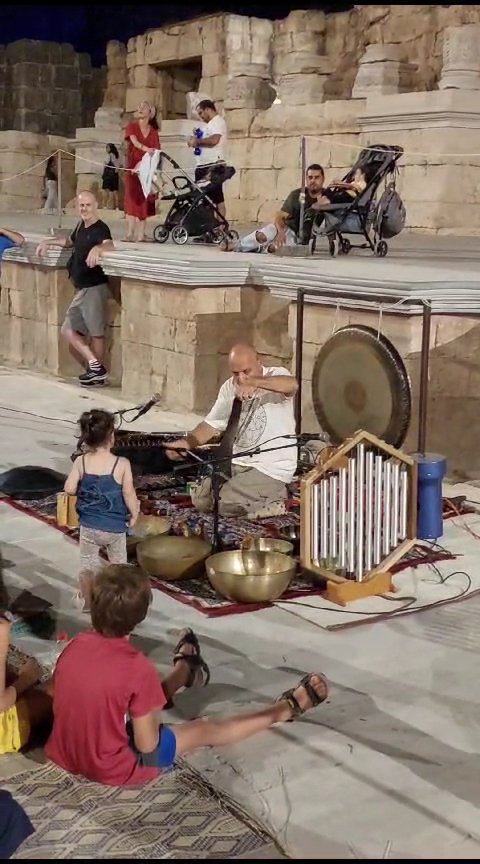
Shean Nights – Sound and Light Show This incredible show brings to life the ancient stones by projecting images of horse-drawn carriages, Romans and buildings onto the stones, along the central street.

Beit Shean Opening Times April-September: Saturday-Thursday 8am-5pm, Friday 8am-4pm October-March: 8am-4pm

Entry Fees Adult: NIS 38 Child: NIS 23 Israeli senior citizen: 50% discount

Directions From Afula, take Road 71 towards Beit Shean, turn right onto 7078 towards the modern city, and the park is signed. From the Sea of Galilee travel south on Road 90, turn right onto Road 71 towards Afula/Beit Shean, and shortly afterward,...

   Read more
avatar
1.0
7y

Low rating because of the very poor behavior of the tour guides and staff.

We went for a night time sound and light show and tour.

This is an amazing archeological site! Beautifully restored with a wealth of material that can be learned. For the longest time we have been looking forward to visiting it. Unfortunately the staff made it into an unpleasant and non learning experience.

They were surly and unpleasant. The cashier was rude to people. The woman who ushered us in was yelling at people to enter. I was waiting near the front entrance of the seating area, looking out for our friends who were to be arriving shortly. This woman yelled at me to get to my seat and actually grabbed my shoulder!

After the sound and light show we were herded out of the seating area and assigned a guide who was supposed to take us around the archaeological site and explain various things. From the start, he did not wait for the entire group to assemble in front of him but started speaking about the sights, when more than half of his group still wasn't there. He was quite consistent in doing this and can't seem to care about his group.

The woman usher led the group behind us and she was constantly yelling at our group to hurry up because they had a lot of people packed in that evening and they have to keep things moving.

As an educational experience it was the pits. Very unpleasant. Very rushed. Totally unprofessional.

We have been on archaeological tours in different countries, some better than others.

This rated at the bottom...

   Read more
avatar
5.0
4y

Скифополис (греческое название Бейт-Шеана) был одним из самых значительных, богатых и красивых городов Декаполиса (десять эллинистических городов, объединённых в административную единицу). Хоть он и являлся отдаленной римской провинцией, но по тем временам - это воистину самый современный город со всеми удобствами, в котором прожило не менее 30-ти тысяч человек. Общественные туалеты, канализации, водопроводы, бани, рынки, мосты, дороги, невообразимые по сложности мосты, ну, и конечно, культурный досуг - амфитеатр на 7 тысяч посадочных мест. Впрочем, сцена могла служить не только для безобидных представлений трагиков и комедиантов, но и для гладиаторских боёв, театр в IV веке превратился в амфитеатр и его арена впитала кровь профессиональных бойцов и несчастных рабов. Хорошо пройтись по римскому городу, по двум перекрещенным центральным улицам (кардо и декуманус). Полюбоваться на величественные колоны, зайти на полукруглую площадь, на которой 2000 лет назад располагались крытые лавочки. На правой стороне улицы Палладиус стоят колонны с капителями ионического ордера, а на левой - коринфского. Кстати, колонны амфитеатра также увенчаны капителями коринфского ордера.

Возможно, название города связано со скифскими наемниками Александра Македонского. Может, именно они основали город или он был предназначен для них.

Конечно, Скифополис имеет гораздо более древнюю историю. Он был известен под названием Бейт-Шеан задолго до эллинов и римлян.

Кстати, здесь найдены поселения времён халколита, а это, на минуточку, 4000 лет до нашей эры.

Ну а сам город был основан хананеями. Вероятней всего, Бейт-Шеан означает Дом Шеана (возможно, Шеан - древнее имя ханаанского бога солнца или плодородия).

Город расположен в стратегическом месте, в древности здесь проходил путь из Египта в Месопотамию. Он находится на пересечении двух центральных дорог: из Тверии в Иерусалим и пути, соединяющем долину с береговой линией Средиземного моря.

Бейт-Шеан фигурирует среди городов, завоёванных фараоном Тутмосом III в XIV веке до н. э. Почти три века город был административным центром всего региона. На вершине холма был раскопан большой дом египетского наместника. Были найдены статуя Рамсеса II и две стелы Сети I. После вторжения народов моря (филистимлян) и появления Израиля, Египет потерял власть над регионом. Дом египетского правителя был сожжён примерно в 1150 году до н. э., и египетские здания уже не восстанавливались.

Значительные части Ханаана делили между собой наши предки кочевники, носящие имя Израиль и воины-мореходы, прибывшие с Крита.

В Писании неоднократно упоминается Бейт-Шеан, а история гибели царя Шаула (Саула) заставляет задуматься об отваге и верности.

Израильский царь, будучи тяжело ранен, чтобы не достаться живым в руки своих врагов, кончает жизнь самоубийством. Филистимляне находят его труп и вешают "на стене Бейт-Шана" (בֵּית שָׁן). Однако жители Явеш (Иависа) Галаадского, с благодарностью помнившие Шаула, спасшего их от позора и гнета аммонитян, снарядили лучших воинов, пробрались в город и под покровом ночи сняли тело царя с крепостной стены и похоронили у себя, почтив его память недельным постом. Бейт-Шеан упоминается в надписях Карнакского храма в списке городов, подвергшихся разграблению во время похода фараона Шешонка I на Ханаан (около 925 года до н. э.). Городом владели цари Израиля, пока он не был полностью разрушен во время ассирийского завоевания Израильского царства Тиглатпаласаром III в 732 году до н. э.

Благодаря богатой водными источниками земле, окрестности города славились своими урожаями, поэтому Бейт-Шеан несмотря на постоянные злоключения, был почти всегда заселён. Рабби Шимон бен Лахиш, живший аж в третьем веке, так сказал об этом месте: "Если рай находится на земле Израиля, то его вход — Бейт-Шеан". Уверяю вас, любой, увидевший это чудо, сразу же согласится с ним, но все же лучше это делать зимой, так как летом этот блаженный рай напоминает...

   Read more

Page 1 of 7
Previous
Next

Posts

xx
Beit Shean is one of the oldest cities in Israel. Often overlooked by tourists, it’s worth a visit. Like most places in Israel Beit Shean has several names – Scythopolis, Tel Beit Shean, Tel el-Husn, Tel el-Hosn, Beisan, and Nysa. It is located in the Galilee region of northern Israel where the Harod Valley and Jordan Valley meet, just 27km south of the Sea of Galilee and 5km east of the Jordan River and is one of the country’s largest archaeological sites. The site is visited on our Galilee and Beit Shean Tourwhich runs twice a week from Tel Aviv and Jerusalem. History of Beit Shean Beit Shean was settled as early as the Chalcolithic era (about 6000 years ago) and has remained continually inhabited since then. Extensive excavation of a large mound in Beit Shean has revealed over 20 layers of remains from ancient civilizations. Canaanite Temples pre-date Egyptian occupation of the region followed by Israelite rule and the Philistines during the Old Testament period. Beit Shean is mentioned in the Bible several times and is best known as the site where King Saul and his sons were hung from the city walls. The city remained a significant metropolis during the reign of King David and King Solomon. The Hellenistic period followed when the city was renamed, Scythopolis after Dionysus’ nurse who was believed to have been buried here. In the 1st century AD, Beit Shean became a flourishing multi-cultural Roman city and one of 10 cities in the Decapolis regional league. Beit Shean was the Roman provincial capital in the 4th century AD but following an earthquake in 749 AD the city never truly regained its former status. Since then the Crusaders, Mamluks, Ottomans, British and finally Israelis have each settled in Beit Shean. Beit Shean National Park Today the main attraction in Beit Shean is the Archaeological National Park where tourists can see the history of Israel through the archaeological remains from each historic period. On the elevated mound are remains of the Canaanite and Egyptian cities and at the foot of the mound are the extensive remains of the Roman city. The excavation and reconstruction offer a clear picture of what the city would have looked like. This former Roman metropolis was home to 30,000 to 40,000 citizens and covered approximately 370 acres. Visitors to the park can see the ancient wall that surrounded the city, public baths, a Roman temple, stores, artisan workshops and other well-preserved structures. The central Palladius street runs for 24 meters and is lined by colonnades. Historians established that the street was named after a 4th-century Roman governor after uncovering an inscription. There are rare mosaics and a Roman amphitheater which is still in use today. Shean Nights – Sound and Light Show This incredible show brings to life the ancient stones by projecting images of horse-drawn carriages, Romans and buildings onto the stones, along the central street. Beit Shean Opening Times April-September: Saturday-Thursday 8am-5pm, Friday 8am-4pm October-March: 8am-4pm Entry Fees Adult: NIS 38 Child: NIS 23 Israeli senior citizen: 50% discount Directions From Afula, take Road 71 towards Beit Shean, turn right onto 7078 towards the modern city, and the park is signed. From the Sea of Galilee travel south on Road 90, turn right onto Road 71 towards Afula/Beit Shean, and shortly afterward, left onto 7078.
Harold BergsteinHarold Bergstein
Low rating because of the very poor behavior of the tour guides and staff. We went for a night time sound and light show and tour. This is an amazing archeological site! Beautifully restored with a wealth of material that can be learned. For the longest time we have been looking forward to visiting it. Unfortunately the staff made it into an unpleasant and non learning experience. They were surly and unpleasant. The cashier was rude to people. The woman who ushered us in was yelling at people to enter. I was waiting near the front entrance of the seating area, looking out for our friends who were to be arriving shortly. This woman yelled at me to get to my seat and actually grabbed my shoulder! After the sound and light show we were herded out of the seating area and assigned a guide who was supposed to take us around the archaeological site and explain various things. From the start, he did not wait for the entire group to assemble in front of him but started speaking about the sights, when more than half of his group still wasn't there. He was quite consistent in doing this and can't seem to care about his group. The woman usher led the group behind us and she was constantly yelling at our group to hurry up because they had a lot of people packed in that evening and they have to keep things moving. As an educational experience it was the pits. Very unpleasant. Very rushed. Totally unprofessional. We have been on archaeological tours in different countries, some better than others. This rated at the bottom of the heap!
Рами ЮдовинРами Юдовин
Скифополис (греческое название Бейт-Шеана) был одним из самых значительных, богатых и красивых городов Декаполиса (десять эллинистических городов, объединённых в административную единицу). Хоть он и являлся отдаленной римской провинцией, но по тем временам - это воистину самый современный город со всеми удобствами, в котором прожило не менее 30-ти тысяч человек. Общественные туалеты, канализации, водопроводы, бани, рынки, мосты, дороги, невообразимые по сложности мосты, ну, и конечно, культурный досуг - амфитеатр на 7 тысяч посадочных мест. Впрочем, сцена могла служить не только для безобидных представлений трагиков и комедиантов, но и для гладиаторских боёв, театр в IV веке превратился в амфитеатр и его арена впитала кровь профессиональных бойцов и несчастных рабов. Хорошо пройтись по римскому городу, по двум перекрещенным центральным улицам (кардо и декуманус). Полюбоваться на величественные колоны, зайти на полукруглую площадь, на которой 2000 лет назад располагались крытые лавочки. На правой стороне улицы Палладиус стоят колонны с капителями ионического ордера, а на левой - коринфского. Кстати, колонны амфитеатра также увенчаны капителями коринфского ордера. Возможно, название города связано со скифскими наемниками Александра Македонского. Может, именно они основали город или он был предназначен для них. Конечно, Скифополис имеет гораздо более древнюю историю. Он был известен под названием Бейт-Шеан задолго до эллинов и римлян. Кстати, здесь найдены поселения времён халколита, а это, на минуточку, 4000 лет до нашей эры. Ну а сам город был основан хананеями. Вероятней всего, Бейт-Шеан означает Дом Шеана (возможно, Шеан - древнее имя ханаанского бога солнца или плодородия). Город расположен в стратегическом месте, в древности здесь проходил путь из Египта в Месопотамию. Он находится на пересечении двух центральных дорог: из Тверии в Иерусалим и пути, соединяющем долину с береговой линией Средиземного моря. Бейт-Шеан фигурирует среди городов, завоёванных фараоном Тутмосом III в XIV веке до н. э. Почти три века город был административным центром всего региона. На вершине холма был раскопан большой дом египетского наместника. Были найдены статуя Рамсеса II и две стелы Сети I. После вторжения народов моря (филистимлян) и появления Израиля, Египет потерял власть над регионом. Дом египетского правителя был сожжён примерно в 1150 году до н. э., и египетские здания уже не восстанавливались. Значительные части Ханаана делили между собой наши предки кочевники, носящие имя Израиль и воины-мореходы, прибывшие с Крита. В Писании неоднократно упоминается Бейт-Шеан, а история гибели царя Шаула (Саула) заставляет задуматься об отваге и верности. Израильский царь, будучи тяжело ранен, чтобы не достаться живым в руки своих врагов, кончает жизнь самоубийством. Филистимляне находят его труп и вешают "на стене Бейт-Шана" (בֵּית שָׁן). Однако жители Явеш (Иависа) Галаадского, с благодарностью помнившие Шаула, спасшего их от позора и гнета аммонитян, снарядили лучших воинов, пробрались в город и под покровом ночи сняли тело царя с крепостной стены и похоронили у себя, почтив его память недельным постом. Бейт-Шеан упоминается в надписях Карнакского храма в списке городов, подвергшихся разграблению во время похода фараона Шешонка I на Ханаан (около 925 года до н. э.). Городом владели цари Израиля, пока он не был полностью разрушен во время ассирийского завоевания Израильского царства Тиглатпаласаром III в 732 году до н. э. Благодаря богатой водными источниками земле, окрестности города славились своими урожаями, поэтому Бейт-Шеан несмотря на постоянные злоключения, был почти всегда заселён. Рабби Шимон бен Лахиш, живший аж в третьем веке, так сказал об этом месте: "Если рай находится на земле Израиля, то его вход — Бейт-Шеан". Уверяю вас, любой, увидевший это чудо, сразу же согласится с ним, но все же лучше это делать зимой, так как летом этот блаженный рай напоминает раскалённый ад.
See more posts
See more posts
hotel
Find your stay

Pet-friendly Hotels in Beit Shean

Find a cozy hotel nearby and make it a full experience.

Beit Shean is one of the oldest cities in Israel. Often overlooked by tourists, it’s worth a visit. Like most places in Israel Beit Shean has several names – Scythopolis, Tel Beit Shean, Tel el-Husn, Tel el-Hosn, Beisan, and Nysa. It is located in the Galilee region of northern Israel where the Harod Valley and Jordan Valley meet, just 27km south of the Sea of Galilee and 5km east of the Jordan River and is one of the country’s largest archaeological sites. The site is visited on our Galilee and Beit Shean Tourwhich runs twice a week from Tel Aviv and Jerusalem. History of Beit Shean Beit Shean was settled as early as the Chalcolithic era (about 6000 years ago) and has remained continually inhabited since then. Extensive excavation of a large mound in Beit Shean has revealed over 20 layers of remains from ancient civilizations. Canaanite Temples pre-date Egyptian occupation of the region followed by Israelite rule and the Philistines during the Old Testament period. Beit Shean is mentioned in the Bible several times and is best known as the site where King Saul and his sons were hung from the city walls. The city remained a significant metropolis during the reign of King David and King Solomon. The Hellenistic period followed when the city was renamed, Scythopolis after Dionysus’ nurse who was believed to have been buried here. In the 1st century AD, Beit Shean became a flourishing multi-cultural Roman city and one of 10 cities in the Decapolis regional league. Beit Shean was the Roman provincial capital in the 4th century AD but following an earthquake in 749 AD the city never truly regained its former status. Since then the Crusaders, Mamluks, Ottomans, British and finally Israelis have each settled in Beit Shean. Beit Shean National Park Today the main attraction in Beit Shean is the Archaeological National Park where tourists can see the history of Israel through the archaeological remains from each historic period. On the elevated mound are remains of the Canaanite and Egyptian cities and at the foot of the mound are the extensive remains of the Roman city. The excavation and reconstruction offer a clear picture of what the city would have looked like. This former Roman metropolis was home to 30,000 to 40,000 citizens and covered approximately 370 acres. Visitors to the park can see the ancient wall that surrounded the city, public baths, a Roman temple, stores, artisan workshops and other well-preserved structures. The central Palladius street runs for 24 meters and is lined by colonnades. Historians established that the street was named after a 4th-century Roman governor after uncovering an inscription. There are rare mosaics and a Roman amphitheater which is still in use today. Shean Nights – Sound and Light Show This incredible show brings to life the ancient stones by projecting images of horse-drawn carriages, Romans and buildings onto the stones, along the central street. Beit Shean Opening Times April-September: Saturday-Thursday 8am-5pm, Friday 8am-4pm October-March: 8am-4pm Entry Fees Adult: NIS 38 Child: NIS 23 Israeli senior citizen: 50% discount Directions From Afula, take Road 71 towards Beit Shean, turn right onto 7078 towards the modern city, and the park is signed. From the Sea of Galilee travel south on Road 90, turn right onto Road 71 towards Afula/Beit Shean, and shortly afterward, left onto 7078.
x

x

hotel
Find your stay

Affordable Hotels in Beit Shean

Find a cozy hotel nearby and make it a full experience.

Get the Appoverlay
Get the AppOne tap to find yournext favorite spots!
Low rating because of the very poor behavior of the tour guides and staff. We went for a night time sound and light show and tour. This is an amazing archeological site! Beautifully restored with a wealth of material that can be learned. For the longest time we have been looking forward to visiting it. Unfortunately the staff made it into an unpleasant and non learning experience. They were surly and unpleasant. The cashier was rude to people. The woman who ushered us in was yelling at people to enter. I was waiting near the front entrance of the seating area, looking out for our friends who were to be arriving shortly. This woman yelled at me to get to my seat and actually grabbed my shoulder! After the sound and light show we were herded out of the seating area and assigned a guide who was supposed to take us around the archaeological site and explain various things. From the start, he did not wait for the entire group to assemble in front of him but started speaking about the sights, when more than half of his group still wasn't there. He was quite consistent in doing this and can't seem to care about his group. The woman usher led the group behind us and she was constantly yelling at our group to hurry up because they had a lot of people packed in that evening and they have to keep things moving. As an educational experience it was the pits. Very unpleasant. Very rushed. Totally unprofessional. We have been on archaeological tours in different countries, some better than others. This rated at the bottom of the heap!
Harold Bergstein

Harold Bergstein

hotel
Find your stay

The Coolest Hotels You Haven't Heard Of (Yet)

Find a cozy hotel nearby and make it a full experience.

hotel
Find your stay

Trending Stays Worth the Hype in Beit Shean

Find a cozy hotel nearby and make it a full experience.

Скифополис (греческое название Бейт-Шеана) был одним из самых значительных, богатых и красивых городов Декаполиса (десять эллинистических городов, объединённых в административную единицу). Хоть он и являлся отдаленной римской провинцией, но по тем временам - это воистину самый современный город со всеми удобствами, в котором прожило не менее 30-ти тысяч человек. Общественные туалеты, канализации, водопроводы, бани, рынки, мосты, дороги, невообразимые по сложности мосты, ну, и конечно, культурный досуг - амфитеатр на 7 тысяч посадочных мест. Впрочем, сцена могла служить не только для безобидных представлений трагиков и комедиантов, но и для гладиаторских боёв, театр в IV веке превратился в амфитеатр и его арена впитала кровь профессиональных бойцов и несчастных рабов. Хорошо пройтись по римскому городу, по двум перекрещенным центральным улицам (кардо и декуманус). Полюбоваться на величественные колоны, зайти на полукруглую площадь, на которой 2000 лет назад располагались крытые лавочки. На правой стороне улицы Палладиус стоят колонны с капителями ионического ордера, а на левой - коринфского. Кстати, колонны амфитеатра также увенчаны капителями коринфского ордера. Возможно, название города связано со скифскими наемниками Александра Македонского. Может, именно они основали город или он был предназначен для них. Конечно, Скифополис имеет гораздо более древнюю историю. Он был известен под названием Бейт-Шеан задолго до эллинов и римлян. Кстати, здесь найдены поселения времён халколита, а это, на минуточку, 4000 лет до нашей эры. Ну а сам город был основан хананеями. Вероятней всего, Бейт-Шеан означает Дом Шеана (возможно, Шеан - древнее имя ханаанского бога солнца или плодородия). Город расположен в стратегическом месте, в древности здесь проходил путь из Египта в Месопотамию. Он находится на пересечении двух центральных дорог: из Тверии в Иерусалим и пути, соединяющем долину с береговой линией Средиземного моря. Бейт-Шеан фигурирует среди городов, завоёванных фараоном Тутмосом III в XIV веке до н. э. Почти три века город был административным центром всего региона. На вершине холма был раскопан большой дом египетского наместника. Были найдены статуя Рамсеса II и две стелы Сети I. После вторжения народов моря (филистимлян) и появления Израиля, Египет потерял власть над регионом. Дом египетского правителя был сожжён примерно в 1150 году до н. э., и египетские здания уже не восстанавливались. Значительные части Ханаана делили между собой наши предки кочевники, носящие имя Израиль и воины-мореходы, прибывшие с Крита. В Писании неоднократно упоминается Бейт-Шеан, а история гибели царя Шаула (Саула) заставляет задуматься об отваге и верности. Израильский царь, будучи тяжело ранен, чтобы не достаться живым в руки своих врагов, кончает жизнь самоубийством. Филистимляне находят его труп и вешают "на стене Бейт-Шана" (בֵּית שָׁן). Однако жители Явеш (Иависа) Галаадского, с благодарностью помнившие Шаула, спасшего их от позора и гнета аммонитян, снарядили лучших воинов, пробрались в город и под покровом ночи сняли тело царя с крепостной стены и похоронили у себя, почтив его память недельным постом. Бейт-Шеан упоминается в надписях Карнакского храма в списке городов, подвергшихся разграблению во время похода фараона Шешонка I на Ханаан (около 925 года до н. э.). Городом владели цари Израиля, пока он не был полностью разрушен во время ассирийского завоевания Израильского царства Тиглатпаласаром III в 732 году до н. э. Благодаря богатой водными источниками земле, окрестности города славились своими урожаями, поэтому Бейт-Шеан несмотря на постоянные злоключения, был почти всегда заселён. Рабби Шимон бен Лахиш, живший аж в третьем веке, так сказал об этом месте: "Если рай находится на земле Израиля, то его вход — Бейт-Шеан". Уверяю вас, любой, увидевший это чудо, сразу же согласится с ним, но все же лучше это делать зимой, так как летом этот блаженный рай напоминает раскалённый ад.
Рами Юдовин

Рами Юдовин

See more posts
See more posts