The origins
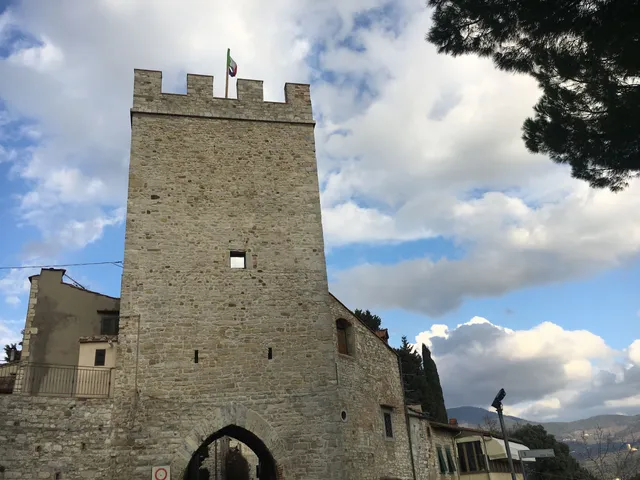
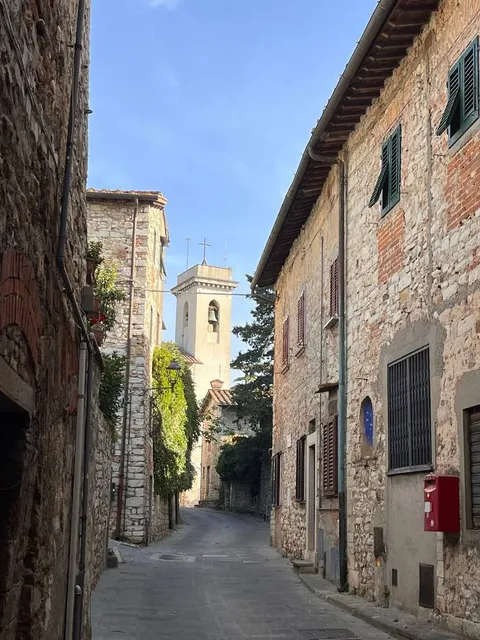
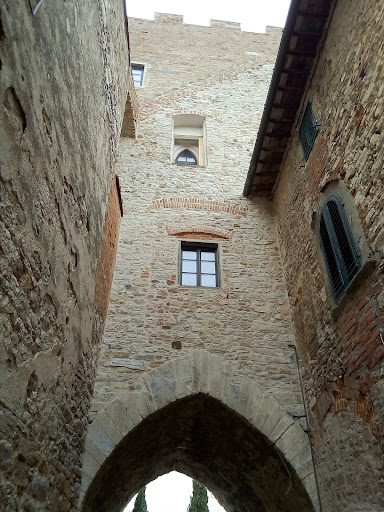
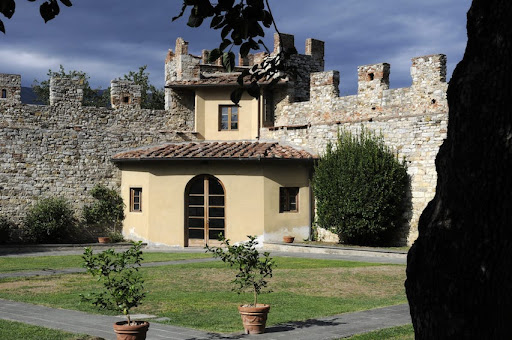
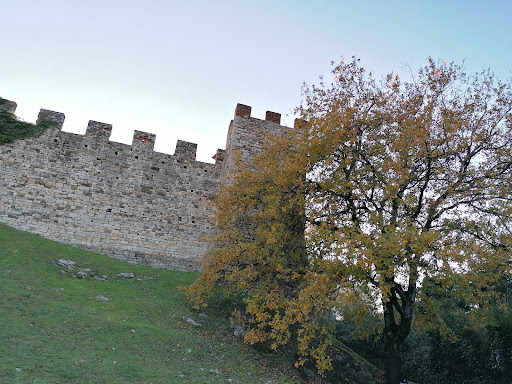
The village still retains the characteristic appearance of the fortified village, with an oval plan, typical of hill towns. Located on an isolated hill, located at the point where the valley of the Marina stream opens towards the Florentine plain, it is visible from the four cardinal points and in the past guarded the communication routes that led to Mugello . The first fortification of the Calenzano hill is most likely due to the powerful family of the Guidi counts . The original nucleus of the castle assumed considerable strategic importance in the twelfth century, located as it was on the border between two dioceses, that of Florence and Pistoia(Prato will become so only in 1653) and the feudal domains of the aforementioned Guidi, of the Alberti counts , who controlled the Val di Bisenzio , and of the Ubaldini , Ghibelline lords of Mugello. The first mentions of Calenzano as a "castle" date back to the 13th century. We find traces of it in the Book of Montaperti of 1260 and in the Book of Estimates of 1269. In this second source in particular we describe the damage suffered by the Guelphs of Florence after the defeat in the battle of Montaperti by the Ghibellines, which also caused massive destruction to the castle of Calenzano.
From the Guidi the castle passed under the jurisdiction of the bishop of Florence and finally at the beginning of the 14th century it became a possession of the Republic of Florence. It is interesting to note that three other castles were located along the Val di Marina : that of Combiate, at the Passo delle Croci , of which no trace remains, defended the access to the plain from the north; that of Legri , formerly owned by the Guidi counts then by the Figiovanni and the Cattani-Cavalcanti, restored in recent years in neo-Gothic style is now a private residence; and the castle of Travalle, also an ancient fief of the Guidi. The property of the latter, divided between the Tosinghi and the Lamberti, was purchased by the Municipality of Florence in 1225. It then passed to the ancient Corbinelli family, and remained with them throughout the 1600s. Since then, the "castellaccio" of Travalle, as it is called, has been one of the farms of the large villa farm first of the Strozzi Alamanni, then of the Ganucci Cancellieri. The castles were joined by numerous watchtowers in the control of the territory, such as the tower of Collina and the “Torraccia” or the tower of Baroncoli.
The 14th century: three sieges in less than forty years
The most important historical fact concerning the castle occurred on the night between 4 and 5 October 1325, when the Ghibelline militias of the Lucca leader Castruccio Castracani , veterans from the victorious battle of Altopascio , attacked and set fire to the fortifications without encountering resistance during their advance. about Florence. In that century of continuous wars that was the '300, Calenzano again suffered serious devastation. In 1351 it was besieged and damaged by the troops of the Visconti of Milan led by Giovanni di Oleggio. At that point the Florentine Republic, aware that it could not give up a stronghold which was the real gateway to the Florentine plain from the west, decided to take action. The defensive structures were consolidated and enlarged, making the walls assume the conformation that will keep for the centuries to come. These expensive works proved effective when in 1363 the Pisans, flanked by the English mercenaries of Giovanni Acuto , raged through the countryside of Florence, plundering and plundering. The castle walls resisted and also provided shelter to the inhabitants of nearby Sesto.In that same year the Municipality of Florence approved a further strengthening of the defense works and decreed the absolute prohibition for the inhabitants, under penalty of a fine of 1000 pounds of small florins, to build or live in houses or huts leaning against the castle walls or in a perimeter of 200 fathoms...
Read moreA medieval place in a modern world. You can only see the outside, but very picturesque. The view is lovely, as is from the church on the opposite hill. Enjoy the 15-20 min. stroll for...
Read moreIl borgo conserva ancora oggi l'aspetto caratteristico del villaggio fortificato, con schema a pianta ovale, tipico dei centri di collina. Posto su una collinetta isolata, situata nel punto dove la valle del torrente Marina si apre verso la piana fiorentina, è visibile dai quattro punti cardinali e sorvegliava in passato le vie di comunicazione che portavano in Mugello. Il primo incastellamento della collina di Calenzano si deve molto probabilmente alla potente famiglia...
Read more