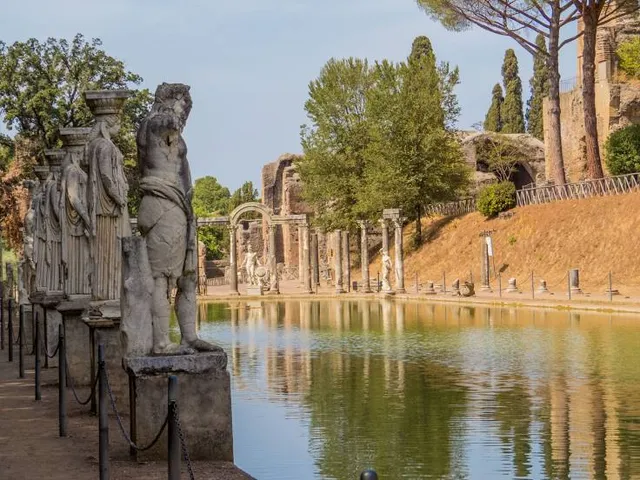
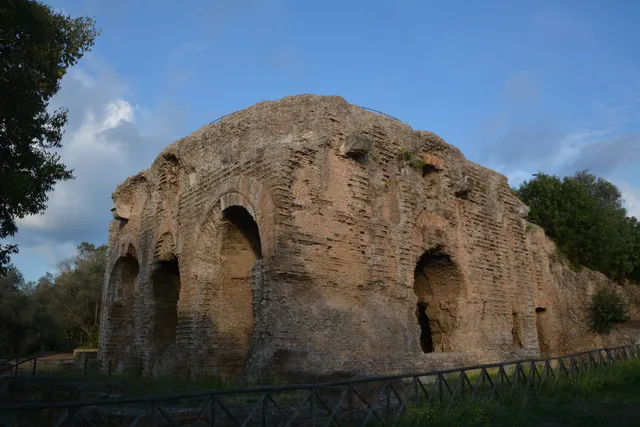
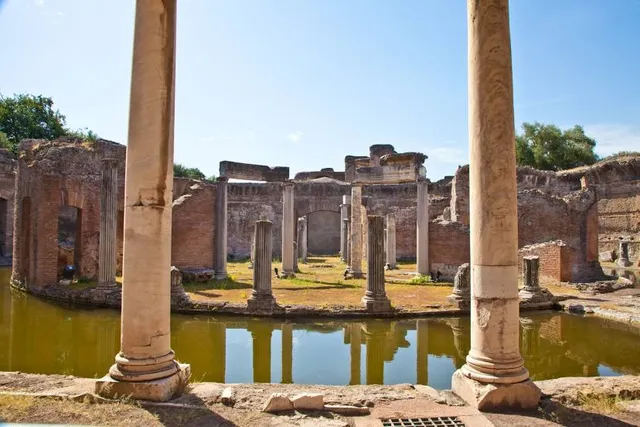
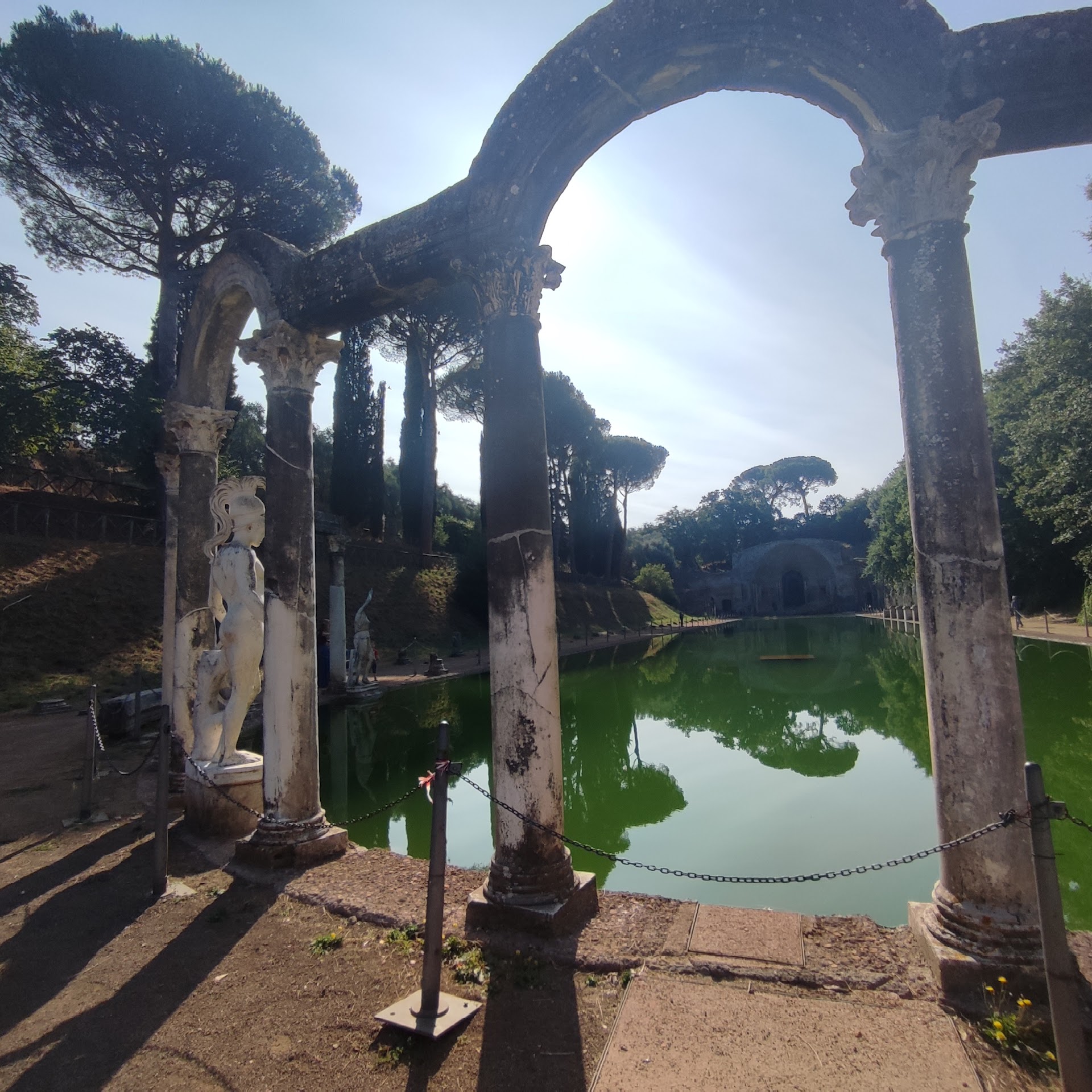
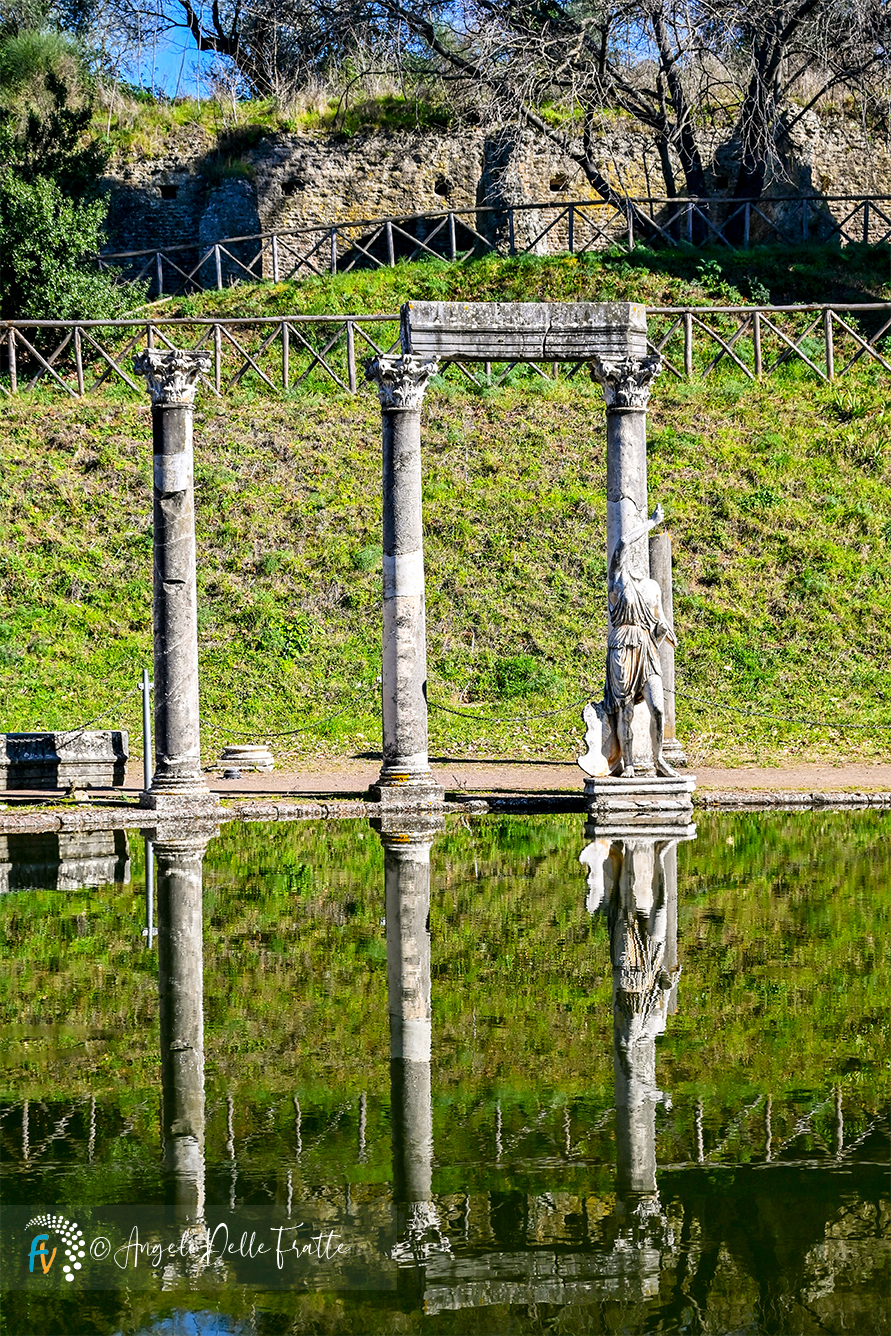
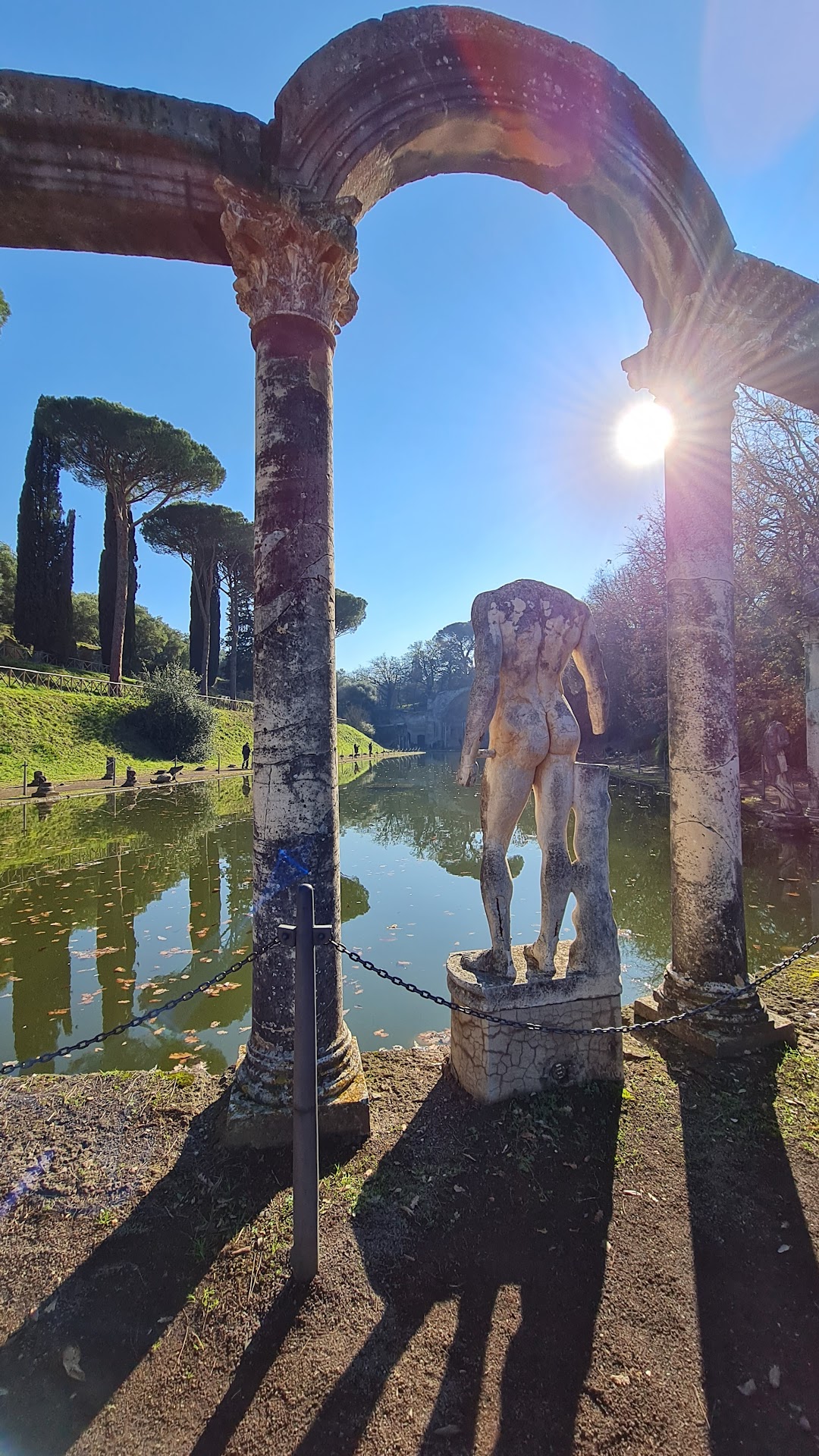
Canopus is the most well-known ruin in Hadrian's Villa.
Hadrian's Villa was designed and planned by Emperor Hadrian, one of the Five Good Emperors of Rome. Hadrian had a lifelong passion for traveling and architecture, and Hadrian’s Villa served as his architectural laboratory, blending the experiences he gained from his travels across the vast Roman Empire, which spanned Europe, Asia, and Africa, into the architectural designs. The villa incorporated elements from Roman, Greek, and Egyptian architecture, creating an unparalleled style.
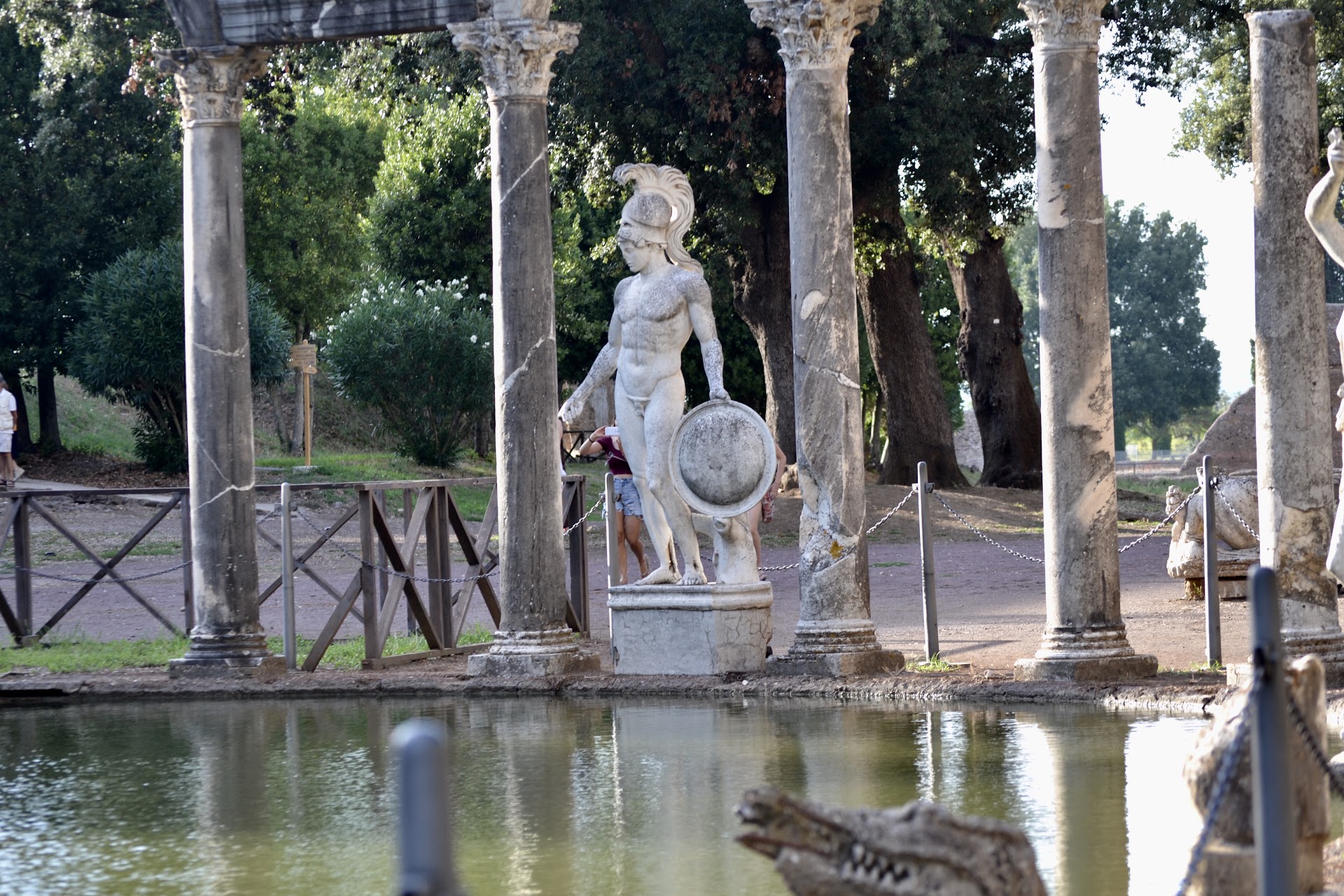
Among the many Greek and Egyptian-style buildings, the most prominent surviving structure is Canopus. Scholars have long believed that this pool symbolized the Great Canal of Canopus, an ancient Egyptian city in the Nile Delta, due to the discovery of crocodile stone carvings on one side and the Serapeum (a temple dedicated to Serapis, a Hellenistic Egyptian god who replaced Osiris) at the far end of the pool. However, recent archaeological findings suggest that scholars now lean towards the idea that Canopus may symbolize either the Nile River or the Mediterranean, which better explains the Greek statues of Hermes and the Amazonian warriors found at the end and along one side of the pool, representing Greece and Asia Minor. Additionally, it is believed that the pool and temple were not used for religious purposes but were more likely a summer retreat and entertainment venue for Emperor Hadrian.
For me, Hadrian’s Villa is quite distant from the city center of Rome and is not easy to reach. I went there primarily for Canopus. Besides the beautiful photos on various websites, I was also drawn in by the romantic love story often mentioned in Chinese travel blogs. But in reality, Canopus has nothing to do with that romantic love story. Another ruin in the villa is much more likely to be connected to the story. However, that ruin is now just a foundation, and as an ordinary person, I can’t even tell what it was 😅😅😅. So, even though I later learned that Canopus was a large entertainment facility, I still prefer to believe that the Egyptian style represents Emperor Hadrian’s nostalgia for his lover who passed away in Egypt. Viewing these weathered ruins through such a melancholic lens makes their charm even more...
Read moreThe Canopus, one of the main attractions of Hadrian's Villa, is a long pond surrounded by a splendid colonnade. At the bottom end stands a nymphaeum that is recognizably a temple of Serapis (Serapeum).
It consists of a semicircular exedra with a ribbed cupola, extended by a long vaulted corridor. This ensemble, which is decorated with fountains and statues, was for a long time believed to be an evocation of the Egyptian town of Canopus, linked to Alexandria by a canal from the Nile and famous for its Temple of Serapis.
A more recent interpretation gives it another meaning: the pond is not the canal but the Mediterranean, which explains the presence of Greece (symbolized by copies of the caryatids from the Erechtheion in Athens) and of Asia (represented by copies of two Amazons by Phidias that adorned the Temple of Artemis in Ephesus and a copy of Praxiteles' renowned...
Read moreIl canapo è il monumento più famoso dell'antica Villa Adriana. Rappresenta il famoso canale del delta del Nilo che congiungeva Alessandria alla città di Canopo. Tale canele era famoso presso gli antichi per la sua bellezza, infatti era chiamata EURIPOS. La città di Canopo era famosa nel periodo tolemaico per le orge che Ivi si svolgevano. La funzione principale di questo bacino idrico era quella di ricordare il corso del fiume Nilo. Infatti in antichità l'acqua scorreva continuamente verso la valle dell'ippodromo. In questo canale di acqua sempre in movimento nel centro erano posizionate le statue di coccodrilli e ippopotami che uscivano sul pelo dell'acqua Dando l'impressione di essere elementi animati. Inoltre sempre sui lati vi erano delle pregevoli statue di cariatidi e di sileni cantori nonché statue di Ares e danaidi. Le scoperte di questi notevoli elementi di carattere statuario sono state rese possibili alle intuizioni dell'Antico guardiano di Villa Adriana che qui viveva e che decise di far scavare Nel 1950 questo sito che all'epoca era solo una valle completamente interrata. Sulla parte di sinistra vi era un doppio xystus porticato ove trovavano posto gli invitati al triclinio estivo del l'imperatore. Nella parte terminale del canopo vi era il tempio dedicato a Serapide la divinità Egizio tolemaica che era venerata in Egitto rappresentando la figura sintetica di Horus e di Zeus. Il Serapeo aveva una cascata di acqua che produceva una frescura particolarmente gradita dall'imperatore ed ai suoi più stretti commensali durante l'estate: probabilmente generali e i governatori delle province. Infatti questa parte di Villa era dedicata ai banchetti estivi nella parte più interna del serapeo trovava posto uno stibadium: ovvero un banchetto triclinare Rotondo, intorno a cui sedevano alcuni dei personaggi più importanti dell' entourage Imperiale di Publio Elio Adriano. Delle tessere di mosaico blu foderavano la parete superiore e con estrema probabilità nelle nicchie erano posizionate delle statue di pregevole fattura e l'enigmistica con estrema probabilità realizzate in bronzo dorato quindi di altissima qualità punto il serapeo era alimentato dall'acquedotto dell' ANNIO NOVUS che scorreva proprio più a Monte, vicino a quella che oggi conosciamo come l'Accademia, ovvero la parte della villa più intima riservata alla Buen Retiro dell' imperatore Adriano; nella parte superiore al canopo, ovvero nell'accademia, l'imperatore visse la sua storia d'amore con...
Read more