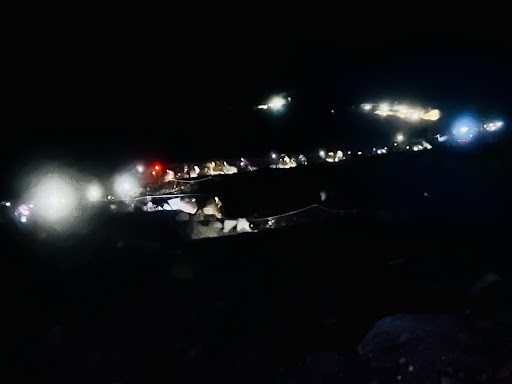
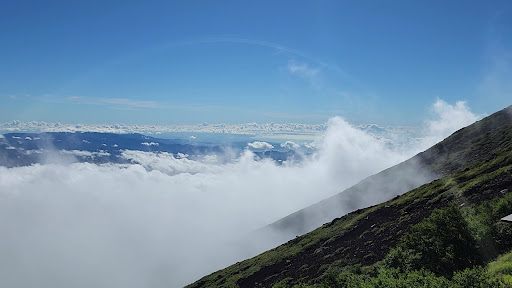
After climbing for hours through the pitch-black night, guided only by the faint circle of our headlamps and the slow rhythm of our steps, we finally reached the summit of Mt. Fuji just before dawn.
The air was razor-thin and freezing cold—every breath turned into a small puff of white mist—but the energy around us was alive. Hikers from every corner of the world were gathering at the crater rim, all bundled up, all waiting for the same magical moment: the first light of sunrise, known here in Japan as goraikō.
At around 4:15 am, the horizon began its transformation. What was once a dark canvas of indigo slowly bled into soft streaks of orange, pink, and shimmering gold. Then, as the sun inched above the endless sea of clouds, a collective wave of awe rippled through the crowd. Some clapped, some cheered, others stood in hushed silence, but we all shared the same wide-eyed wonder.
For a brief moment, standing at 3,776 meters, on the very roof of Japan, I felt both impossibly small and profoundly connected—to the mountain, to nature, and to every single person around me.
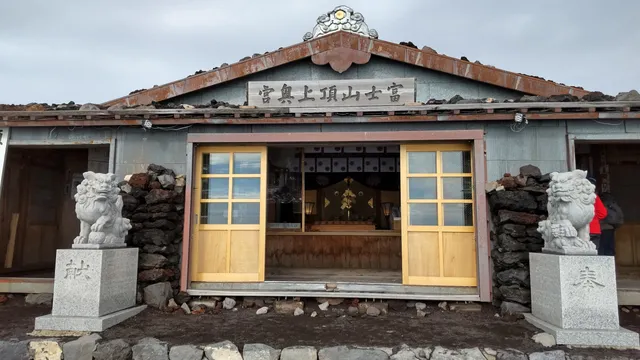
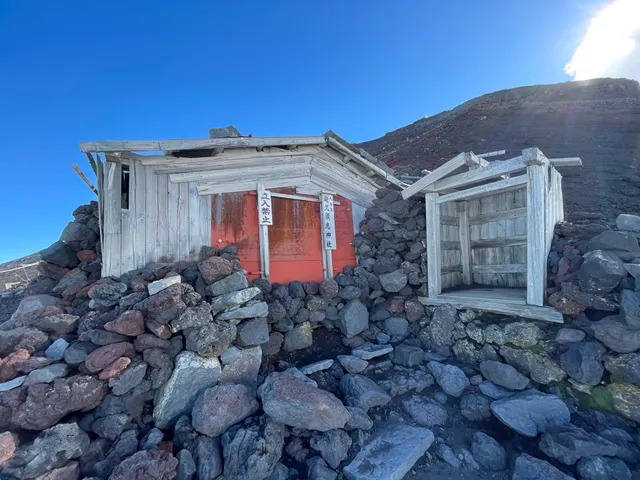
Just a short walk from where we stood was the Kusushi Shrine. It looked modest compared to the grandeur of the sunrise, yet its presence was powerful. Dedicated to Konohanasakuya-hime, the goddess of Mt. Fuji, the shrine has greeted generations of pilgrims who once climbed this sacred peak entirely on foot, starting from the mountain’s base. For them, this shrine was the end of a spiritual journey; for me, reaching it after hours of physical and mental endurance felt like completing a pilgrimage of my own.
I paused at the small torii gate, bowed my head, and whispered a silent prayer of thanks—for the strength to climb, for the safety of our group, and for the chance to witness something so extraordinary.
Around me, others were doing the same. Some purchased little protective charms, others lined up to get a commemorative summit stamp burned into their hiking sticks, each ritual carrying its own meaning. The shrine added a sense of reverence to the climb, reminding me that Mt. Fuji is not only about the challenge—it is also about humility and respect for a place that has been sacred for centuries.
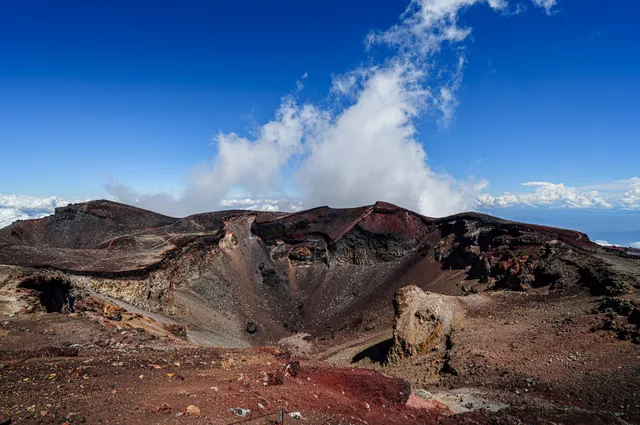
As the sunlight grew stronger, spreading across the sky and washing the crater in warm light, the rugged volcanic ridges cast dramatic shadows that seemed to stretch forever. I felt a rush of relief, gratitude, and pride all at once. The climb had tested every bit of stamina and patience, but the reward was so much more than the view. It was the rare feeling of standing at the meeting point of earth, sky, and spirit.
With the sun finally breaking through the icy wind and warming our faces, I understood why people call this a once-in-a-lifetime experience. It wasn’t just about standing on Japan’s highest peak—it was about feeling the mountain’s spirit, about being part of a tradition that stretches back centuries. For me, Kusushi Shrine and the rising sun came together in perfect harmony, giving the summit a sense of completion. This wasn’t simply a climb to the top; it was a memory I knew I would carry with me for the...
Read moreWorth the hike! They do day and night trails so you can check out at all times on their website. I recommend day so you can have the amazing views once you've made it. It is pretty grueling to make it to the summit but it all pays off once you're on top. The way up isn't that bad, but the walk down is the worst part so keep that in mind. It's at a 45 degree angle so it's rough on the feet. It took me about 6 1/2 hours to get up and about 4 1/2 going down. My experience level is at a beginners so if you're more well versed in this, you can finish way quicker.
There are 4 different trails to take and you can go based on your experience levels. I personally found the Yoshida trail to be the easiest of the four. It wasn't as packed with folks and it was easy to navigate. There are steep areas so be aware of that.
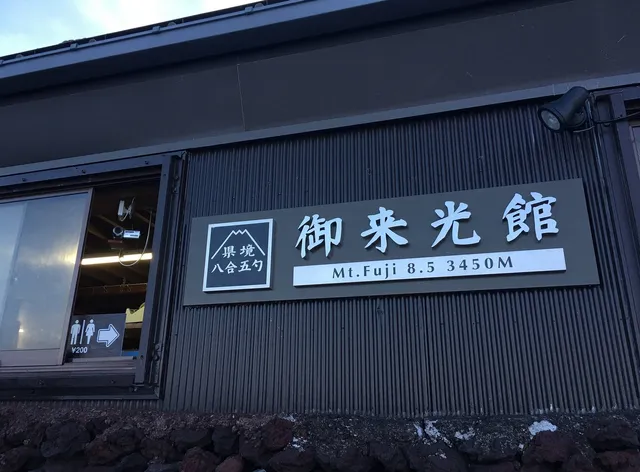
For the optimal day hike, start at the 5th Station. Each station has rest stops for food and drinks. Keep in mind the prices go higher since it takes that much more to bring those items up. To use the bathroom it's ¥200.
You can purchase a walking stick at the 5th Station for help up on the trails. You can also get a wood burning done on your walking stick to signify each station you've accomplished.
The hike down be sure to use the rest stops because you won't be able to go until about half way down (very limited).
Be sure to bring all the essentials (backpack, rain gear, light jackets, gloves, hat, beanie, wick t-shirts and pants, change of clothes, sunscreen, sun glasses, lip balm, anti-chaffing cream, boots) and I also recommend not to use cotton material. From my experience, cotton gets soaked fast from sweat or rain and doesn't dry as fast and with the altitude changes and cooler weather you can potentially suffer from hypothermia. Altitude sickness is also something that may occur but be sure to take breaks as needed or you can buy oxygen cans from the 5th Station for about ¥1500.
All in all, it's a great experience! Just be sure to be well prepared and...
Read moreOne of the blissful moments after a full night climbing.. Really nice feeling that you have achieved something.. This shrine located in top of the Mt. Fuji.. After reaching its a very long queue for entry to the shrine. The view was so beautiful on the top of fuji. You can see the sunrise from the summit.. Every time it give surprises.. Being at top before tye sunrise is a really a good feeling... Its really hard to reach.. But its worth it... If you are in Japan or living in Japan, climbing mount fuji is one of the unique experience... On the top of the mountain you will see a restaurant... You can get the noodles there.. Udon and instant ramen.. In that cold climate it will be awesome,. Mount Fuji climbing period is only between August and September ( this year (2023) it was closed on 11th September ).. Please watch the schedule...
Read more