The ruins of Great Hayashi Castle span one mountain in a larger frond-like typographic chain of moutains and castles. To the east of Hayashiohjō is Mizubanjō and to the west is Hayashikojō, Lesser Hayashi Castle. Between are gently sloping valleys with terraced fields and homes. On my way to Hayashiohjō I could see both the greater and lesser mounts together from the plain.
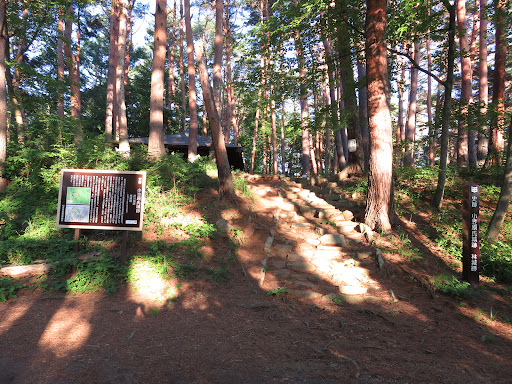
The layout of Hayashiohjō makes it easy to explore. Starting at the trail head one climbs up the initial face of the mountain foot via some switchbacks. It was here that I was climbing when from overhead several rocks came tumbling down. I looked up and saw a family of Kamoshika (Japanese goatalopes / serow) sprinting across the mountain slope. They put some distance between me and them and then began to look back at me. Eventually calming down they began their usual routine of snuffling about in the fallen leaves for stuff to eat and eventually ambled on out of sight.
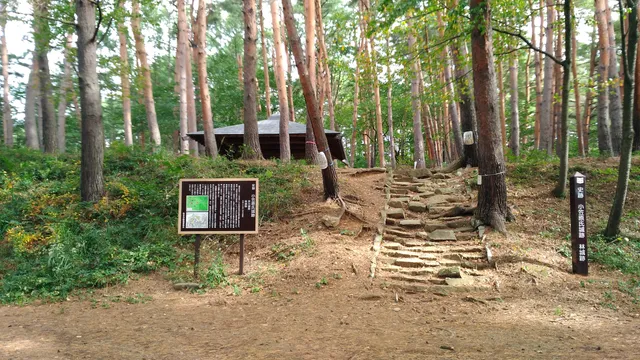
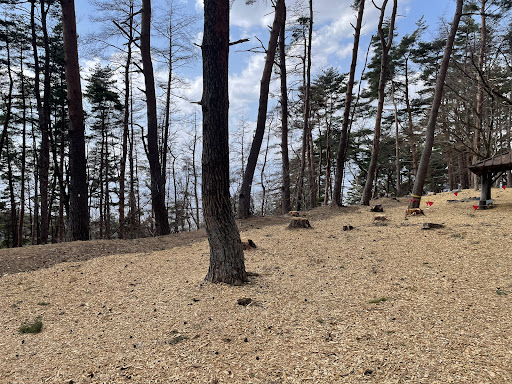
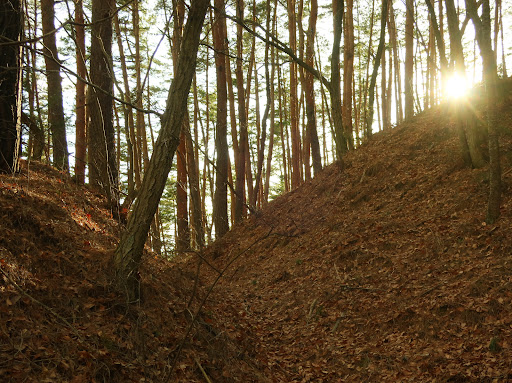
The castle structure follows the mountain ridge, being perforated by horikiri (trenches). All the way up the mountain is terraced to either side of the main path, with gate ruins and trenches separating clusters of dozens of sub-baileys in each segment. The higher up the more numerous these many terraced enclosures. At the top of the mount are two large baileys, separated by a trench system with gate remains. The shukuruwa (main bailey) is ringed with dorui (earthen embankments). On the inside of this dorui there are traces and segments of ishiźumi (stone-pilings). In one place the dorui is broken up by a koguchi (tiger's maw gate) ruin.
Beyond the shurukuwa is a sizable rear bailey. These uppermost integral baileys are ensconced with several layers of ring baileys. A path leads down from one of them to the "princess's make-up well", below which one can see a double trench although it was difficult to photograph. The autumn foliage at Hayashi Castle was...
Read more林大城は谷を挟んだ隣の林小城とともに国の史跡に指定されている。 林大城は標高846m、麓からの比高は約230mである。現在、林道が整備され主郭近くまで車で上がることができ非常に便利である。
林大城は主郭、二郭は整備されており見学しやすい。主郭は土塁で守られており、一部に石積が残っている。ただし、他の小笠原氏系の城に比べると石垣はわずかである。主郭周辺は堀切と竪堀で守られている。 小笠原氏系の他の城と同様、下部には無数の小郭が段郭状に並んでいる。縄張り図によると林大城はその小郭の規模が最大である。往時は家臣団の屋敷などが並んでいたのだろうか。ただし、訪問した6月末はその小郭群は藪化しており、ほぼ見ることはできなかった。残念ながら全体的に藪化している部分が多く、あまり印象に残らない城であった。
林城は室町時代に築かれた。戦国期に府中・松尾・鈴岡三氏に分かれていた小笠原氏を府中小笠原氏が再統一した後、本城を井川城から林城に移したという。1550年に武田氏が信濃に侵攻し、埴原城落城後、小笠原氏は戦わ...
Read more国指定史跡林城跡(大城) 松本市を東西に流れる薄川に架かる金華橋のすぐ南にあり別名を金華山城といいます。信濃国守護小笠原氏の本城で現在は堀切や曲輪、石垣、土塁などの遺構が残っており井川城跡と共に国の指定史跡になっています。大きな特徴は山の尾根に階段状の削平地が幾重にも連なっておりその規模に圧倒されます。上部に行けば行くほど切り岸の高さや削平地の広さも大きくなっています。 【歴史】 信濃守護小笠原氏は井川館を拠点にしていましたが同族の小笠原氏を統一した後に林城に拠点を移しました。天文19年(1550年)小笠原長時が武田信玄に攻められ林城は一夜のうちに自落しました。 【アクセス】 薄川に架かる金華橋の南詰めに案内板が設置された登城口があります。周囲に駐車場はありません。ここから尾根伝いに登山道があり林大城主郭まで徒歩約30分比高差200mほどです。尚、林大城は車でも登ることが可能ですが連続する削平地を見るのであれば徒歩がおすすめです。 #お城 #城 #城跡 #城巡り #国史跡 #山城 #長野県...
Read more