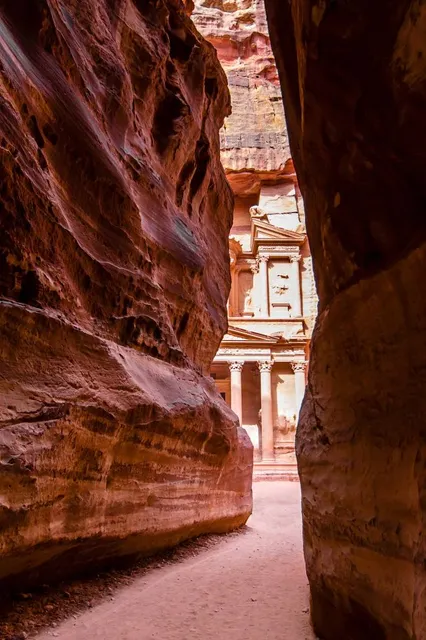
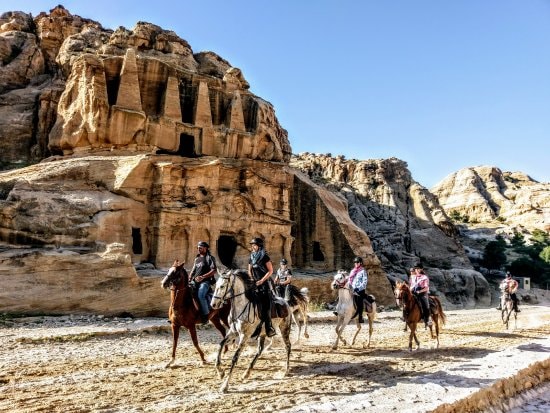
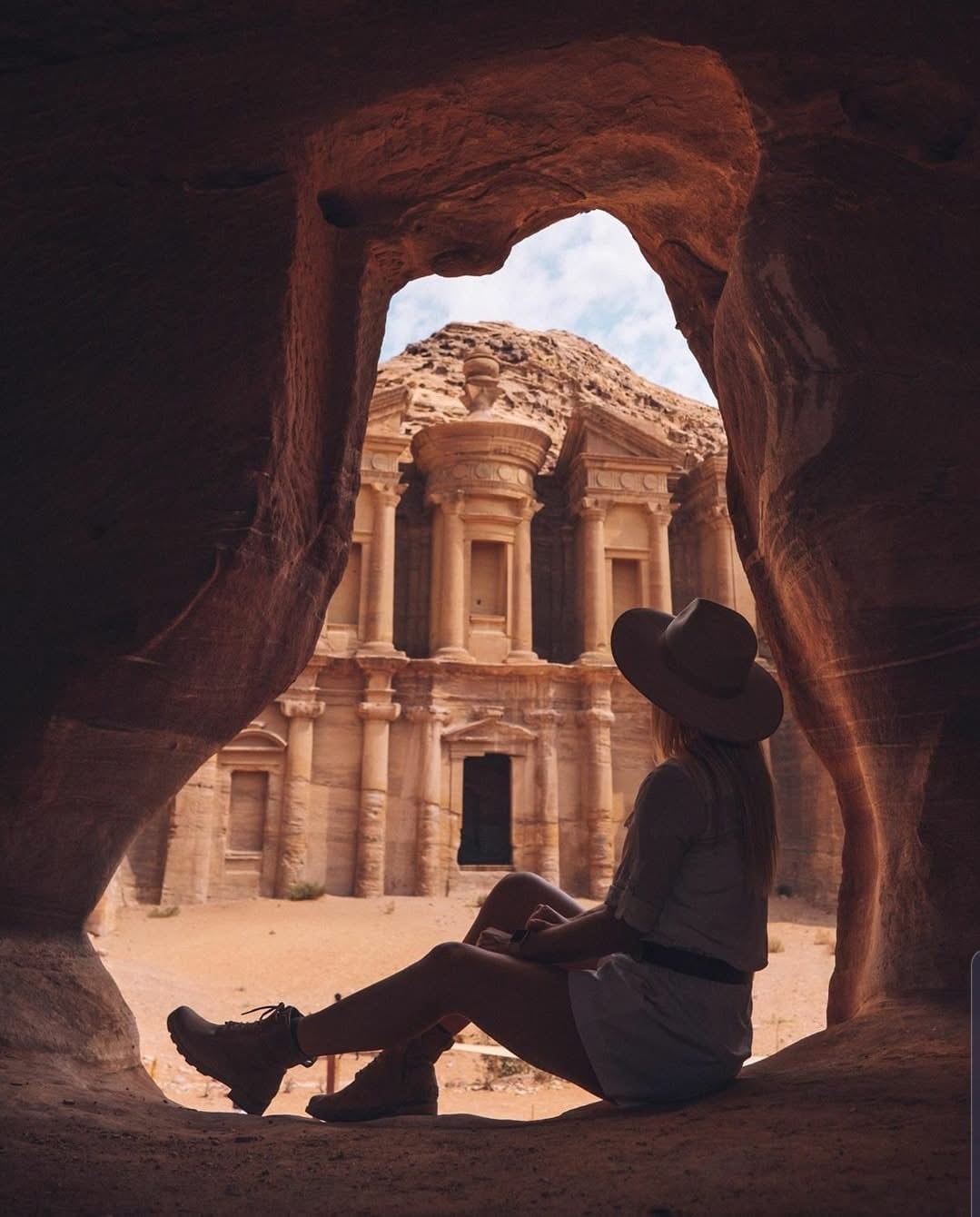
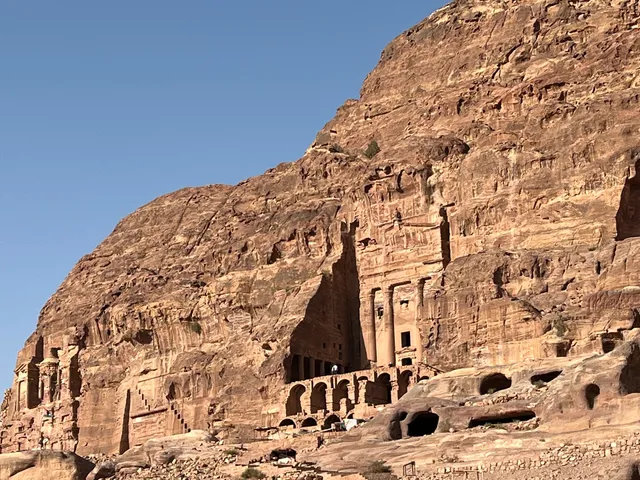
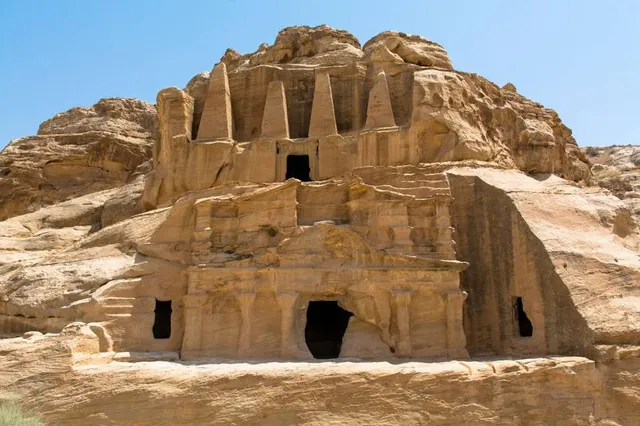
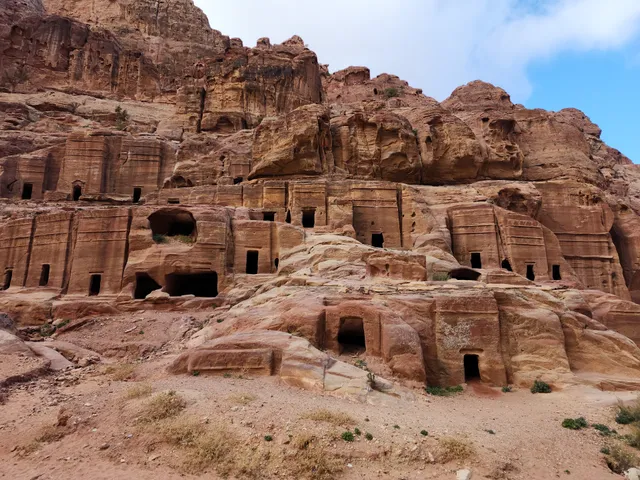
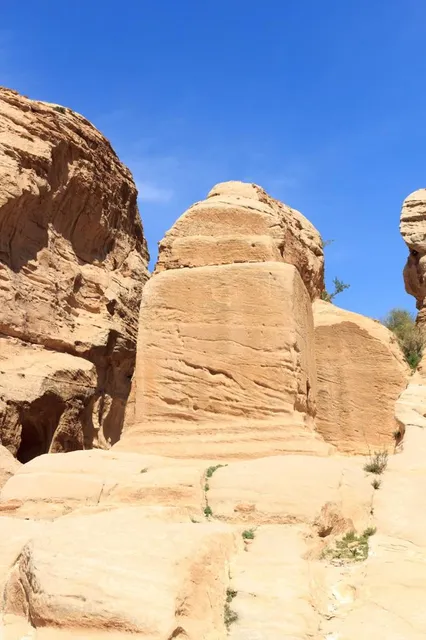
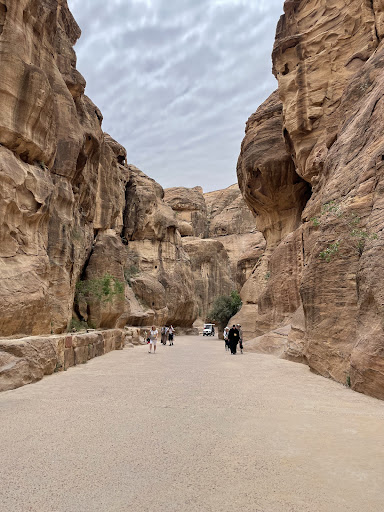
The Siq (Arabic: السيق, transliterated al-Sīq, transcribed as-Sīq,[a] literally 'the Shaft') is the main entrance to the ancient Nabatean city of Petra in southern Jordan. Also known as Siqit, it is a dim, narrow gorge (in some points no more than 3 metres (10 ft) wide) and winds its way approximately 1.2 kilometres (3⁄4 mi) and ends at Petra's most elaborate ruin, Al Khazneh (the Treasury). A wide valley outside leading to the Siq is known as the Bab as-Sīq (Gateway to the Siq).
Description
The arch, destroyed by an earthquake in 1896, drawn in 1839. From The Holy Land, Syria, Idumea, Arabia, Egypt, and Nubia Unlike slot canyons such as Antelope Canyon in the American Southwest, which are directly shaped by water, the Siq is a natural geological fault split apart by tectonic forces; only later was it worn smooth by water. The walls that enclose the Siq stand between 91–182 metres (299–597 ft) in height.[1]
The entrance to the Siq contains a huge dam, reconstructed in 1963 and again in 1991, designed to bar the mouth of the Siq and reroute the waters of Wadi Musa. The dam is a fairly true reconstruction of what the Nabataeans did to control Wadi Musa between the 1st century BC and the beginning of the 1st century AD. The entrance also contains the remnants of a monumental arch, of which only the two abutments and some hewn stones of the arch itself have survived. The arch collapsed in 1896 following an earthquake, but its appearance is known from the lithographs of Matthew Boulby and David Roberts.[1]
The Siq was used as the grand caravan entrance into Petra. Along both walls of the fissure are a number of votive niches containing baetyli, which suggest that the Siq was sacred to the Nabatean people. In 1998, a group of statues were uncovered when digging was conducted to lower the road by more than six feet. Although the upper part is greatly eroded, it is still possible to recognise the figures of two merchants, each leading two camels. The figures are almost twice lifesize.[1]
Along the Siq are some underground chambers, the function of which has not yet been clarified. The possibility that they were tombs has been excluded, and archaeologists find it difficult to believe that they were dwellings. The majority consensus is that they housed the guards that defended the main entrance...
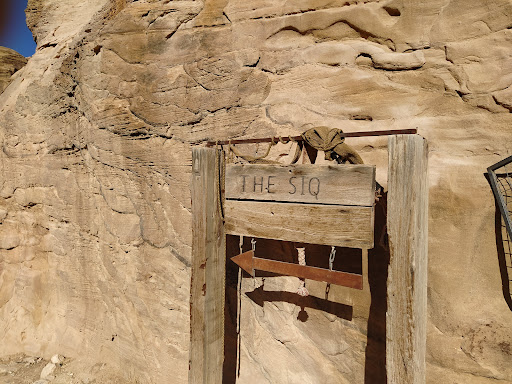
Read moreThe Siq. After covering a Kilometer plus distance you come to, a sign post that proclaims "the Siq". Relatively wide sandy path narrows down. Where as you had sufficient space around you on the sandy path you find yourself in a crowded narrow passage. Steep vertical cliff walls on either side. Most of this almost 2 odd kilometers in length crevice is and always has been the main entrance to the ancient Nabatean city of Petra. Most of the Siq is natural rock still at many places Nabateans handwork in creating dam, inscriptions , small temples and idols of their Gods along the length of Siq are unmistakable. Another Nabatean work was carved water channels on both sides of the siq. Looking closely at these water channels while going to the city , right-hand side water was carried in clay pipes laid in the channels. Whereas there were no clay pipes on the left side. Most of the siq has paved path. Varying in width from estimated 3 meters to 12 meters. Though we were early but may not sufficiently early as the Siq had become pretty crowded particularly at narrow places. Many times thing became a bit hairy when tongas, racing like crazy passed your location. You had to be real fast to scamper out of the harms or rather tonga's way. Even though siq width at the ground level was 3 to 12 meter it was not so all the way up to the top of rock faces. At places in higher reaches the rock faces were almost touching. These places became a bit gloomy. I think at many places sun light may never reach the ground. To add to the thrill of the siq it was always twisting left and right. One never knew what wonderful view awaits you after the next turn. As happens at the very last turn of the siq when through the narrow vertical Walk through the siq to Petra city is a unique experience. If possible do not miss this by...
Read moreThe arch, destroyed by an earthquake in 1896, drawn in 1839. From The Holy Land, Syria, Idumea, Arabia, Egypt, and Nubia Unlike slot canyons such as Antelope Canyon in the American Southwest, which are directly shaped by water, the Siq is a natural geological fault split apart by tectonic forces; only later was it worn smooth by water. The walls that enclose the Siq stand between 91–182 metres (299–597 ft) in height.[1]
The entrance to the Siq contains a huge dam, reconstructed in 1963 and again in 1991, designed to bar the mouth of the Siq and reroute the waters of Wadi Musa. The dam is a fairly true reconstruction of what the Nabataeans did to control Wadi Musa between the 1st century BC and the beginning of the 1st century AD. The entrance also contains the remnants of a monumental arch, of which only the two abutments and some hewn stones of the arch itself have survived. The arch collapsed in 1896 following an earthquake, but its appearance is known from the lithographs of Matthew Boulby and David Roberts.[1]
The Siq was used as the grand caravan entrance into Petra. Along both walls of the fissure are a number of votive niches containing baetyli, which suggest that the Siq was sacred to the Nabatean people. In 1998, a group of statues were uncovered when digging was conducted to lower the road by more than six feet. Although the upper part is greatly eroded, it is still possible to recognise the figures of two merchants, each leading two camels. The figures are almost twice lifesize.[1]
Along the Siq are some underground chambers, the function of which has not yet been clarified. The possibility that they were tombs has been excluded, and archaeologists find it difficult to believe that they were dwellings. The majority consensus is that they housed the guards that defended the main entrance...
Read more