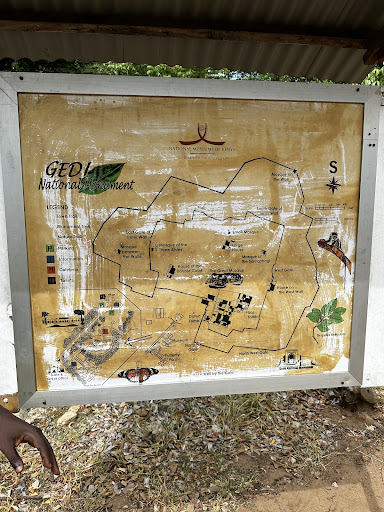
During my recent trip to Kenya, I had the opportunity to visit the Gede Ruins, a hidden gem that offers a unique blend of natural beauty and historical significance. Nestled in the coastal region near Malindi, the Gede Ruins complex is divided into three distinct segments: the Snake Park, the Gede Ruins Historical Site, and the Butterfly Park. Each offers a unique experience, and together, they make for an enriching and educational visit.
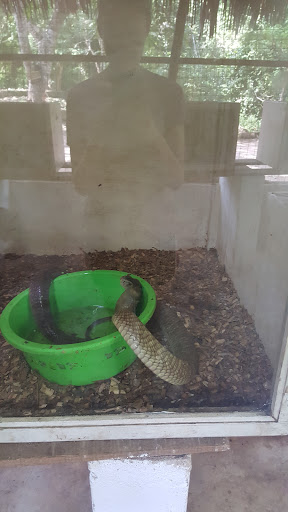
Part 1: The Snake Park My journey began at the Snake Park, a fascinating exhibit of some of Kenya's most notorious reptiles. The park is home to a variety of snakes, including the venomous Green Mamba and the large African Rock Python.
Highlights: The park offers guided tours where knowledgeable guides share insights about the different snake species, their habitats, and their role in the local ecosystem. The close-up encounters with the snakes were both thrilling and educational. It's a great place for those interested in herpetology or for anyone looking to conquer their fear of snakes.
Experience: The park is well-maintained, and the safety of both visitors and the snakes is clearly a priority. The enclosures are designed to mimic the natural habitats of the snakes, providing a humane and educational perspective on these often misunderstood creatures.
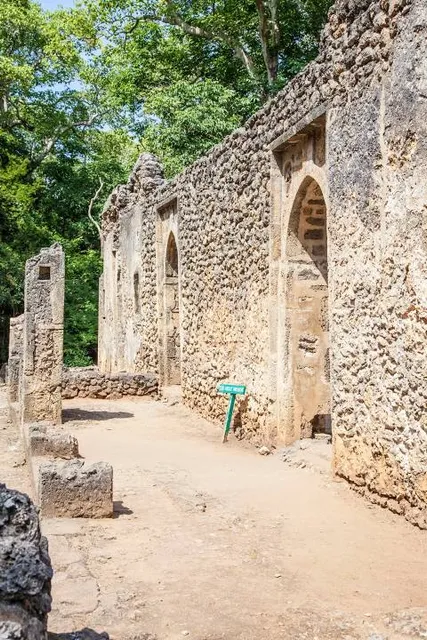
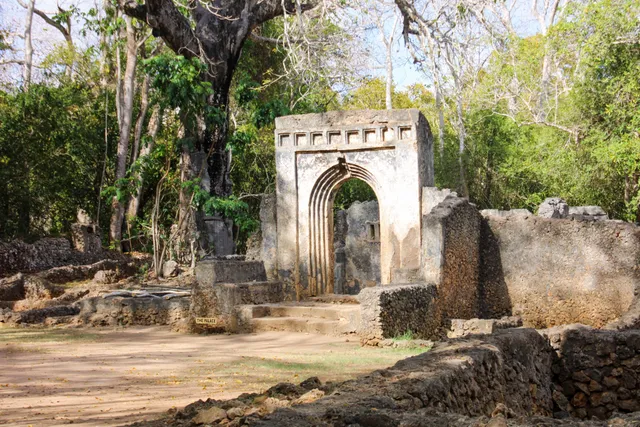
Part 2: Gede Ruins Historical Site Next, I explored the Gede Ruins Historical Site, the centerpiece of the complex. These ruins date back to the 12th century and offer a peek into the ancient Swahili culture.
Highlights: The stone remains of mosques, houses, and tombs are beautifully preserved, allowing visitors to walk through and imagine life in the ancient city. The site also has a museum that displays artifacts found in the ruins, providing context to the history of the area.
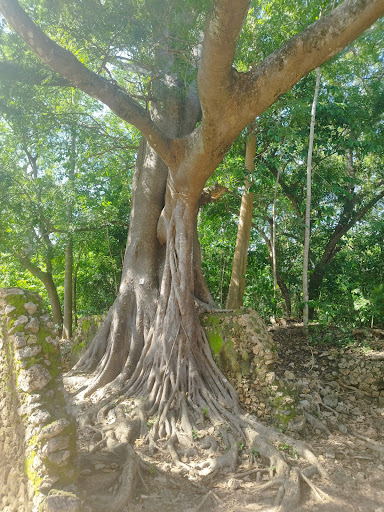
Experience: Walking through the Gede Ruins felt like stepping back in time. The site is enveloped by lush forest, and the sound of birds and monkeys in the trees adds to the mystical atmosphere. Informational plaques throughout the ruins offer insights into the historical significance of each structure.
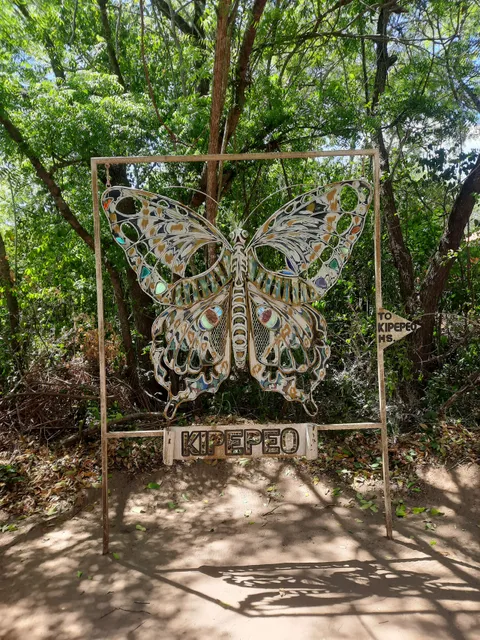
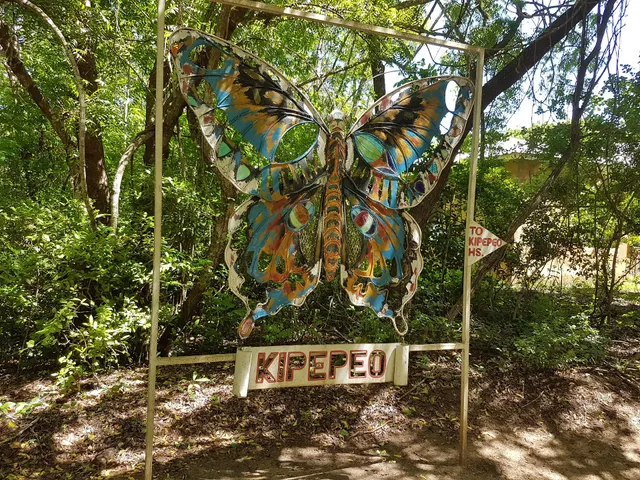
Part 3: The Butterfly Park The final segment of my visit was the Butterfly Park, a serene and colorful garden that is home to various species of butterflies.
Highlights: The park provides a habitat for butterfly conservation and breeding, and it's a delight to see the different stages of their life cycle. The variety of butterflies, from the common Swahili Swallowtail to rarer species, fluttering among the flowers and plants is a sight to behold.
Experience: The Butterfly Park is not just about observation; it's an immersive experience. You can walk among the butterflies, watch them feed, and if you're lucky, have them land on you. It's a peaceful and enchanting end to the tour of the Gede Ruins complex.
Conclusion: The Gede Ruins complex is a must-visit destination for anyone traveling to Kenya. It offers a rich tapestry of experiences, from the adrenaline-inducing Snake Park to the historically rich ruins and the tranquil Butterfly Park. It's a place where nature and history converge, providing visitors with a deeper understanding of Kenya's cultural and natural heritage. Whether you're a history buff, nature lover, or just looking for a unique travel experience, the Gede Ruins...
Read moreGEDI RUINS Gedi lies on the coastal region of Kenya, 94 km north of Mombasa town, another historic town. It was a small town built entirely from rocks and stones. It was inhabited by Swahili people of East Africa. This historic town date back from the 15th century, through preservation most of the original foundations are still be seen . In 1927, the Gedi historic town, which occupy an area of 44 hectares of land, were declared a historic monument and much excavation and preservation work carried out such that large areas of this ancient town are now revealed, including the pillar tombs, the palace and a great mosque. The historic town of Gedi occupied a very large area and had two walls around it. The inner wall was where the rich lived. The outer wall enclosed 18 hectares which also included farm and plantation land with quite a number of mud and wattle houses for the middle class. Outside the walls is where the peasants lived. There is a dated coral tomb with beautiful Arabic script engraved with the date 1399. From the dated tomb, one can see the Great Mosque. A spectacular 50m deep well, known as the "Well of the Great Mosque" which must have been used for ablutions is still discernible. On the other side of the mosque stands the Octagonal pillar tomb of the Imam or priest. Further into the forest, one can see the 15th century palace where the king held court and addressed women with marital problems. Chambers which had no windows or doors are believed to have been used by the noblemen to store their gold and jewels. The only way to gain entrance was through a secret door from the roof that was found in the King's/ Sultans room. Over the historic town, the shallow coral rag soil has grown a lowland semi-deciduous forest, maintained by a rainfall of around 1,100 mm/year. The 44 hectares site, surrounded by farmland, is entirely fenced, and contains around 35 hectares of coastal forest, traversed by narrow paths that wind between the excavated buildings. At least 50 indigenous tree species occur, including Gyrocarpus americanus and Sterculia appendiculata. It is not quite clear why the town was eventually deserted. Several reasons have been put across that is; that it was overcome by an army from Mombasa on its way to attack Malindi around 1530 AD. Another reason suggests that the Galla people who were raiding southwards around 1600 AD made life unbearable. And also lack of water as the wells were drying up except the one which was outside the walls contributed to its abandonment. Gedi ruins is important because: The historic town presents us with evidence of the development of an architectural complex consisting of mosques, palaces, and living quarters that were protected with two stone walls around it making it a unique landscape at this period in history. And it's also an outstanding testimony to the social and economic structure of the inhabitants of Gedi around the 13th century AD. Gedi was one of the most prosperous Swahili city states before its decline in the...
Read moreA really nice place to come for a few hours for a relaxing walk. They'll give you a private guide to walk with you and explain the history of the place, ours was really nice polite and fun and spoke English throughout so I could understand everything. There's also a butterfly nursery and a snake rescue centre here and I advise you to combine all the 3 in one visit as the other two are minor things and will take half an hour each. In the snake rescue centre you can see some cool snakes even though it's not a big place, it has around 15 snakes on display but the entrance is really cheap. The butterfly nursery was a bit disappointing for the handler (there's a different person managing this section the ruins guide will wait for you outside and pick you back up when you finish) and the place itself is small and run down and we literally saw 2 butterflies 1 caterpillar and few eggs with the nurseries where the chrysalis hatch. Maybe when it's the right season you'll see more butterflies. It's really cheap too so you can give it a shot once here... And at the end you can buy some awesome honey made by the local community at 500 kes a jar. The guy when he understood I'm Italian kept trying to say a few words he knew in Italian and it was a bit embarrassing especially cause my wife, Kenyan, doesn't understand it. This happened quite a few times in malindi and we really hated it. Overall the place is worth a visit but it's far the transport will cost as much as the entrances if not more and it takes for all up to 3 hours no more. Remember to bring plenty of bananas cause there are many monkeys at the entrance and the guide will even call them for you and you can feed them. They're harmless and don't steal belongings and they'll even climb on you! They won't hurt you and there's nothing to...
Read more