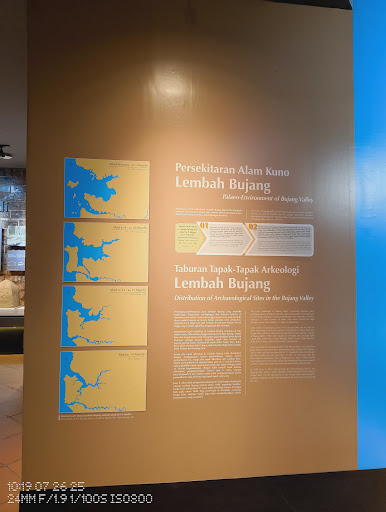
The Lembah Bujang Archaeological Museum is sprawling historical complex located in Merbok, Kedah and has approximately area of 224 square kilometres.
It is the richest archaeological area and in fact it is the only museum in Malaysia which exhibits archaeological collections that serves as evidence of the existence of a trade and Hindu/Buddhism propagation center in Southeast Asia from the 3rd. to the 12th century AD.
These archaeological evidence clearly shows that Lembah Bujang was once a central port that played a trade center for connecting the eastern and western countries especially the Arabians, Indians and Chinese as well as maritime traders from the Malay archipelago including exotic jungle produce such as gaharu and cendana.
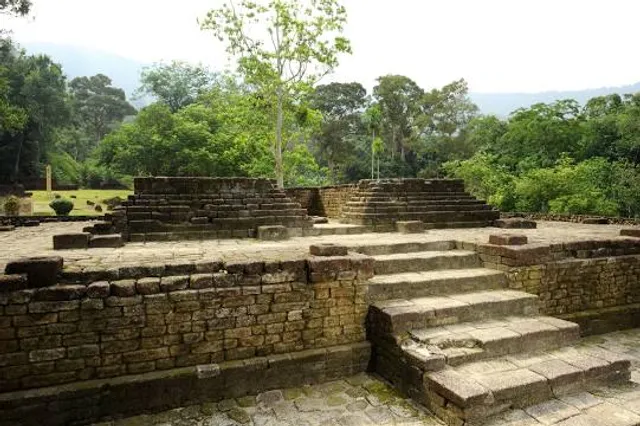
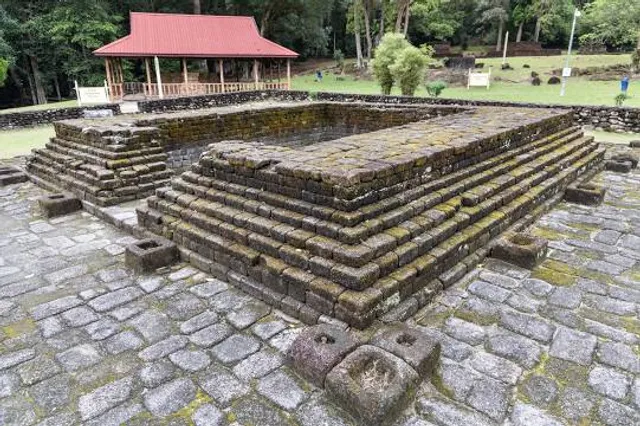
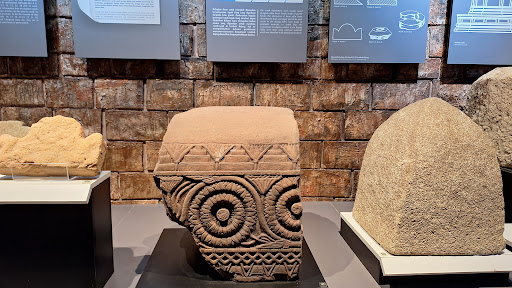
Anyone who visits here will not miss the chance to witness candi (ancient ruined tombs) and some other ruins that can date as way back to 2,535 years old. Other interesting items include metal tools and ornaments, pottery, stone caskets, ceramics and even Hindu coins. These remains proves that Indian influence from the early 5th century.
Bujang Valley is also a great ground for historical research despite the place has some ruins over the years and some scriptures and writings did not survive. However, with the help of natives with folk stories and oral history, the people can obtain vast informations regarding the history of this place. A complete archaeological collection, library and trained officers to help researchers who are interested to further their research in 7th - 12th century AD commerce and Hindu/Buddhist customs in Lembah Bujang.
To get more in depth knowledge of Bujang Valley, do look out for books written by one of the most prominent local archaeologist, Nik Hassan Shuhaimi Nik Abdul Rahman who did research in the Bujang Valley. He introduced a periodisation of the history of Bujang Valley as well as a theory which explains about the process of indigenisation of the Indian Culture which formed the socio-economic make up of the polity.
Lembah Bujang became the first leading port in Southeast Asia that provided sea route which served as alternative route to China or Far East instead of long winded land route. It was evident in archaeological finds and writings of Chinese and Arab seamen as well as in Indian literatures dated back 2nd and 14th century AD.
Apart from being a focal trade station, Lembah Bujang was also a place of Hindu/Buddha faith propagation in Southeast Asia during the 3rd to the 12th century, which proved of the existence of architectural designs of Hindu temples with Hindu/Buddhist features and devices which could be related to the Hindu/Buddhist faith. This faith was brought and practiced by Hindu/Buddhist Indian traders who came trading at Lembah Bujang.
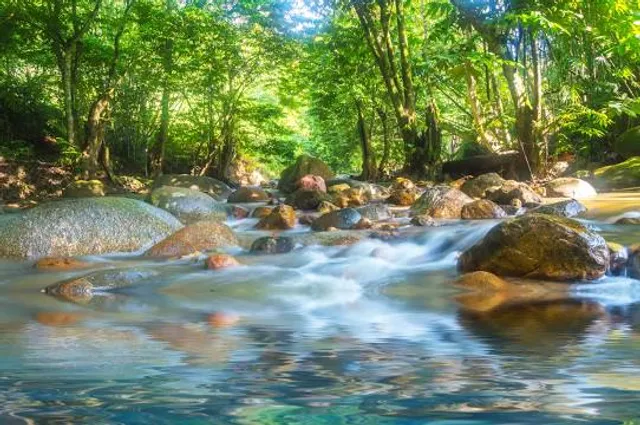
Visitors will also be able to immerse themselves in the tranquility of the flowing river and lush tropical rainforest greenery laden with exotic flora and fauna which grows naturally all around the museum as well as be enchanted by the architecture and artifacts of...
Read moreHighly recommended. A good place to kill 1-2 hours of your family time in Sungai Petani.
Museum is located next to a waterfall. So you can enjoy both nature and educational tours.
The waterfall itself is a living museum. You can see ancient rock cuts and old markings on the waterfall surface.
You can also picnic and stroll along the river.
There are 3 exhibition galleries in the museum i.e. ancient Indian, ancient trade and outdoor exhibits. The Indian gallery is currently closed for renovation.
The ancient trade gallery has just been refurbished. Its clean, modern, fully air-conditioned and has approximately 100 displays.
An uphill walk is required to see the outdoor exhibits. It starts with the stone works exhibits of granite base, sugar cane grinder and pillars and finally the actual ruins of several old temples found in Kedah.
Access to this museum is free. Just drive through the main gate and park your car in the visitor's parking. Then proceed to the waterfall or gallery. Just register your name at the entrance of the gallery.
The museum has clean toilets and prayer room. It is near to the parking lot. Please bear that there's no shop or vending machine in the museum. Please bring your own water, wear good walking shoes, hat and sun glasses.
Tips: We tied our visit with a trip to Tanjung Dawai pier. Its not that far. You can buy local snacks, have lunch or take a boat ride to Pantai Merdeka. Cost is about RM100 for 1 boat per trip. Boat can fit at least 12 persons. Can share with other passengers. But, the timing of the boat...
Read moreThe Bujang Valley is a sprawling historical complex and has an area of approximately 224 km situated near Merbok, Kedah, between Gunung Jerai in the north and Muda River in the south, it is the richest archaeological area in Malaysia.
These archaeological remains show that there was a Hindu-Buddhist polity here. In Sanskrit the term bhujanga refer to serpent, thus the name itself is roughly translated into "Serpent Valley". The area consists of ruins that may date more than 2,535 years old. More than fifty ancient tomb temples, called candi have also been unearthed. The most impressive and well-preserved of these is located in Pengkalan Bujang, Merbok. The Bujang Valley Archaeological Museum is also located here. In the area of Bujang Valley known as Sungai Batu, excavations have revealed jetty remains, iron-smelting sites, and a clay brick monument dating back to AD 110, making it the oldest man-made structure to be recorded in Southeast Asia.
The local rulers adopted Indian cultural and political models earlier than those of Kutai in eastern Borneo, in southern Celebes or Tarumanegara in western Java, where remains showing Indian influence have been found dating from the early 5th century. Relics found in the Bujang Valley are now on display at the archaeological museum. Items include inscribed stone caskets and tablets, metal tools and ornaments, ceramics, pottery, and...
Read more