Leaving the bustling capital of Ulaanbaatar behind, we embarked on an exciting new chapter of our Mongolian adventure – a road trip across the vast steppes. Our first destination: Karakorum, a place steeped in history and once the center of the mighty Mongol Empire that lies about 360km southwest of Ulaanbaatar. As we drove through the endless expanse of the Mongolian countryside, it was hard to imagine that this remote area once hosted the capital of the largest contiguous land empire in history.
Founded by Chinggis Khan in 1220, Karakorum served as the capital of the Mongol Empire until Kublai Khan moved it to what is now Beijing. In its heyday, Karakorum was a cosmopolitan city, a melting pot of cultures, religions, and trade routes. Envoys, merchants, and travelers from across Eurasia converged here, making it a true crossroads of civilizations. Today, little remains of the ancient capital, its grand buildings lost to time. However, the sense of history is palpable, and the wide-open landscapes give a hint of why the Mongols chose this strategic location.
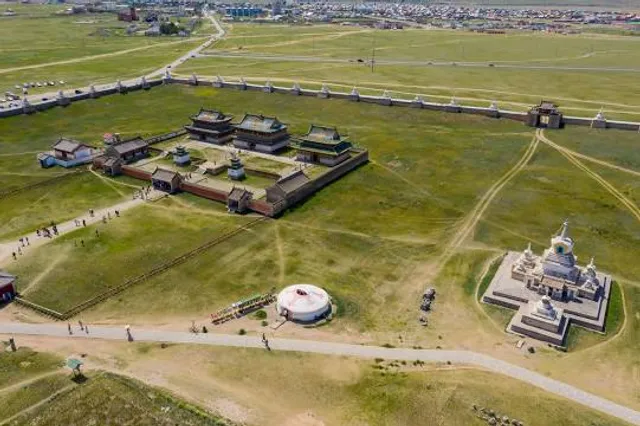
The highlight of our visit to Karakorum was undoubtedly the Erdene Zuu Monastery. This sprawling complex, surrounded by an impressive wall featuring 108 stupas (symbolizing the 108 beads of a Buddhist rosary), is the oldest surviving Buddhist monastery in Mongolia. Erdene Zuu was built in 1586 by Abtai Sain Khan, a descendant of Chinggis Khan, upon the ruins of the ancient capital. Much of the stone used to construct the monastery came from the ruins of Karakorum itself, creating a tangible link between the site's imperial past and its spiritual present.
When we entered through the main gate, we were immediately struck by the serene atmosphere. The monastery complex once contained over 60 temples with more than 1000 monks in residence. Today, only a few temples remain, but they are no less impressive. We explored the three main temples, each dedicated to a different stage of Buddha's life. The intricate artwork, colorful murals, and ornate statues within these temples offered a glimpse into the rich Buddhist heritage of Mongolia. The blend of Mongolian and Tibetan architectural styles was fascinating to observe.
As the sun began to set, casting long shadows across the monastery grounds, we took a final walk along the ancient walls. Standing there, with the vast Mongolian steppe stretching out in all directions, it was easy to feel the weight of history. From the empire of Chinggis Khan to the spiritual legacy of Buddhism, Karakorum and Erdene Zuu Monastery encapsulate so much of what makes...
Read moreThis is my sixth visit to Erdene Zuu Monastery, and even after all these times, it still feels like I have not had enough. Every visit reveals something new — a detail in the architecture I hadn’t noticed before, a quiet corner where the sound of the wind carries the whispers of centuries past, or the warm smiles of the monks and locals who keep the spirit of the place alive.
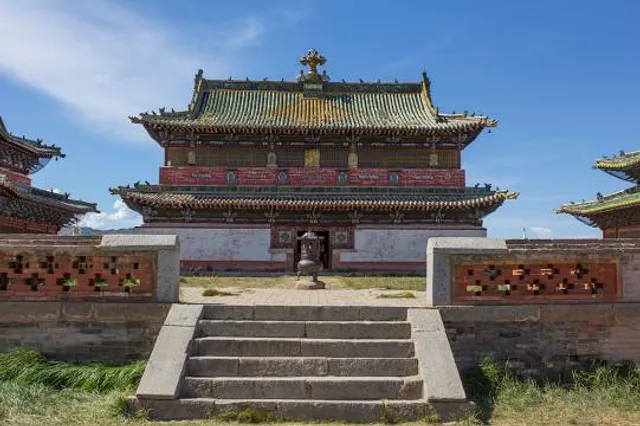
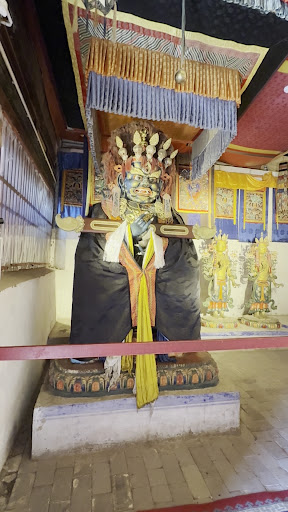
Erdene Zuu is not only one of the most well-preserved and beautiful temples in Mongolia, but also a wonderful place to deepen your understanding of Himalayan Buddhism. Walking through its courtyards, you are surrounded by centuries of history, from the intricate wood carvings and colorful thangkas to the solemn prayer wheels that invite you to pause and reflect. The monastery embodies a blend of Mongolian and Tibetan Buddhist traditions, offering a rare opportunity to connect with a spiritual heritage that has been carefully protected through the ages.
On this trip, I even purchased a ticket that allowed me to take photos inside the temple. Capturing the intricate details, vibrant murals, and serene expressions of the statues was truly special, and I look forward to sharing these images with future guests who plan to visit — so they can already have a glimpse of the beauty awaiting them.
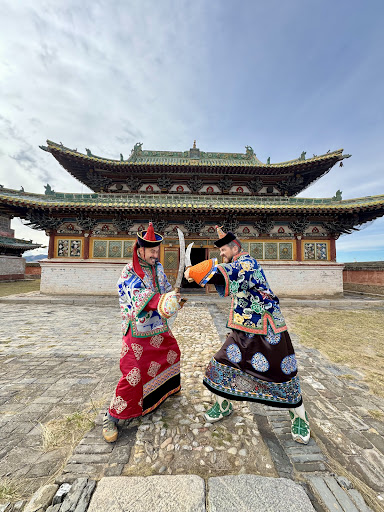
Outside the monastery walls, the atmosphere shifts to a lively and colorful scene. There are many souvenir stalls where you can browse a variety of gifts — from hand-crafted jewelry and felt products to traditional artworks. If you want a truly memorable photo, you can rent a set of traditional Mongolian costumes and step back in time for a moment. One thing I deeply appreciate about Mongolia is that shopkeepers are generally fair — prices remain consistent whether you’re buying in a wholesale supermarket, at a small local stall, or even at the airport.
For me, Erdene Zuu is more than just a tourist attraction. It is a place where history, spirituality, and culture intertwine in the most beautiful way. Each visit leaves me with a deeper appreciation of Mongolia’s heritage, and I know that no matter how many times I return, there will always be another layer of its story waiting to...
Read moreErdene Zuu Monastery, located near the ancient city of Karakorum in Mongolia, is a remarkable historical and spiritual site that offers a profound connection to the country’s rich cultural heritage. My visit to this sacred monastery was an unforgettable journey into the heart of Mongolian Buddhism, history, and architecture.
As the oldest Buddhist monastery in Mongolia, Erdene Zuu holds immense historical significance. Founded in the 16th century, it stands as a symbol of the country’s spiritual resilience and cultural identity. The monastery’s name, which translates to “Hundred Treasures,” is fitting, as it is a treasure trove of art, history, and spirituality.
The monastery complex is surrounded by a massive stone wall with 108 stupas, a number considered sacred in Buddhism. Inside, the temples and stupas are adorned with intricate carvings, vibrant paintings, and statues of Buddhist deities. The main temple, with its golden roofs and ornate decorations, is particularly awe-inspiring. Walking through the complex, I felt a deep sense of reverence and tranquility, enhanced by the soft chants of monks and the fluttering of prayer flags in the wind.
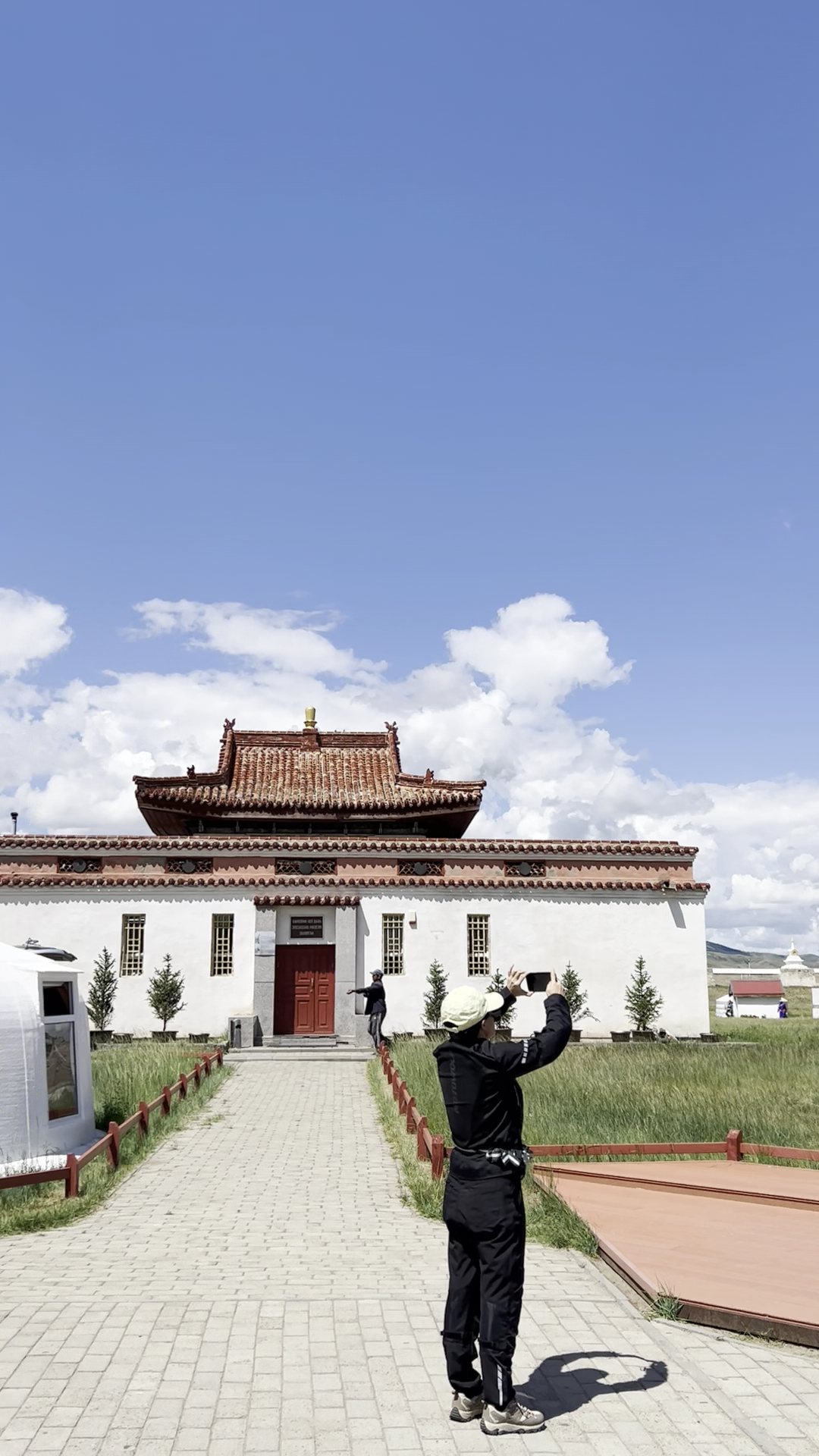
One of the highlights of my visit was learning about the monastery’s history, including its survival through periods of destruction and its role in preserving Mongolian Buddhism. The museum on-site provides fascinating insights into the monastery’s past, as well as the broader history of Buddhism in Mongolia.
The surrounding landscape, with its vast open plains and distant mountains, adds to the monastery’s serene and spiritual atmosphere. It’s easy to see why this site was chosen as a place of worship and reflection.
Erdene Zuu Monastery is not just a historical landmark; it’s a living testament to Mongolia’s spiritual and cultural legacy. Whether you’re a history enthusiast, a spiritual seeker, or simply someone looking to experience the beauty of Mongolia’s heritage, this monastery is a must-visit. A truly inspiring and enriching experience that left me with a deep appreciation for Mongolia’s...
Read more