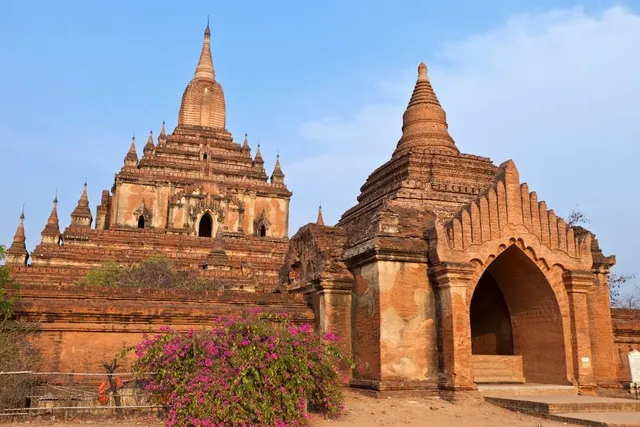
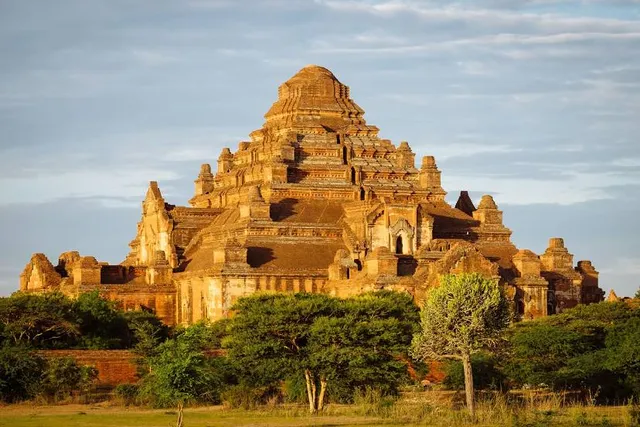
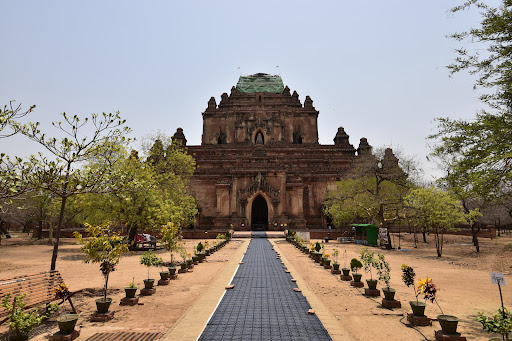
Whenever I reached Bagan land, feeling is so strange and free even though I was there so many times. It's always giving new and new again. The Sulamani is a large, very elegant multi storey structure from the late Bagan period. The temple was built during the reign of King Narapatisithu, a very prosperous time in Bagan. During his long reign several of Bagan’s most impressive monuments were built, such as the Dhammayazika and the Gawdawpalin temple.An inscribed stone in the North porch of the temple tells that King Narapatisithu found a small ruby at the spot where the Sulamani temple was later erected, hence the name of the temple, which means small ruby.
The architectural style has many similarities with that of the Htilominlo temple, which was built a few decades later. The Sulamani is a two storey structure with a square layout. The large first floor is topped with three receding terraces. The upper floor which is much smaller is topped with another four receding terraces. The corners of both lower and upper terraces contain smaller spires. The top of the Sulamani comprises of a sikhara, a tower structure originating from North India. Unlike the one of the Ananda temple, the sikhara is not gilded. On top of that is the hti, a spire ornament shaped like an umbrella. The temple has entrance porches on all four sides. The Eastern porch which is the main entrance protrudes further out from the structure than the others. Apart from this, the structure is symmetrical. The Sulamani’s base and terraces contain beautiful glazed terracotta plaques with depictions of Jataka tales, the stories about the previous lives of the Buddha. It was customary for the most important and largest temples in Bagan to have a set of plaques with Jataka tales, of which there are 547 in total, in order to educate the people about Buddhism. It was destroyed some part by...
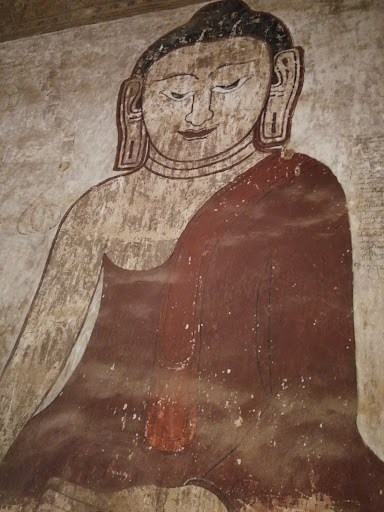
Read moreMost atmospheric of all big temples we visited in Bagan. Built in the 12th century, it contains beautiful frescoes depicting stages of the life of the Buddha. My favorites are the disciples offering flowers, each holding a distinct elaborate bouquet, spread across several walls on all 4 sides of the temple. Immense painted images of seated and reclining Buddhas are also beautiful, very touching. But there are also intricate drawings of elephants... So much art, devotional art, of the highest quality. Natural lighting is rather striking, too. All in all, very humbling to visit. Seems to have lost prominence with visitors since the prohibition of climbing the temples, so that it was very quiet at our visit, and the serene atmosphere very proper...
Read moreSulamani Temple built in 1183, though it went thru damaged twice during earthquake in 1975 & 2016, it still stands beautifully with a lot of wall paintings in its interior believed to be drawn on in the 18th century. Also there is one part of the wall where the paintings clearly from an later period and different artist...small and detailed.. I find it has lots of Chinese influence. This is a must go temple if you want to see something different like the wall paintings. You can see lots of Buddha painting, sitting and sleeping. Also lots of paintings of people offering flowers to the Buddha. There are also paintings of Buddha sitting and...
Read more