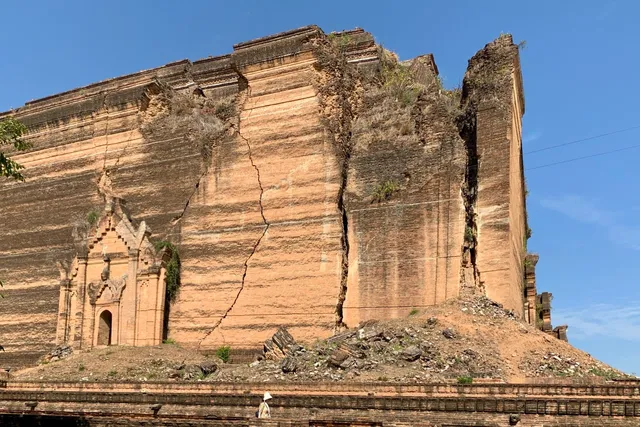
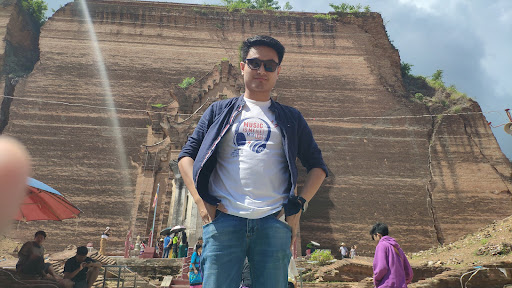
The Mingun temple is a monumental uncompleted stupa began by King Bodawpaya in 1790. It was not completed, due to an astrologer claiming that, once the temple was finished, the king would die.[1] The completed stupa would have been the largest in the world at 150 metres (490 ft). Huge cracks are visible on the structure from the earthquake of 23 March 1839.[2] Like many large pagodas in Myanmar, a pondaw paya or working model of the stupa can be seen nearby.
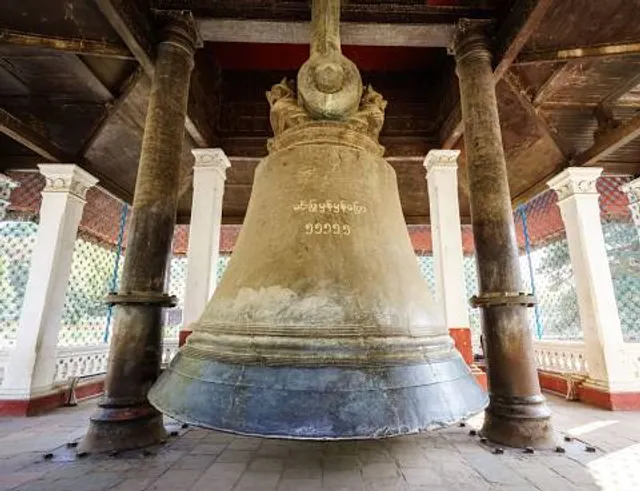
King Bodawpaya also had a gigantic bell cast to go with his huge stupa, the Mingun Bell weighing 90 tons, and is today the largest ringing bell in the world. The weight of the bell in Burmese measurement, is 55,555 viss or peiktha (1 viss = 1.63 kg), handed down as a mnemonic "Min Hpyu Hman Hman Pyaw", with the consonants representing the number 5 in Burmese astronomy and numerology.
မင်းကွန်းသည် ၁၇၉၀ ပြည့်နှစ်ကဘုရင်ဘိုဒါပါရာမှစတင်ခဲ့သောupaရာမပြည့်စုံသည့်ရုပ်ပွားတော်ဖြစ်သည်။ နက္ခတ်ဗေဒင်ဆရာတစ် ဦး ကဝတ်ပြုရာအိမ်တော်ဆောက်လုပ်ပြီးသည်နှင့်ဘုရင်သေမည်ဟုပြောကြားခဲ့သည်။ ပြီးစီးခဲ့သောစေတီပုထိုးသည်ကမ္ဘာ့အကြီးဆုံးမီတာ ၁၅၀ (ပေ ၄၉၀) တွင်ရှိသည်။ ၁၈၃၉ ခုနှစ်မတ်လ ၂၃ ရက်ငလျင်လှုပ်ခတ်မှုနှင့်ဖွဲ့စည်းပုံတွင်ကြီးမားသောအက်ကြောင်းများကိုတွေ့မြင်နိုင်သည်။ မြန်မာပြည်ရှိဘုရားသုံးဆူများကဲ့သို့ပင်အနီးအနားရှိရေကန်ပုဏ္ဏားသို့မဟုတ်စတူဒီယို၏အလုပ်လုပ်ပုံကိုတွေ့နိုင်သည်။
King Bodawpaya သည်အလွန်ကြီးမားသော stupa ဖြစ်သည့် Mingun Bell နှင့်အတူသွားရန်အလွန်ကြီးမားသောခေါင်းလောင်းသွန်းလောင်းထားပြီးယနေ့တွင်ကမ္ဘာပေါ်တွင်အကြီးဆုံးမြည်သံဖြစ်သည်။ မြန်မာတိုင်းတာမှုအတွက်ခေါင်းလောင်း၏အလေးချိန်မှာ ၅၅၅၅၅ viss သို့မဟုတ် peiktha (၁ viss = ၁.၆၃ ကီလိုဂရမ်) ဖြစ်ပြီးအနုပညာ "Min Hpyu Hman Hman Pyaw" ဟုခေါ်ပြီးမြန်မာနက္ခတ္တဗေဒနှင့် numerology တွင်နံပါတ် ၅...
Read moreIntended to be a 500 foot high stupa, a mound housing Buddhist relics, the Pahtodawgyi remains unfinished to this day but is still an awe-inspiring structure. Measuring 450 by 450 feet and 172 feet high, it dwarfs the surrounding area, and would easily have rivaled the size of the Great Pyramid of Giza had King Bodawpaya finished its construction. Construction began in 1790, using mostly slave labor, and causing a massive drain on resources and manpower in the area. The project was widely unpopular during its time, which some suspect caused its cessation. King Bodawpaya was a superstitious man and during the construction, it was prophesied that the completion of the great stupa would cause his death or the destruction of the country. Worried about maintaining his empire, the king slowed progress on the stupa. When he died, construction was abandoned completely. Despite not completing the stupa, construction on an accompanying bell was finished, and was similarly grand in size. The finished bell weighed over 200,000 pounds and is 12 feet high. The massive bell can be rung by striking the outside since it has no internal ringing mechanism. Since the early 19th century, the stupa has become increasingly decrepit. An earthquake in 1839 left giant cracks along the face of the stupa, and wear and tear have led it to become almost natural looking. Without the bright white entrance, visitors could easily mistake the stupa for a large earthen mound, or simply a pile of...
Read moreThe Mingun Pagoda is a massive unfinished pagoda built at the end of the 18th century, that was meant to be the largest pagoda in the country. The massive paya, also known as the Mantara Gyi Pagoda, the Mingun Pahtodawgyi and the Great Royal Stupa makes for an impressive site on the banks of the Irrawaddy river. In front of the pagoda facing the river are the remains of two giant Chinthe lions about 29 meters high, guarding the temple. At the center of the 50 meter high pagoda facing the river is a huge richly decorated entrance. Inside the pagoda is a small shrine with a Buddha image. It is possible to climb to the top of the pagoda using a stairway to the right of the structure. From there you will have magnificent views of the area with the nearby Hsinbyume Pagoda, several other pagodas, the Irrawaddy river and the mountains to the back of the pagoda. Two large earthquakes did considerable damage to the Mingun Pagoda. During the 1838 earthquake the heads of the giant Chinthes broke off and rolled into the Irrawaddy river. Large cracks appeared in the...
Read more