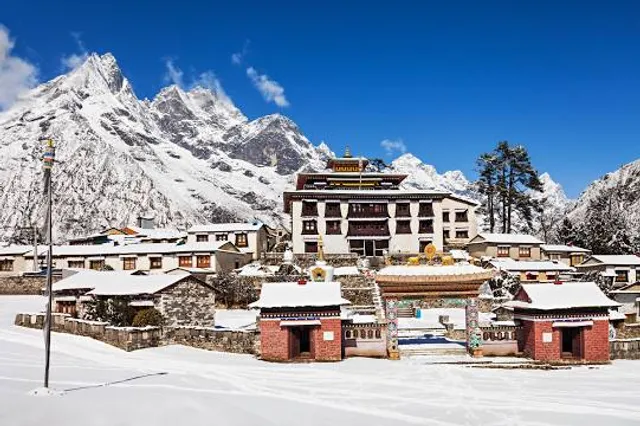
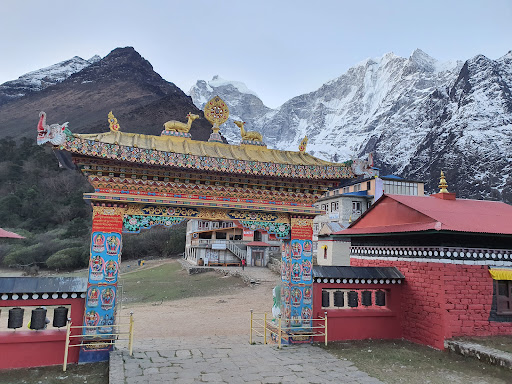
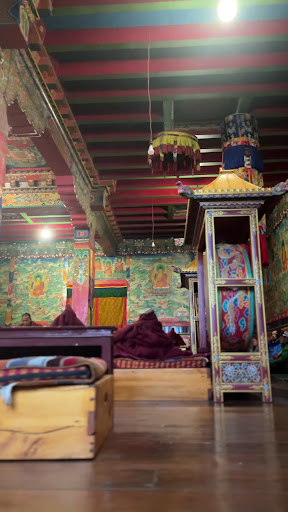
Tengboche monastery in Solu Khumbu Nepal in early March 1984 it appeared a festival was underway, and the photos over the next few days will illustrate some of the activities.
The Losar festival came into existence much before Buddhism in Tibet and was celebrated as a gesture of thanks to the Gods. Initially celebrated mostly among farmers, Losar went on to become a predominantly Buddhist festival celebrating the commencement of the New Year. The celebrations of Losar date back to the pre-Buddhist period when Tibetans used to follow the Bon religion. Bon is commonly considered to be the indigenous religious tradition of Tibet, a system of shamanistic and animistic practices performed by priests called shen (gshen) or bonpo (bon po). During that time a spiritual ceremony was organized every winter in which devotees offered incense smoke to local deities and spirits, in the belief that they would ensure the wellbeing of the people and their surroundings.
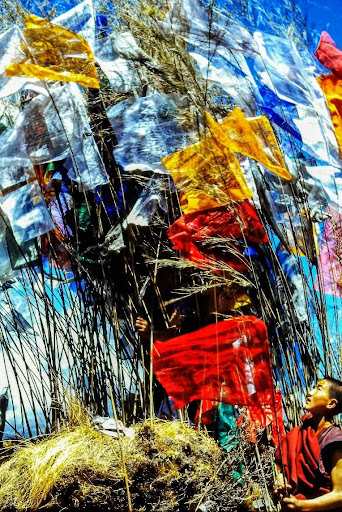
Nepali families including Sherpas prepare for Losar some days in advance by thoroughly cleaning their homes; decorating with fragrant flowers and their walls with auspicious signs painted in flour such as the sun, moon, or a reversed swastika; and preparing cedar, rhododendron, and juniper branches for burning as incense. In Solu Khumbu the festival goes by the name Gyalpo Losar. Losar rituals often encompass lighting butter lamps, making offerings, and engaging in prayers to invoke positive energies and blessings for the community's spiritual well-being in the upcoming year. Besides these practices, Buddhist's make, refresh, and replenish older prayer flags.
These photos show the last part of a religious ceremony atop a ridge high above Tengboche monastery where young monks are replenishing prayer flags and burning cedar, rhododendron, and juniper branches to produce a fragrant smoke while their elder colleagues chant from ancient texts and blow the long...
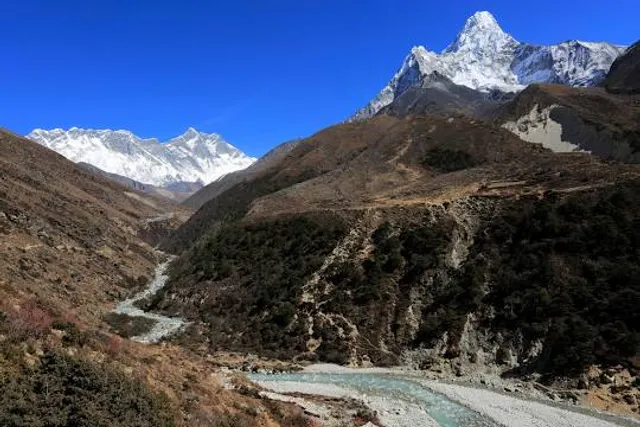
Read moreTengboche Monastery Situated at 3,867 metres (12,687 ft), the monastery is the largest gompa in the Khumbu region of Nepal. It was built in 1916 by Lama Gulu with strong links to its mother monastery known as the Rongbuk Monastery in Tibet. In 1934, it was destroyed by an earthquake and was subsequently rebuilt. In 1989, it was destroyed for a second time by a fire and then rebuilt with the help of volunteers and international assistance. Tengboche monastery is amidst the Sagarmatha National Park (a UNESCO World Heritage Site of "outstanding universal value”), draped with a panoramic view of the Himalayan Mountains, including the well-known peaks of Tawache, Everest, Nuptse, Lhotse, Ama Dablam, and Thamserku.
Tengboche is the terminus site of the "Sacred Sites Trail Project" of the Sagarmatha National Park that attracts large number of tourists for trekking and mountaineering. It is a circular trail that covers 10 monasteries in a clockwise direction terminating in the Tengboche Monastery. About 350 years ago, Lama Sangwa Dorje (a high priest) of Khumbu declared Tengboche to be a religious site where there would one day be an important monastery. But it wasn't until 1923, when the reincarnate of Lama Sangwa Dorje—a boy from nearby Khumjung—founded the...
Read moreI was there in 1993 to attend a reopening ceremony of monastery. This monastery was burnt down in 1989. Sir Edmund Hilary rebuilt this and the old monastery replacing by solid strecture. The reopening ceremony was inaugurated by then Nepal’s PM GP Koirala. Tengboche Monastery is one of the most famous monasteries of Nepal. Atop a hill across Imja Khola, Tengboche is the most common night halt after Namche. The monastery is perched on a high ridge across the canyon from Khunde. From Tengboche you can continue on to Pheriche, Kala Pattar and the hamlet of Gorakshep. From here, the site of Everest Base Camp is easily accessible. This monastery is situated at 3,867 metres, the monastery is the largest gompa in the Khumbu...
Read more