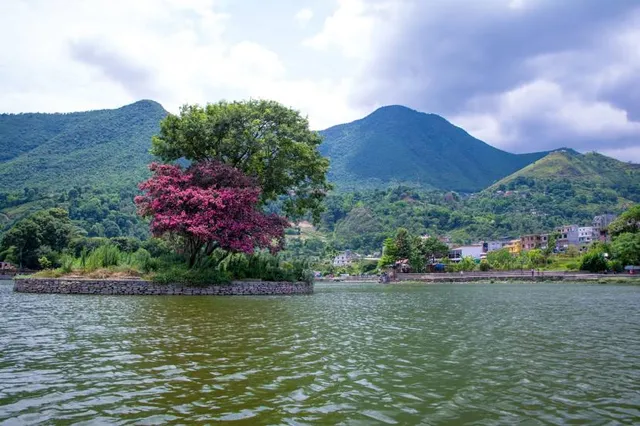
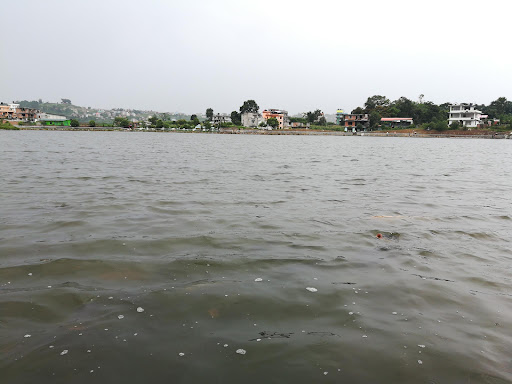
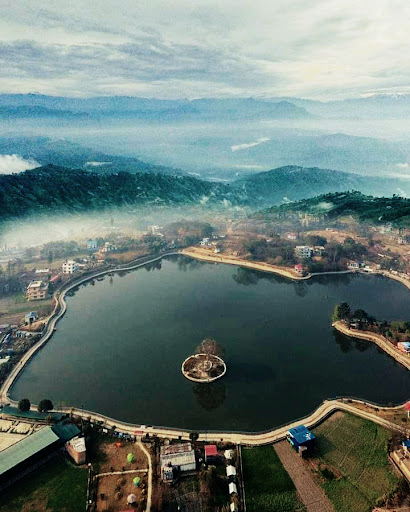
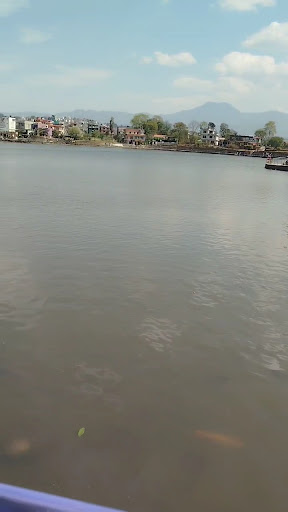
It’s time that you explore Kathmandu fair and square. Go for off-beaten tracks and trails and enjoy discovering Taudaha Lake. A small lake that’s located in the outskirts of Kathmandu, Taudaha represents ‘snake’ and ‘lake.’
Highlights:The name actually comes from mythology, where it is believed that a Buddhist mythical character Manjushree had cut the hill to drain the water of this lake, which is why the lake is now smaller than it used to be. However, due to the draining of lake, countless nagas, mythological creatures who were half snakes and half humans were left homeless. And therefore, an underwater lake or Taudaha was built, where serpent king and the subjects lived. That’s why the lake is considered tranquil. This lake is perfect for birdwatchers, as a number of migratory species visit the place.
The Taudaha Lake is believed to be a remnant pool of the huge lake that once existed where now the city of Kathmandu sits. According to mythology, a Buddhist mythical character Manjushree cut the hill in the valley's south, allowing the lake's water to drain off, thereby creating land that was duly occupied by people. Folklore suggests that that "cut" in the hill is the Chobar Gorge, a narrow passage from which the Bagmati River exits the Kathmandu Valley. After the water of the ancient lake drained away, a few small lakes and ponds were created beyond the hills. Taudaha is believed to be one of those ponds.
When the lake was drained, countless nagas, mythological creatures that were half human and half serpent, were left homeless. This made the Naga King Karkotak livid. In order to allay his wrath, the locals living near Taudaha built an underwater palace, studded with precious stones and riches beyond imagination. The Serpent King was pleased and ruled his serpent subjects in their underwater kingdom. The king also promised to protect the humans living around the lake, on the condition that the tranquility of his water abode never be disrupted. It is due to this that even today locals do not swim or fish in the lake.
Around 40 species of birds have been recorded out of which 17 are residents, 2 are summer migrants and rest are winter migrants. Black kite, Black drongo, Cattle egret, Oriental magpie robin, Common myna, Jungle crow, Rose-ringed parakeet, White-throated kingfisher and Red-vented bulbul are some of the resident birds. Barn swallow and Indian cuckoo are summer visitors. Winter migrants include the Great cormorant, ruddy shelduck, Northern shoveler, Mallard duck, Gadwall, Eurasian coot, Northern pintail and common teal.
There are many species of fishes in the lake. It is well known for large carps. Common carp, Silver carp, Grass carp, Bighead carp and colourful carps have been introduced in the lake. These non-native species have disrupt the ecosystem and are out-competing the native species. Native fish species include several barbs, catfishes and snakeheads.
Mammals such as Golden jackal, Indian grey mongoose and several rodents are found around the lake.
Checkered keelback and Oriental garden lizard are frequently sighted reptile species.
The lake, arguably the only clean water body remaining in the Kathmandu Valley, is a stop over for numerous migratory bird species. In the winter, hundreds of water birds can be seen in and around the lake. Taudaha lake is one of the important site for...
Read more
 Learn more insights from Wanderboat AI.