Rangiriri Pā was the decisive battle for Northern Waikato in November 1863.
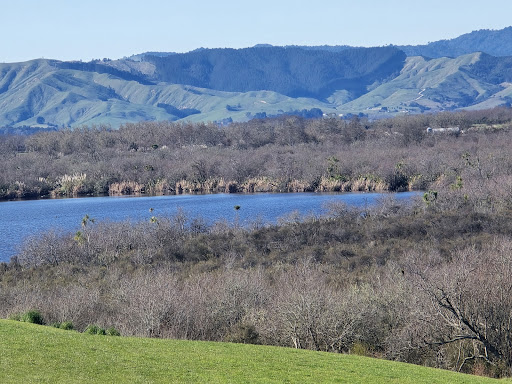
A Kīngitanga force constructed a defensive line along a ridge between the Waikato River and Lake Waikare, including a high-sided central Redoubt (Te Wheoro's Redoubt, which is closed to the public).
Rangiriri Pā was undermanned compared to the redoubt at Meremere to the North. Only several hundred fighters were available, as the planting season reduced the available manpower. On 20 November, the government assembled 1,500 men with artillery and gunboats.
Ultimately, the entire force, including artillerymen and naval personnel, participated in the final assaults on the redoubt. But despite their advantage, these all failed. Overnight, for the safety of the tribe, many Māori evacuated across Lake Waikare, including King Tāwhiao and mortally wounded Pene Te Wharepu, the architect of the redoubt. In the morning, the remaining Kīngitanga force surrendered. There is a dispute about the actual events, with the defenders claiming the British waved a white flag as an offer to parley, effectively trapping and overpowering them.
Casualties at Rangiriri were high by the standards of these battles – 45 government soldiers were killed, with 85 wounded. About 35 Kīngitanga Māori were killed, with an unknown number wounded. The 183 Māori captured at Rangiriri were held on Kawau Island in Auckland’s Hauraki Gulf but escaped in September 1864.
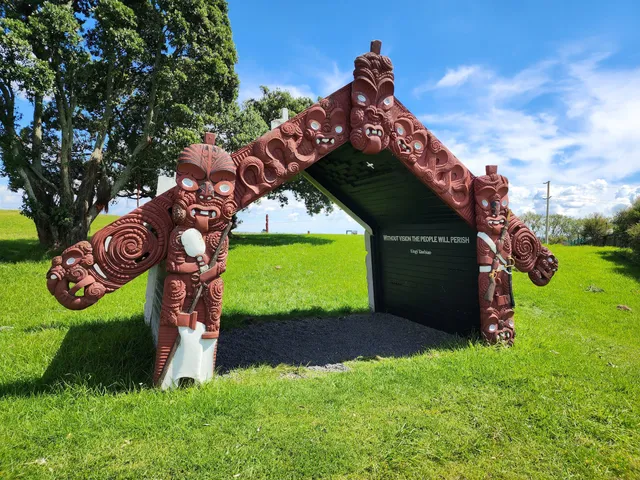
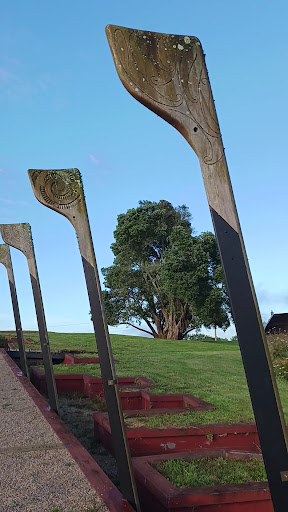
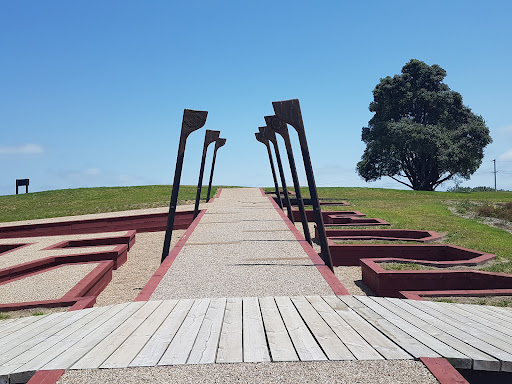
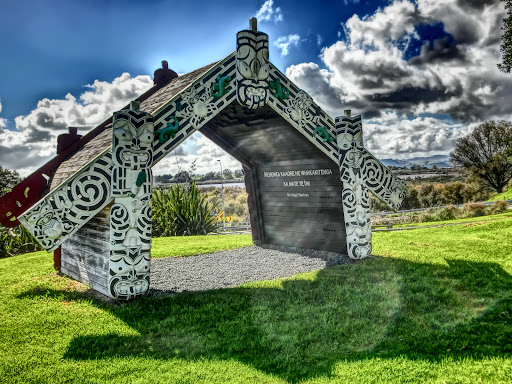
For a long time, the site of Rangiriri Pā was barely noted. But today, you can’t miss the battlefield while driving along the Waikato Expressway. It is back in the hands of Tainui and marked out by two lines of pou (engraved posts of significance). Look to the East, just before the Rangiriri offramp. Drive to the top of Rangiriri Paa, where you can walk down over the remnants of the Pā and trenches, with several explanatory panels.
I felt an aura of sadness walking towards the pou, thinking of the lives lost and remembering some of the Māori who might still be buried there.
This is a must-do if you want to connect to our past, to understand our...
Read moreRangiriri Paa, Is a tribute to the battle between kingitanga adherents and the fallen Waikato Maori chiefs, warriors, women and children. This paa site memorializes 'waikato land wars' and the battle between the English and Maori. During this battle many Maori and British soldiers died, respect for this site is recommended due to the fact that some of the Maori could be buried here. Stories from the local Waikato people describe how King Tawhiao and 200 of his Whanau fled this paa site, while his warriors stayed back to face a certain death or imprisonment so that their King could escape. This paa commemorates the courageous battle for Maori to reinforce tino rangatiratanga, (sovereignty) and cements Kingitanga ( the Maori king movement) as an indistinguishable force for the crown to reckon with. There are pou placed down the hill and there is an aura of deep sadness when you walk down the hill. Highly recommend visiting this site of interest. Please click like if you found this review helpful. Thank you....
Read moreI visited the "free area" about 6 weeks ago, and then revisited both areas as part of a school trip - twice. The first tour was superior to the first, because we were given a talk and viewing about the "pou pous" (sp). This was not included in the "same" tour also short time later. Likewise, the first group experienced holding and pretending to load faux muskets, but the 2nd group didn't.
I found the language used by the guides to be a bit "in your face" for the age of the group - "massacre" etc - although clearly intentional.
The students were able to walk though and hide in dug outs (trenches), which they enjoyed - playing with pool noodles as pretend weapons. At this stage, very haunting sounds were made, making easy to imagine the history of the site.
The guides could slow down their talks somewhat for better understanding, but I acknowledge that was probably a time...
Read more