HTML SitemapExplore
Find Things to DoFind The Best Restaurants

Kalash Valley — Attraction in Chitral Tehsil

Name
Kalash Valley
Description
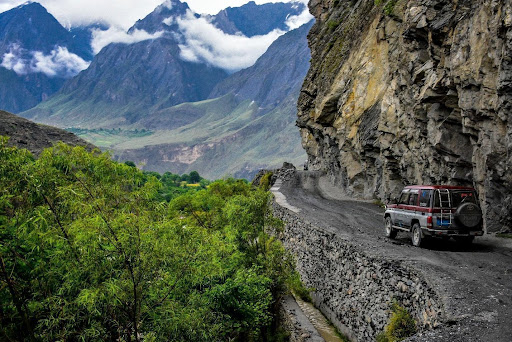
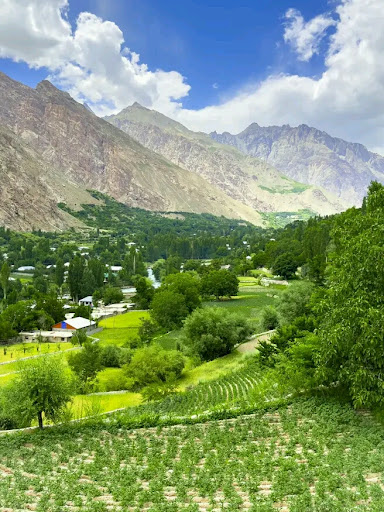
The Kalasha Valleys are valleys in Chitral District in northern Pakistan. The valleys are surrounded by the Hindu Kush mountain range.
Nearby attractions
Nearby restaurants
Nearby hotels
Related posts
Pakistan travel plan‘
Keywords
Kalash Valley tourism.Kalash Valley hotels.Kalash Valley bed and breakfast. flights to Kalash Valley.Kalash Valley attractions.Kalash Valley restaurants.Kalash Valley travel.Kalash Valley travel guide.Kalash Valley travel blog.Kalash Valley pictures.Kalash Valley photos.Kalash Valley travel tips.Kalash Valley maps.Kalash Valley things to do.
Kalash Valley things to do, attractions, restaurants, events info and trip planning
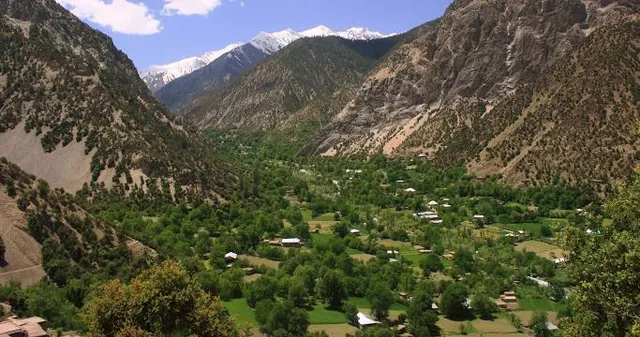
Kalash Valley
PakistanKhyber PakhtunkhwaChitral TehsilKalash Valley

Basic Info

Kalash Valley

MMVG+Q8V The center of kalash Valley, Kalash, Batrik, Pakistan
4.6(417)
Open 24 hours
Save
spot

Ratings & Description

Info

The Kalasha Valleys are valleys in Chitral District in northern Pakistan. The valleys are surrounded by the Hindu Kush mountain range.

Cultural
Outdoor
Scenic
Off the beaten path
attractions: , restaurants:
logoLearn more insights from Wanderboat AI.

Plan your stay

hotel
Pet-friendly Hotels in Chitral Tehsil
Find a cozy hotel nearby and make it a full experience.
hotel
Affordable Hotels in Chitral Tehsil
Find a cozy hotel nearby and make it a full experience.
hotel
The Coolest Hotels You Haven't Heard Of (Yet)
Find a cozy hotel nearby and make it a full experience.
hotel
Trending Stays Worth the Hype in Chitral Tehsil
Find a cozy hotel nearby and make it a full experience.

Reviews

Get the Appoverlay
Get the AppOne tap to find yournext favorite spots!
Wanderboat LogoWanderboat

Your everyday Al companion for getaway ideas

CompanyAbout Us
InformationAI Trip PlannerSitemap
SocialXInstagramTiktokLinkedin
LegalTerms of ServicePrivacy Policy

Get the app

© 2025 Wanderboat. All rights reserved.

Reviews of Kalash Valley

4.6
(417)
avatar
4.0
3y

Beautiful and Rich Culture, really so honest people in all communities

The Tribe of Kalash, also known as Kafir (non-believer) / Siyah Posh (Black Robed) approximately around 3,000 in number today, claim to be the descendants of Alexander’s army. However, their origin has remained a mystery and research is still on at various levels to identify their historical and biological ancestry. Many Kalash people believe their ancestors came to the area from a distant place known as Tsiyam, which the Kalash priests and bards invoke in their songs during festivals. Nevertheless, no one really knows where the place actually was or currently is.

The Kalash people are animists, nature worshippers and refuse to convert to Islam. It is this emphasis on non-conversion that can be perceived as the root cause of their marginalisation in the region. Before we go into an elaborate analysis of the current situation of the Kalash people, it is important to understand the ethnic and sectarian backdrop of the Islamic Republic of Pakistan. For a long time, Pakistan has been known to abhor the recognition of various ethnic identities. This in many ways resulted in the creation of Bangladesh in 1971 and the various insurgencies that plague the country even to this date. Within its own fabric, because of an unwritten policy of ‘othering’, the country has alienated its minorities be it the Muhajirs, Balochis, Shias, Ahmadis, Ismailis, so on and so forth. As described above, with a scanty population of 3,000 people, the Kalash are not even 1% of the population; but the uniqueness of their being and their composite history and heritage adds immense value to the vast landmass they belong to, which once upon a time was home to not only Islam but also Buddhism, Hinduism and other animistic religions. With this background, the Kalash people can be understood as being ethnically marginal while constituting a demographically insignificant minority in a nation created on the grounds of religion.

Who are the Kalash people?

Speaking in strictly scientific terms, human populations show subtle allele-frequency differences across geographical spaces and according to available methods individuals tend to be clustered based on their genetic information into groups that correspond to their respective geographical regions. In an early global survey of this kind, five clusters were identified (1) Africans, (2) a widespread group including Europeans, Middle Easterners, and South Asians, (3) East Asians, (4) Oceanians, and (5) Native Americans. However, when the divisions were increased to include a sixth group: it comprised only of a single population, that of the Kalash.

As has been mentioned earlier, the Kalash are an isolated South Asian population of Indo-European speakers residing in the Hindu Kush mountain valleys in the northwestern part of Pakistan, near the Afghanistan border. They represent a religious minority with unique and rich cultural traditions. As their number is constantly shrinking, the Kalash people are found to be staying in three valleys of the Hindu Kush: Rumbur, Bumburet and Birir in the Chitral district of Khyber Pakhtunkhwa. The Rumbur and Bumburet grouping form a single culture due to similarities in their cultural practices, while the Birir grouping being the most traditional one of the three, forms a separate culture of its own. The region is at the crossroads of what is known as the Nuristan province of Afghanistan in the west, Swat and Gilgit in the east, Pamir Knot in the north and Lowari Pass in the south. The Kalash language is said to be part of the Dardic group of Indo-Aryan languages. As per UNESCO, the language is listed as being critically endangered as like many other tribal languages all over the world, Kalash has no proper script. On its part, even the Government of Pakistan has made no effort to document and keep a record of this unique language. What is even worse is that till date there does not exist a single standard text devoted solely to...

   Read more
avatar
5.0
2y

Kalash Valley, Pakistan, reveals itself as more than just a destination—it becomes an emotional journey. As you wander through its terraced fields and witness the ancient rituals of the Kalash Pakistan community, the fantastic Kalash Valley view will infuse a sense of awe and reverence fills your heart.

The vibrant festivals and colorful traditions of the Kalasha people resonate deeply, igniting a profound connection with their resilient spirit.

At a distance of 40 Kilometers from Chitral, along the Pakistan-Afghanistan border, at an elevation of 1,670 meters, lies the remote but one of the most beautiful valleys of Pakistan in the Hindu Kush known as Kalash Valley. The traditions, customs, and culture of Kalash Valley bear a striking contrast with the rest of Pakistan.

The average climate of Kalash Chitral is moderate. The average temperature is 15 Degrees Celsius. During the winter months, however, the valley received more rainfall.

Distinct seasonal variations characterize the Kalash weather. During the summer months, from June to August, the valley experiences pleasant temperatures ranging from 20°C to 30°C (68°F to 86°F). It is the ideal time to explore picturesque landscapes, enjoy outdoor activities, and witness the vibrant cultural festivals of the Kalasha people.

In autumn, from September to November, the temperatures begin to drop, ranging from 10°C to 25°C (50°F to 77°F). The valley is adorned with stunning red, orange, and yellow hues as the foliage changes, creating a breathtaking backdrop for nature enthusiasts and photographers.

Winter arrives in Kalash Valley from December to February, bringing chilly temperatures that can dip below freezing, ranging from -5°C to 10°C (23°F to 50°F). Snowfall is expected during this period, transforming the valley into a winter wonderland.

Spring, from March to May, sees a gradual transition from the cold winter to milder temperatures that range from 10°C to 25°C (50°F to 77°F).

Kalasha Dur Museum is a place that offers a good insight into the history...

   Read more
avatar
1.0
1y

A Visit to Kalash Valley: A Journey Through Time

Tucked away in the majestic Hindukush mountains, Kalash Valley is a hidden gem waiting to be discovered. This enchanting valley is home to the ancient Kalash people, who have preserved their unique culture and traditions for centuries.

Day 1: Arrival in Chitral

Our journey begins in Chitral, the gateway to Kalash Valley. We'll explore the town's bustling bazaar, visit the Chitral Museum, and get a glimpse into the region's rich history.

Day 2: Enter the Kalash Valley

We'll drive to the Kalash Valley, passing through scenic landscapes and picturesque villages. Our first stop is the Bumburet Valley, where we'll visit the Kalash village of Balanguru.

Day 3: Explore the Kalash Villages

We'll spend the day exploring the Kalash villages of Rumbur and Birir, immersing ourselves in the local culture and traditions. We'll visit ancient temples, witness traditional dances, and indulge in local cuisine.

Day 4: Trek to the nearby villages

We'll embark on a trek to nearby villages, taking in the breathtaking views of the surrounding mountains and valleys. We'll interact with the locals, learning about their way of life and customs.

Day 5: Return to Chitral

Our journey comes to an end as we return to Chitral, carrying memories of the enchanting Kalash Valley and its people.

Tour Highlights:

Explore the ancient Kalash villages and culture Witness traditional dances and music Visit ancient temples and museums Indulge in local cuisine and hospitality Trek through scenic landscapes and picturesque villages Learn about the region's history and customs

Tour Duration: 5 days

Best Time to Visit: May to October

Accommodation: Local hotels and guesthouses

Transportation: Private vehicles and trekking

Guide: Experienced local guide

Language: English, Urdu, Khowar (local language)

Join us on this unforgettable journey to Kalash Valley, where time stands still and tradition...

   Read more
Page 1 of 7
Previous
Next

Posts

Pakistan travel plan‘
Flora AllenFlora Allen
Pakistan travel plan‘
Latif Ur Rehman (Myart)Latif Ur Rehman (Myart)
Beautiful and Rich Culture, really so honest people in all communities The Tribe of Kalash, also known as Kafir (non-believer) / Siyah Posh (Black Robed) approximately around 3,000 in number today, claim to be the descendants of Alexander’s army. However, their origin has remained a mystery and research is still on at various levels to identify their historical and biological ancestry. Many Kalash people believe their ancestors came to the area from a distant place known as Tsiyam, which the Kalash priests and bards invoke in their songs during festivals. Nevertheless, no one really knows where the place actually was or currently is. The Kalash people are animists, nature worshippers and refuse to convert to Islam. It is this emphasis on non-conversion that can be perceived as the root cause of their marginalisation in the region. Before we go into an elaborate analysis of the current situation of the Kalash people, it is important to understand the ethnic and sectarian backdrop of the Islamic Republic of Pakistan. For a long time, Pakistan has been known to abhor the recognition of various ethnic identities. This in many ways resulted in the creation of Bangladesh in 1971 and the various insurgencies that plague the country even to this date. Within its own fabric, because of an unwritten policy of ‘othering’, the country has alienated its minorities be it the Muhajirs, Balochis, Shias, Ahmadis, Ismailis, so on and so forth. As described above, with a scanty population of 3,000 people, the Kalash are not even 1% of the population; but the uniqueness of their being and their composite history and heritage adds immense value to the vast landmass they belong to, which once upon a time was home to not only Islam but also Buddhism, Hinduism and other animistic religions. With this background, the Kalash people can be understood as being ethnically marginal while constituting a demographically insignificant minority in a nation created on the grounds of religion. Who are the Kalash people? Speaking in strictly scientific terms, human populations show subtle allele-frequency differences across geographical spaces and according to available methods individuals tend to be clustered based on their genetic information into groups that correspond to their respective geographical regions. In an early global survey of this kind, five clusters were identified (1) Africans, (2) a widespread group including Europeans, Middle Easterners, and South Asians, (3) East Asians, (4) Oceanians, and (5) Native Americans. However, when the divisions were increased to include a sixth group: it comprised only of a single population, that of the Kalash. As has been mentioned earlier, the Kalash are an isolated South Asian population of Indo-European speakers residing in the Hindu Kush mountain valleys in the northwestern part of Pakistan, near the Afghanistan border. They represent a religious minority with unique and rich cultural traditions. As their number is constantly shrinking, the Kalash people are found to be staying in three valleys of the Hindu Kush: Rumbur, Bumburet and Birir in the Chitral district of Khyber Pakhtunkhwa. The Rumbur and Bumburet grouping form a single culture due to similarities in their cultural practices, while the Birir grouping being the most traditional one of the three, forms a separate culture of its own. The region is at the crossroads of what is known as the Nuristan province of Afghanistan in the west, Swat and Gilgit in the east, Pamir Knot in the north and Lowari Pass in the south. The Kalash language is said to be part of the Dardic group of Indo-Aryan languages. As per UNESCO, the language is listed as being critically endangered as like many other tribal languages all over the world, Kalash has no proper script. On its part, even the Government of Pakistan has made no effort to document and keep a record of this unique language. What is even worse is that till date there does not exist a single standard text devoted solely to this culture.
Liaqat Azam ChitraliLiaqat Azam Chitrali
*A Visit to Kalash Valley: A Journey Through Time* Tucked away in the majestic Hindukush mountains, Kalash Valley is a hidden gem waiting to be discovered. This enchanting valley is home to the ancient Kalash people, who have preserved their unique culture and traditions for centuries. *Day 1: Arrival in Chitral* Our journey begins in Chitral, the gateway to Kalash Valley. We'll explore the town's bustling bazaar, visit the Chitral Museum, and get a glimpse into the region's rich history. *Day 2: Enter the Kalash Valley* We'll drive to the Kalash Valley, passing through scenic landscapes and picturesque villages. Our first stop is the Bumburet Valley, where we'll visit the Kalash village of Balanguru. *Day 3: Explore the Kalash Villages* We'll spend the day exploring the Kalash villages of Rumbur and Birir, immersing ourselves in the local culture and traditions. We'll visit ancient temples, witness traditional dances, and indulge in local cuisine. *Day 4: Trek to the nearby villages* We'll embark on a trek to nearby villages, taking in the breathtaking views of the surrounding mountains and valleys. We'll interact with the locals, learning about their way of life and customs. *Day 5: Return to Chitral* Our journey comes to an end as we return to Chitral, carrying memories of the enchanting Kalash Valley and its people. *Tour Highlights:* - Explore the ancient Kalash villages and culture - Witness traditional dances and music - Visit ancient temples and museums - Indulge in local cuisine and hospitality - Trek through scenic landscapes and picturesque villages - Learn about the region's history and customs *Tour Duration:* 5 days *Best Time to Visit:* May to October *Accommodation:* Local hotels and guesthouses *Transportation:* Private vehicles and trekking *Guide:* Experienced local guide *Language:* English, Urdu, Khowar (local language) Join us on this unforgettable journey to Kalash Valley, where time stands still and tradition reigns supreme.
See more posts
See more posts
hotel
Find your stay

Pet-friendly Hotels in Chitral Tehsil

Find a cozy hotel nearby and make it a full experience.

Pakistan travel plan‘
Flora Allen

Flora Allen

hotel
Find your stay

Affordable Hotels in Chitral Tehsil

Find a cozy hotel nearby and make it a full experience.

Get the Appoverlay
Get the AppOne tap to find yournext favorite spots!
Beautiful and Rich Culture, really so honest people in all communities The Tribe of Kalash, also known as Kafir (non-believer) / Siyah Posh (Black Robed) approximately around 3,000 in number today, claim to be the descendants of Alexander’s army. However, their origin has remained a mystery and research is still on at various levels to identify their historical and biological ancestry. Many Kalash people believe their ancestors came to the area from a distant place known as Tsiyam, which the Kalash priests and bards invoke in their songs during festivals. Nevertheless, no one really knows where the place actually was or currently is. The Kalash people are animists, nature worshippers and refuse to convert to Islam. It is this emphasis on non-conversion that can be perceived as the root cause of their marginalisation in the region. Before we go into an elaborate analysis of the current situation of the Kalash people, it is important to understand the ethnic and sectarian backdrop of the Islamic Republic of Pakistan. For a long time, Pakistan has been known to abhor the recognition of various ethnic identities. This in many ways resulted in the creation of Bangladesh in 1971 and the various insurgencies that plague the country even to this date. Within its own fabric, because of an unwritten policy of ‘othering’, the country has alienated its minorities be it the Muhajirs, Balochis, Shias, Ahmadis, Ismailis, so on and so forth. As described above, with a scanty population of 3,000 people, the Kalash are not even 1% of the population; but the uniqueness of their being and their composite history and heritage adds immense value to the vast landmass they belong to, which once upon a time was home to not only Islam but also Buddhism, Hinduism and other animistic religions. With this background, the Kalash people can be understood as being ethnically marginal while constituting a demographically insignificant minority in a nation created on the grounds of religion. Who are the Kalash people? Speaking in strictly scientific terms, human populations show subtle allele-frequency differences across geographical spaces and according to available methods individuals tend to be clustered based on their genetic information into groups that correspond to their respective geographical regions. In an early global survey of this kind, five clusters were identified (1) Africans, (2) a widespread group including Europeans, Middle Easterners, and South Asians, (3) East Asians, (4) Oceanians, and (5) Native Americans. However, when the divisions were increased to include a sixth group: it comprised only of a single population, that of the Kalash. As has been mentioned earlier, the Kalash are an isolated South Asian population of Indo-European speakers residing in the Hindu Kush mountain valleys in the northwestern part of Pakistan, near the Afghanistan border. They represent a religious minority with unique and rich cultural traditions. As their number is constantly shrinking, the Kalash people are found to be staying in three valleys of the Hindu Kush: Rumbur, Bumburet and Birir in the Chitral district of Khyber Pakhtunkhwa. The Rumbur and Bumburet grouping form a single culture due to similarities in their cultural practices, while the Birir grouping being the most traditional one of the three, forms a separate culture of its own. The region is at the crossroads of what is known as the Nuristan province of Afghanistan in the west, Swat and Gilgit in the east, Pamir Knot in the north and Lowari Pass in the south. The Kalash language is said to be part of the Dardic group of Indo-Aryan languages. As per UNESCO, the language is listed as being critically endangered as like many other tribal languages all over the world, Kalash has no proper script. On its part, even the Government of Pakistan has made no effort to document and keep a record of this unique language. What is even worse is that till date there does not exist a single standard text devoted solely to this culture.
Latif Ur Rehman (Myart)

Latif Ur Rehman (Myart)

hotel
Find your stay

The Coolest Hotels You Haven't Heard Of (Yet)

Find a cozy hotel nearby and make it a full experience.

hotel
Find your stay

Trending Stays Worth the Hype in Chitral Tehsil

Find a cozy hotel nearby and make it a full experience.

*A Visit to Kalash Valley: A Journey Through Time* Tucked away in the majestic Hindukush mountains, Kalash Valley is a hidden gem waiting to be discovered. This enchanting valley is home to the ancient Kalash people, who have preserved their unique culture and traditions for centuries. *Day 1: Arrival in Chitral* Our journey begins in Chitral, the gateway to Kalash Valley. We'll explore the town's bustling bazaar, visit the Chitral Museum, and get a glimpse into the region's rich history. *Day 2: Enter the Kalash Valley* We'll drive to the Kalash Valley, passing through scenic landscapes and picturesque villages. Our first stop is the Bumburet Valley, where we'll visit the Kalash village of Balanguru. *Day 3: Explore the Kalash Villages* We'll spend the day exploring the Kalash villages of Rumbur and Birir, immersing ourselves in the local culture and traditions. We'll visit ancient temples, witness traditional dances, and indulge in local cuisine. *Day 4: Trek to the nearby villages* We'll embark on a trek to nearby villages, taking in the breathtaking views of the surrounding mountains and valleys. We'll interact with the locals, learning about their way of life and customs. *Day 5: Return to Chitral* Our journey comes to an end as we return to Chitral, carrying memories of the enchanting Kalash Valley and its people. *Tour Highlights:* - Explore the ancient Kalash villages and culture - Witness traditional dances and music - Visit ancient temples and museums - Indulge in local cuisine and hospitality - Trek through scenic landscapes and picturesque villages - Learn about the region's history and customs *Tour Duration:* 5 days *Best Time to Visit:* May to October *Accommodation:* Local hotels and guesthouses *Transportation:* Private vehicles and trekking *Guide:* Experienced local guide *Language:* English, Urdu, Khowar (local language) Join us on this unforgettable journey to Kalash Valley, where time stands still and tradition reigns supreme.
Liaqat Azam Chitrali

Liaqat Azam Chitrali

See more posts
See more posts