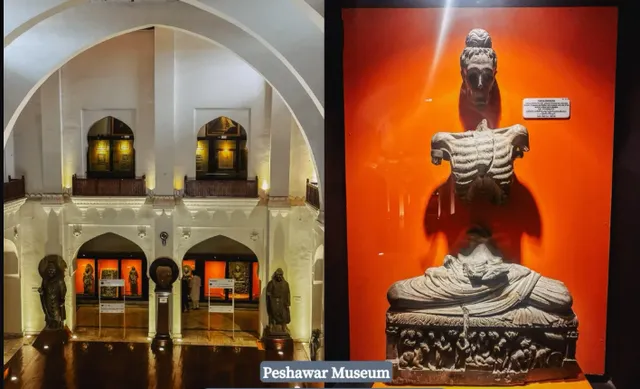
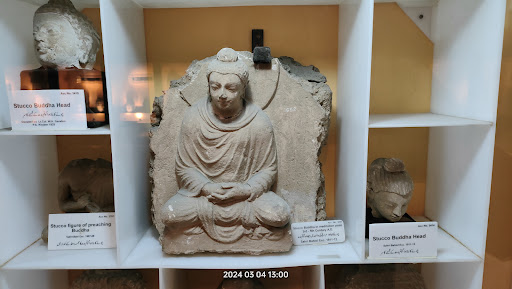
The current collection has almost 14,000 items based on Gandhara, Greco-Buddhist, Kushan, Parthian, and Indo-Scythian life. Examples include art, sculptures, coins, manuscripts, statues, ancient books, early versions of the Quran, weapons, dresses, jewelry, Kalash effigies, inscriptions, paintings of the Mughal and later periods, household materials and pottery, as well as local and Persian handicrafts.
Gandhara and Greco-Buddhist Art: Peshawar Museum has one of the largest and most extensive collections of Gandhara art of the Buddhist period and is considered to be one of the biggest collections of Buddhist objects in the world. The museum also contains the largest collection on Gautama Buddha. Buddhist stone sculptures, terracotta figurines, and other Buddhist objects. The display of Gandhara art in the main hall includes Buddha's life stories, miracles, worship of symbols, relic caskets, and individual standing Buddha sculptures. The ethnological objects of that period are also exhibited in the museum.
Numismatics: The Peshawar Museum has 8,625 coins, 4,510 of which are pre-Islamic. The main interest of the museum's numismatic collection is that the coins were recovered from archaeological sites, including: Shah-Ji-Ki-Dheri, Shari Bahlol, Takht-i-Bahi and Jamal Garhi. The collections of Bactrian Greek, Indo-Greek, Indo-Scythian, Indo-Parthian and Kushan coins have been published.
Mughal and Persian Islamic Art: This gallery exhibits wooden facades of mosques, ancient Arabic and Persian inscriptions, fine Multani tiles and ceramics, and the dresses and weapons of Syed Ahmad Shaheed Barailvi and numerous ancient leaders. Some of the best works are the Mughal Islamic metal artifacts in bronze and silver, the calligraphic specimens and scrolls that date as far back as 1224.
Middle Age and British Rule to Present: This gallery mainly consists of items displaying the culture and life of the major tribes of the Khyber Pakhtunkhwaprovince, and the Kalasha Desh located in the far north of the province, where a small tribe of animists called the Kalashlive. The museum exhibits cultural items of the Kailash Valley. Exhibits also include swords, daggers, spears, long bows, recurve bows, arrows, shields, muzzle-loading guns, revolvers, pistols and...
Read moreThe Peshawar Museum in Khyber Pakhtunkhwa, Pakistan is a cultural and historical hub that showcases the rich heritage of the region. The museum was established in 1907 and has since become one of the most visited attractions in the city.
One of the main highlights of the museum is its extensive collection of Gandhara art, which dates back to the 1st century AD and is considered some of the finest examples of Buddhist art in the world. The collection includes sculptures, coins, and manuscripts that offer a fascinating insight into the cultural and religious practices of the ancient Gandhara civilization.
Another major attraction of the museum is its display of manuscripts, which include hand-written copies of the Holy Quran, as well as other religious and secular texts. The manuscripts are adorned with intricate calligraphy and intricate illustrations, and offer a glimpse into the rich literary and artistic traditions of the region.
The museum also houses a collection of arms and armor, including swords, shields, and guns, that were used by various ethnic groups in the region. The collection offers a unique perspective on the military history of the area and the various conflicts that took place over the centuries.
In addition to its historical and cultural exhibits, the Peshawar Museum also features a number of modern amenities, such as a library, a research center, and a conference hall. The museum is open to visitors seven days a week and is a popular destination for tourists, students, and scholars alike.
In conclusion, the Peshawar Museum is an important cultural and historical institution that offers visitors a fascinating glimpse into the rich heritage of the region. Whether you are interested in ancient art, religion, military history, or simply want to learn more about the culture and traditions of Pakistan, the Peshawar Museum is a must-visit...
Read moreThe Peshawar Museum is located in Peshawar, Khyber Pakhtunkhwa.
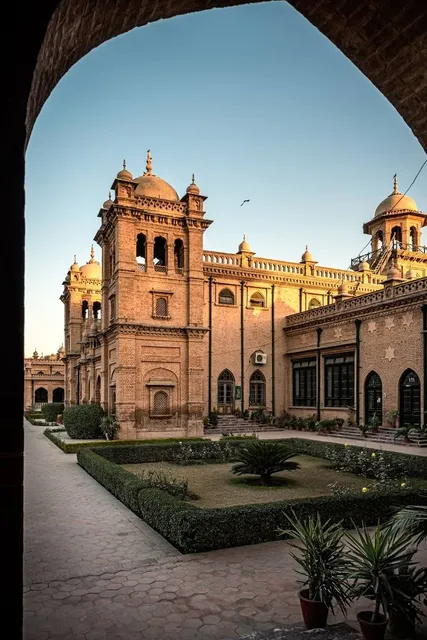
The Peshawar Museum was founded in 1907 as "Victoria Hall," in memory of Queen Victoria. The 2 story building was built in a syncretic architectural style consisting of British, Hindu, Buddhist and Mughal Islamic styles. The museum initially had only one exhibition hall, but 2 more were added in 1969–70. In 2004–05.
The museum was further expanded with the construction of a new block with two galleries, two halls for the museum's collection in storage, offices for the provincial directorate of archaeology, a conservation laboratory and a cafeteria. The historic exhibition hall was also renovated at that time.
The current collection has almost 14,000 items based on Gandhara, Greco-Buddhist, Kushan, Parthian, and Indo-Scythian life. Examples include art, sculptures, coins, manuscripts, statues, ancient books, early versions of the Quran, weapons, dresses, jewelry, Kalash effigies, inscriptions, paintings of the Mughal and later periods, household materials and pottery, as well as local and Persian handicrafts. It has 8,625 coins, 4,510 of which are pre-Islamic. The main interest of the museum's numismatic collection is that the coins were recovered from archaeological sites, including: Shah-Ji-Ki-Dheri, Shari Bahlol, Takht-i-Bahi and Jamal Garhi. The collections of Bactrian Greek, Indo-Greek, Indo-Scythian, Indo-Parthian and Kushan coins have been published. This gallery exhibits wooden facades of mosques, ancient Arabic and Persian inscriptions, fine Multani tiles and ceramics, and the dresses and weapons of Syed Ahmad Shaheed Barailvi and numerous ancient leaders. Some of the best works are the Mughal Islamic metal artifacts in bronze and silver, the calligraphic specimens and scrolls that date as far...
Read more