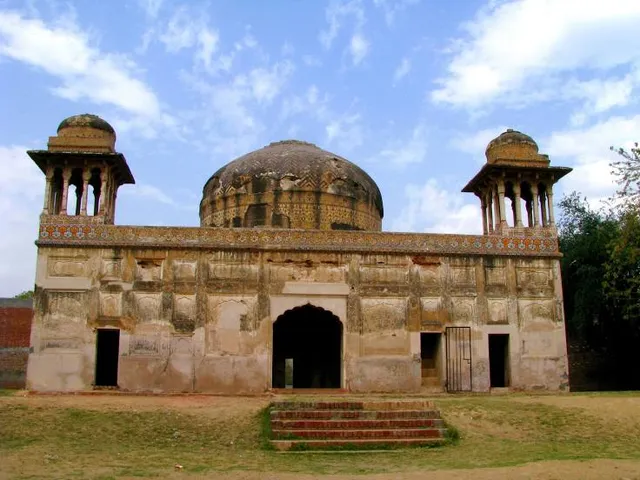
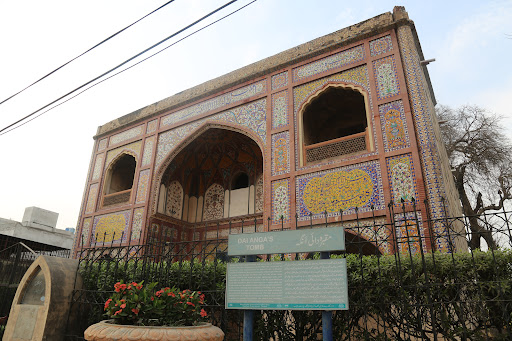
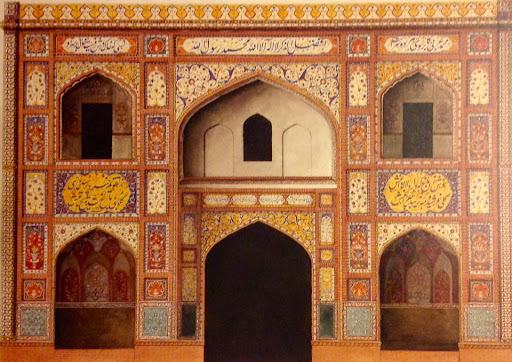
The Tomb of Dai Anga (often misheard or misspelled as “Dai Naga”) is a lesser-known but highly significant piece of Mughal funerary architecture located in Lahore, Pakistan. It holds great potential for heritage tourism, especially for those interested in the Mughal harem, royal women, and Mughal-era architecture beyond the grand monuments.
⸻
🕌 Tomb of Dai Anga – Overview
🧕 Who was Dai Anga? • Real name: Zeb-un-Nisa Begum, affectionately known as Dai Anga, which means “wet nurse”. • She was the wet nurse of Emperor Shah Jahan, making her an influential figure in the Mughal court. • Known for her deep loyalty to the royal family and her role in Mughal patronage of architecture and arts.
⸻
🛕 Architectural Highlights • Located near Gulabi Bagh, close to the University of Engineering & Technology (UET), Lahore. • Built in 1671 with typical Mughal features: • Decorative tile work (kashi kari) • Intricate frescoes and floral designs • Garden layout reflecting charbagh style (although now lost or degraded)
⸻
📈 Development & Tourism Promotion Plan
⸻
🛠️ 1. Restoration & Preservation • Collaborate with UNESCO, the Walled City of Lahore Authority (WCLA), and private conservation groups. • Focus areas: • Restoring blue and green tile work • Structural consolidation of the tomb chamber • Reviving the original garden layout to reflect Mughal-era tranquility
⸻
🧭 2. Tourist Accessibility & Infrastructure • Improve signage and approach roads from UET and GT Road. • Add facilities: • Clean restrooms • Visitor benches and shaded areas • Pathway lights for evening visits • Designate it as a “stop” in the Greater Mughal Heritage Route of Lahore
⸻
🎧 3. Educational & Cultural Interpretation • Install interpretive boards in English, Urdu, Arabic, and French • Offer audio guides and mobile app tours explaining: • Dai Anga’s role in the Mughal court • Architecture and motifs • Role of royal women in Mughal art and society
⸻
📸 4. Digital Storytelling & Online Visibility
Content Ideas: • “Unsung Women of the Mughals” series on YouTube or Instagram • High-res photo essays of the tile art and dome interiors • Mini-docs with historians exploring Mughal women’s contributions
Platforms: • Google Arts & Culture • Instagram Reels, TikTok, and Facebook Heritage Pages • Official Pakistan Tourism websites & embassies abroad
⸻
🌍 5. Niche Tourism Branding
Target Audiences: • Heritage tourists from Europe, Turkey, and South Asia • Architectural students & scholars from global universities • Women-centric travel blogs & cultural tourism platforms
Thematic Branding: • “The Women Behind the Empire” • “Mughal Lahore: Beyond the Emperors” • “Tales of Forgotten Queens and Nurses”
⸻
🛒 6. Souvenirs & Cultural Tie-Ins • Launch a small shop or online store with: • Tile-pattern notebooks • Scarves with floral Mughal motifs • Books about Mughal women and architecture
⸻
💡 Slogan Ideas • “Dai Anga’s Tomb – A Mother’s Legacy in Stone” • “Discover the Mughal Queen of Care” • “A Hidden Gem of Lahore’s Mughal Past”
⸻
Would You Like: • A tourist brochure or walking map featuring the tomb? • A social media post series idea about “Women of the Mughal Empire”? • A proposed heritage trail route including Dai...
Read more‘Gulaabi Bagh” Aka Pink Garden - LAHORE, PUNJAB, PAKISTAN.
This beautiful adorable building and garden was built during the reign of Emperor Shah -e-Jahan ( 5th Emperor of Mughal Dynasty 1592-1666). The Garden and building is situated on G.T. Road, besides University Of Engineering & Technology, Lahore, Pakistan.
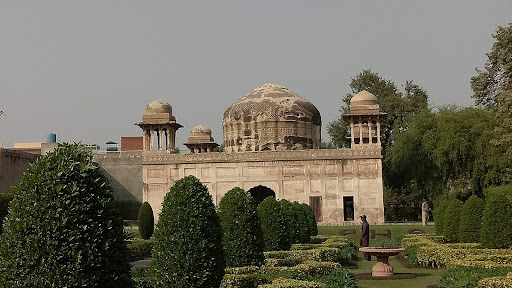
The Garden and the building was built by Sultan Beg for the princess Sultana Begum (daughter of Shahjahan & wife of Ghiyaas-ud-Din Irani). Sultana Begum, later on, dedicated the garden to her midwife, named Daayee Angaa. After the death of Midwife Daayee Angaa, she was buried inside the garden and a separate beautiful building was built as her resting tomb.
Due to negligence of Archeological department, this beautiful garden and the buildings were ruined. Later on, with the passage of time, some encroachers built their houses inside the garden that are totally against property law and are illegal. In Year 2012, PHA (Parks & Horticulture Authority of Punjab) started renovation of building and the garden which is still in progress.
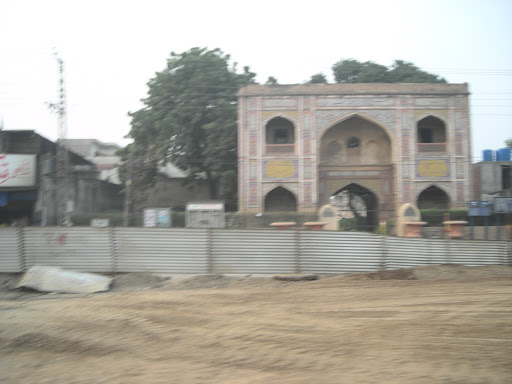
The Main gate of the garden is beautifully decorated with multicolor mosaic and very tiny tiles. Building is also inscribed with Persian & Arabic Inscription in a beautiful manner. Both sides of the gate have typical Mughal Style Balconies called ‘Jharokaa’ that are filled with flowering patterns of multicolor. The main building of the tomb is situated at the end from the main gate passing through the garden on a platform that is 5-feet high from ground level.
The tomb was beautifully covered with mosaic patterns and multicolored tiles which have gradually worn out with the hardships of time and not been taken care of. The dome of the tomb reminds the glory of Mughal Architecture, whose beautiful decoration of marble and color has been...
Read moreDai Anga, born Zeb-un-Nisa, was a prominent figure in the Mughal era, known for her strong association with the imperial family. She served as a wet nurse to Mughal Emperor Shah Jahan, establishing a deep bond with him and earning the affectionate title "Dai" (nurse). Her relationship with the royal family elevated her status within the court, and she wielded significant influence.
Though she was not of royal blood, her proximity to Shah Jahan and the Mughal household allowed her to partake in the privileges of the elite. Dai Anga's influence extended beyond her role in the imperial family; she became a philanthropist and an active participant in the cultural and religious activities of the Mughal Empire. One of her most notable contributions was the construction of a mosque in Lahore, Pakistan, known as "Dai Anga Mosque" or "Masjid Dai Anga." Built in 1635, this mosque is a testament to Mughal architecture, featuring intricate tile work and inscriptions that reflect the grandeur of the era. It stands as a symbol of her piety and deep connection to Islam.
Dai Anga was also instrumental in establishing a garden near the eastern side of Lahore, now known as the "Gulabi Bagh Gateway," another architectural marvel that showcases Mughal artistry. This gateway, initially part of a larger garden, remains a historical site, though much of the garden has faded over time.
Dai Anga’s legacy is rooted in her role as a nurturer of royalty, a patron of architecture, and a figure of moral and cultural influence in Mughal society. Her contributions to the cultural landscape of Lahore reflect her enduring significance in the history...
Read more