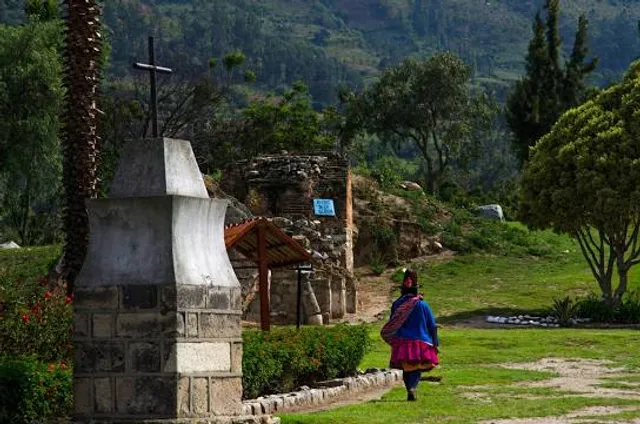
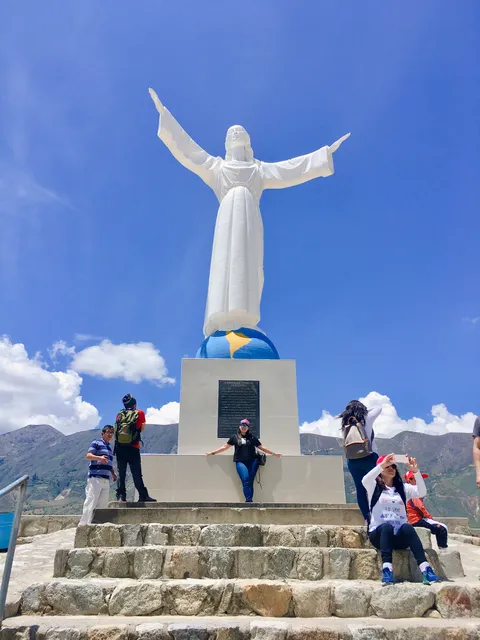
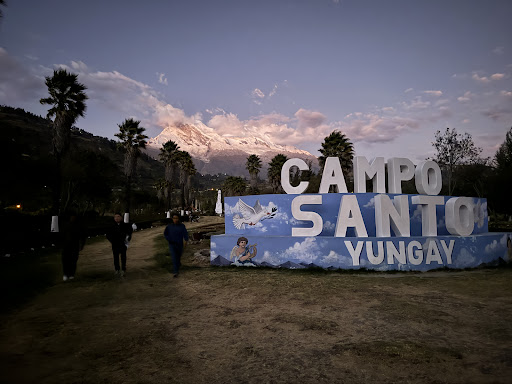
Visiting Campo Santo Yungay was a deeply moving and sombre experience. This memorial site tells the tragic story of the 1970 earthquake and landslide that buried the entire town of Yungay and took thousands of lives. Walking through the grounds, it’s impossible not to feel the weight of what happened here. The preserved remnants of the original town — including the tops of palm trees, a bus, and parts of the church — are haunting reminders of the power of nature and the fragility of life.
The site is beautifully maintained and respectfully honours the memory of those who were lost. It’s quiet and peaceful, with stunning views of Huascarán looming in the distance — the very mountain from which the avalanche descended. I left with a heavy heart but also with a sense of reverence for the resilience of the local community.
A visit to Campo Santo Yungay is not just about seeing a historical site — it’s about remembering, reflecting, and paying respect. I highly recommend making the time to visit if you’re in the...
Read moreA must see site, especially with a tour guide to fully understand the history of this memorial site.
I came in the evening (~5pm) before sunset on a Thursday. It was practically empty and felt far more surreal to be there. I felt far more connected this way.
We came across a local guide, Mr. Isidoro Garcia, (most guides are senior citizens which I loved because it speaks to the community’s engagement of including their elders) and he gave us the whole walking tour of this memorial place.
Mr. Isidoro (Spanish/Quechua speaking) was a phenomenal guide and a local elder who survived the earthquake. His tours are engaging, he’ll ask YOU questions (like a teacher/student) and engage you. Incredibly patient with questions and encourages them. Please find him...
Read moreEste lugar es atractivo para el turismo, no sólo por su belleza paisajistica, si no por su gran historia, se trata de un pueblo que renació después del terremoto que ocurrió en 1970. Dicho pueblo quedó sepultado en cuestión de segundos, denominado campo santo porque bajo ella quedaron sepultadas un montón de personas. Según la historia, el pueblo de Yungay y especialmente su plaza principal era la más hermosa de todo el Callejón de Huaylas, según diversos escritos y testimonios de personas que la vieron. Desde la plaza con altas palmeras y hermosas flores de diversos colores, se podía apreciar el impresionante nevado “Huascarán”.
Fue Antonio Raimondi que le dio el apelativo de YUNGAY HERMOSURA, quién recorrió los pueblos del Callejón de Huaylas, fiel a su estilo a cada ciudad que llegó le puso una denominación adicional, por ejemplo a Recuay le puso “ladronera”, a Huaraz “soledad”, a Carhuaz “borrachera” y a Caraz “dulzura”. Pero cuando llego a Yungay quedó tan impresionado por la belleza del pueblo que no tuvo más palabras que decir: “Yungay hermosura”.
Es por ello que Yungay, hoy por hoy sigue siendo igual de hermosa, por su historia, por su renacimiento, por sus paisajes, por sus colores, por sus altas palmeras, por su plaza llena de flores de diversos colores.
Un lugar súper recomendado para conocer, estando en el lugar uno puede imaginarse o remontarse a aquel año donde ocurrió esta...
Read more