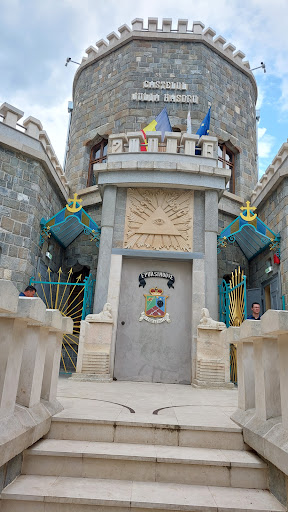
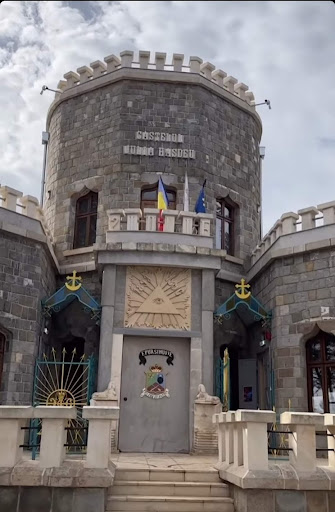
The castle is small on the inside, but it looks solid, cute (like it was made for a single fair maiden to live in it) and inviting from the outside.
The story is that Bogdan P. Hasdeu, the father of the young and ill Iulia Hasdeu - which died at 18 years old - held séance sessions there to reconnect with his beloved child.
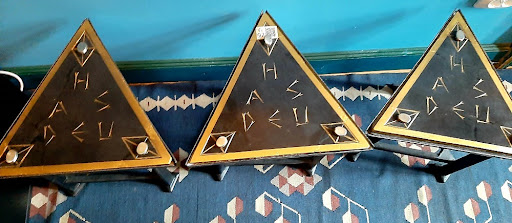
Iulia Hasdeu was an intellectual from an early age, but she caught tuberculosis while studying in France, disease that didn't have a cure in those days. In order to cope with the pain of his loss, her father made a room for spiritism. To get to that room, the castle is filled with symbols for purifying the soul and for connecting with the other side.
For me, the glass eye in the ceiling of the room prior to the spiritism one, gave me a strange vibe. Also the statue of Jesus and the Holy-Grail-shaped-ladders felt more like dead symbols to me than something higher, something that can speak to my soul.
Even the photos made in complete darkness in the spiritism room to spot out the entities from beyond - which were caught in the form of 3 spots of light - didn't quite impress me.
What really caught my attention was Iulia's math notebook - her calligraphy was an art, you can really see her love for science there. Also the fact that her father knew 20 languages. Wow! These were two things that I appreciate and stuck with me.
One thing I forgot to ask the guide is what meaning did it have for the Hasdeu family the words of Galileo Galilei "Eppur si muove". It struck me because I have read the Eppur si Muove novel of Jokai Mor, where for the main character it meant that the world would still continue without him - him, who was a genius and the most loved poet by his compatriots - postmortem (I forgot the character's name).
The ticket didn't cost much like 12-13 lei and the tax for taking photos inside was 16 lei.
Also, you cannot buy souvenirs when entering, just when you leave (which made me raise my eyebrow), but it saved me 10 lei, ha ha. I was really enthusiastic at the begining to have a small rememberance of the place with the portrait of Iulia Hasdeu, but after seing the castle I was ok not to buy anymore. Maybe they should let people buy from the start if they see something they want, in order to win more money.
All in all, it's worth seing and hearing the story. Plus there are nice...
Read moreThe Iulia Hasdeu Castle is a folly house built in the form of small castle by historian and politician Bogdan Petriceicu Hasdeu in the city of Câmpina, Romania. Work on it began in 1893, after Hasdeu's daughter, Iulia Hasdeu, died at the age of 19, an event that dramatically shook and changed Hasdeu's life. He claimed that his belated daughter provided the plans for building the castle during sessions of spiritism. The building was completed in 1896.
The Iulia Hasdeu Castle, which was requiring a lot of reparation, even when Hasdeu was in life, was affected by the First World War and in 1924 the People's Atheneum of Câmpina "B.P.Hasdeu" tried to take it for restoration. The castle was affected again by the Second World War and it kept its state till 1955, when its name was written in the Listing of Historical Monuments.
Since 1994 the Iulia Hasdeu Castle has been housing the "B.P.Hasdeu” Memorial Museum which displays furniture, personal belongings of Hasdeu family, photos and original documents, manuscripts, Hasdeu's reviews, many pictures made by Nicolae Grigorescu and...
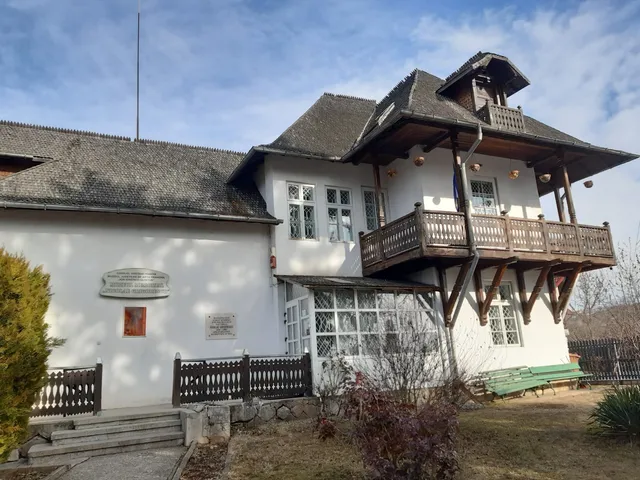
Read moreThe Bogdan Petriceicu Hasdeu Memorial Museum is a historic museum located in the city of Câmpina, Romania. The museum is dedicated to the life and works of Bogdan Petriceicu Hasdeu, a prominent Romanian writer, historian, and philologist of the 19th century. The museum is housed in the writer's former home, which has been preserved and restored to showcase his life and legacy. Visitors to the museum can see a collection of his personal belongings, including furniture, books, manuscripts, and artwork. They can also explore the beautiful garden surrounding the house, which contains a monument dedicated to Hasdeu's daughter, who died tragically at a young age. The Bogdan Petriceicu Hasdeu Memorial Museum is a must-see attraction for anyone interested in Romanian history, literature,...
Read more