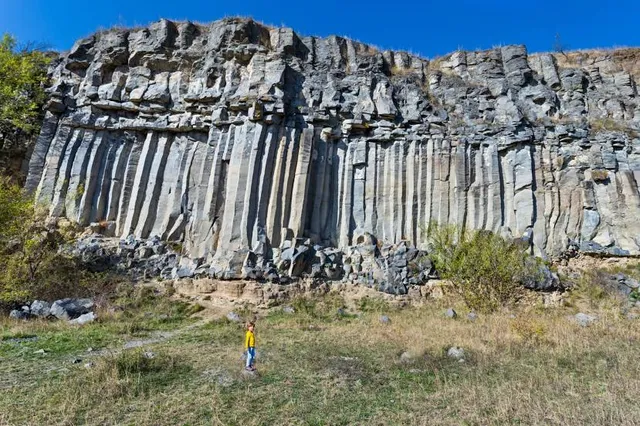
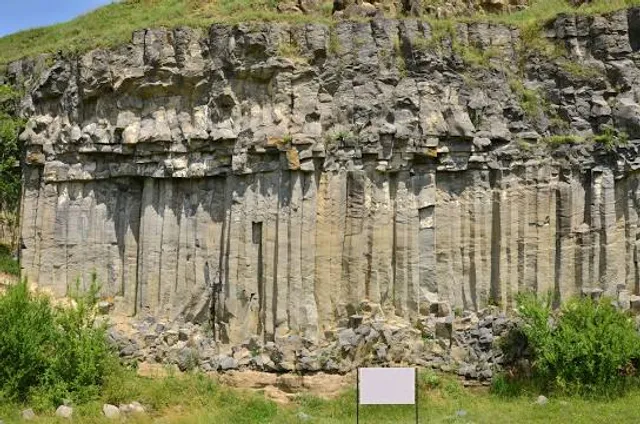
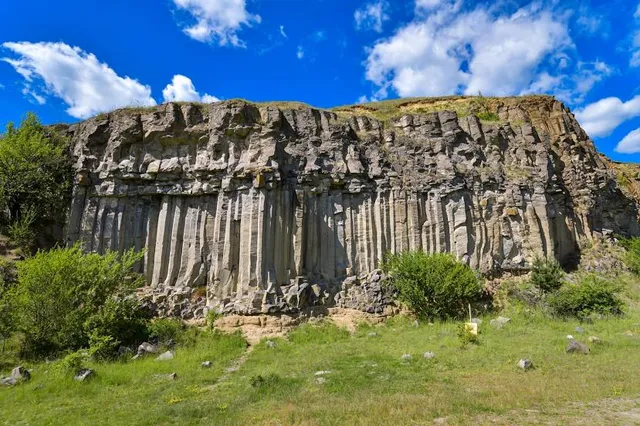
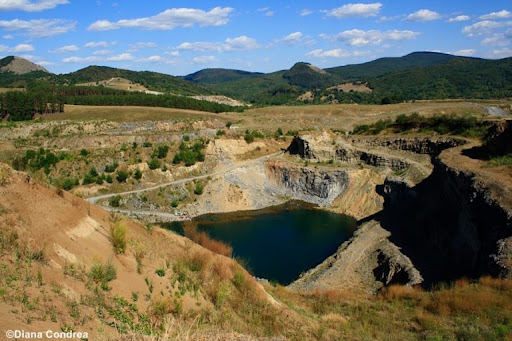
As a geology student, standing before the Racos Basalt Columns feels like stepping into a textbook illustration of columnar jointing. These middle-size hexagonal pillars, reaching heights of 30 meters, showcase entablature and colonnade structures formed during the Pliocene epoch (approximately 2.5 million years ago). The site represents a classic example of cooling fractures in thick basaltic lava flows, where contraction during solidification created these brownish polygonal patterns. What makes Racos particularly interesting is the variation in column diameter (30-100 cm) and the occasional radial jointing, suggesting changes in cooling rates. The oxidized red-brown patina on some surfaces reveals iron-rich mineral weathering, while fresh fractures expose the dark gray, vesicular basalt with visible olivine and pyroxene microcrystals. The surrounding badlands offer excellent stratigraphic exposure, showing the contact between the basalt and underlying Badenian sedimentary layers. For researchers, the abandoned quarry provides rare cross-sectional views of the columnar basalt’s internal structure. While protective measures are needed (some columns show destabilization), Racos remains finest outdoor classroom for volcanology and structural geology. Especially for photographers it is almost alien landscape perfect for dramatic, cosmic...
Read moreThe small village of Racos, half-way between Brasov and Sighisoara, is well-known in Romania for its geological importance. The crater of a volcano that last erupted thousands of years ago and the nearby basalt columns attract many travelers curious to discover a landscape that seems to come from another world.Still, the basalt columns, 10-15 meters tall and more than 1 million years old, and the millennial crater are still the main attractions of the village. Both landscapes are the result of the volcanic activity that took place in the Eastern Carpathians, the last eruptions happening 10,000 years ago. You can easily find the columns and crater on foot, taking a walk of 30-40 minutes from the village. You can also drive, but keep in mind that the dirt road is more suitable for walking than driving, unless you prefer the off-road adventure.
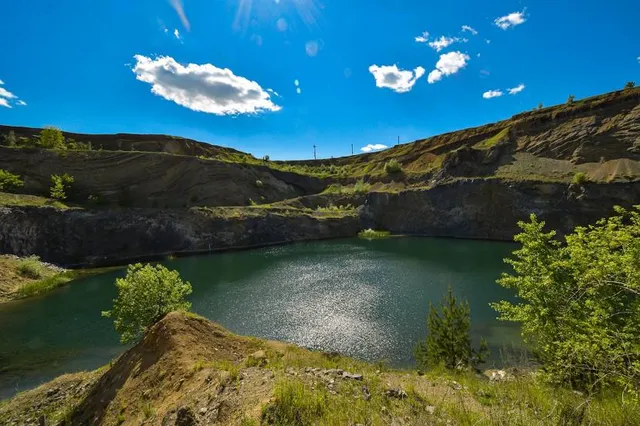
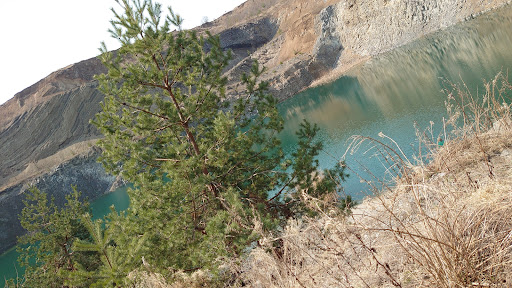
The geological surprises don’t stop here. A turquoise lake formed in a former basalt quarry is the locals’ favorite place for a swim. If you’re planning to go local in Romania, this is your chance to do it in the most original way. Don’t be surprised if you’re not...
Read more⚠️‼️‼️ Foarte important! 💳💰⚠️ Tare frumoasă zona! O recomand din tot sufletul. Mergând des în zonă țin să vă spun că acest loc minunat ca și celelalte: lacul de smarald și vulcanul stins ce sunt în aceeași arie protejată, se vizitează contra cost! Au adus ceva îmbunătățiri zonei cei ce se ocupă de protejarea locului. Ca atare au amenajat o parcare, toalete ecologice, indicatoare și panouri informative. Masca de protecție este obligatorie. La Vulcanul stins se filmează un film așa că anul acesta accesul în zonă este restricționat momentan. Iar ca bonus achitând contravaloarea biletului puteți vizita Castelul Sükösd-Bethlen din centrul satului.Un mare plus adus locului este interzicerea scăldatului în lac și plata cu cardul. (Noi am mers anul trecut de dor și fără bani la noi, ajunși acolo norocul a fost că aveam cardul la noi.) 🤣 Dar merită vizitată zona. Un bilet costa atunci 20 lei de adult. Un mic sfat nu faceți ca noi care mergeam des în acest loc minunat, musai să vă informați de pe internet înainte de a porni la drum, mai ales dacă veniți de departe, nu ca noi la o oră distanță. Sper să vă ajute informațiile mele. Drumeții minunate oriunde vă...
Read more