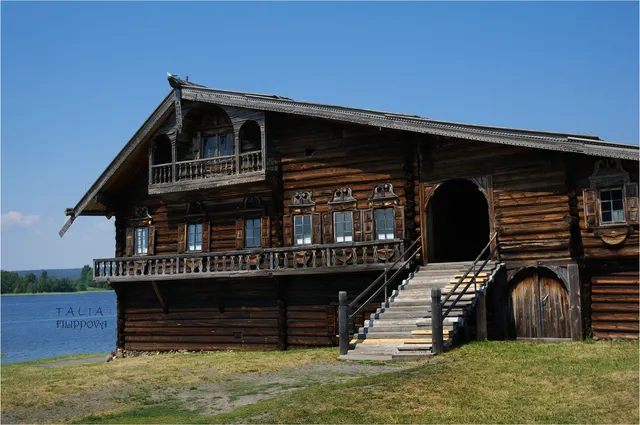
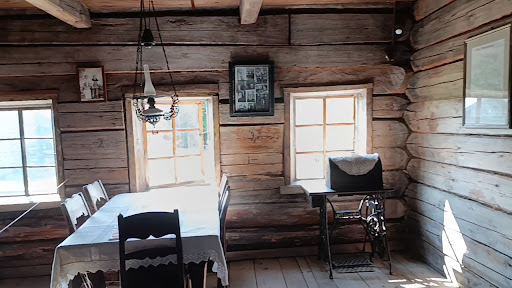
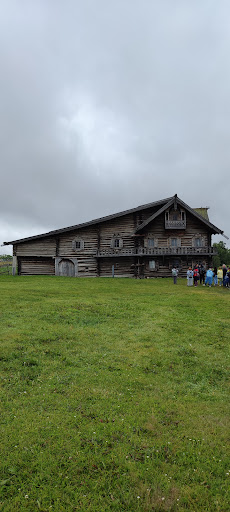
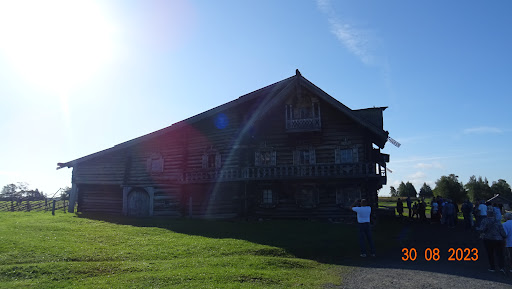
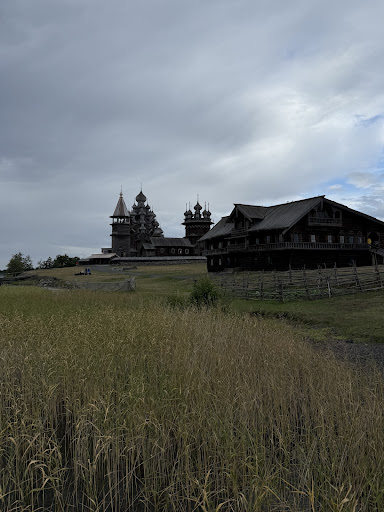
The Oshevnev House, which was moved from the village of Oshevnevo in the Medvezhyegorsky District to the island of Kizhi in 1951, is a typical peasant house-complex of the "koshel" type, built in 1876. It is now part of the Kizhi Museum-Reserve and showcases the life of a wealthy peasant family in the late 19th and early 20th centuries. The interior of the house has been fully restored to its historical state. On the ground floor, there is a winter izba with a Russian stove, which takes up a significant portion of the space, as well as storage rooms for supplies. In the living area, you can see traditional kitchen utensils, dishes, a table with a samovar, and a red corner with icons, which is an important sacred space in a peasant house. The second floor is dedicated to summer rooms, including a light room (gornitsa), where people lived during the warmer months. Here you can see items related to women's handicrafts, such as spinning wheels, looms, and the bride's dowry, as well as divination tools like harrows and ritual objects for wedding ceremonies. The household part of the house has two floors: the lower floor houses a barn with stables, while the upper floor features a spacious shed where hay, agricultural tools, fishing equipment, and even boats used for transporting livestock to pastures were stored. You can also see winter sleds, nets, and other tools. Of particular interest is the "peasant refrigerator", a special pantry for storing dairy products, where even today a lower temperature is maintained than in the rest of the house. Oshevnev's house is also notable for its architecture: it is decorated with carved balconies, an openwork gallery (a gallery encircling the residential part) and decorative elements made with an axe without the use of nails. Inside, original details such as painted ceilings and carved architraves have been preserved. Today, the house is open to visitors, and tourists can learn about the traditional lifestyle of the...
Read moreДом Ошевнева из деревни Ошевнево стал первым памятником, перевезенным и восстановленным на острове Кижи для создания музейной архитектурной экспозиции. По своим возможностям крестьянский дом был своеобразной усадьбой и вмещал все, что необходимо для жизни. Жилье, место для работы, кладовые, а также помещение для скота находились внутри дома, за пределы выносились лишь строения, которые стремились уберечь от случайного огня. Поэтому в стороне от дома, но обязательно на виду перед окнами, ставились амбары с добром и хлебом, а ближе к воде ставились пожароопасные бани. Дом был построен в 1876 году и предназначался для семьи зажиточного крестьянина Нестора Михайловича Ошевнева. Семья была многолюдной, в некоторые периоды число ее членов...
Read moreДом 1876 года постройки в 1951 году перевезен в сектор «Русские Заонежья» музея-заповедника «Кижи». Внутренние интерьеры представляют убранство дома зажиточного крестьянства Заонежья конца XIX –...
Read more