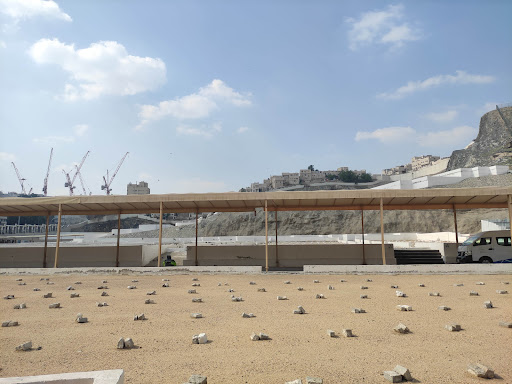
Jannatul Maala Cemetery (Al-Ma'la Cemetery) ★★★★★
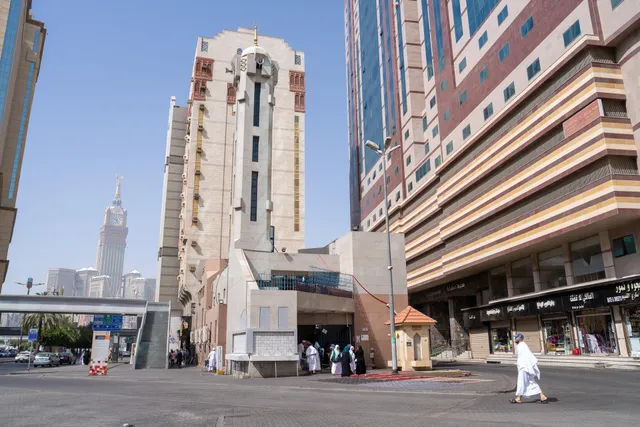
Jannatul Maala, also known as Al-Ma'la Cemetery, is a deeply revered historical and religious site located in the heart of Makkah, Saudi Arabia. This sacred cemetery holds immense significance for Muslims worldwide, as it is the final resting place of several prominent figures from the early days of Islam. Situated approximately 1.3 kilometers north of the Masjid al-Haram, it is easily accessible for pilgrims and visitors.
Historical Significance: Jannatul Maala is renowned for its historical importance. Among the notable individuals buried here are Khadijah bint Khuwaylid, the first wife of Prophet Muhammad (PBUH) and the first person to embrace Islam. Her unwavering support for the Prophet during the early days of Islam is deeply cherished by Muslims. Additionally, the cemetery is the resting place of Abdul Muttalib, the Prophet's grandfather, and Abu Talib, his uncle, who played crucial roles in protecting and supporting the Prophet.
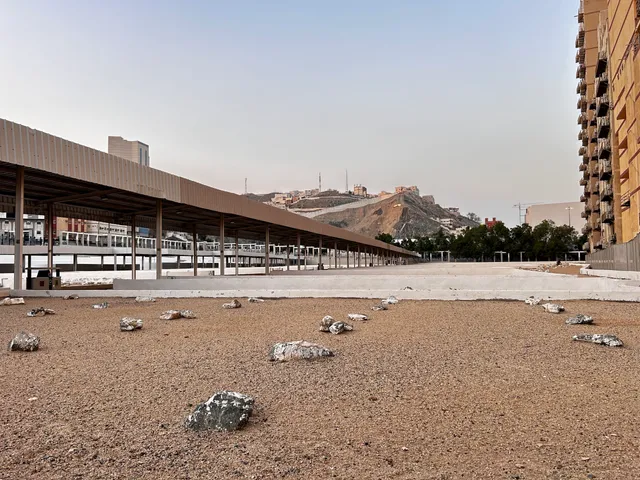
Atmosphere and Layout: The cemetery's layout is modest and unadorned, in line with Islamic principles that emphasize humility and equality in death. The graves are marked by simple stones, and the pathways are well-maintained, allowing visitors to walk through with ease. The serene and solemn atmosphere invites reflection and prayer, making it a place of profound spiritual connection.
Visiting Experience: Visiting Jannatul Maala is a moving experience for many Muslims. The site is open throughout the year and is particularly busy during the Hajj and Umrah seasons. Visitors are encouraged to approach with respect and maintain a quiet demeanor. Modest dress is required, reflecting the sacred nature of the site. Photography is generally discouraged to preserve the sanctity of the cemetery.
Accessibility: Jannatul Maala is conveniently located near the main roads of Makkah, and several transportation options are available to reach the site. The cemetery's pathways are accessible, but the terrain can be challenging for those with mobility issues. It is advisable to visit early in the morning or late in the afternoon to avoid the heat.
Preservation: The cemetery is well-preserved by the Saudi authorities, who ensure it remains clean and respectful. The simplicity of the graves is maintained, reflecting the humility and equality central to Islamic teachings. Efforts are made to educate visitors about the historical and religious significance of the site through information boards and guides.
Spiritual Reflection: For many, Jannatul Maala is not just a cemetery but a place of deep spiritual reflection. Standing by the graves of some of Islam’s earliest and most significant figures provides a tangible connection to the history and heritage of the faith. It is a place where pilgrims can offer prayers, reflect on their faith, and draw inspiration from the lives of those who helped shape the early Muslim community.
Conclusion: Jannatul Maala is a must-visit for any Muslim traveling to Makkah. Its profound historical significance and the serene, reflective atmosphere make it an essential part of understanding and connecting with Islamic history. Whether you are there to pay respects, seek spiritual solace, or simply reflect on the humble beginnings of Islam, Jannatul Maala offers a deeply enriching experience.
Tips for Visitors: Preparation: Be prepared for the weather, as Makkah can get extremely hot. Wear comfortable and modest clothing. Respect: Maintain a respectful and quiet demeanor while visiting. This is a sacred site for many. Guide: Consider hiring a local guide to provide historical context and enhance your visit. Timing: Visit early in the morning or late in the afternoon to avoid peak heat and crowds.
Overall, Jannatul Maala is a poignant reminder of the rich history and enduring legacy of Islam, making it a site of pilgrimage and reverence for millions of Muslims...
Read moreAl Ma’alla graveyard in Makkah is in vicinity of Masjidul Haram blessed with graves of many companions of Prophet Muhammad (صلى الله عليه و سلم) and many other righteous followers.
From top Qabar (grave) of Sayyidah Khadeejatul Kubra (رضي الله عنها), first wife of Rasoolullaah (صلى الله عليه و سلم) is clearly visible. Many people who posses very special love towards this doubtlessly great lady are seen offering salam (salutation) to her with tears flowing from their eyes.
Other prominent Qabars are Qasim ibn Muhammad (رضي الله عنه) eldest son of Rasoolullaah (صلى الله عليه و سلم) who died in childhood Asmaa binth Aboobacker (رضي الله عنها), daughter of first Caliph Aboobacker al Siddique (رضي الله عنه) and elder sister of Ayisha (رضي الله عنها. Abdullah ibn Zubair (رضي الله عنه) son of Asmaa (رضي الله عنها) and Zubair bin Awwam (رضي الله عنه) who was killed by cruel ruler Hajjaj bin Yousuf. Sumayya Ummu Ammar bin Yasser (رضي الله عنها), first from Muslims sacrificed who was brutally tortured and killed by Abu Jahl in presence of her husband Yasser (رضي الله عنه) and 6.son Ammar (رضي الله عنه). Abdullah ibn Amr bin Aas (رضي الله عنه).
Great personalities buried there in recent times are Sayyid Muhammad Alawi Maliki(رحمة الله عليه) a famous scholar of Ahlu Sunnah wal Jamaa of recent times lived in Makkah and Muhammad Abdu Yamani (رحمة الله عليه) were buried here.
Many scholars assemble near grave of Khadeejathul Kubra (رضي الله عنها) after ‘Asr’ prayers on every Wednesday to recite verses from Qur'aan and gift the thawab (reward) to those who are buried there.
Several Ahadeeth state the virtues of this graveyard, one being the narration in which Prophet (ﷺ) said about it, "What an excellent place is this graveyard." Ahmad – Hadith 3472 and Majma'uz Zawaa'id (Vol.3 Pg.297).
Nearly 7000 Sahaba buried here including graves of Abd Manaf: Great, great-grandfather of the Holy Prophet [ﷺ], Hashim: Great-grandfather of the Holy Prophet [ﷺ], Abdul Muttalib: Grandfather of the Holy Prophet (ﷺ), and Abu Talib: Father of Hadhrat Ali (radhi). The Holy Prophet (ﷺ) used to visit it frequently. It is the 2nd holiest graveyard of Islam after Jannat-ul-Baqi...
Read moreKhadijah bint Khuwaylid (Arabic: خديجة بنت خويلد) or Khadījah al-Kubra (Khadijah the Great) 555 ( Or 567 CE)– 22 November 619 CE) was the first wife and follower of the Islamic Prophet (Arabic: نَـبِي, Prophet) Muhammad. She is commonly regarded by Muslims as the "Mother of the Believers". Khadijah is regarded as one of the most important female figures in Islam, like her daughter, Fatimah. Muhammad was monogamously married to her for 25 years. After the death of Khadijah, Muhammad re-married. Khadijah was the closest to Muhammad and he confided in her the most out of all his following wives. It is narrated in many hadiths that Khadijah was Muhammad's most trusted and favorite among all his marriages. It is narrated in Sahih Muslim: The messenger of Allah said: "God Almighty never granted me anyone better in this life than her. She accepted me when people rejected me; she believed in me when people doubted me; she shared her wealth with me when people deprived me; and Allah granted me children only through her." ‘A’ishah narrated of Muhammed and Khadijah in Sahih Bukhari: "I did not feel jealous of any of the wives of the Prophet as much as I did of Khadijah though I did not see her, but the Prophet used to mention her very often, and when ever he slaughtered a sheep, he would cut its parts and send them to the women friends of Khadijah. When I sometimes said to him, "(You treat Khadijah in such a way) as if there is no woman on Earth except Khadijah," he would say, "Khadijah was such-and-such, and from her I had children." It is also narrated: The Messenger of Allah said: "The best of its women is Khadijah bint Khuwailid, and the best of its women is Maryam bint ‘Imran." Muhammad said about her "She believed in me when the whole world refuted me and she attested to my veracity when the whole world accused me of falsehood. She offered me compassion and loyalty with her wealth when everyone else had...
Read more