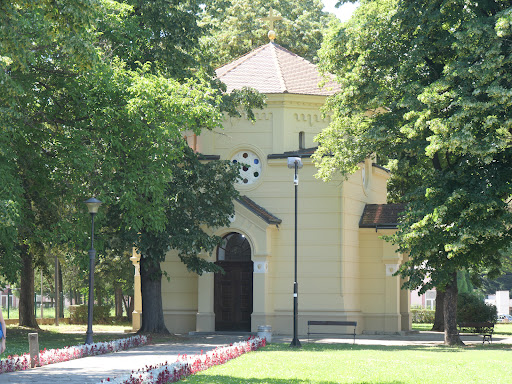
In the 1st Serbian Revolt initiated by the Serbs against the Ottoman Empire (against the Turks) under the leadership of Karakorce in 1804, the Serbian rebels committed genocide in Belgrade (3,000 Bosniaks) in 1807 and in the city of Sjenica (2,499 Bosnians) in 1809 by murdering Muslims (Turćin).
They slaughtered the Turks, wherever they captured the Turks (Bosniaks), they massacred them all, regardless of whether they were women or children.
Klali su Turke, gdje su god koga našli, nisu štedili ni ranjenike, ni žene, ni decu tursku.“ (source: K. N. Nenadović, Život i dela velikog Đorda Petrovića Karađorda, Beograd, 1971., str. 166.)
In particular, the Serbian rebels, who committed genocide against Bosnians, and the Ottoman Army came face to face in the Chedar War. Serbian rebels who lost the war are cornered when they cannot coordinate the war well. Rather than being caught and prosecuted, their leader, Stevan Sindelic, shot at powder kegs in the nearby arsenal, causing the death of all the Serbs present there.
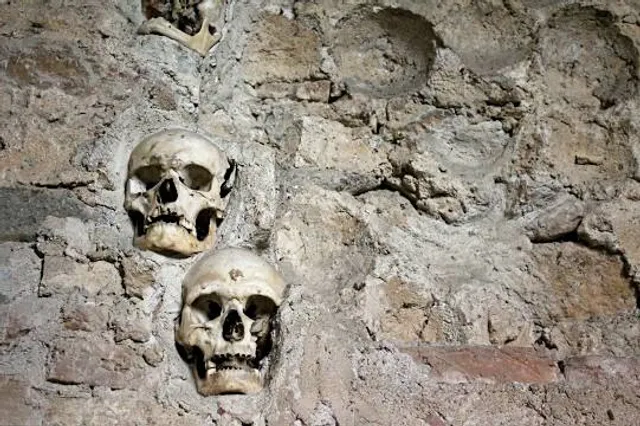
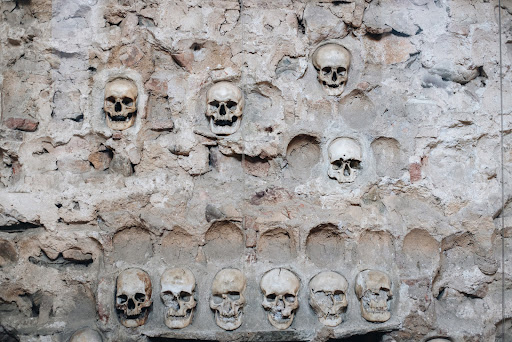
Grand Vizier Hurşit Pasha, the commander of the Ottoman Army, decided to have a tower built from the heads of the murderers as a punishment for the brutality (genocide) committed against the civilian population in Belgrade and Senice (Sjenica), to show the power of the state, to show the power of the state, to warn that they would revolt again, to cut off the heads of the dead rebels and serve as a warning to the world. gives.
When the Ottoman Empire withdrew from Nis after independence was granted by the Western States according to the decisions of the Berlin Congress in 1878, the tower passed under the control of the established Kingdom of Serbia. The tower was taken under a roof in the same year and a chapel was built around it in 1892.
During the period of the Kingdom of Yugoslavia, the tower was reorganized with the restoration carried out in 1937. The tower is decorated with a bust of Stevan Sindelic, who killed his own men, the Serbian rebels.
In 1948, Socialist Yugoslavia was taken under protection by the Federal Republic of Serbia under the National Cultural Heritage list, and then turned into a propaganda monument of "anti-Turkism" with the so-called heroic lies...
Read moreA 14 minute drive east from Bubanj is Skull Tower; one of the most haunting monuments in the world. The rule of the Ottoman empire over Serbia was not pleasant to say the least and the Serbian people were not just going to sit back and do nothing. In Belgrade, we saw the monument to Karađorđe. He was responsible for the First Serbian Uprising in 1804. This proved to be unsuccessful. In May of 1809 was the Battle of Čegar, here in Nis. Trenches were dug for Serbian soldiers to charge the Ottomans.
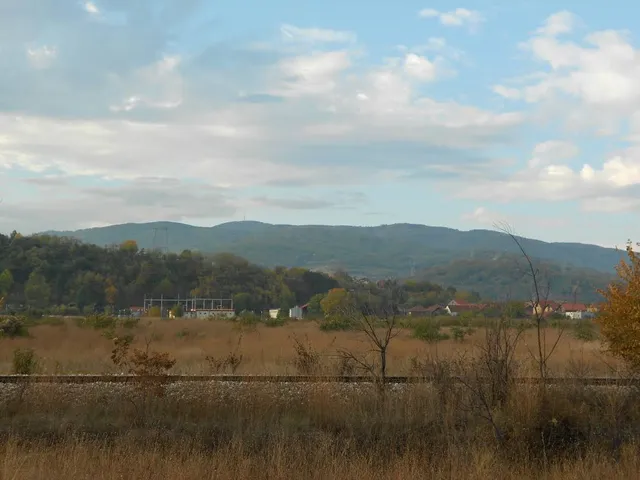
On Čegar Hill, Vojvoda (Duke) Stevan Sindjelic, the leader of this uprising dug a trench for him and his 3,000 loyal soldiers. This trench was closest to the Turks. On May 31st, the much larger Turkish army took over the trench. Sindjelic realizing no help was coming and not wanting to give the Ottomans the satisfaction of killing his men, took out his gun and blew up the gun powder reserves which created a great explosion that blew up the remaining Serbians in the trench and many of the Ottomans as well.
In this trench and the area nearby 4,000 Serbs and 10,000 Turks were killed. Even with this advantage the Serbian forces withdrew their troops. But that wasn't enough for the Ottomans. The Ottoman commander ordered his men to decapitate the dead Serbians, skill their skulls, fill them with cotton and send them to the Sultan Constantinople as a sign of their victory. With those skulls this horrific monument, skull Tower, was built. This tower stood at the entrance of the city of Nis as a warning sign of what tragedies would be in store for anyone trying to liberate themselves or defy the Ottoman rule.
The foundations of the chapel began in 1894. A plaque dedicated near the chapel in 1904 reads: "To the first Serbian liberators after Kosovo." The chapel was renovated in 1937 and a bust of Sinđelić was added the following year. The Second Serbian Uprising led by Miloš Obrenović, eventually succeeded in turning Serbia as a...
Read moreIt is very sad that such an interesting historical monument was presented so poorly. This is a small room with almost no information about the main monument. This is very burdensome because it does not allow us to delve into the history and understanding of the events that led to such a cruel result. For me, this is disrespectful for their history on the part of those who created this museum.
It was also disappointing that we had to call the cashier from another room to give us tickets. Then we returned to them to find out if we understood correctly that for 3€ we got one small room without information, they told us that it was so. Then we began to explain that we did not think this was a full-fledged service for which they took money from us, since the most important thing in the museum was missing - information. Because of this, a small conflict began with a museum employee, who turned out to be a guide and was ready to tell us everything. But this was not explained to us at the time of purchasing tickets, and there was no one in the main room of the museum throughout our stay. And this man appeared only at the end of our visit (but we already spent there some time and had another plans for this evening), which upset us very much, because we were left without information and did not understand why we wasted time visiting the museum.
But the fault is not so much of these employees (they even returned our money for visiting), but of the compilers of the museum. The museum must be able to present information and interest the visitor even without a guide! Museums are created to educate and convey information, but there was none here. It’s a shame that such a pitiful semblance of a museum was built around such an interesting historical monument. This story could be presented very beautifully, interestingly, and...
Read more