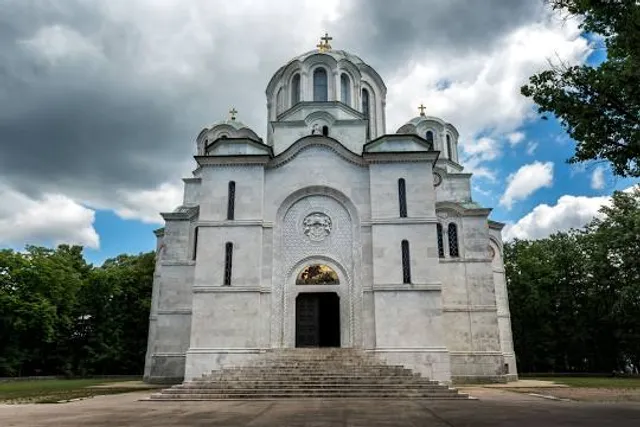
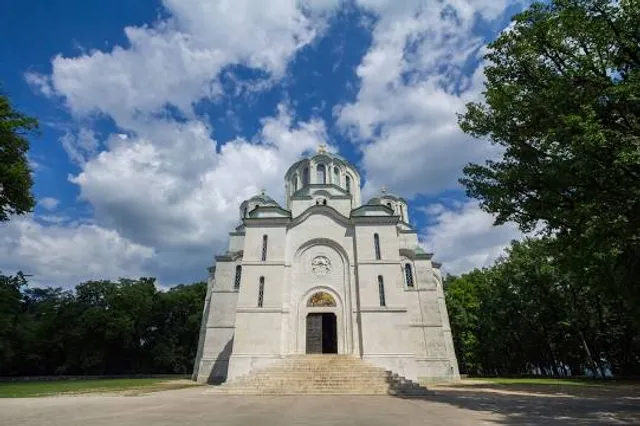
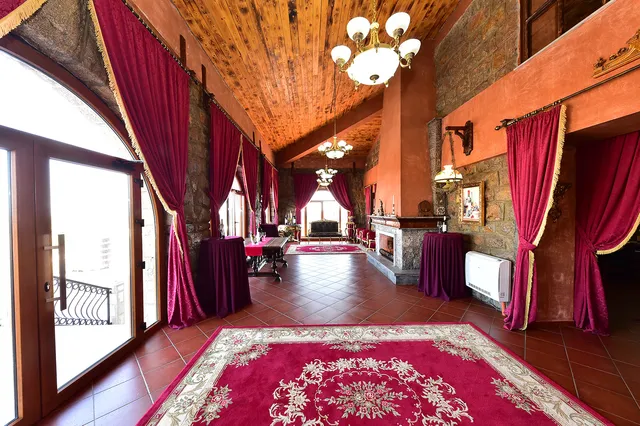
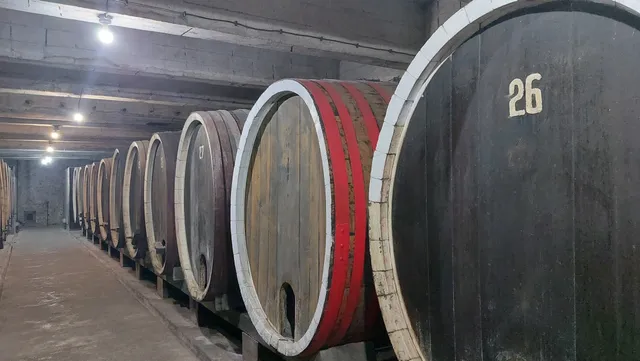
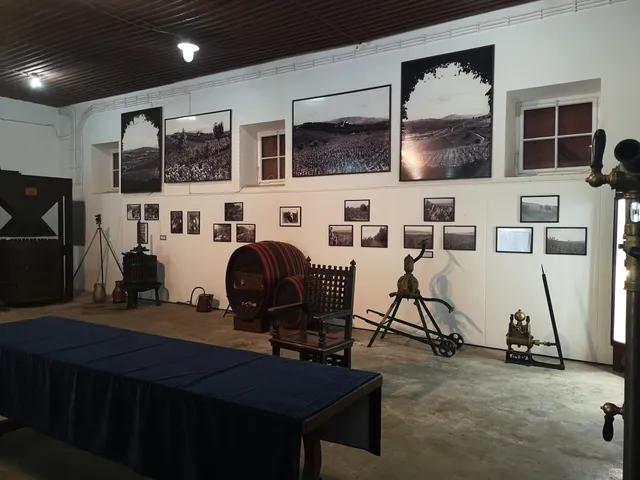
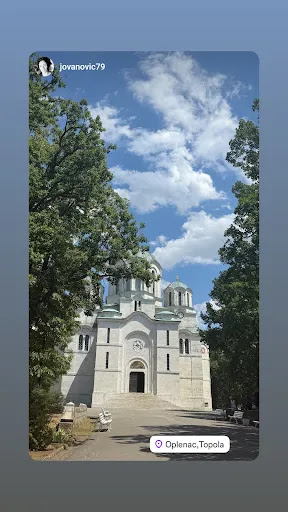
The area is really lovely, from the parking a pedestrian small street between the threes is going up to the hill. No more than 150 metres. The church outside is really nice, the white call really makes a difference from the green threes. The inside of the church is spectacular, with the mosaics and the colos. There is a guide at the entrance that will shortly explain the history. There was a ticket when I when there, 4oo din, but you also use the same ticket to check the house of Petar, the house of winery and Karadjordjev Konak, which can take you, up to two hours walking in really nice area with wonderful landscape. However, the church is great, check the pictures and videos, but it is a must see and you can learn Serbian history. Hint, check with the guide, why there is one grave outside the church, and there are 12 empty ones inside.... The house of Petar, just infront of the church, you can see some paintings of Karadhodje family, mainly from Aleksandar l and Marija, as well some personal items from that time. This is the second site seeing to be seen after the church of Gjorge. The third is the wine house at the gate of the complex, the house from outside looks very nice, but when I was there I was disappointed by the art paintings from a serbian painter. The fourth site seeing is the Karadjorge Konak, check this too, is the second best after the church. It can be good day off from Belgrade, you need 1 hour to get there by car, around 2 hours of the site seeing and plus for lunch for roasted pork and lamb, check 'pecenjara' type of restaurants, with fresh...
Read moreSt George Church is the five-domed church built in the style known as Serbian–Byzantium, a sort of oriental gothic style, between 1910 and 1930, by King Peter I who was a grandson of the founder of the royal family who led the Serbs in an uprising against the Ottoman Empire that had controlled the Balkans for centuries. The revolution was successful, the Ottomans were booted out and in 1811 Karadjordje was confirmed as the lawful ruler of Serbia and his heirs after him. At St George’s Church four of Serbia’s kings and 18 members of the Karadjordje dynasty are buried in the crypt, their tombs made of onyx from Decani in Kosovo, and representing the pearl of Serbia’s cultural and historical heritage. The most important characteristic of church is the mosaic that covers much of the interior walls, made from Murano glass from Venice. The huge candelabra which is made of melted weapons from the Battle of Kajmackalan in WWI and in the shape of the medieval crown of Serbia but upside down, symbolising Serbia’s mourning at the loss of their country at the Battle of Kosovo in 1389. Entry tickets are 300 Serbian Dinars which is around GBP2.5 or Euro 3. The price includes entrance to St George’s Church (the curator is happy to give you lots of information in English), King Peter’s house (a small summer villa built in 1912 for his own use and today a museum), the villa of King Alexander I and Queen Mary (closed to visitors at the moment) and entry to the tower and Church of Our Blessed Lady of Karadjordje Town, dating...
Read moreA Jewel of Serbian Heritage – St. George’s Church, Oplenac
Nestled on the serene hills of Topola, the Church of St. George at Oplenac is nothing short of a national treasure. Built as the mausoleum of the Karađorđević royal family, this gleaming white-marble church stands as a powerful symbol of Serbian history, faith, and resilience.
The exterior, with its shining white stone and commanding presence, invites awe. But the real magic happens once you step inside—a kaleidoscope of over 40 million glass mosaic pieces, covering nearly every surface, stuns the senses. The colors, the craftsmanship, and the sheer scale of the mosaics depicting Serbian saints and church history leave a deep emotional impression.
Each tile tells a story, and standing beneath the magnificent dome, you feel the weight and beauty of centuries of culture and sacrifice. The church also houses the tombs of many members of the royal family, including Karađorđe, the leader of the First Serbian Uprising.
This is not just a place of worship; it’s a spiritual and historical landmark that every visitor to Serbia should experience. Surrounded by peaceful gardens and panoramic views of the Šumadija region, it’s a place that connects past, present, and future in the most graceful way.
Whether you’re drawn by faith, history, or architecture, St. George’s Church at Oplenac is unforgettable—a shining mosaic masterpiece and a testament to the...
Read more