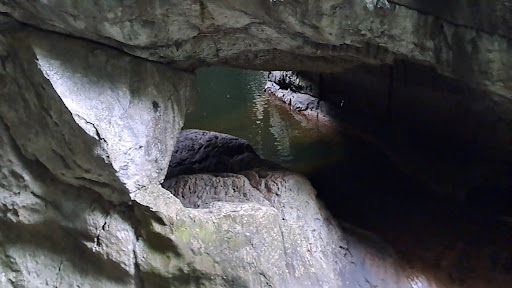
“Wow. Awesome. Must see.” Sure, but enough of the adjective salad. The Škocjan Caves were formed over millions of years in Cretaceous and Paleocene limestone, a sloooww process that carved jaw-dropping stalactites, stalagmites, and underground ravines. If you actually want to experience this natural phenomenon, here's what really matters:
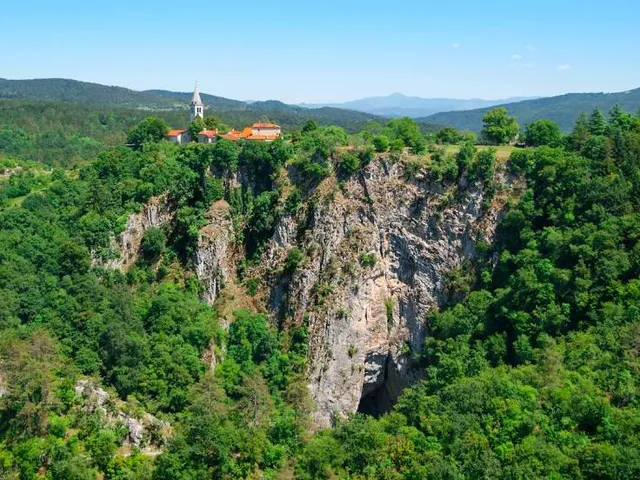
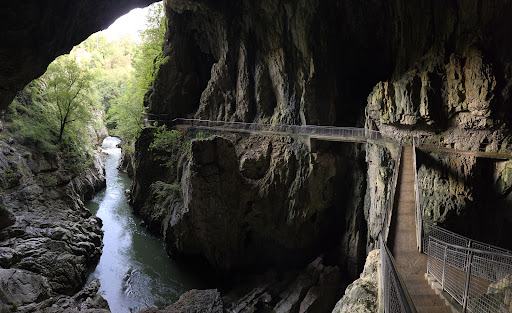
Guided tours only. No lone wolf spelunking here. You go in with a guide who knows all about stalactites, stalagmites, and the secret stories of the caves. No photography inside. That is right, no selfies with stalactites. You will just have to store the memories in your brain. Tour timing. The grand tour is 1.5 hours of jaw-dropping caverns. First group goes at 10:00, last one at 15:00. If you are in the final slot, you will be surfacing around 16:30. It's cold so bring something. Book ahead. Do not gamble. I showed up bright and early aiming for the 10:00 tour and only got in at 14:00. Learn from my foolish optimism. After the tour. Three marked routes let you explore above ground. Route 3 is the longest at 1.5 hours and worth every step, cliffs, views, air, and space. At the end of route, there is also a short climb about 15 degrees stairs followed by a 10-minute walk back to base. Luckily, you are greeted by a vendor selling lemonade and yummy homemade ice cream, the perfect victory snack. See the pictures I photographed to get a sense of the views and scenery, during the optional 3rd route. On-site basics. Ticket booth, gathering square, a small eatery, toilets, and parking. EV drivers, 8 shiny 22 kW chargers. The pioneers. The first explorers were fearless, lowering themselves into the abyss with ropes and lanterns. They built stairs, walkways, and other paths to make the caves accessible, and you can still see traces of their work along the way, adding even more awesomeness.
And after all that, standing above the immense ravine in the second cave. The caves do not just impress, they humble, and the world below feels both alive and...
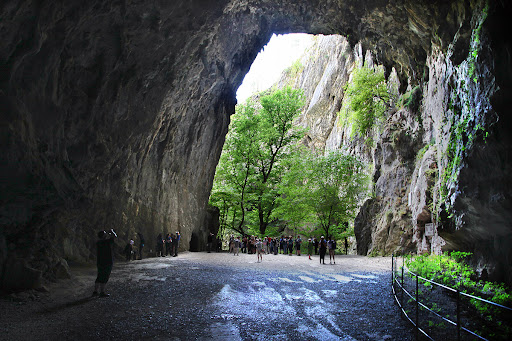
Read moreWonderful experience and must see for those who like speleological marvels 😊 If you want to see how speleology works in beautiful natural heritage of Slovenia come here to Skocjanske caves rather than to popular Postojna caves. It is more mature experience so I wouldn't recommend it to small children or those who don't care about science or history of this place. It's more suited for mountaineering enthusiast. History of the place all together with natural events inside caves that has collapsed multiple times over the years to create nice and beautiful reservation has left more emotional memories than other caves I have seen so far. One of the factors you enjoy it here is due to the fact that you are not allowed to take pictures by any means inside the caves. Although some people don't care and take out their phones this is explained before the exhibition by the Slovenian/English speaking guide. We were instructed to use our eyes the old fashioned way. Afaik nobody got sued for waking up bats or causing some disturbance in the cave but we were told the is some large financial fee for taking pictures. After you get out of the cave to daylight there is no issue and you can take as many picture as you want. Inside the cave there is huge underground canyon, beautiful sceneries ( of stalactites, stalagmites, columns, curtains ) and multiple routes of the first explorers. What to see? At least all VIEWING POINTS and ROUTE NUMBER 1 the red one with guide. What to buy? Definitely tour guide book ( at the time of visit only 5 eur) which is translated to many languages and has more information than you'll hera from...
Read moreThe Skocjan Cave sare a unique natural phenomenon, the creation of the Reka River. Afterreaching the Karst, flows on the surface, alonganapproximatelyfour-kilometre-longgorgethatends with a magnificentwallunderwhich it disappears underground. The Reka River blind valleyis the largest in Slovenia. Probably in the Early Pleistocene the ceiling of the cave collapsed some 200 metres from the sinks; as a result, the collapse dolines Velika dolina (up to 165 metres deep) and Mala dolina (120 metres) we recreated, separated by a naturalbridge, a remnant of the original caveceiling. At the bottom of Velika dolina, the Reka River finally disappears underground and resurf aces againthirty-four kilometres awayat the springs of the Timava River, not far from the Adriaticcoast. Part of the Skocjan Caves in which the Reka River flows, namely the Sumeca jama (the Murmuring Cave), isonly 3.5 kilometreslong, between 10 and 60 metres wide and over 100 metres high underground. The length of allcavepassagestotalsapproximately 6 kilometres, while the verticaldifferencebetween the highestentrance (Okroglicaabyss) and the lowest point in the cavesreached by man, thatis the siphon, is 205 metres. At someplaces, the gorgeextendsinto underground chambers. The largest of them, Martel's Chamber, is 308 metres long, 89 metres wide on average (reaching a maximum of 123 metres) and 106 metres high, with the highest point of the ceilingat 146 metres above the Reka River bed . Skocjan Cave is on...
Read more