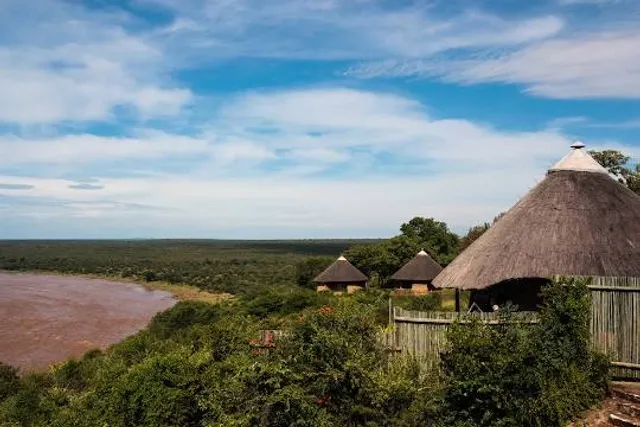
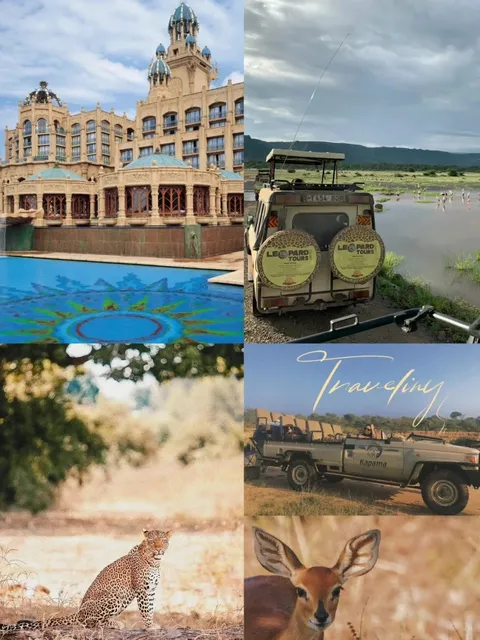
There are places that get under your skin like a fever you never quite shake. Kruger National Park is one of those places—a sprawling, magnificent bastard of a wilderness that’s been breaking hearts and mending souls for the better part of a century. For my family, it’s been fifty years of pilgrimage to this altar of the African bush, and each return feels like coming home to a lover who’s grown more beautiful and more broken with each passing year. Step into a rondavel at Kruger and you’re hit immediately with that smell—creosote and sun-baked concrete, dust and wild sage, the lingering ghost of a thousand campfires. It’s a scent that bypasses your brain entirely and goes straight to that primal place where childhood memories live. One breath and you’re eight years old again, watching your father point out fresh elephant dung on the road to Satara, learning that the world is far wilder and more wondrous than suburban life ever suggested. This is what Kruger does to you. It strips away the pretense, the urban armor we wear, and reminds you that you’re just another animal, albeit one foolish enough to think concrete and steel make you immortal. Let’s be clear about something: Kruger National Park works not because of the suits in Pretoria, but in spite of them. The real heroes here are the women who clean your rondavel at 6 AM with the kind of pride that would shame a five-star hotel. They’re the rangers who know every waterhole, every animal trail, every seasonal migration pattern like a bartender knows his regulars’ drinks. They’re the camp managers who somehow keep the lights on and the water running with budgets that wouldn’t cover a decent dinner in Sandton. These people—underpaid, under-resourced, often working with equipment held together by determination and spare wire—they’re the beating heart of this place. They understand something that the fat cats in their air-conditioned offices never will: that Kruger isn’t just a business opportunity or a political football. It’s a sacred trust. Walk through any camp shop and you’ll see the beautiful contradiction of modern Kruger. Tourists swarm like fruit flies around displays of biltong and krugerrand keychains, dropping rands with the enthusiasm of gamblers on a hot streak. The commercial engine hums along nicely, thank you very much. Money flows in, enthusiasm runs high, Instagram gets fed. But venture beyond the gift shops and you’ll find the rot. Roads that haven’t seen proper maintenance since Mandela walked free. Bridges washed away by predictable seasonal floods, as if the concept of “rainy season” came as a surprise to people who’ve lived here for millennia. Entire sections of the park become inaccessible not because of animal migration or conservation needs, but because someone in procurement decided that the lowest bidder with the right political connections was more important than, you know, actual competence. Thirty-one years of democracy, they say. Thirty-one years of “transformation.” What’s transformed, exactly? The complexion of the people emptying the till, certainly. The enthusiasm with which public contracts get handed out to companies whose main qualification seems to be knowing the right handshake and belonging to the right political party. Meanwhile, the parks budget gets carved up like a feast day kudu, with everyone grabbing their piece before the meat spoils. Black Economic Empowerment companies win contracts to build bridges that collapse with the first good rain, to maintain roads that turn into moonscapes within months. It’s not about building capacity or creating genuine opportunity—it’s about feeding the machine, keeping the right people happy, making sure the trough stays full for those with the...
Read moreNO WIFI IN NATURE'S PARADISE **In this documentation, I shall confine myself to my experience at Kruger park to help other visitors, but not about the park itself, but for posting some photographs captured during our 13 day stay there. My wife and I flew in to Skukuza Airport inside Kruger National Park with SAA Airlink flight at 1130 on 11/03/19. We collected our rented car from Avis at the airport. After that I went to the Kruger Parks Office situated at the airport. Here, (or at the first point of entry) the Park officials check your booking and advise you on the amount payable as "conservation fees". The daily amount payable depends on whether you are a visitor from South Africa, SADC or international. (R 96, 186 & 372 for adults and half rate for children below 11 years of age). If you had purchased 'Wild Card membership' you do not need to pay conservation fees. If you are booked in at one of the rest camps, they give you an "Overnight Visitors Permit". This must be kept safe as you need to produce it together with proof of having paid "conservation fees" at every Rest Camp at Check-in. We had booked to spend 12 nights at Kruger. SATARA - 5 nights - 11, 12, 13, 16, 17 March 2019. LETABA - 2 nights 14 - 15 / 03 /19. LOWET SABIE - 18 - 19 /03 /19. SKUKUZA - 20, 21, 22 /03/19 and outward flight. Facilities available: In March, park gates opened at 0530 and closed at 1800. Late comers are fined! At the reception you can book activities including safari drives and day walks. All bungalows we stayed in were clean and neat. Each unit was cleaned on a daily basis. Facilities available depends on the cost. Each residential unit had an individual barbecue facility. There were swimming pools for residents. Separate picnic facilities were available for day visitors including swimming pools. Park Shops provided our day to day requirements including food items (veggies, meat, drinks, wines, spirits) and day-to-day needs. Fuel stations Car wash (except at Lower Sabie) ** We could get Wi-Fi connections only at 'Cattle Baron Restaurant' at Skukuza. All other camps and restaurants had no WiFi.
We appreciate all the positive comments, many of which are simply wonderful and couldn't be written better. Kruger is a special place with positive energy! Our experience of visiting the Kruger Park is the experience we have accumulated over the past few years. These tips are based on these trips. To move around the park you need a car. Rent a car in Johannesburg for less and with more choice. We recommend taking an SUV, at least compact class or higher, but with an engine power of more than 100 hp.
If you have a short trip, say less than 4 days, then stay in the south (Skukuza, Lower Sabie,...). We recommend Lower Sabie.
If you have more time, you can explore the north. Be prepared for the fact that there will not be many animals here, but there will also be fewer people. Flora lovers will definitely love the north.
Don't be upset if your bungalow is missing something or something doesn't work. Report this to the camp duty officer immediately and they will usually help you. Well, if not, then just remember, you are traveling, and this is an adventure, and treat it like an adventure. This will keep your mood up.
It is better to go either before the New Year holidays or after (before 20.12 or after 20.01).
If you are traveling for the first time, try to take accommodation around the perimeter. This way you will not only have a beautiful view, but also a great opportunity to see animals without leaving the camp.
You don’t need to take anything special with you. Almost all camps have shops where you can buy food or restaurants where you can eat.
By the way, we also recommend buying fruits along the road, 15-20 km before the entrance to the park (Kruger Gate, others had the same picture), along the road you will see small markets. Very inexpensive and great taste.
Buy meat/vegetables and cook a braai/barbecue. This is a good way to plunge into the world of Africa, meet and communicate with your neighbors.
We usually tip 15 percent in cash. Many people pay their tips by card, but it is better to pay the wait staff in cash.
In Johannesburg, we recommend staying near Mandela Square in Sandton as logistics and security are better than other areas. We also take a SIM card here, it’s MTN or Vodacom. We usually start our journey to Kruger...
Read more