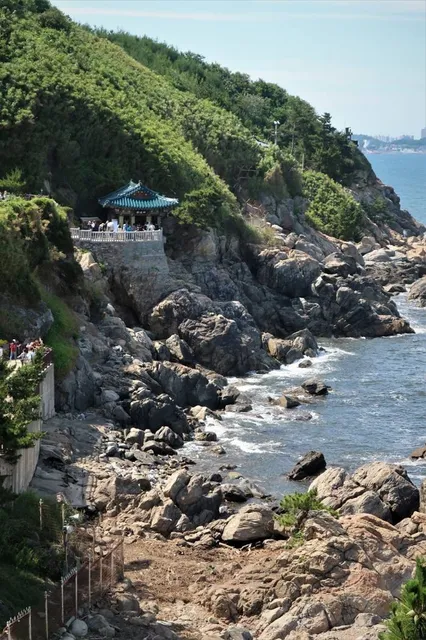
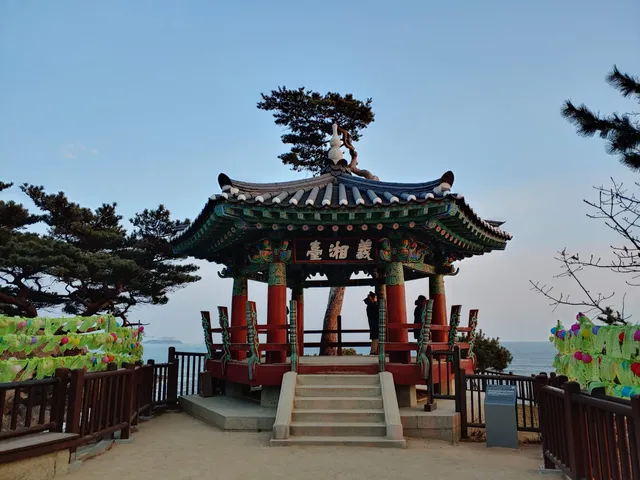
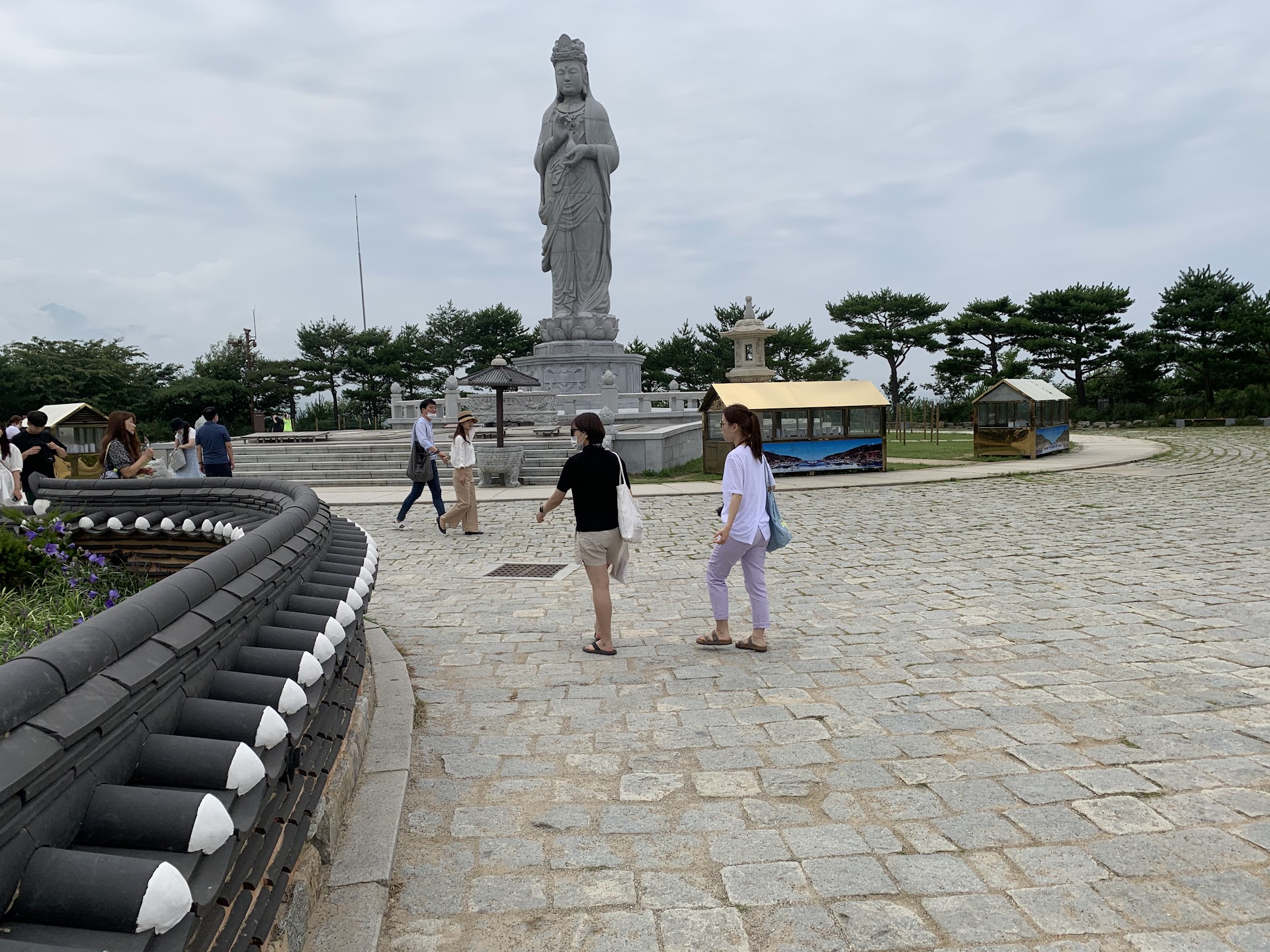
Naksansa Naksan Temple is located at Mountain Obong, one of three famous mountains, with Mountain Gumkang and Mountain Seorak in the east of the Taebaek mountain range. The name of Naksan Temple originated from Mountain Botanakga, where it is believed that Bodhisattva Avolokitesvara (Gwaneum) always resides and gives Dharma. Gwaneum is symbolized as the compassion of Bodhisattva in Mahayana Buddhism. With over 1300 years of history, innumerable Buddhists, regardless of their social positions and status, are continuously visiting this temple to see real relics of Gwaneum. This temple has a breathtaking scenic beauty of nature, the East Sea, with many sacred treasures and cultural heritages. Naksansa has been one of the most holy and attractive places, not only for Buddhists, but also for other ordinary people including foreigners in Korea. There are many other famous legacies like the landmark statue of Haesu Gwaneumsang (Seaward-Looking Bodhisattva Avalokitesvara Statue is one of the largest statues in Asia), Botajeon, enshrined many kinds of Bodhisattva including seven other Bodhisattva Avalokitesvara such as Chunsu Gwaneum (Sahasrabhuja aryaavalokiresvara with one thousand hands) and Memorial Hall of Venerable Master Uisang, with records and relics related with his achievements. Naksansa is one of the most favorite places with its one thousand year historic temple, sacred treasures and cultural heritages. Most of Buddha’s halls and pavilions in Naksansa were burnt to the ground by a catastrophic forest fire on the 5th of April, 2005. However, in spite the disastrous conflagration, Naksansa, with its thousand year history, is gradually being reconstructed, with the strong support of the people and...
Read more낙산사 is, without a doubt, one of my favorite temples in all of Korea. Perched gracefully on a cliffside overlooking the East Sea, it feels like a place suspended between earth and sky—where time moves just a little slower and the noise of the world fades into the sound of crashing waves.
It’s hard to imagine now, but about twenty years ago, this serene temple was nearly lost. A massive fire swept through the grounds, reducing centuries-old buildings to ashes. I remember hearing the news back then and feeling an ache, as though we’d lost something sacred. But what followed was nothing short of remarkable: a careful, respectful restoration effort that stayed true to the temple’s original beauty and spirit. Today, walking through its gates, you’d never know it had faced such devastation. It stands tall once again, not just rebuilt, but reborn.
The highlight, for me, has always been the view. From the temple grounds, the East Sea stretches endlessly beyond the cliffs, shimmering beneath the sun or cloaked in morning mist. Whether you’re looking out from the Hongnyeonam Hermitage or simply resting along one of the quiet pathways, the scenery feels like something out of a painting—peaceful, powerful, and humbling.
There’s a quiet magic about 낙산사. Maybe it’s the blend of resilience and beauty. Maybe it’s the way the ocean breeze mixes with the scent of pine and incense. Or maybe it’s just the feeling that, even for a moment, you’ve stepped into a place where the sacred and natural live in...
Read moreWelcome to a buddhist pilgrimage site! There is a small cafe inside the souvenir/gift shop near the entrance that sells all sorts of herbal teas, as well as coffee/espresso drinks, but the downside is that drinks cannot be ordered past 5pm..
When I got here, some parts of the area were undergoing renovation/reconstruction but otherwise a lot of beautiful architecture, a giant stone buddha, Spectacular views of mountain-meets-ocean, an overall nice tourist area for photography manias.
Some areas are off-limits mainly because those areas are actual living residences for the monks that take care of the place, I chuckled when a monk in traditional clothing walked by... wearing a brand-name runners...
A lot of walking and stairs too but there are gradual ramps as well for wheelchair access and those who hate stairs.
Due to covid, a lot of the fountains for natural mountain spring water have been cut off and closed so the public drinking/washing areas were not accessible but that is just a minor setback to the entire experience.
Even if one is not religious or is part of a different religion, it is still a good place to take in beautiful scenery, especially...
Read more